Transferring in the US After Arrival: Seven Major Airports, From Immigration to Your Next Gate
- US transit
- US immigration
- LAX
- SFO
- ATL
- ORD
- EWR
- SEA
- DTW
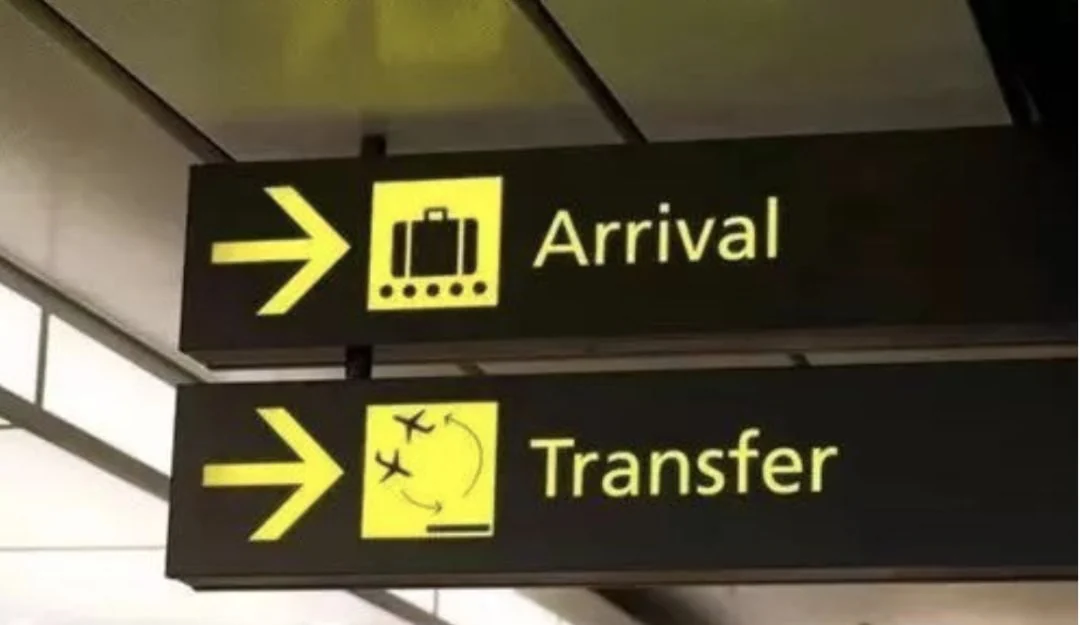
There is no such thing as an international-to-international transit in the United States: whatever your final destination, everyone entering the country clears immigration at the first airport where they land, collects their checked bags, goes through customs, re-checks the bags and clears domestic security again before boarding the next flight. For a first trip to the US — for tourism, work or study — this part of the journey is where things most often go wrong.
Many airports accept international arrivals: Los Angeles, San Francisco, Seattle, New York, Chicago, Atlanta, Washington, Detroit and more. This guide is in two parts — the general process and the seven airports most often used as a first port of entry: Los Angeles (LAX), San Francisco (SFO), Atlanta (ATL), Chicago O'Hare (ORD), New York Newark (EWR), Seattle (SEA) and Detroit (DTW) — and sets out which shuttle or train to take and which corridor to follow at each one.
1. The transfer process after arriving in the US
Wherever you land, a US connection goes through the same five steps: immigration → baggage claim → customs → re-check your bags → change terminals and clear security again.
1. Immigration
Follow the crowd, or the Immigration and Arrival signs, to the immigration hall. Travellers with a visa or ESTA queue in the visitor lanes and answer a few simple questions about their trip; anyone referred to secondary inspection is seen at a separate desk. Photography is forbidden in the immigration waiting area, as is the use of phones and other electronic devices — put them away before you join the queue.
2. Baggage claim
After immigration, collect your checked luggage from the carousel. Note that bags are not transferred automatically, even when your onward flight is a domestic one — you have to take them off the belt yourself and carry them out through customs.
3. Customs
Hand over the declaration form you filled in on the plane (the blue form; spare copies are available in the arrivals hall) and clear customs. If you have anything to declare, complete the form honestly and use the red channel; if not, walk through the green channel. Once you are past this door, you are formally in the United States.
4. Re-checking your bags
Do not walk straight out of the airport after customs — first find the connecting flights or transit counter and hand your bags back in. The international arrivals halls normally have transit counters for the main airlines: at Chicago O'Hare's Terminal 5, for instance, United and American each have their own. If your airline has no transit desk in the terminal you landed in, you have to take the bags to the terminal your next flight leaves from and check them there.
5. Changing terminals and clearing security again
Then follow your boarding pass to the right terminal and concourse. US airports are large, and terminals are usually linked by an internal train or shuttle bus; you must clear security once more before entering the domestic departure area, exactly as you did at the start of your journey. The internal transfer options at the seven airports are below, with the details for each airport in the next section.
| Airport | How you move between terminals | One-line warning |
|---|---|---|
| LAX Los Angeles | Free inter-terminal shuttle bus, some walkways | Nine separate terminals; walking between them is slow |
| SFO San Francisco | AirTrain (red and blue lines) | International arrivals are in the International Terminal |
| ATL Atlanta | The underground Plane Train | Do not confuse it with MARTA, the city metro |
| ORD Chicago | The ATS airport train | International arrivals are at Terminal 5; take the ATS |
| EWR Newark | AirTrain (three stops: A, B, C) | International arrivals are mainly at Terminal B |
| SEA Seattle | Mostly on foot, inside the main terminal | The letter in your gate number is the concourse |
| DTW Detroit | In-terminal tram, inter-terminal shuttle | Delta is in McNamara; other airlines in the North Terminal |
6. How much connection time to allow
The original material is explicit about the big airports: more time is always better.
| Airport | Allow | Why |
|---|---|---|
| ORD Chicago | 2 hours or more | International arrivals are at Terminal 5; you take the ATS and clear security again |
| DTW Detroit | 2 hours or more | 90 minutes is very tight, and the terminal shuttle adds a leg |
| LAX Los Angeles | At least 40 minutes if you walk between terminals | Nine separate terminals and a one-way shuttle loop |
| Other airports | 1.5–2 hours | Queues at immigration, baggage claim, customs and security |
In peak season, around public holidays and on evening arrivals, add another 30–60 minutes for comfort.
2. The seven airports
1. LAX Los Angeles International Airport
Los Angeles has nine terminals (Terminals 1–8 plus the Tom Bradley International Terminal, TBIT, also called Terminal B) and each one is a separate building, linked only by roads, shuttle buses and a few walkways. TBIT is currently the main international arrivals point, and most flights by the major Chinese carriers land there.
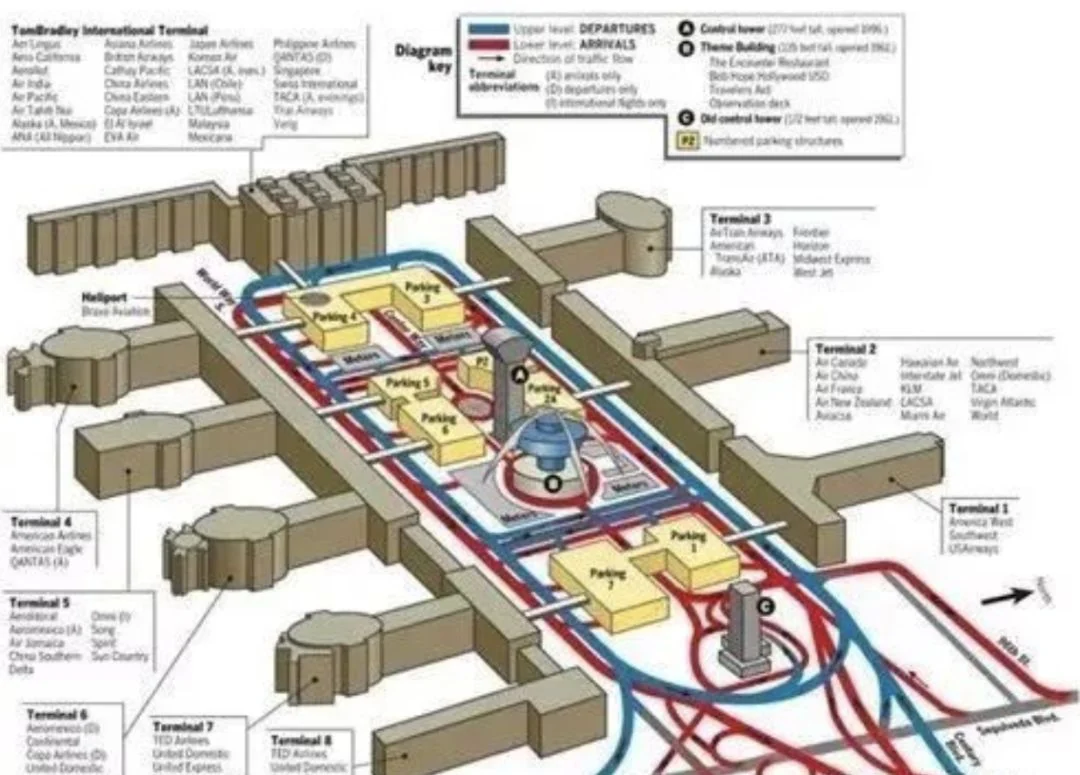
Two things matter when changing terminals at LAX:
- Only take the inter-terminal shuttle bus (called Shuttle Bus A in the original material). Several other buses run to car parks, the rental car centre and the metro station — board the wrong one and you leave the airport.
- The shuttle runs a one-way loop, so a full circuit can take a long time; and from TBIT you have to walk to either end of the terminal to see the stop at all, because the signs in between are poor. There are walkways between some neighbouring terminals, but walking from TBIT to the United area takes at least 40 minutes — do not attempt it if your connection is tight.
On baggage: every terminal has its own immigration hall, and the process is the same as at other airports — immigration, baggage claim, customs. After customs, note that not every airline has a transit counter in the terminal you arrived in; you may have to wheel your bags to the terminal your next flight departs from.
2. SFO San Francisco International Airport
San Francisco International is a major hub for United and a focus city for Alaska Airlines, so United passengers in particular often connect here. The airport has four terminals: Terminals 1, 2 and 3 handle domestic flights, and all international flights arrive at the International Terminal, which is divided into two boarding areas, A and G.
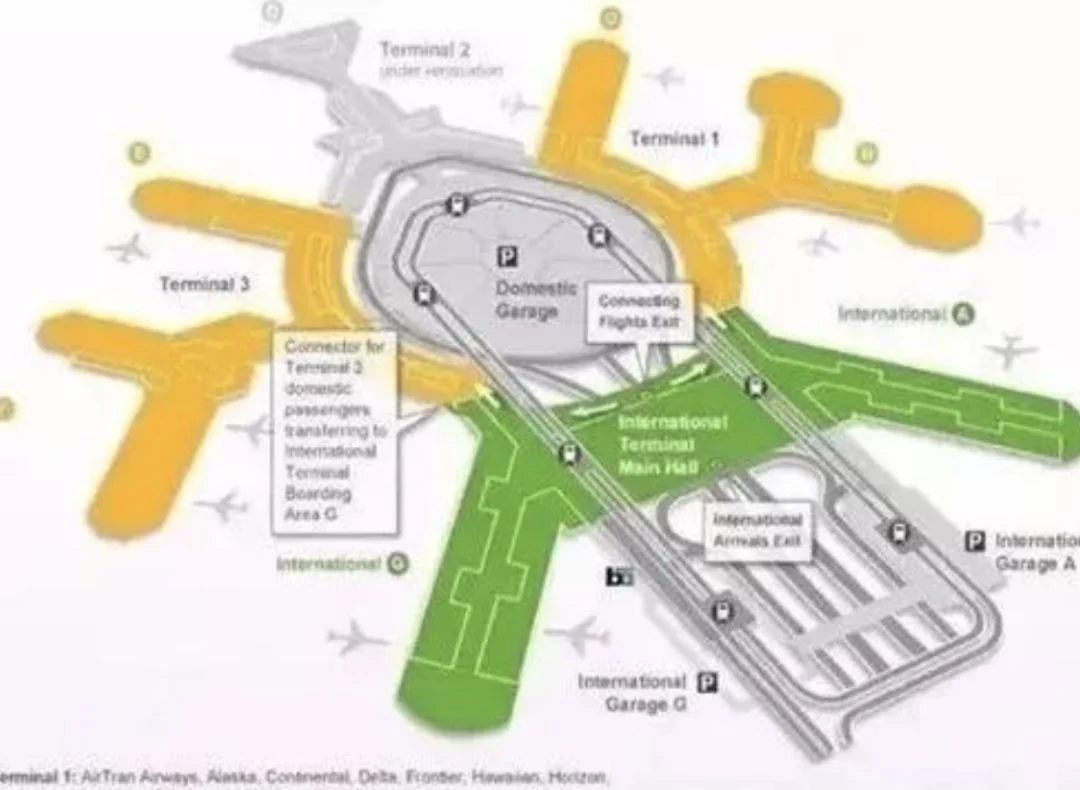
After immigration and baggage claim, walk on: passengers with goods to declare fill in a form, everyone else walks straight through customs. If you are connecting, read the signs carefully — the Arrival Lobby and the Connecting Flights Exit are at opposite ends of the hall, so the wrong turn costs you a long walk around.
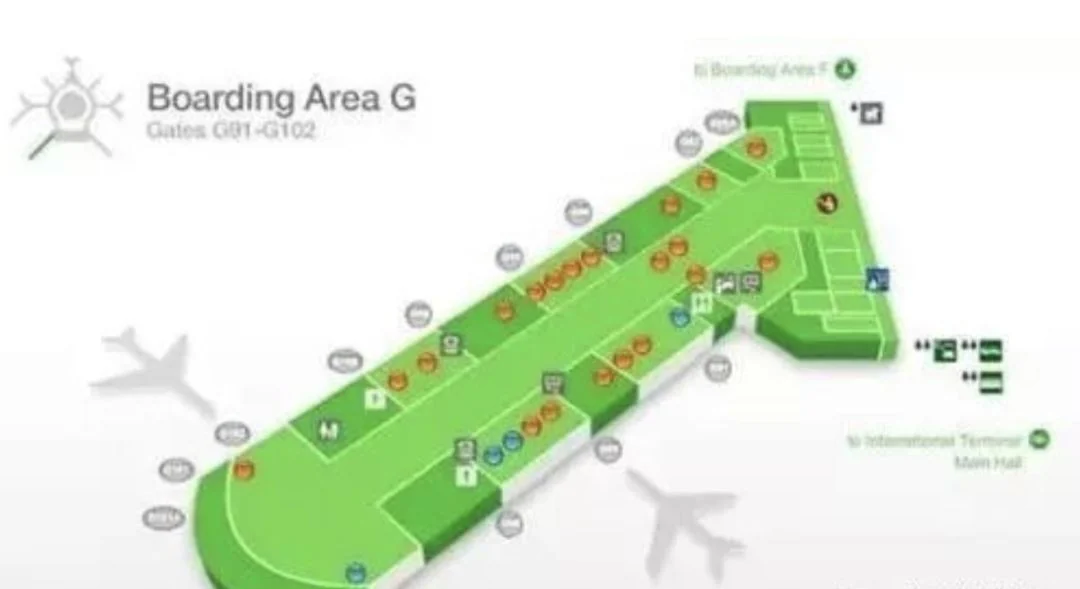
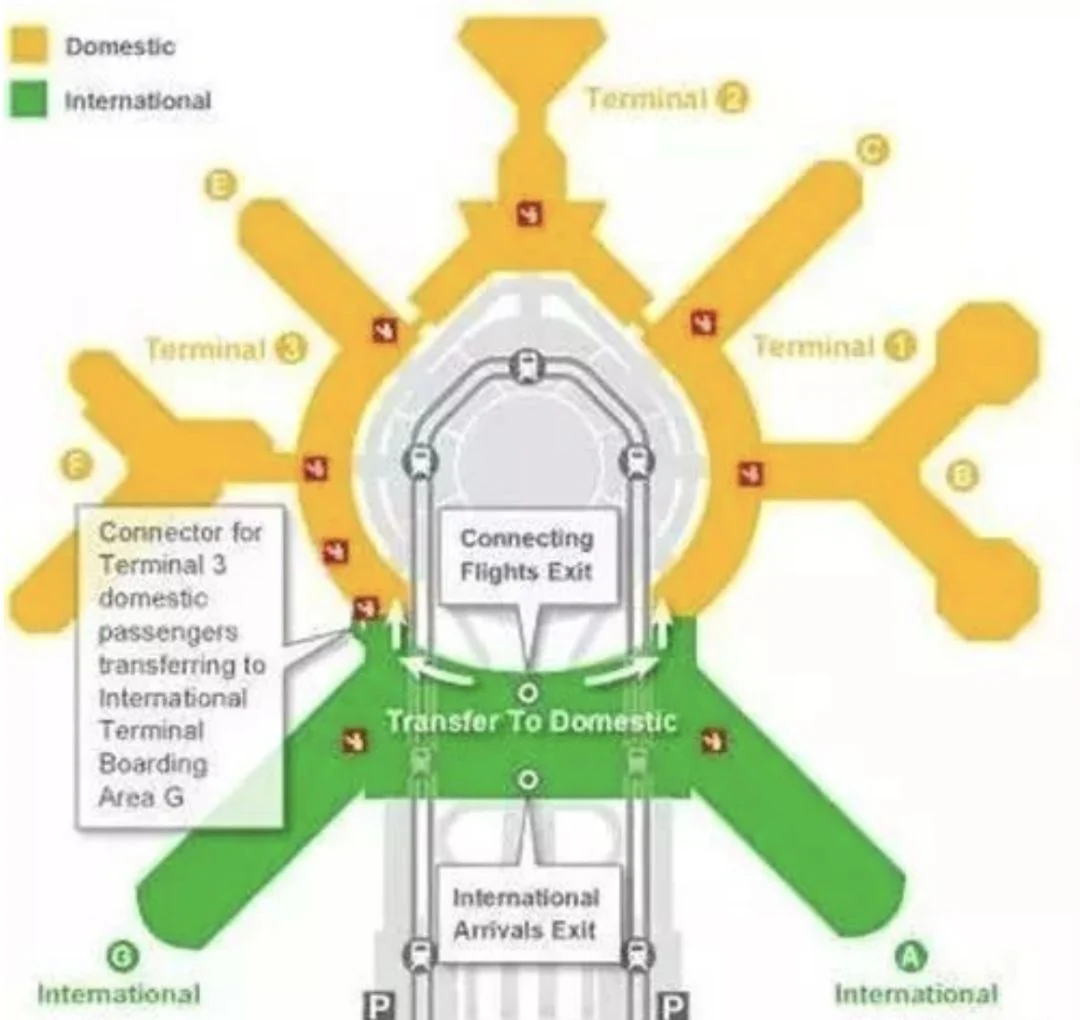
Follow the signs and you will reach your airline's connecting baggage desk; once the bags are in, the airport's AirTrain carries passengers between terminals.
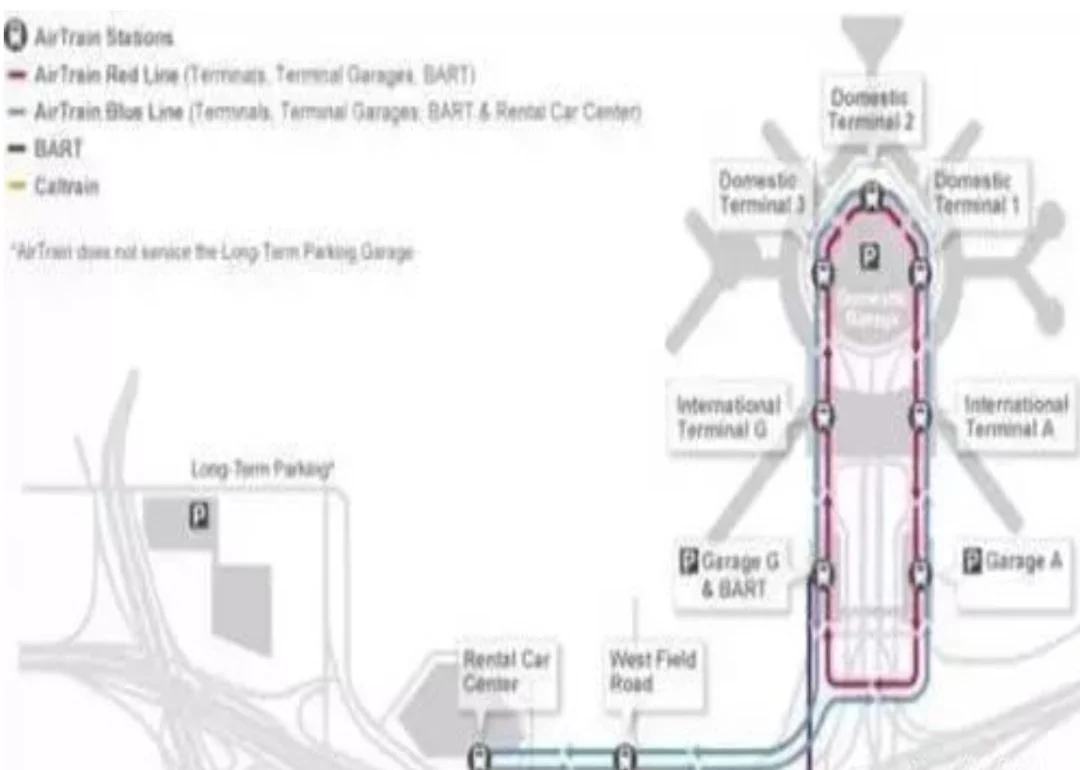
The AirTrain has two lines: the red line stops at the terminals, the terminal garages and the BART station, and the blue line adds the rental car centre. You still need to clear security before entering the next terminal, just as you would departing domestically. The original material also notes that luggage carts at SFO are free.
3. ATL Hartsfield–Jackson Atlanta International Airport
Atlanta is Delta's largest hub, and Delta flights from Shanghai very often connect here. The airport has one domestic terminal (with North and South sides) and an international terminal (Concourse F); what passengers actually deal with is the seven concourses: T, A, B, C, D, E and F, each flight using a fairly fixed terminal and gate.
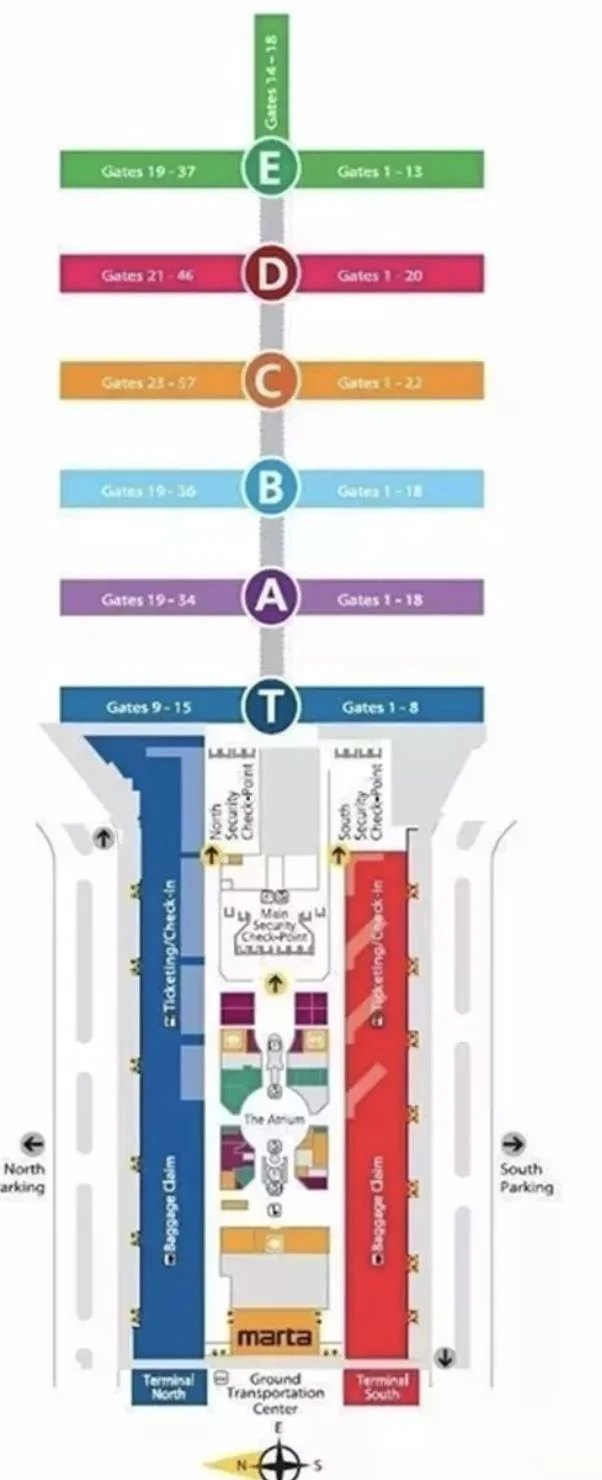
The concourses are linked by the underground Plane Train, which runs very frequently — T to the far end at F takes about a dozen minutes. The original material calls this airport train a "subway", which is easy to confuse with MARTA, the city metro: MARTA's station is on the domestic terminal side and is how you get into downtown Atlanta. You do not need it to connect. After immigration, follow the Plane Train signs and you are heading for your next flight.
The original material's reminders:
- Atlanta's luggage carts are chargeable, payable by credit card.
- Airport Wi-Fi is chargeable, so do not count on being online as soon as you land.
- In daylight saving time Atlanta is 12 hours behind China; in winter time it is 13. Set your watch to local time once you are on board, so you can judge when you land and whether your connection is comfortable.
- Shanghai to Atlanta is about 14 hours in the air.
4. ORD Chicago O'Hare International Airport
Chicago O'Hare is one of the busiest airports in North America and a gateway for travellers heading on to cities across the US. It has 186 gates across four terminals (1, 2, 3 and 5) and nine concourses (B, C, E, F, G, H, K, L and M), and all international flights dock at Terminal 5.
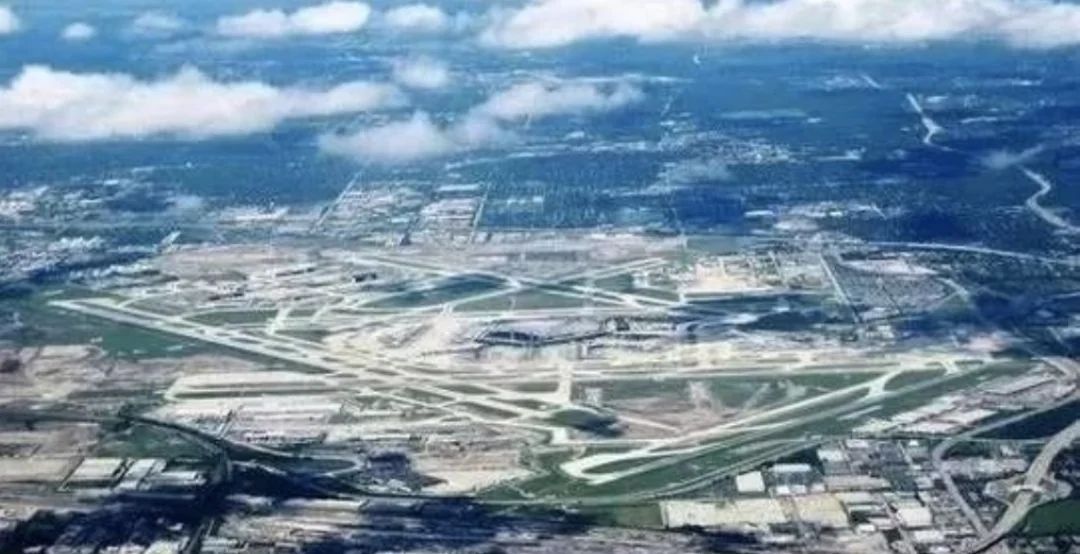
After landing, take your declaration form and follow the crowd to customs — "follow the crowd" works well here. Photography and the use of phones and other electronic devices are strictly forbidden in the immigration waiting area, so put them away while you queue. Once you are through customs and have your bags, do not walk straight out of the airport: take the lifts on either side up to the airport train.
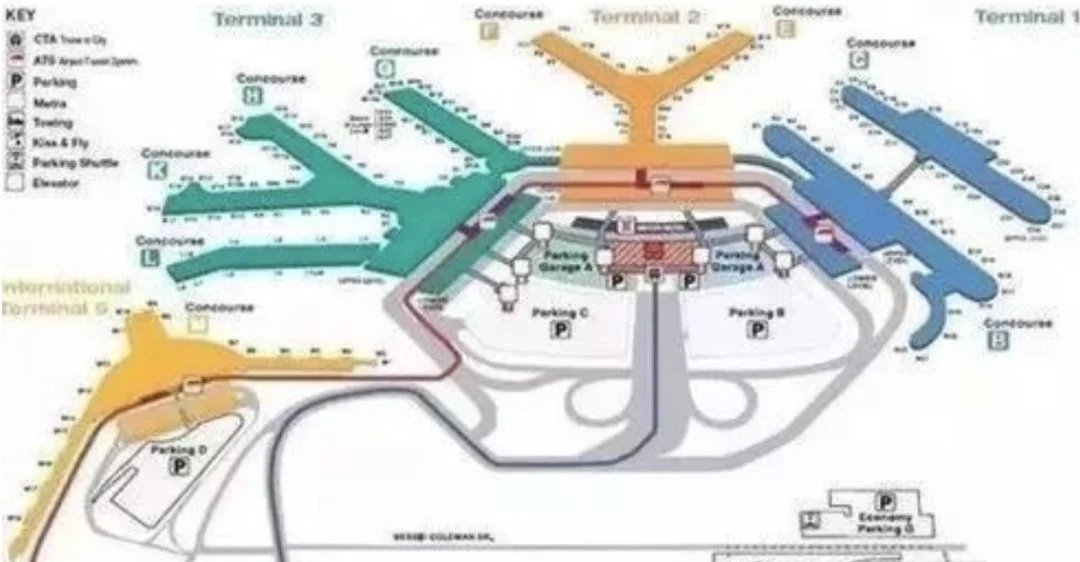
The internal train is the ATS (Airport Transit System), and its stops run in this order: the three domestic terminals → the international terminal → car parks → the CTA metro station → the bus station. Check which terminal your next flight leaves from before you board, and if you get lost, ask any member of ground staff where the transfer shuttle is. Broadly speaking, Terminal 1 is dominated by United, Terminal 3 by American, and Terminal 2 is shared by several domestic carriers.
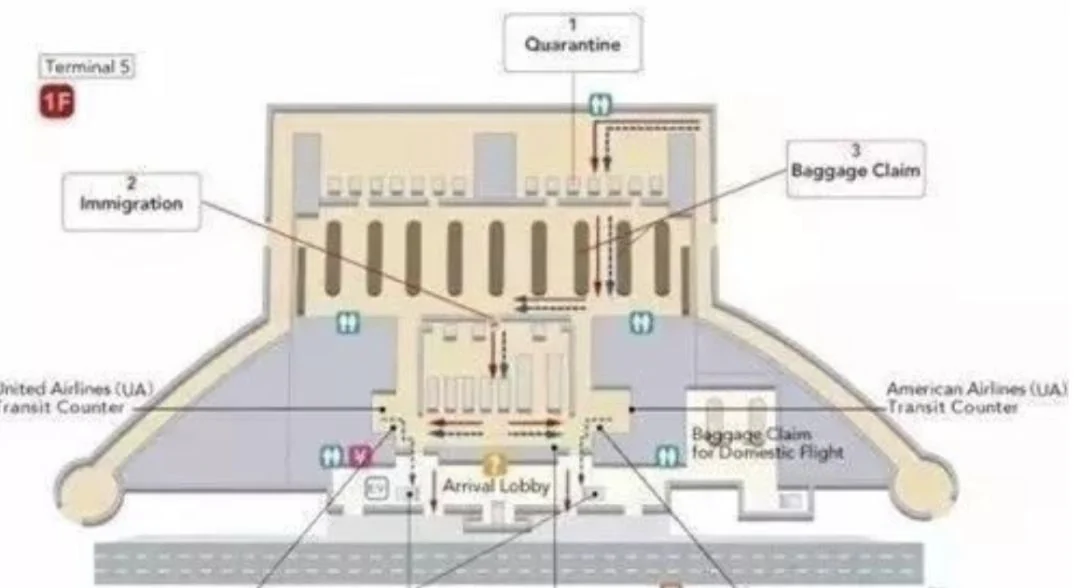
When the ATS drops you at the right domestic terminal, you must clear US domestic security again; past security, find the gate for your next flight and wait there. The original material adds that Chicago's airport Wi-Fi is chargeable and not cheap, so be prepared to be offline, and that you should allow at least two hours to connect.
5. EWR New York Newark Liberty International Airport
Newark is about 16 miles from Manhattan and one of the three airports serving the New York metropolitan area — the others being John F. Kennedy (JFK) and LaGuardia (LGA), with LGA the closest to Manhattan and the usual pick for a sightseeing trip to the city. Newark is among the busiest airports in the country and a hub for United (the "Continental Airlines" of the original material merged into United in 2012), which uses Terminal C and part of Terminal A.
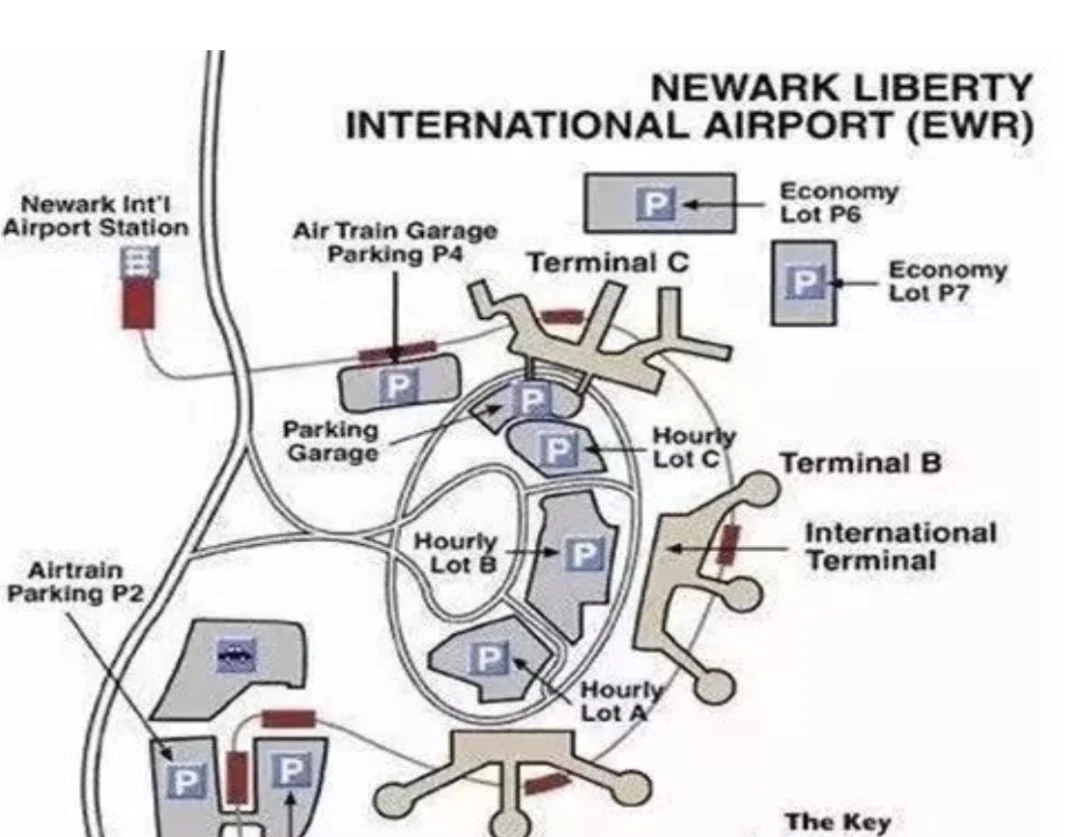
Newark has three terminals — A, B and C — and Terminal B is the main international terminal, although flights from China may also arrive at Terminal C. After landing, follow the crowd or the Immigration signs to clear formalities; Terminal C's immigration point is shown below.
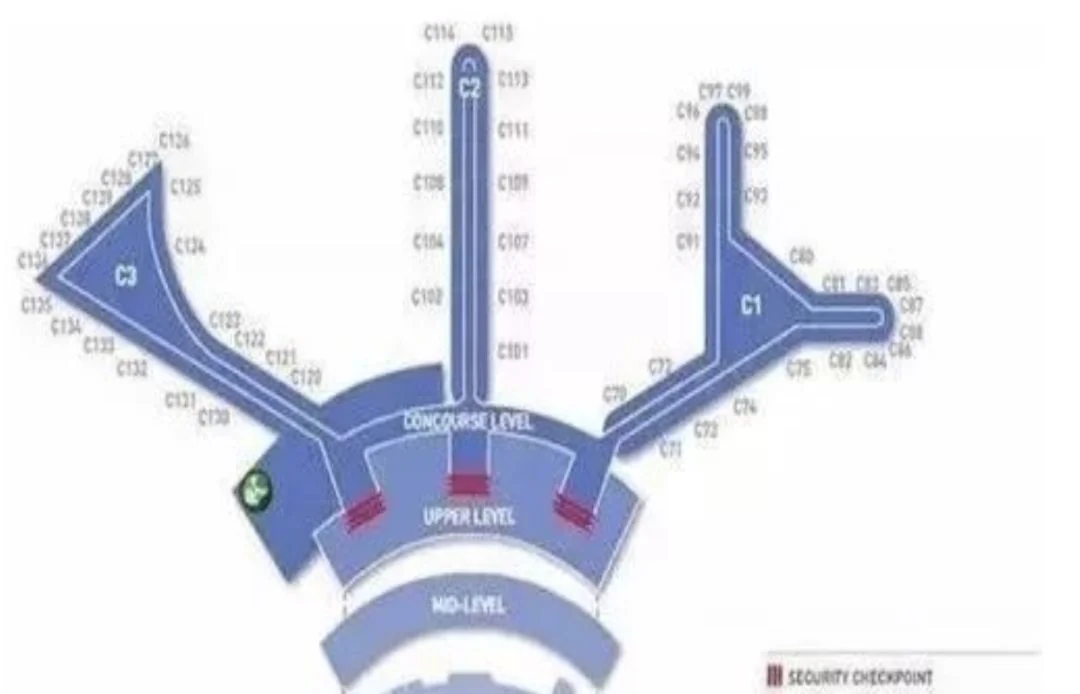
Then collect your bags — note that luggage carts at EWR cost $5, so have notes or coins ready. Take the bags through customs; if you have nothing to declare, walk out and find the transit counter, and hand the bags back in.
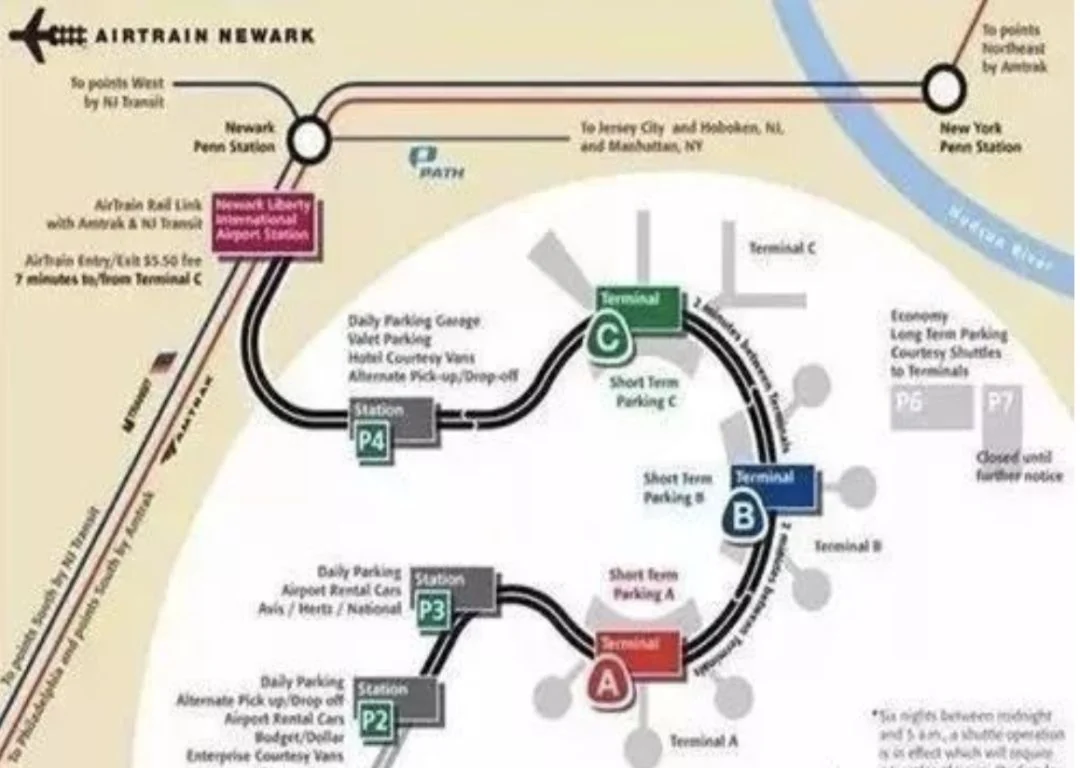
With the bags re-checked, head for the terminal your next flight leaves from. The airport AirTrain runs between Terminals A, B and C — roughly every 15 minutes off-peak and every 3 minutes at peak times — and also links the P2, P3 and P4 garages and the NJ Transit and Amtrak rail station, from which you can reach New York Penn Station directly.
6. SEA Seattle–Tacoma International Airport
Connecting at Seattle is relatively simple: follow your fellow passengers off the aircraft to the immigration hall, clear immigration, collect your bags (baggage claim), go through customs, re-check the bags and clear security once more. If you can read English, or simply follow the crowd, it is hard to go wrong.
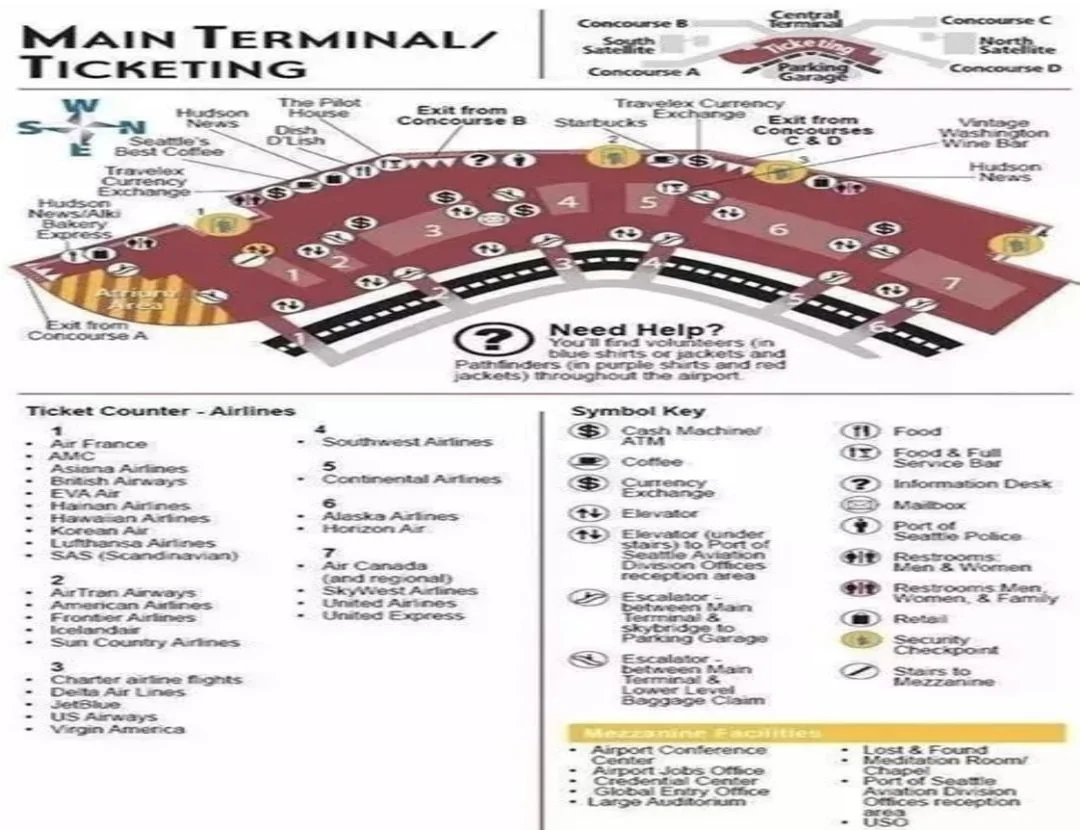
Check-in desks are all in the main terminal, while aircraft dock at different concourses. Seattle has four concourses — A, B, C and D — colour-coded light green, orange, dark green and ochre. You can tell where your next flight leaves from as soon as you get your boarding pass in China, because Seattle gate numbers are one letter plus two digits, and the letter is the concourse: C means concourse C, D means concourse D.
7. DTW Detroit Metropolitan Wayne County Airport
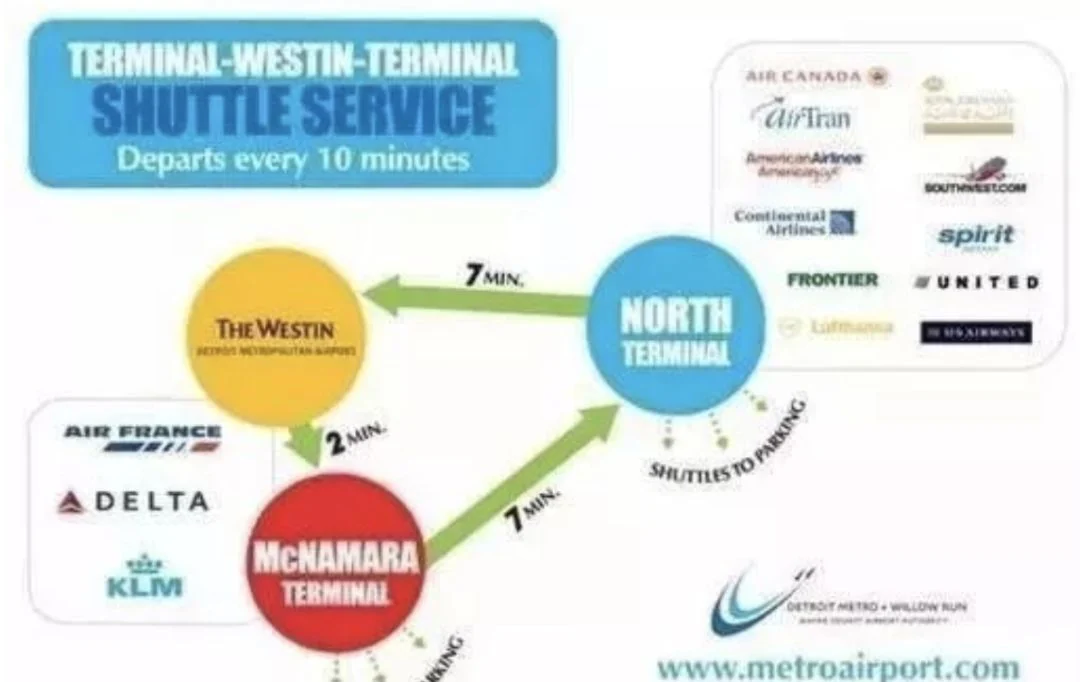
Detroit is a hub for Delta and one of the most modern airports in the country. It has two terminals: the McNamara Terminal and the North Terminal. Delta and its SkyTeam partners use McNamara, while other airlines use the North Terminal.
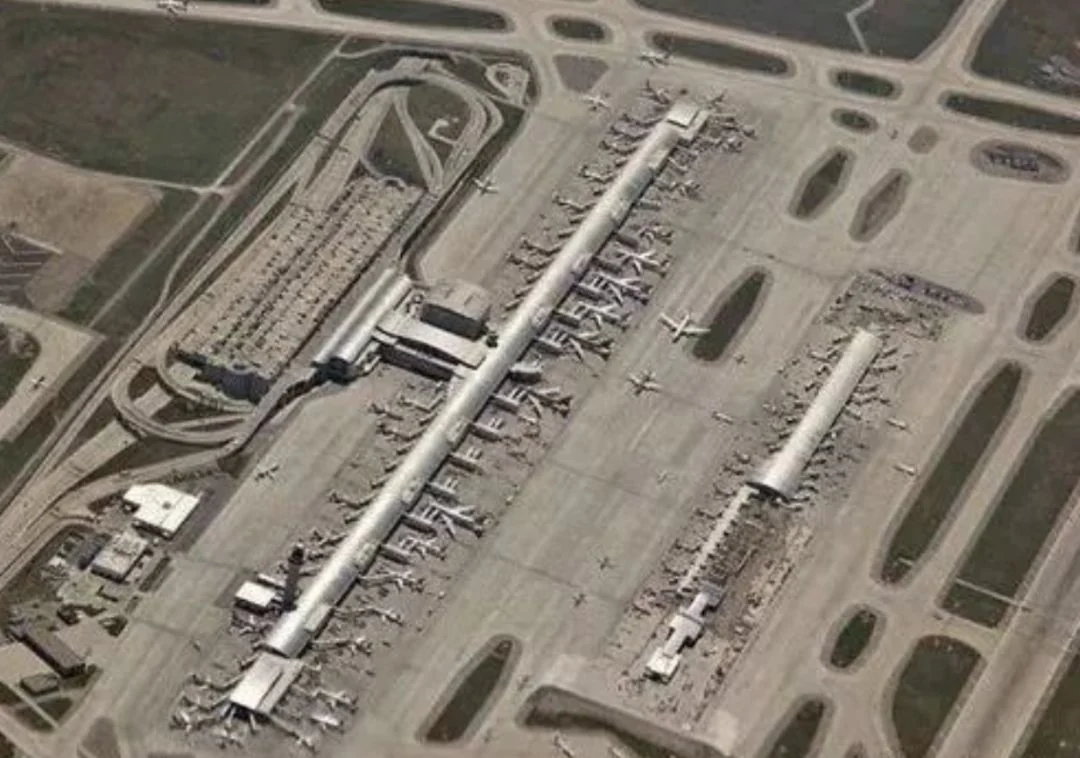
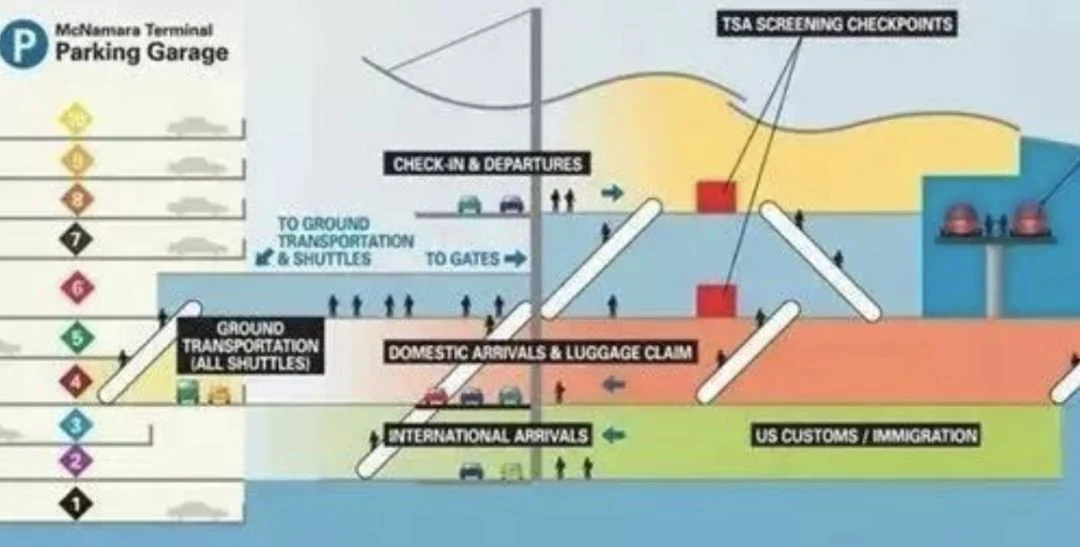
International arrivals at McNamara come in on the green level (the lower level): clear customs, collect your bags on the same level, and re-check them there if you need to. Then go upstairs to the blue Level 2 — most Delta flights leave from Concourse A, and to reach Concourse B or C you can walk through the famous Light Tunnel or take the in-terminal Express Tram.
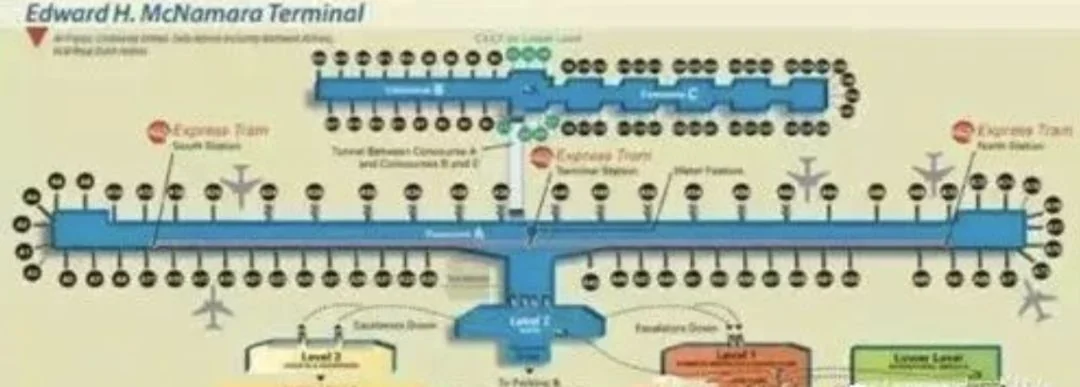
For the North Terminal, take the inter-terminal shuttle — the Terminal–Westin–Terminal service, every 10 minutes, about 7 minutes from McNamara to the North Terminal with a stop at the Westin hotel on the way. The North Terminal itself is simple, but you clear security again before entering it.
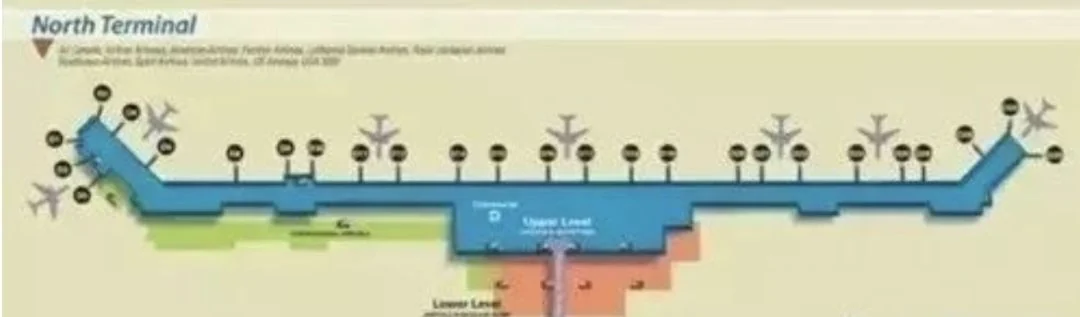
Modern as it is, Detroit still needs a generous connection: allow two hours or more — 90 minutes is very tight — so bear that in mind when you book.
3. Details that are easy to miss
- Luggage carts: the original material notes they are free at SFO, chargeable at ATL (by card) and $5 at EWR — carrying some small notes and a working credit card costs nothing.
- Airport Wi-Fi: it is chargeable at ATL and ORD, so you may not be online the moment you land; keep any essential contact details somewhere you can read offline.
- Time differences: Atlanta is 12 hours behind China in daylight saving time and 13 in winter. Set your watch to local time in the air and the arrival and connection times become much easier to judge.
- Phones and cameras: the use of phones and other electronic devices is forbidden in immigration and customs waiting areas — and do not take photographs.
- You carry your own bags: through ticket or not, once you enter the US you collect your bags, take them through customs and check them in again; they never follow you automatically to the next flight.
The airport diagrams here come from the original material, and airports and airlines change constantly — the Continental Airlines in the source merged into United, US Airways into American and Northwest into Delta. Check with the airport and your airline for the day you travel.
Related links
- On this site: Los Angeles LAX, San Francisco SFO, Atlanta ATL, Chicago O'Hare ORD, Newark EWR, Seattle SEA, United States (US)
- Wikipedia: Los Angeles LAX, San Francisco SFO, Atlanta ATL, Chicago O'Hare ORD, Newark EWR, Seattle SEA, Detroit DTW
- Baidu Baike: Los Angeles LAX, San Francisco SFO, Atlanta ATL, Chicago O'Hare ORD, Newark EWR, Seattle SEA, Detroit DTW
More articlesTravel notes

Direct International Flights from Changsha Huanghua Airport: 15 Routes, Airlines and Schedules
Which international and regional destinations you can fly to non-stop from Changsha Huanghua International Airport (CSX): Yangon, Bangkok (BKK and DMK), Phuket, London, Seoul, Hong Kong, Kuala Lumpur, Singapore, Phnom Penh, Jakarta, Hanoi, Ho Chi Minh City, Vientiane and Nairobi — 15 routes with the airline, flight number, departure and arrival times, flight time and frequency for each, plus how to check the current schedule before you book.6 min read
Paris Charles de Gaulle Airport: Left Luggage, Transport, Tax Refunds and Rest Areas
Everything worth knowing about Paris Charles de Gaulle (CDG) before you land: the layout of Terminals 1, 2 and 3 and the floors of T1, which airlines use which terminal, the free CDGVAL shuttle, left luggage and baggage services, banks and currency exchange, the tax-refund (détaxe) rules and where to claim, free rest areas and lounges, Wi-Fi and charging, SIM cards, and accessibility and family facilities.6 min read