Paris Charles de Gaulle Airport: Left Luggage, Transport, Tax Refunds and Rest Areas
- Paris CDG
- CDG
- left luggage
- tax refund
- airport rest areas
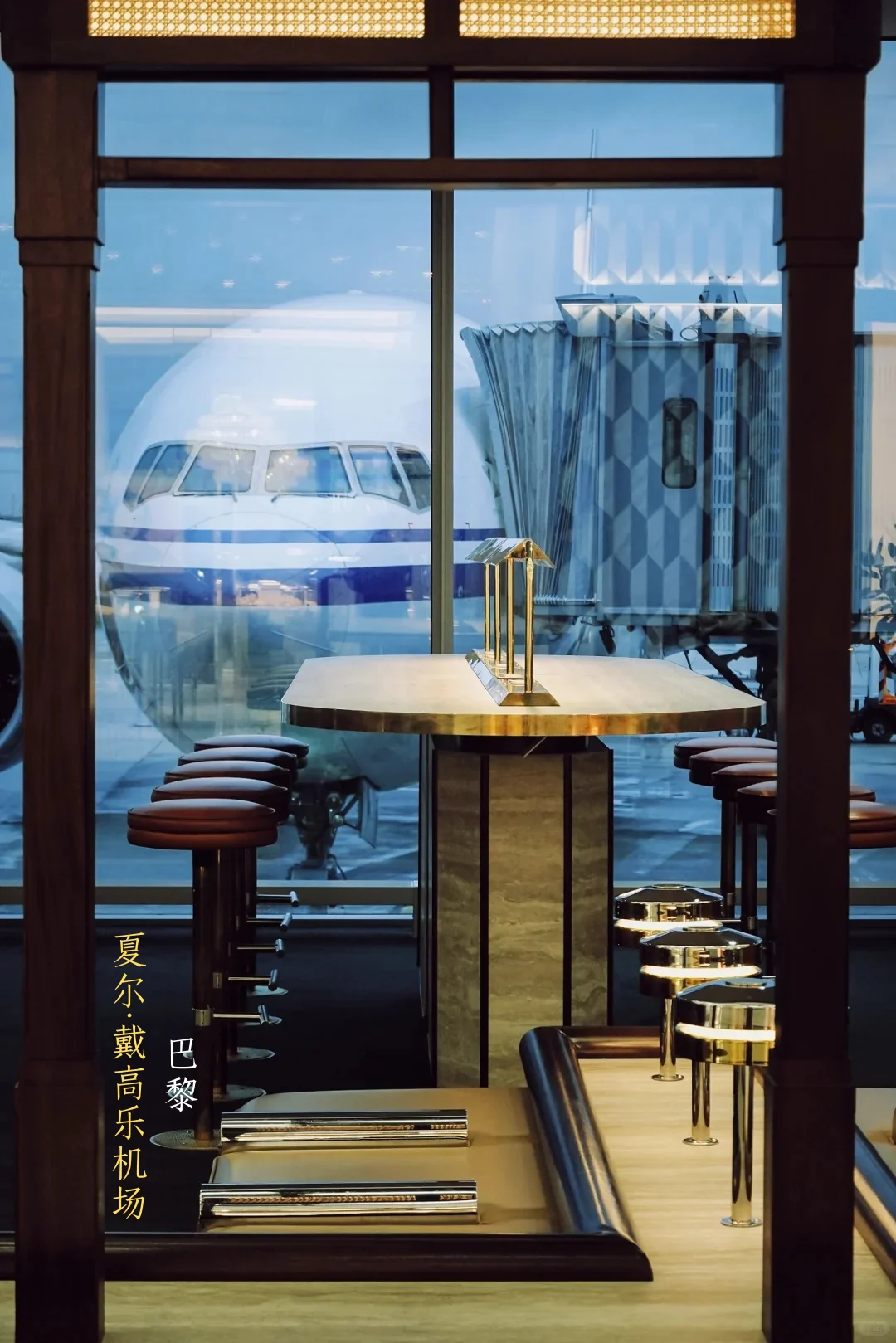
As France's largest international airport and one of Europe's key aviation hubs, Paris Charles de Gaulle (CDG) is where most visitors first meet the city. It lies at Roissy, about 25 km north-east of Paris, covers roughly 30 square kilometres and has 210 gates — the most of any airport in the world.
This guide goes through the terminal layout, transport inside the airport, left luggage, banks and currency exchange, tax refunds, rest areas and lounges, Wi-Fi and charging, SIM cards, and accessibility and family facilities — the services worth knowing about before you land.
1. Terminals and their floors
Three terminals, and seven sub-terminals inside T2
CDG has three terminals: 1, 2 and 3. T2 is the main one, split into seven blocks — T2A, T2B, T2C, T2D, T2E, T2F and T2G — arranged symmetrically along the south side of the airport, and it also includes pier K and the two satellites L and M; it is used mainly by Air France and its SkyTeam partners. T3 is in the north, small and simple, and handles only some low-cost carriers.
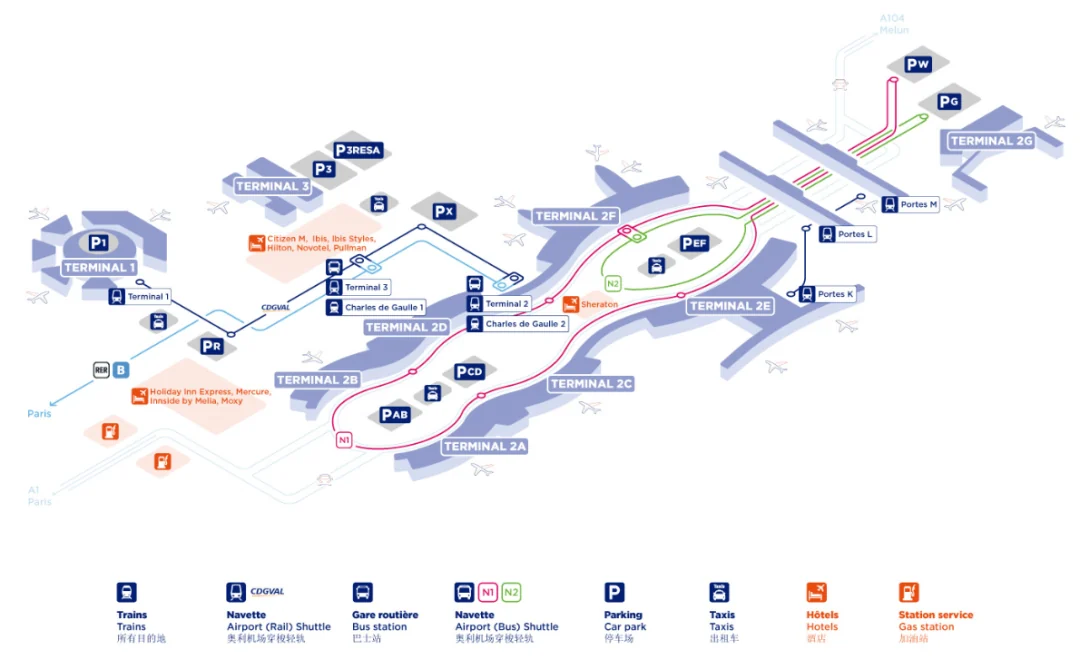
T1 stands to the north-west: a circular, flying-saucer-shaped building, the other main terminal, used chiefly by members of the Star Alliance and oneworld alliances.
What each floor of T1 does
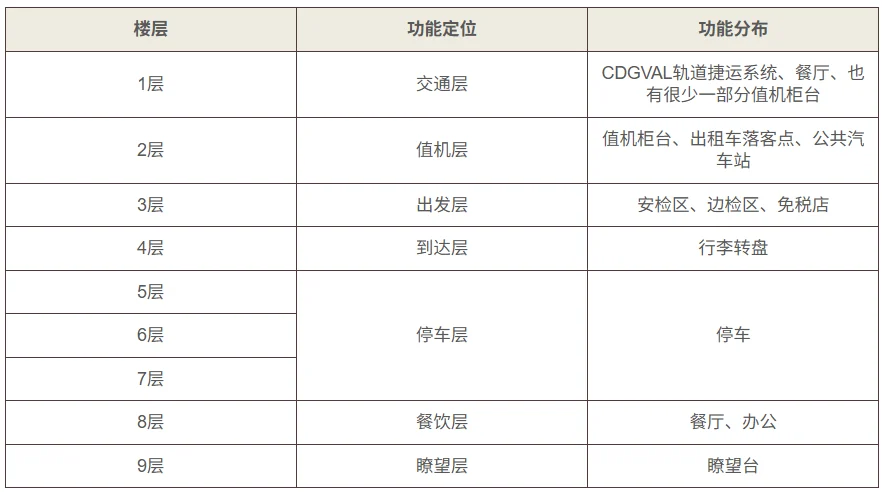
T1 spreads check-in, departures, arrivals and dining across nine levels, so picking the right floor saves a lot of walking:
| Level | Purpose | What is there |
|---|---|---|
| 1 | Transport level | CDGVAL train, restaurants, a few check-in desks |
| 2 | Check-in level | Check-in desks, taxi drop-off, bus station |
| 3 | Departures | Security, border control, duty-free shops |
| 4 | Arrivals | Baggage carousels |
| 5–7 | Parking | Car parks |
| 8 | Dining | Restaurants, offices |
| 9 | Observation | Viewing deck |
Which airlines use which terminal
The split between T1, T2 and T3 is substantial, and inside T2 you also need the sub-terminal (Air China Eastern is at T2E, for example, and Hainan Airlines at T2A). Always check the terminal code on your boarding pass:
| Terminal | Main airlines (from the original material) |
|---|---|
| T1 | Air China, EVA Air, China Airlines, United, Lufthansa, ANA, Eurowings, Qatar Airways, Turkish Airlines, Singapore Airlines, SWISS, SAS, Norwegian, LOT, Aegean |
| T2 | China Eastern (T2E), China Southern (T2E), Hainan Airlines (T2A), Cathay Pacific (T2A), Air France (T2E, T2F), British Airways (T2A), American Airlines (T2A), Delta (T2E), Air Canada (T2A), Japan Airlines (T2E), Korean Air (T2E), Emirates (T2C), Aeroflot (T2C), Finnair (T2D), Alitalia (T2F), KLM (T2F), Ukraine International (T2D), easyJet (T2D) |
| T3 | Mainly Spanish routes such as Vueling, plus charter and seasonal Mediterranean services |
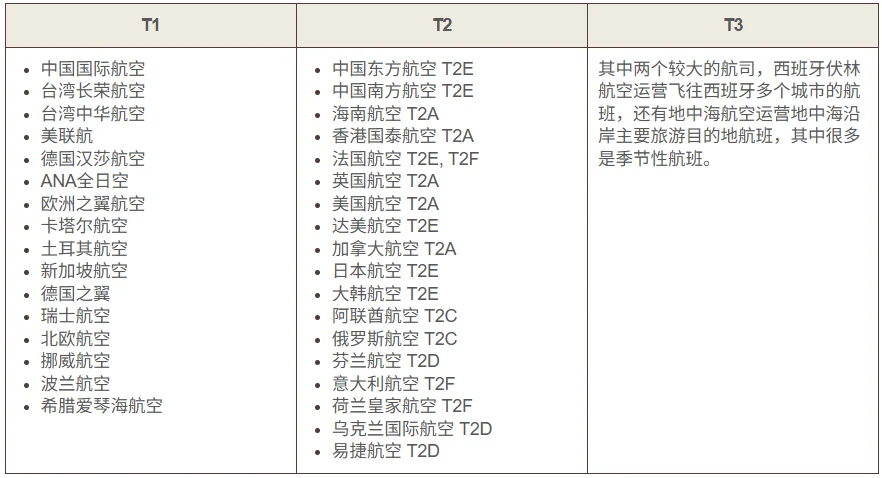
Terminal assignments change (Germanwings and Alitalia in the original list have since ceased or merged), so confirm with your airline and the airport for the day you travel.
2. Getting around inside the airport: CDGVAL and shuttle buses
CDG's terminals are far apart, and crossing the airport sometimes needs a vehicle. There are two: the free CDGVAL shuttle train (also called RoissyVal) and the Navette shuttle buses, both running between T1, T2, T3 and the car parks.
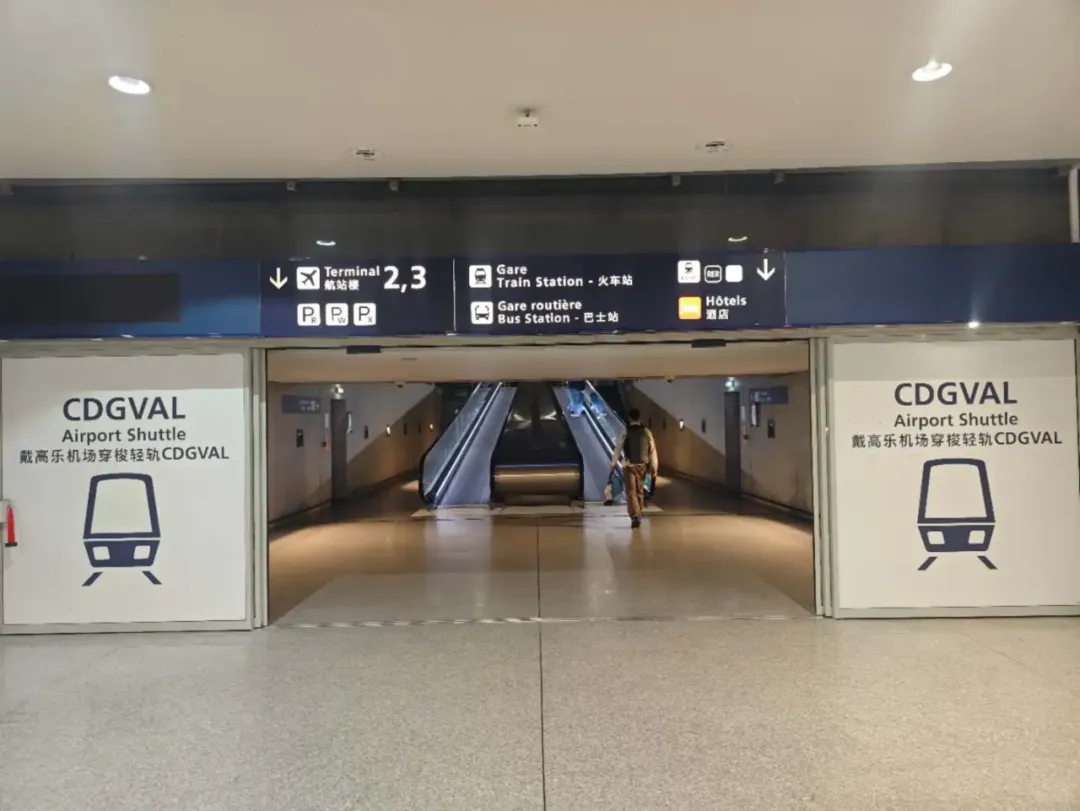
Although the terminals are a fair distance apart the layout is logical, and most signs now carry Chinese, so following them is enough. Allow 20–30 minutes when changing terminals — a CDGVAL hop takes minutes, but waiting and walking do not.
3. Left luggage
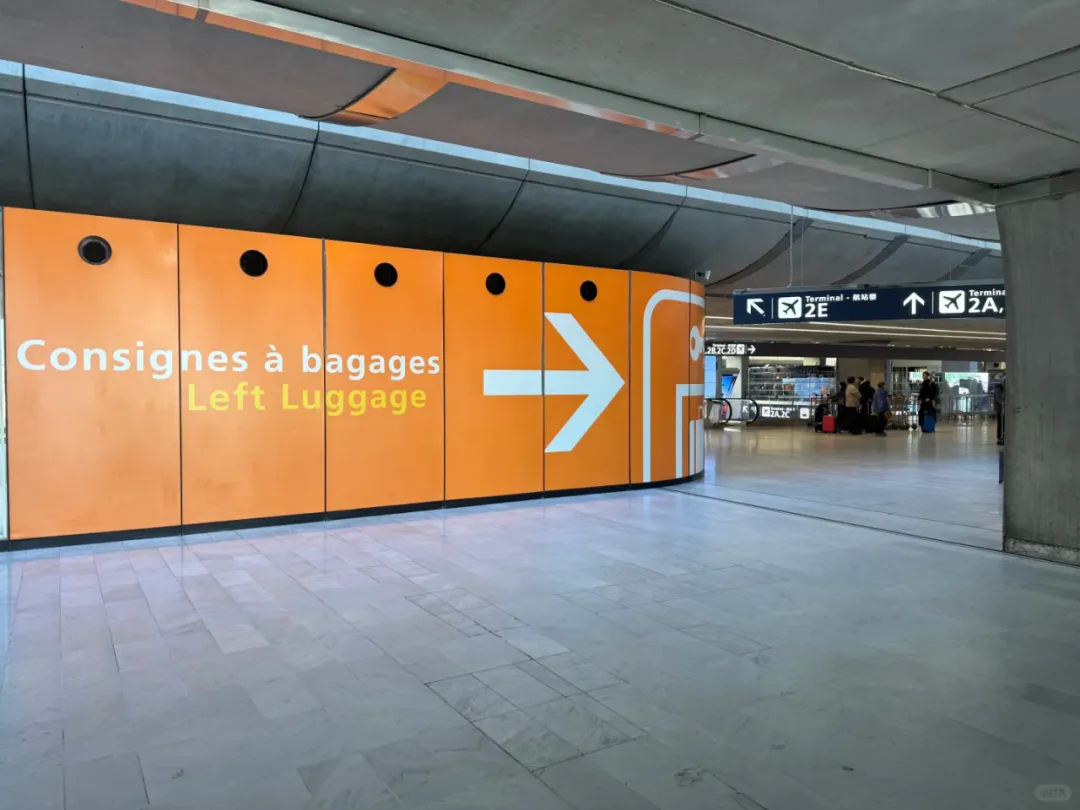
If you want to see Paris first, or have a long connection, leave your bags behind:
- Where: at the TGV station concourse of Terminal 2, near the Sheraton hotel;
- Security: X-ray screening and permanent video surveillance;
- Pricing: flexible, by the hour or by the day;
- Extras: storage for special or valuable items, pet-friendly facilities, plus baggage wrapping and hotel delivery;
- Languages: multilingual staff.
4. Banks and currency exchange
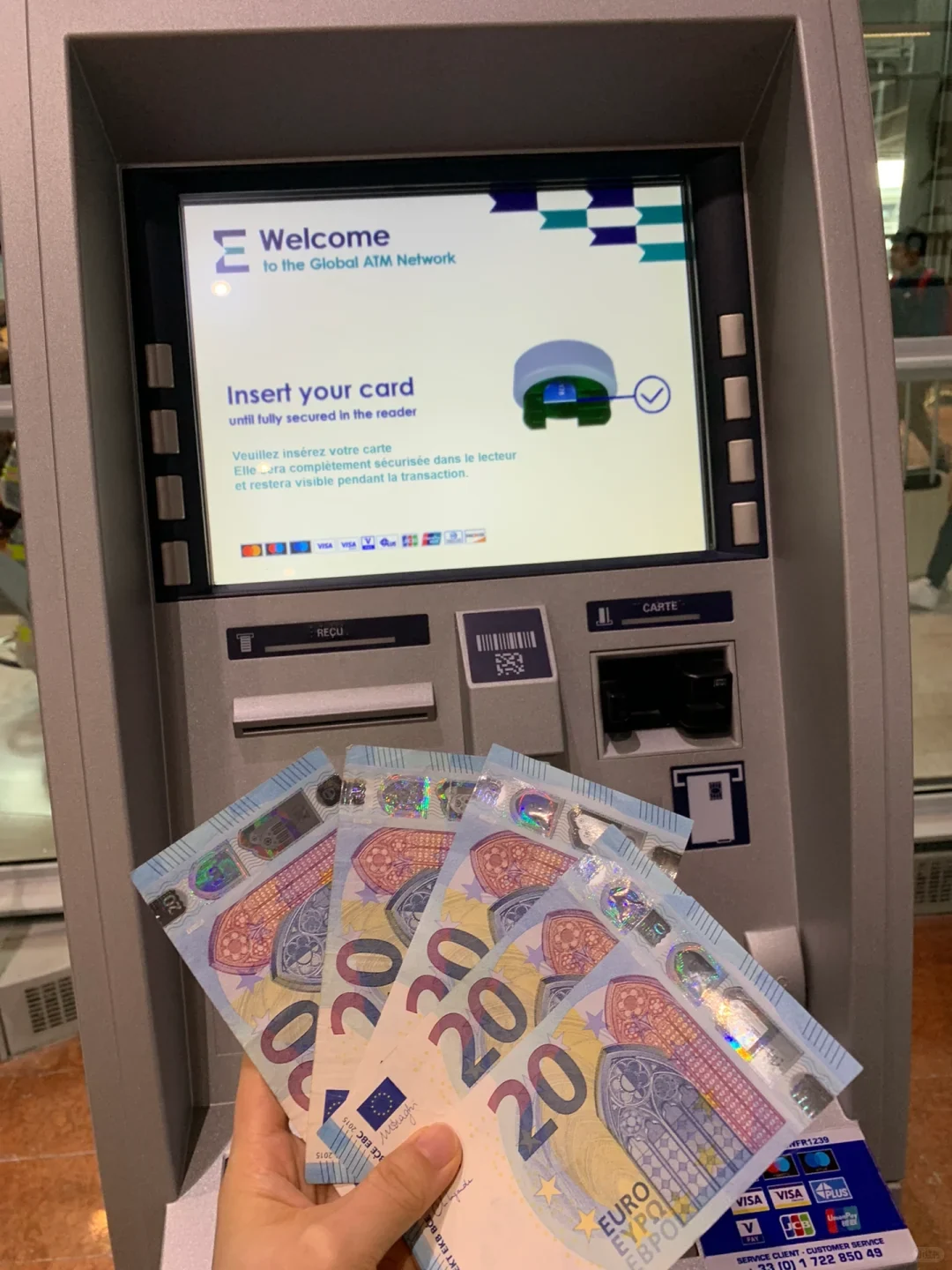
- Every terminal has currency exchange desks (Global Exchange and others) dealing in euros and foreign currency; they sit in both the public and the customs areas, near the check-in halls and the gates.
- ATMs are spread through the terminals for cash withdrawals and everyday transactions — in the arrivals hall and near the gates.
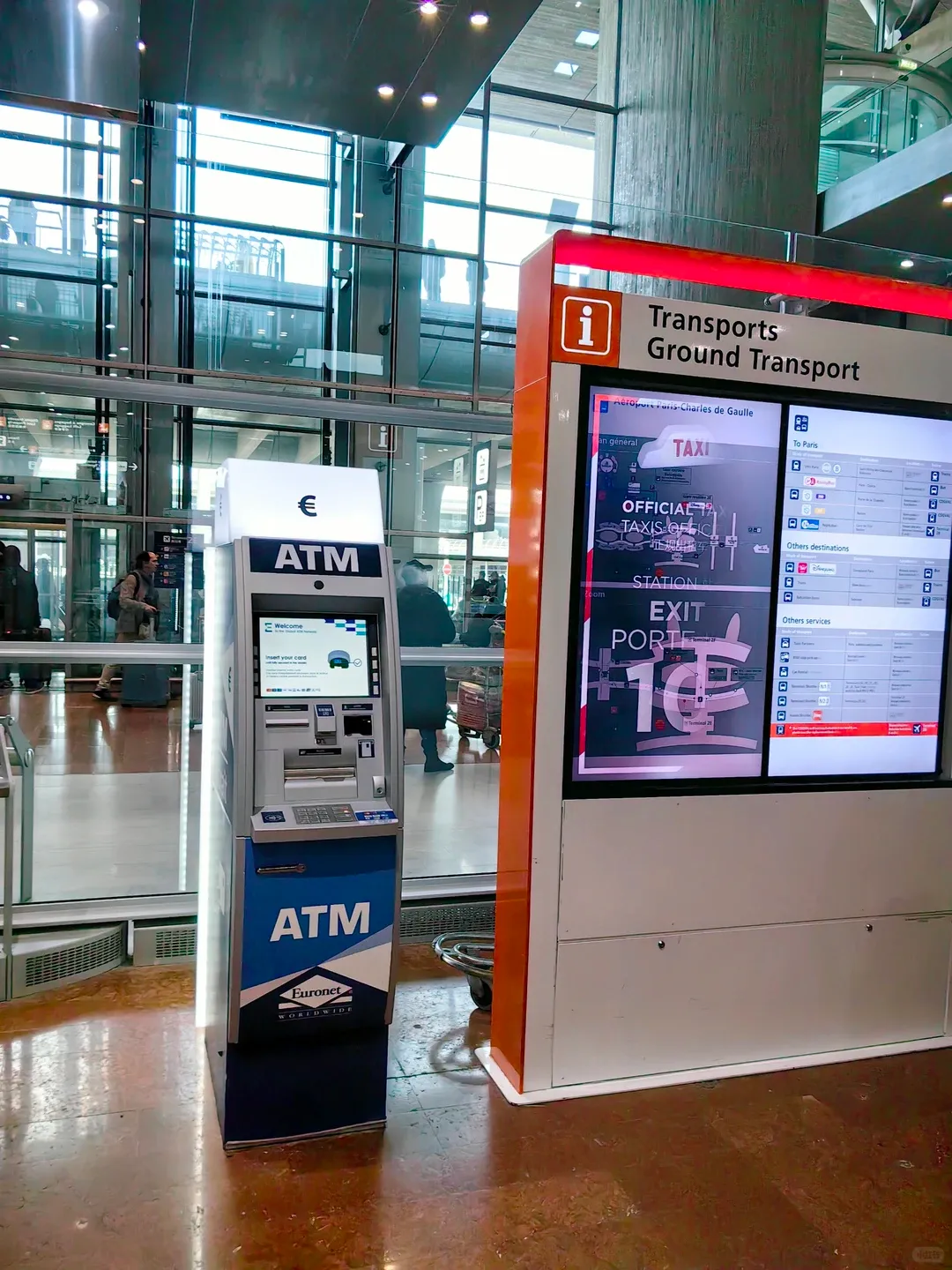
- Note that most banks charge for overseas withdrawals, so check your own bank's fees and limits before you travel. Exchange desks at the airport rarely beat the city on rate, so change only what you need for transport and emergencies.
5. Tax refunds (détaxe)
Non-EU residents (aged 16 or over, staying in France or the EU for less than six months) can reclaim VAT on purchases of €100.01 or more, including VAT, in the same shop on the same day. Bring your passport, all the goods, the tax-free form and the receipt; the goods must be unused and in their original packaging.
The validation points at CDG:
| Terminal | Where to claim |
|---|---|
| T1 | One level below the CDGVAL level |
| T2A / T2B / T2C / T2D | Departure level, near gate 6 |
| T2E | Departure level, near gate 4 |
| T2F / T3 | Arrival level |
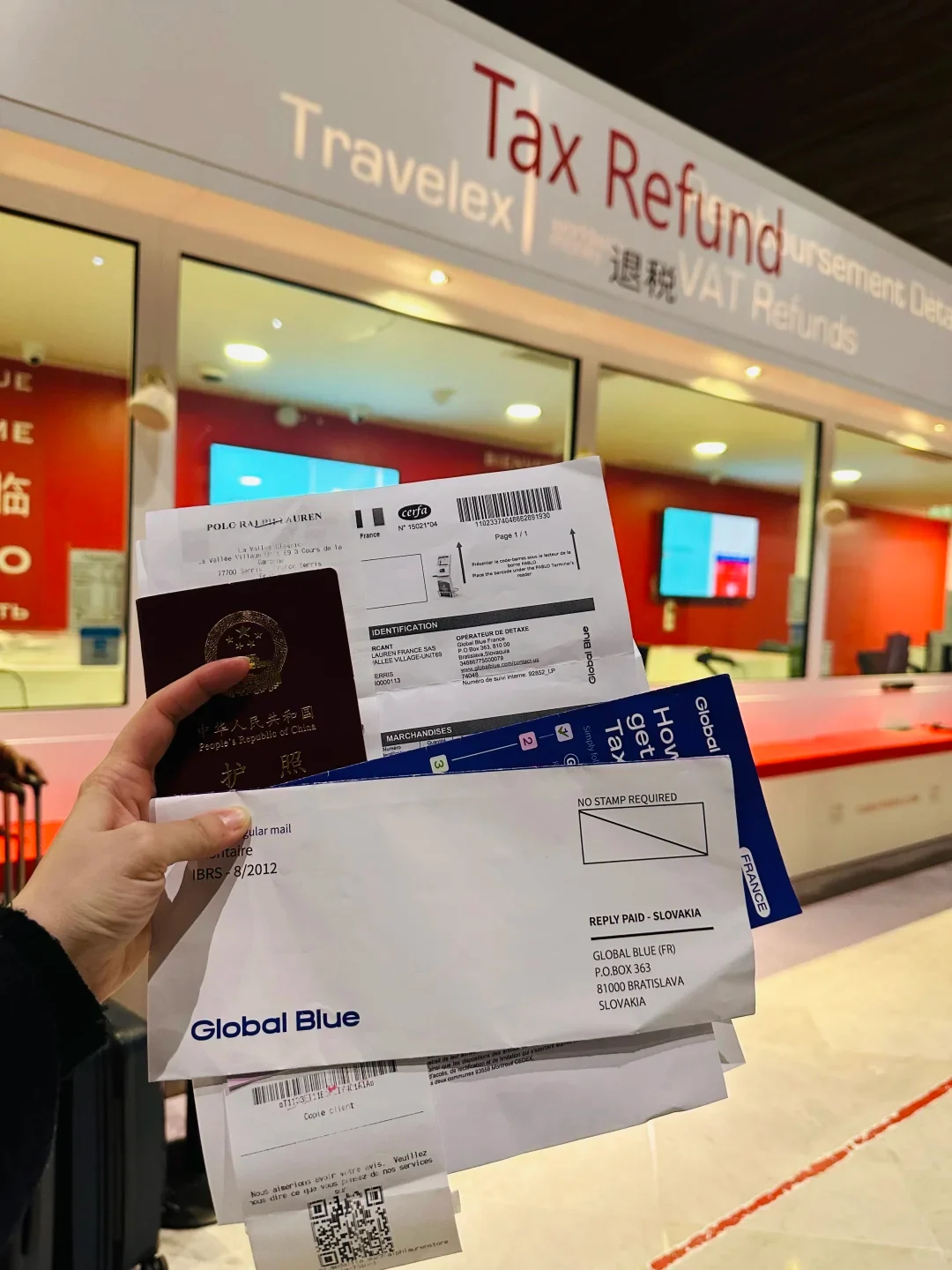
The process, and the parts people get wrong:
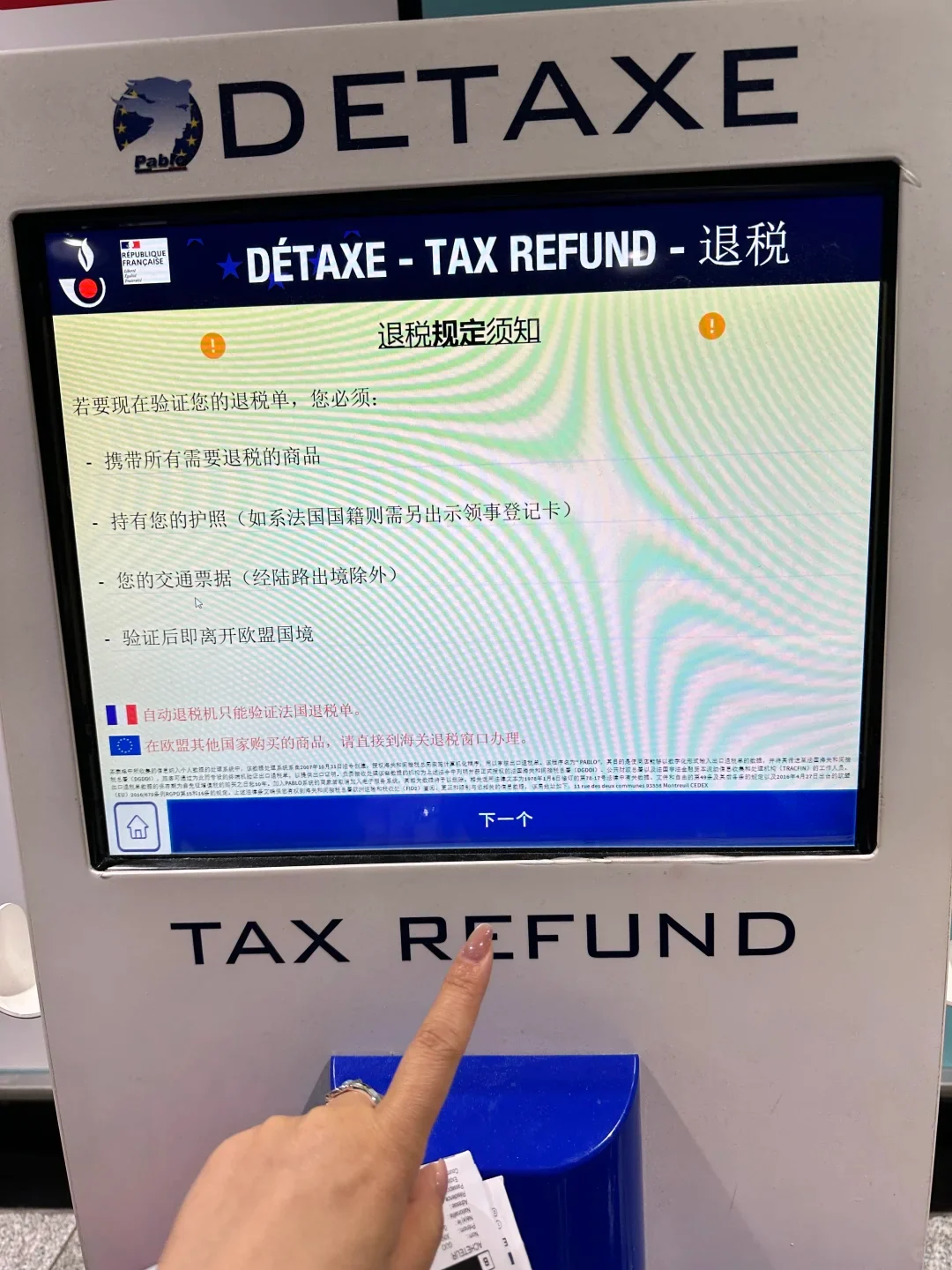
- Ask for the tax-free form in the shop (bring your passport), then scan its barcode at a PABLO self-service terminal — a green "OK Bordereau validé" screen is the customs stamp;
- Do this before you check in or check your bags, because customs may want to see the unused goods;
- French forms can only be validated at the machines; goods bought in other EU countries must be stamped at a customs counter;
- Validation is valid for three months plus the current month from the purchase date, and refunds normally arrive 6–8 weeks after validation.
6. Rest areas and lounges
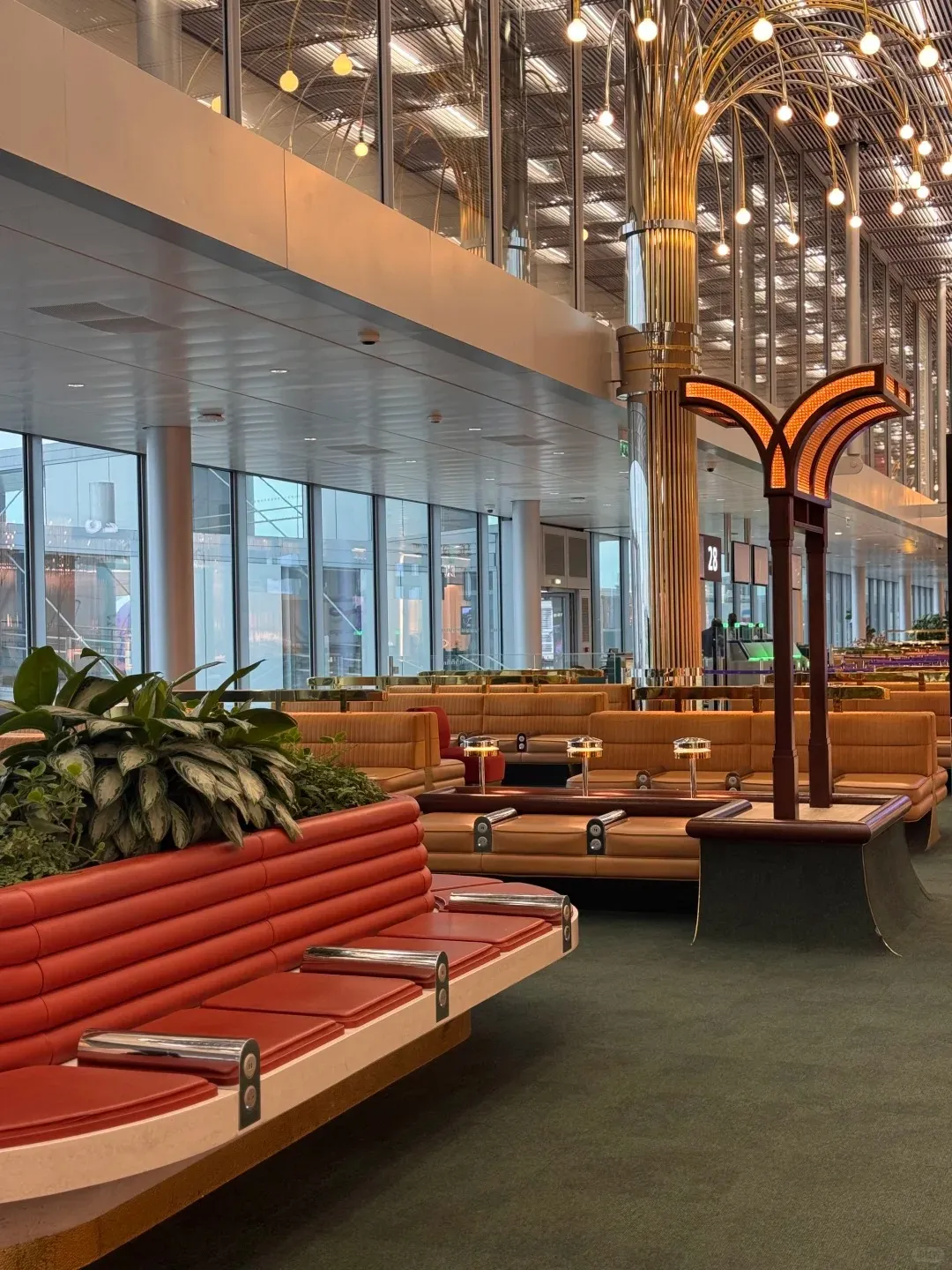
- Free rest areas: the airport provides free seating areas to relax before a flight or during a connection; if you have no hotel or want to save money, you can also spend the night there. They are usually near the furthest gates — follow the signs.
- Paid rest area: inside the free area there is a separate paid zone where you can rest and take a shower.
- Lounges: business- and first-class passengers and airline elite members can use the lounges; economy passengers can usually pay to enter.
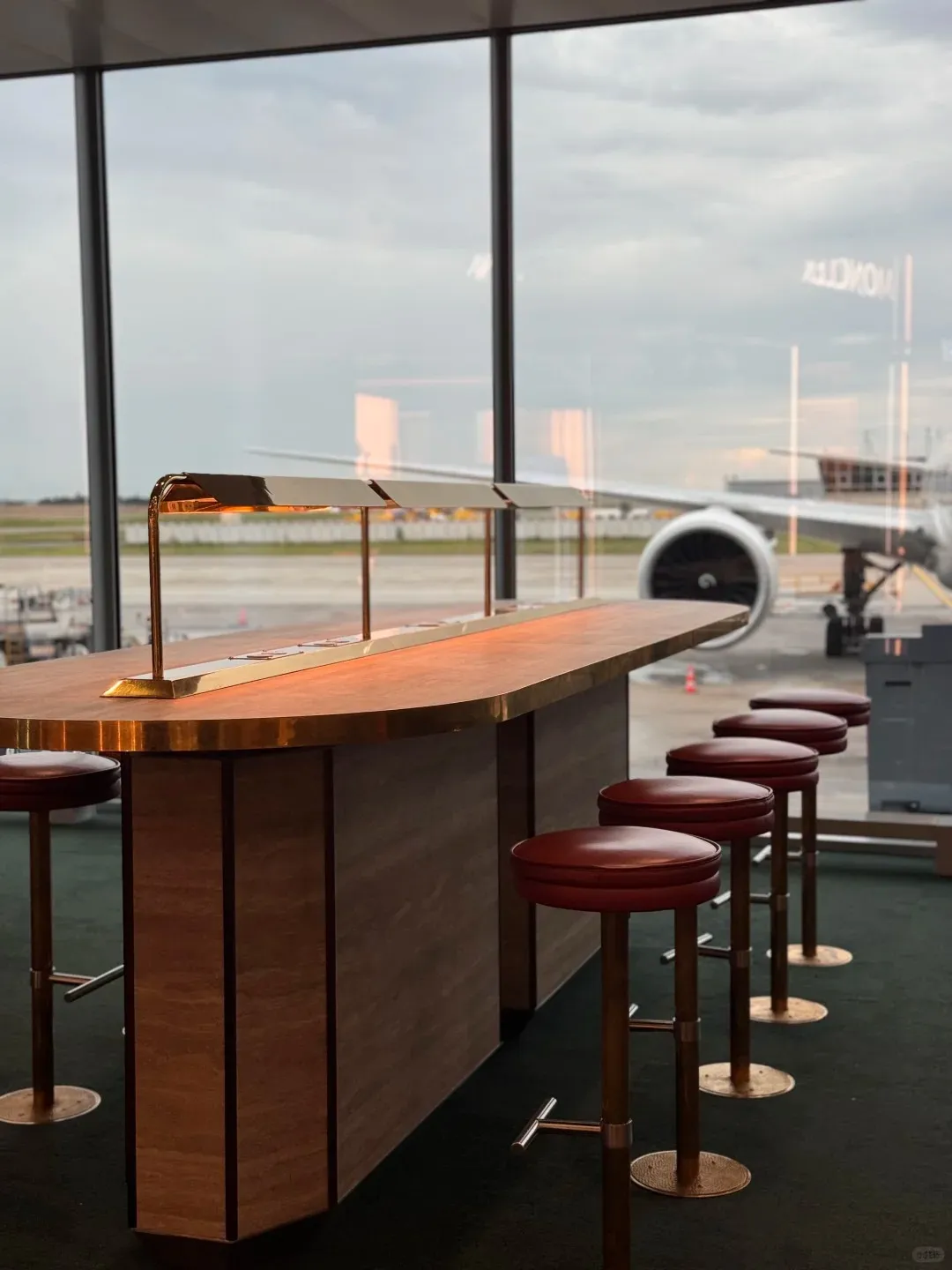
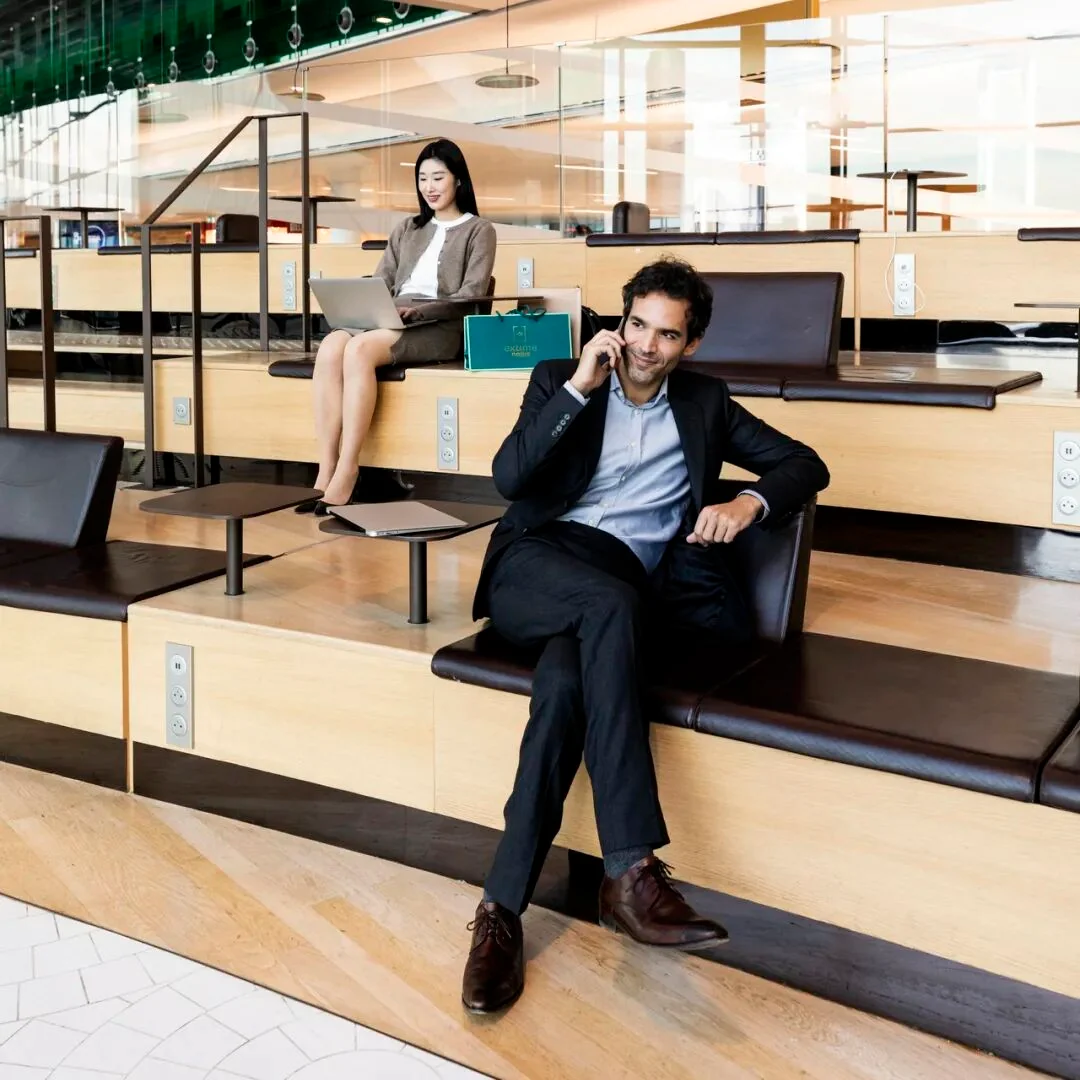
- Work zones: shared workspaces in the terminals, with desks, power sockets and decent lighting.
- Plane spotting: some rest areas look straight out over the runway.
- Smoking: all terminals have designated smoking areas.
7. Wi-Fi, charging and SIM cards
- Free Wi-Fi: covers every terminal; join the "WIFI-AIRPORT" network and you are connected.
- Charging: look for the ChargeBox stations, free to use in the main terminals' post-security departure halls (Terminal 1; T2D; the L and M halls of T2E; Terminal 3).
- SIM cards: every terminal has Relay, Fnac and Orange counters selling local SIM cards and accessories, with multilingual staff and in-store activation — buy it and plug it in. The common tourist option is Orange Holiday (for example 100 GB / 5G at about €49.99), available over the counter.
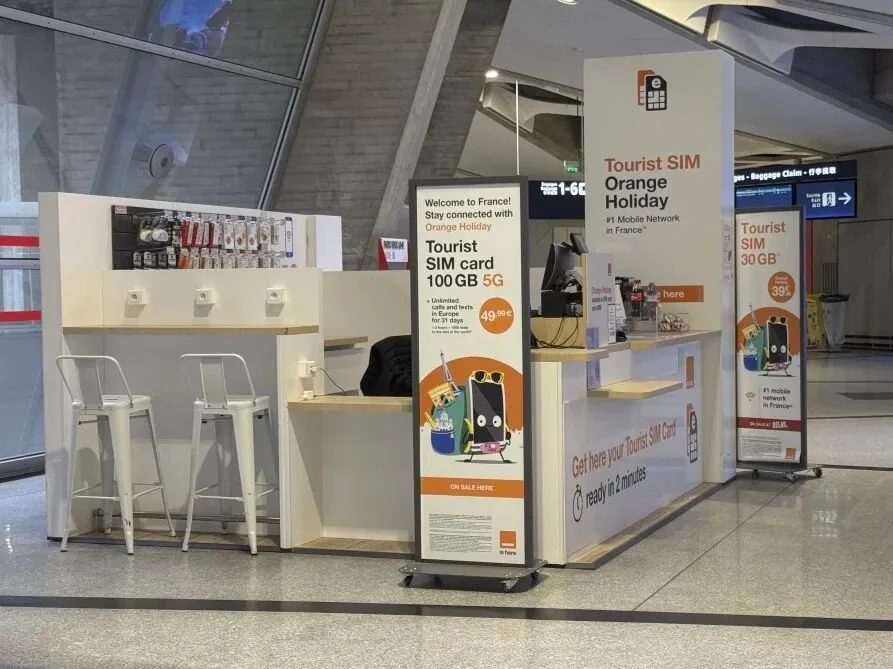
Counters and opening hours:
| Counter | Location | Hours |
|---|---|---|
| Orange SIM Card | T1, level 5 (arrivals) | 06:00–20:30 |
| Orange SIM Card | T2E, level 0 (after security) | 06:00–21:00 |
| Relay | T2E, level 0 (before security) | 06:00–22:00 |
| Fnac | T1, level 3 (before security) | 06:00–21:00 |
8. Accessibility and family facilities
Assistance (PWD):
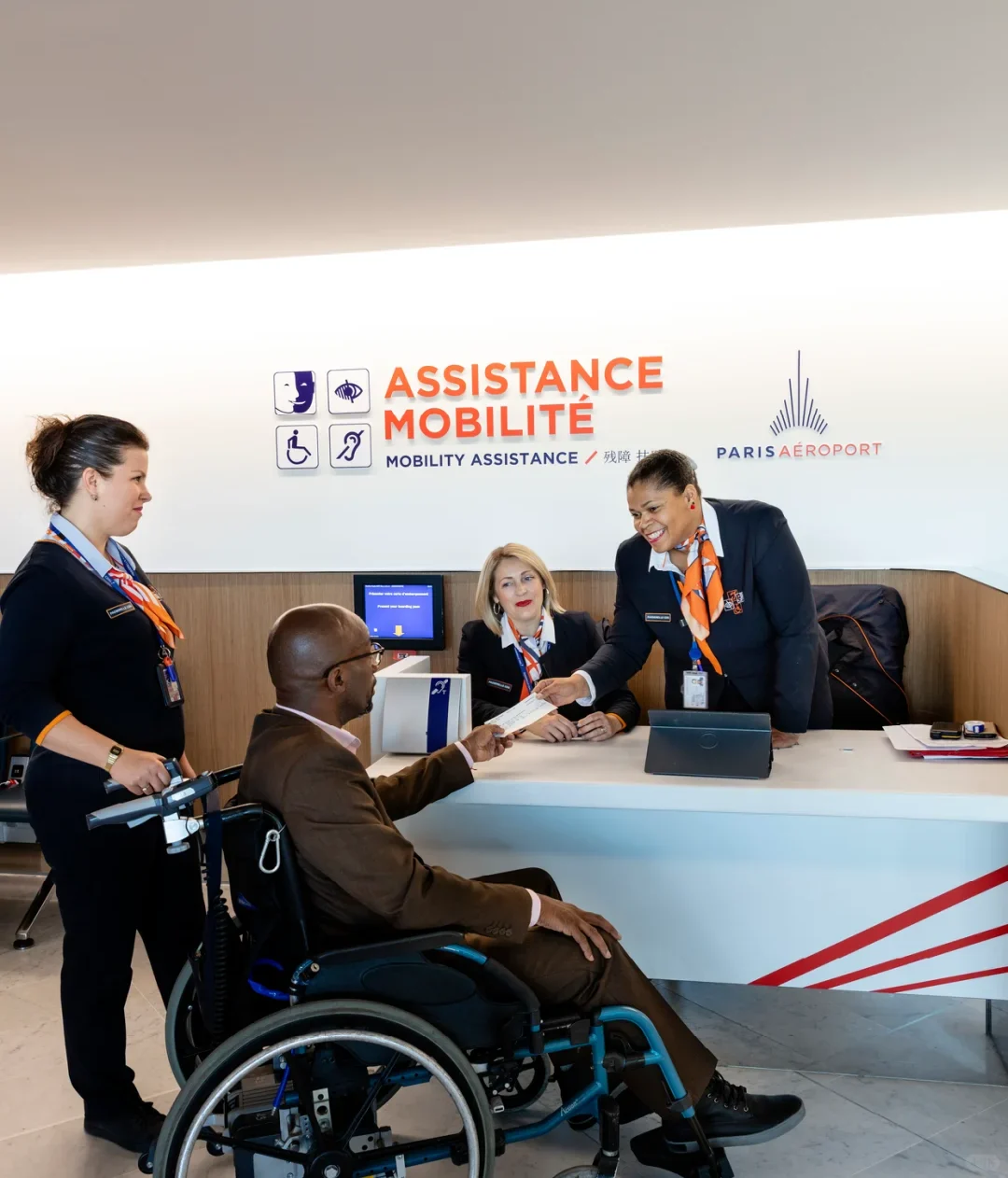
- The terminals provide assistance for passengers with disabilities — book with your airline or travel agent at least 48 hours before departure;
- Meeting points sit inside and outside the terminals, with self-service wheelchairs and pushchairs;
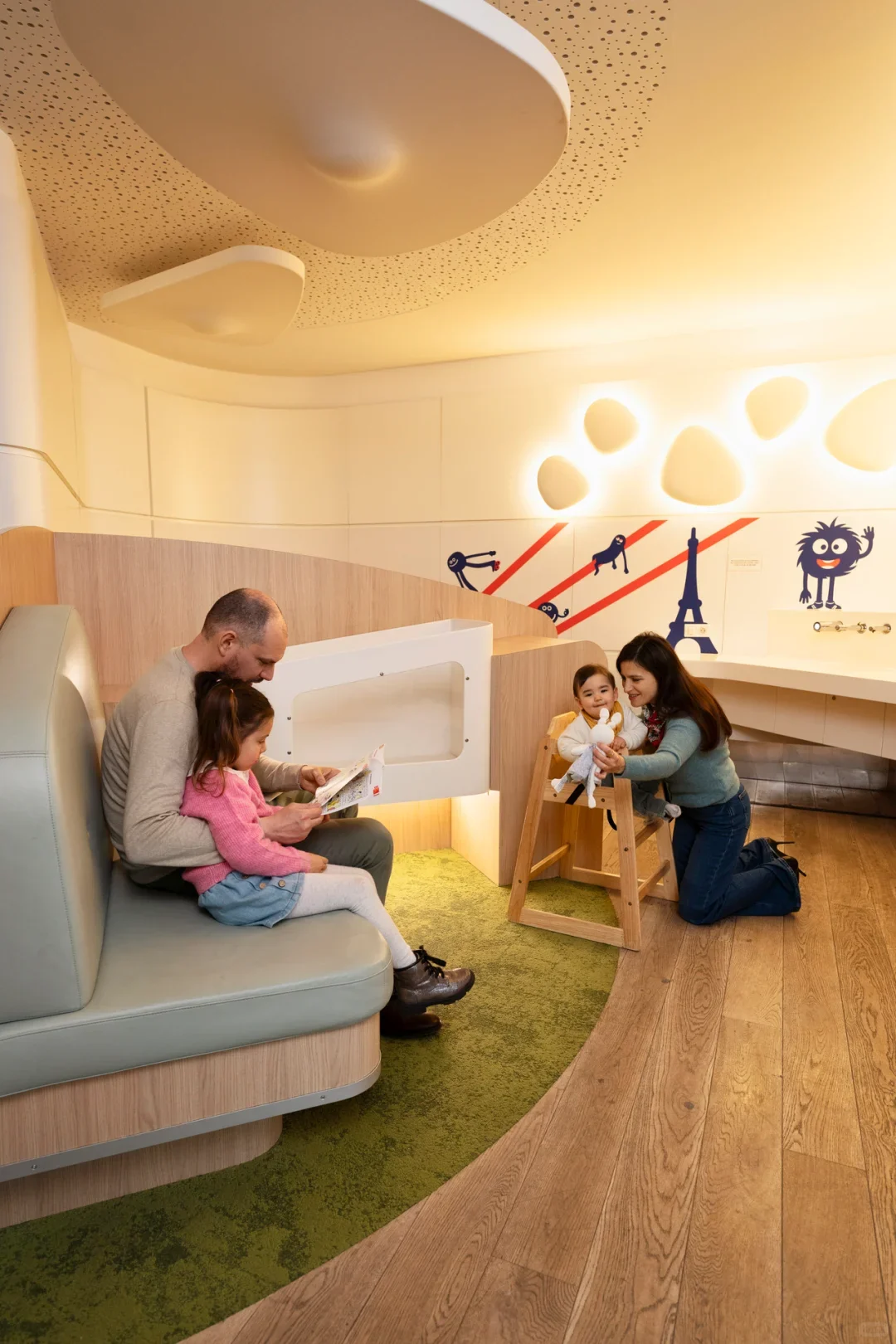
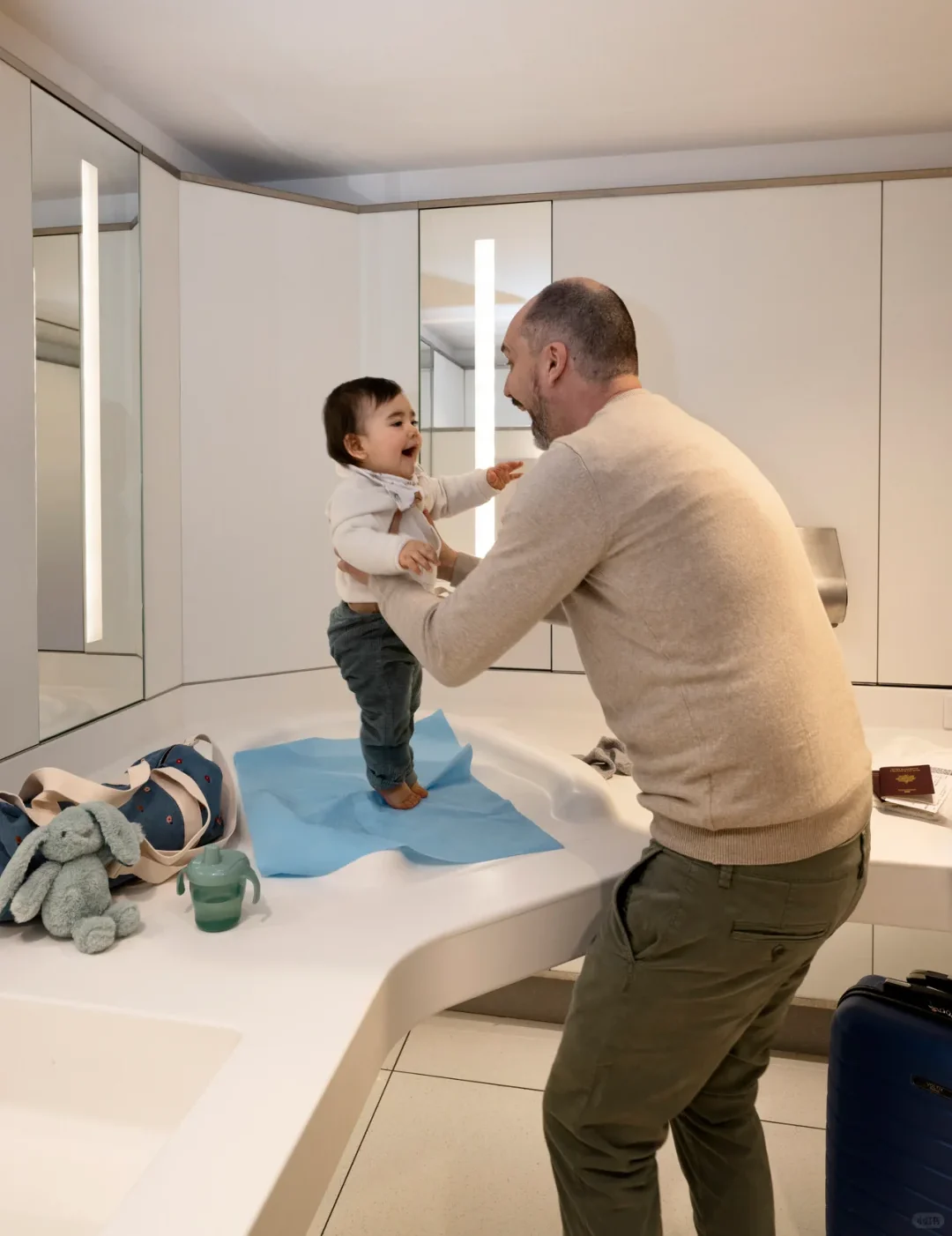
- Modern, accessible changing rooms cover families with children and travellers with disabilities;
- T2E and T2F each have a dog area, giving assistance dogs a comfortable, safe space.
Family facilities:
- Free services for travellers with babies or small children;
- Baby-changing areas and toilets designed for young children;
- Some terminals have baby rooms with full nursing equipment, including bottle warmers and cots.
Related links
- On this site: Paris Charles de Gaulle Airport (CDG), France (FR)
- Wikipedia: Charles de Gaulle Airport
- Baidu Baike: Charles de Gaulle Airport
More articlesTravel notes
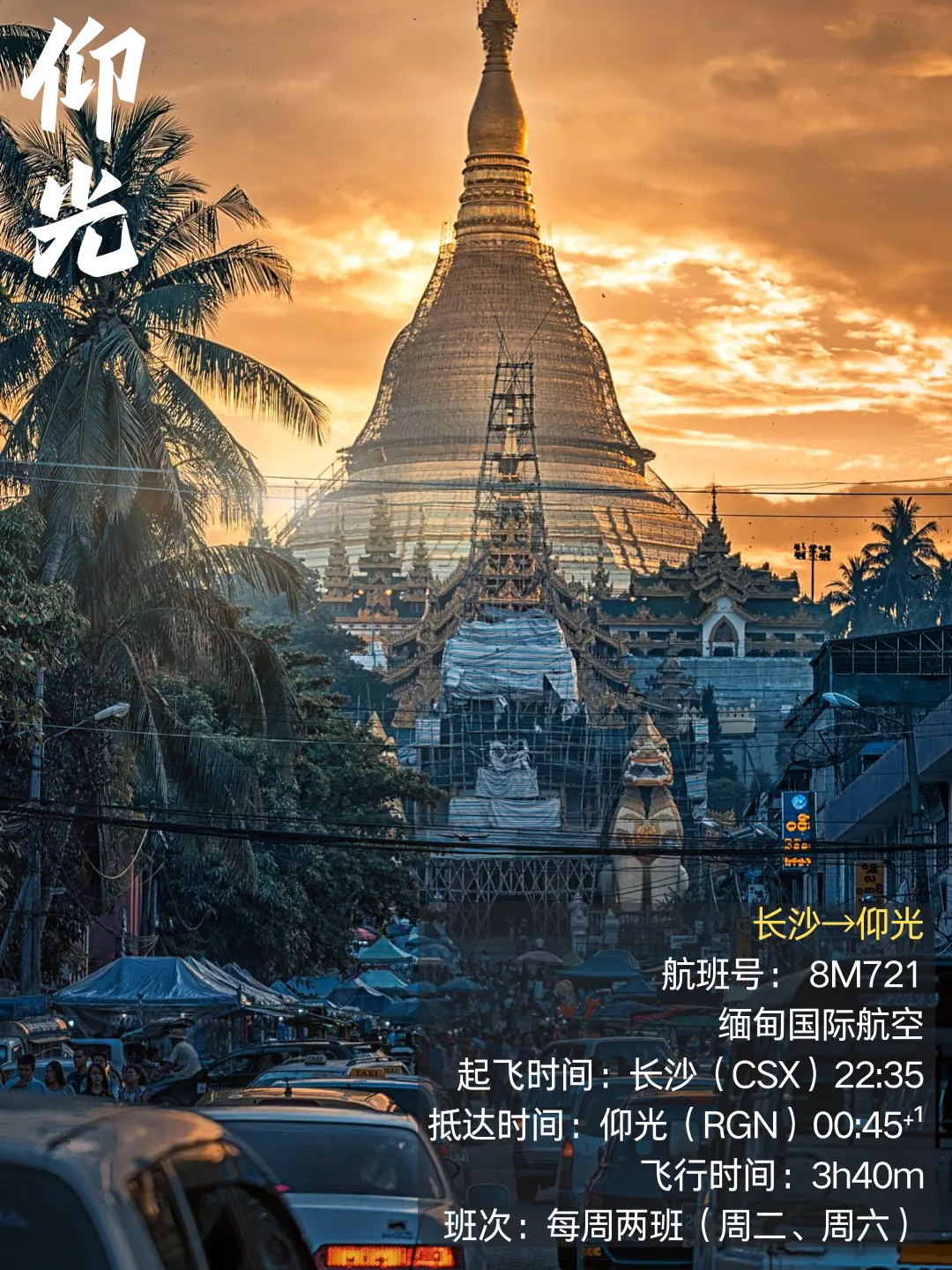
Direct International Flights from Changsha Huanghua Airport: 15 Routes, Airlines and Schedules
Which international and regional destinations you can fly to non-stop from Changsha Huanghua International Airport (CSX): Yangon, Bangkok (BKK and DMK), Phuket, London, Seoul, Hong Kong, Kuala Lumpur, Singapore, Phnom Penh, Jakarta, Hanoi, Ho Chi Minh City, Vientiane and Nairobi — 15 routes with the airline, flight number, departure and arrival times, flight time and frequency for each, plus how to check the current schedule before you book.6 min read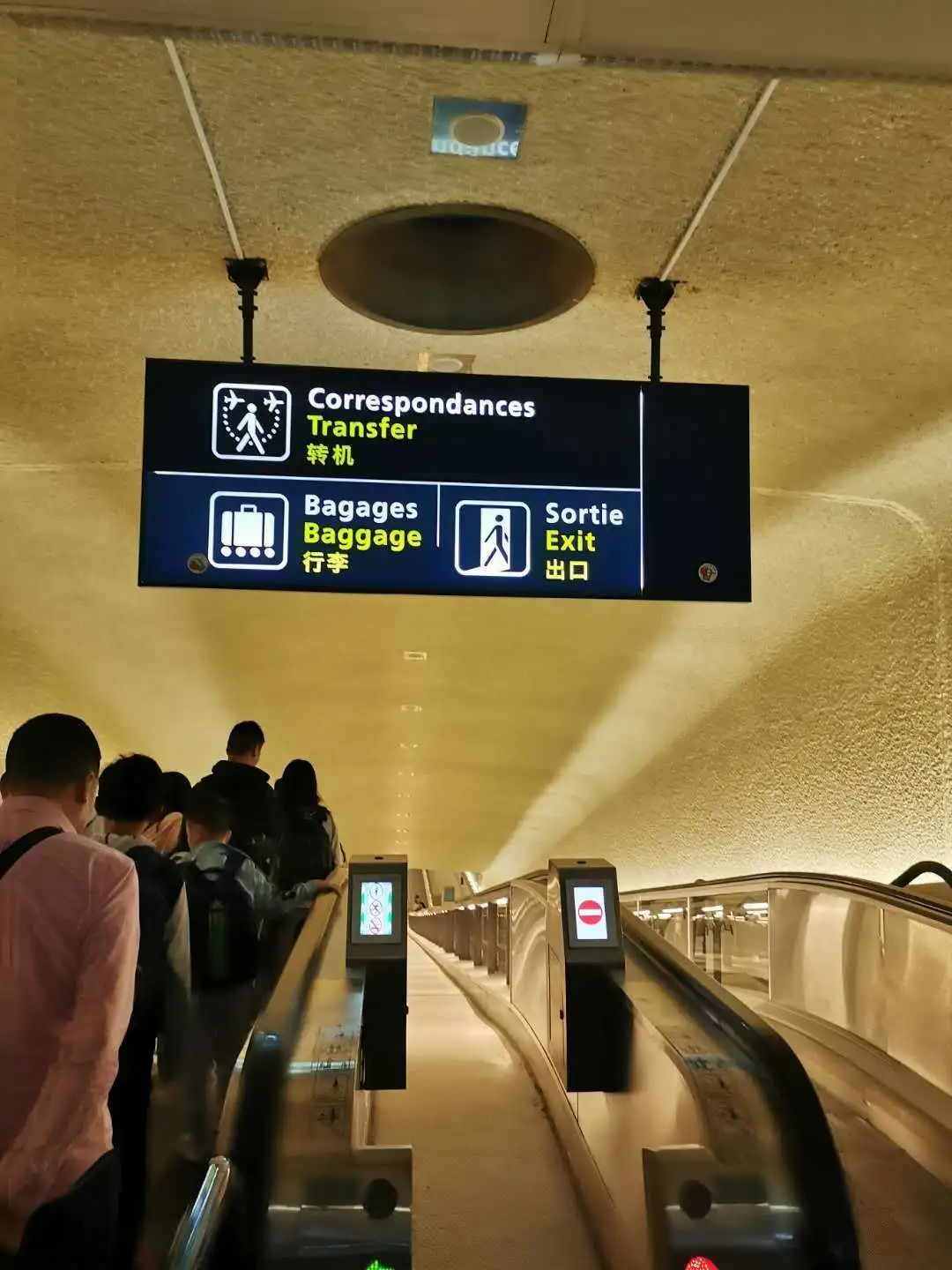
Arriving in France: Navigating Paris CDG to Your Next Train, Bus or Flight
A first-timer''s guide to Paris Charles de Gaulle (CDG): the Chinese-language signage and the arrival tunnel, terminals 1, 2 and 3 plus the seven sub-terminals of T2, the RER B and TGV station inside the airport, the free 24-hour CDGVAL shuttle train, transferring within CDG or to Orly, catching a high-speed train to the rest of France, and a pocket French phrase list for the airport.8 min read