
Aeropuerto Internacional Ninoy Aquino — Mapa de la terminal
 Manila · Filipinas· Ninoy Aquino International Airport
Aeropuerto Internacional Ninoy Aquino (IATA: MNL, OACI RPLL) es un aeropuerto grande que da servicio a Manila, Filipinas, con 4 terminales y 70 puertas, a unos 7 km del centro de Manila.
Ninoy Aquino International Airport (MNL) serves Manila, Philippines. It has 4 terminals with 70 gates in total and handles about 48 million passengers a year. The airport is about 7 km from the city centre. Ground transport into the city: bus, taxi and car.
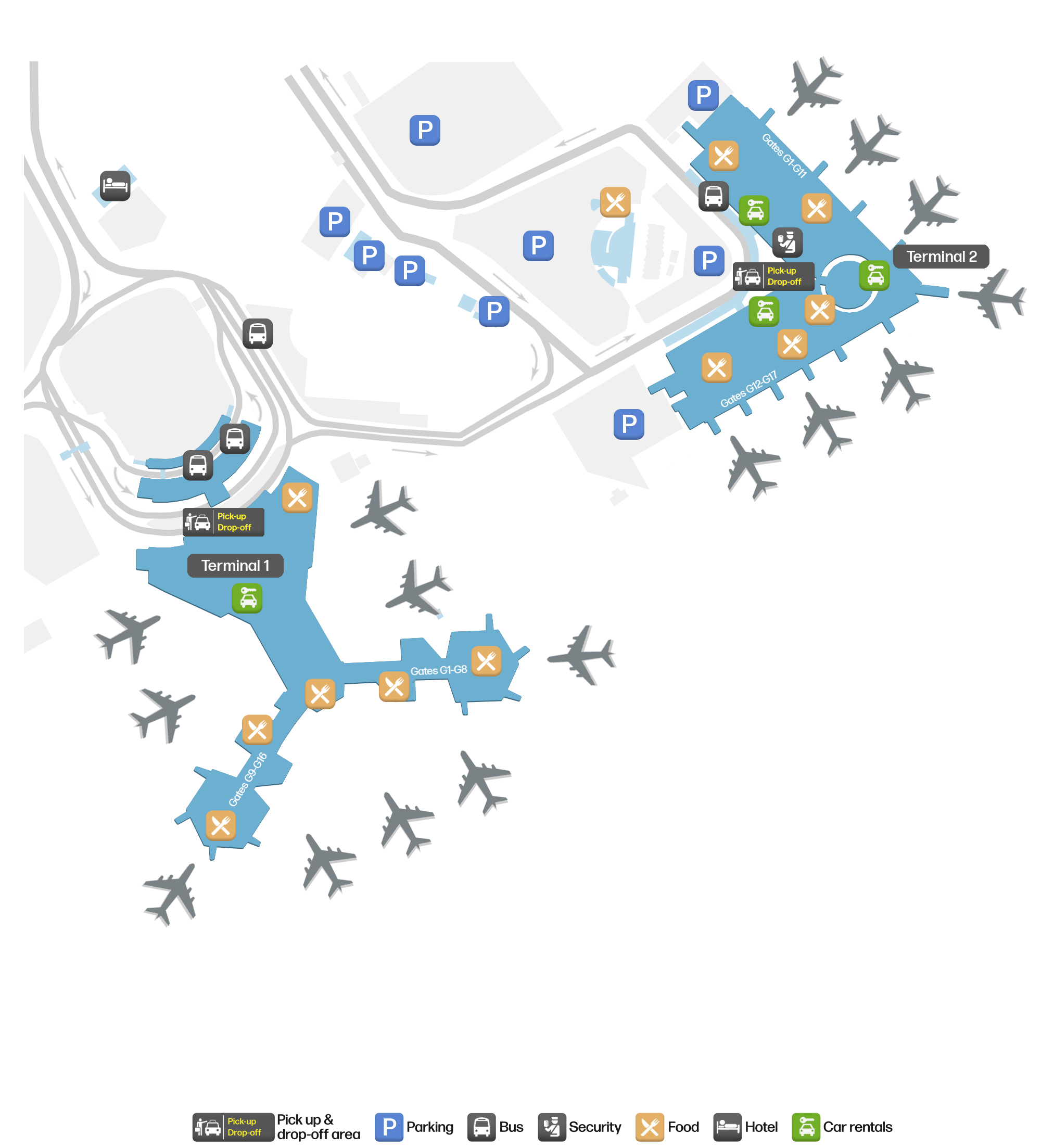
Descargar mapas de aeropuertosDescargas
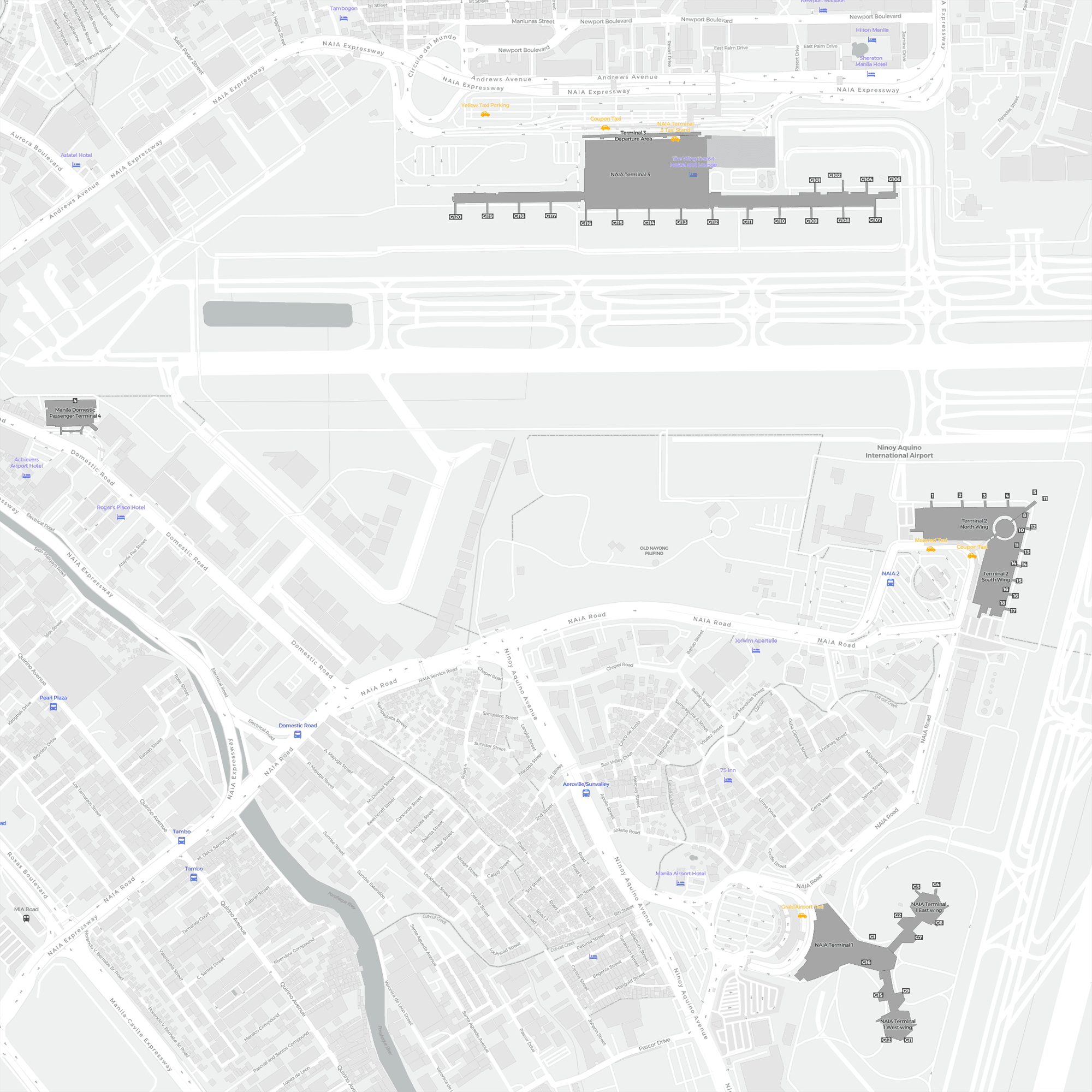
Fotos del aeropuertoFotos del aeropuerto
Fotos reales de este aeropuerto, cada una con la referencia de la página web pública donde se encontró; los derechos de autor siguen siendo de los fotógrafos originales. Haz clic en una foto para ampliarla o en la línea de crédito para abrir su página de origen.
En la imagen satelital, las terminales, la plataforma y las pistas del Aeropuerto Internacional Ninoy Aquino (MNL) son claramente visibles.
Información horaria del aeropuerto — hora actual en MNLHora del aeropuerto
Hora actual en MNL (Asia/Manila) en comparación con tu hora local.
Mapa de rutas de Aeropuerto Internacional Ninoy Aquino — destinos directosMapa de rutas
76 destinos directos: mapa, aerolíneas que operan y distancias.
Vuelos de Aeropuerto Internacional Ninoy Aquino — salidas y llegadasPanel de vuelos
1823 números de vuelo de 67 aerolíneas y 87 destinos, divididos por dirección. Se incluyen los números de código compartido.
| Vuelo | Aerolínea | Destino | País/región |
|---|---|---|---|
| 5J14 | Cebu Pacific | Aeropuerto Internacional de Dubái | Emiratos Árabes Unidos |
| 5J18 | Cebu Pacific | Aeropuerto Internacional de Dubái | Emiratos Árabes Unidos |
| 5J39 | Cebu Pacific | Aeropuerto Kingsford Smith de Sídney | Australia |
| 5J49 | Cebu Pacific | Melbourne Airport | Australia |
| 5J110 | Cebu Pacific | Aeropuerto Internacional de Hong Kong | China |
| 5J112 | Cebu Pacific | Aeropuerto Internacional de Hong Kong | China |
| 5J114 | Cebu Pacific | Aeropuerto Internacional de Hong Kong | China |
| 5J142 | Cebu Pacific | Aeropuerto Internacional de Hong Kong | China |
| 5J186 | Cebu Pacific | Aeropuerto Internacional de Incheon | Corea del Sur |
| 5J188 | Cebu Pacific | Aeropuerto Internacional de Incheon | Corea del Sur |
| 5J192 | Cebu Pacific | Cauayan City (CYZ) Cauayan Airport | Filipinas |
| 5J196 | Cebu Pacific | Cauayan City (CYZ) Cauayan Airport | Filipinas |
| 5J268 | Cebu Pacific | Xiamen Gaoqi International Airport | China |
| 5J272 | Cebu Pacific | Aeropuerto Internacional de Hong Kong | China |
| 5J279 | Cebu Pacific | Denpasar I Gusti Ngurah Rai International Airport | Indonesia |
| 5J281 | Cebu Pacific | Denpasar I Gusti Ngurah Rai International Airport | Indonesia |
| 5J286 | Cebu Pacific | Aeropuerto Internacional de Cantón-Baiyun | China |
| 5J288 | Cebu Pacific | Aeropuerto Internacional de Cantón-Baiyun | China |
| 5J310 | Cebu Pacific | Taiwan Taoyuan International Airport | Taiwán |
| 5J312 | Cebu Pacific | Taiwan Taoyuan International Airport | Taiwán |
Números de vuelo y rutas del índice de vuelos de aviability.com (instantánea de 26 de octubre de 2026); se incluyen los números de código compartido y no se muestran horarios de salida. Fuente: aviability.com ↗
Información y datos del aeropuertoDatos del aeropuerto
Mapa interactivo — ubicación de Aeropuerto Internacional Ninoy AquinoMapa interactivo
Consulta este aeropuerto en otros servicios de mapas:
Manila Ninoy Aquino International Airport terminal guideGuía del aeropuerto
Ninoy Aquino International Airport sits right beside Manila, about 7 km from the city centre, and handles around 52 million passengers a year (2025). It has four terminals with no walkways and no rail link between them, only road shuttles — which makes it one of the airports in Southeast Asia where you most need to leave generous time.
Satellite view
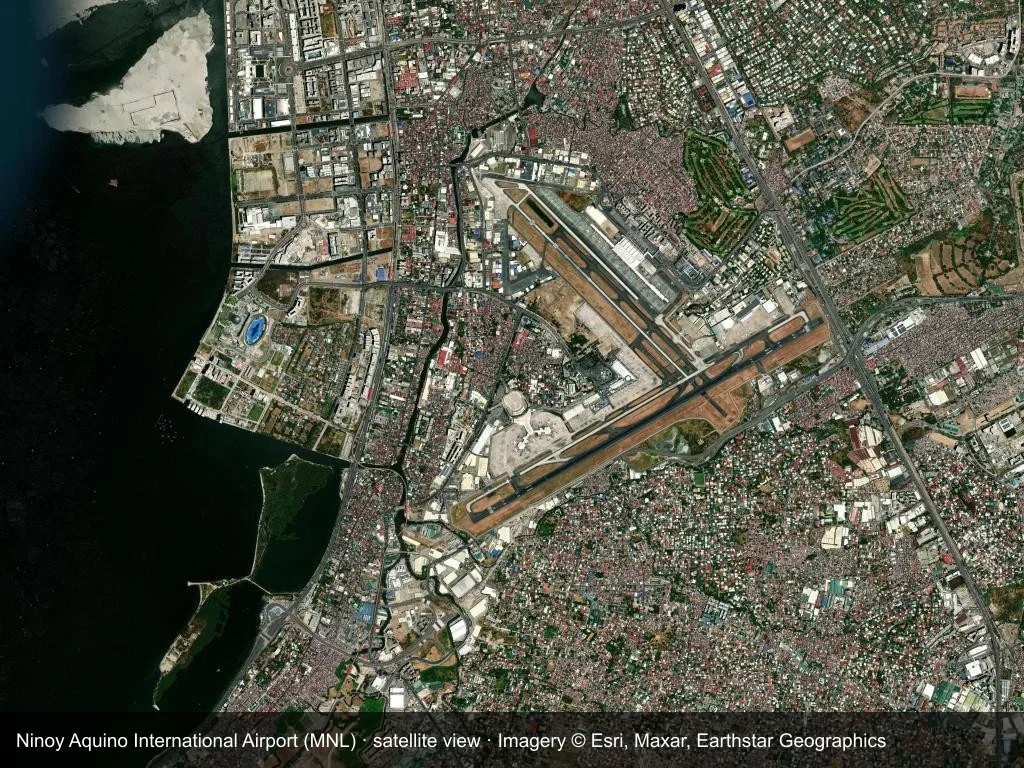
In the satellite image, the terminals, apron and runways at Ninoy Aquino International Airport (MNL) are clearly visible.
The satellite image comes from Esri World Imagery (© Esri, Maxar, Earthstar Geographics); the field and attribution are labelled in the image. This is a satellite view, not a ground-level photograph.
The four terminals
| Code | Name | Main flights | Main carriers |
|---|---|---|---|
| T1 | Terminal 1 | Mostly international | Several foreign carriers; AirAsia Philippines international flights also use it |
| T2 | Terminal 2 | Domestic + international | Philippine Airlines only, split into domestic and international zones |
| T3 | Terminal 3 | International + domestic | The largest and newest; Cebu Pacific, JAL, ANA and others |
| T4 | Terminal 4 | Domestic | Small low-cost carriers and turboprop flights |
How to tell where you are:
- For Philippine Airlines, look to T2; for Cebu Pacific and most international carriers, T3; AirAsia Philippines flies its international routes from T1 and its domestic routes from T2 (changed from March 2026).
- T1 / T2 / T3 are linked by a free inter-terminal shuttle (running 24 hours, boarding pass required), which uses public roads and is exposed to traffic.
- T4 is the furthest from the others, and the drive can take 30–40 minutes.
Our diagram draws the four buildings as separate structures precisely to make the point that every terminal change here is a road journey.
Transfers and connections
- Manila has no airside inter-terminal transit — changing buildings means leaving the terminal, collecting your bags and checking in and clearing security again.
- Official and airline advice: 2 hours for international-to-international in the same building, 3–4 hours for international-to-international across buildings, and 3.5–4 hours for international-to-domestic.
- The early morning (05:00–09:00) and the evening (16:00–20:00) are the congestion peaks, so always budget a cross-terminal connection against peak conditions.
Routes and flights
- Routes — around 30-plus airlines flying to about 60 destinations; long-haul points include Tokyo, Osaka, Seoul, Beijing, Shanghai, Hong Kong, Singapore, Dubai, Sydney, Los Angeles and San Francisco.
- Flights — about 52.02 million passengers in 2025, an all-time record for the airport.
- Aircraft — main bases are Philippine Airlines (T2) and Cebu Pacific (T3), followed by AirAsia Philippines and PAL Express; the fleet is the A320/A321 family, with A330 and A350 on long-haul.
Getting into Manila
- Taxi / rideshare (Grab) — about 7 km, but Manila's congestion can stretch that to an hour, so allow for it.
- Airport buses — linking the main districts of the city with the terminals.
- Light rail / metro — you must first take road transport out of the airport area to reach it, which is not convenient for travellers with heavy luggage.
Practical tips
- Manila is one of the Asian hubs that demands the most patience when connecting: budget 4 hours rather than expecting 2 to cover a cross-terminal transfer.
- In the holiday seasons (Holy Week, All Souls' Day, Christmas and New Year) the crowds stack up, and queues for the inter-terminal shuttle get noticeably longer.
- The city is only a street away from the airport but the congestion is severe, so when you have a flight to catch, plan the ground journey for the worst case.
References
Guía de terminalesGuía de terminales
Rangos de puertas, principales aerolíneas e instalaciones de cada terminal de Aeropuerto Internacional Ninoy Aquino.
Comentarios de los lectoresDebate
Las preguntas, los relatos de viaje y las correcciones son bienvenidos. Los comentarios son públicos.
Cargando…
Cargando comentarios…