
Aeropuerto Internacional de Cantón-Baiyun — Mapa de la terminal
 Cantón · China· Guangzhou Baiyun International Airport
Aeropuerto Internacional de Cantón-Baiyun (IATA: CAN, OACI ZGGG) es un aeropuerto grande que da servicio a Cantón, China, con 2 terminales y 48 puertas, a unos 28 km del centro de Cantón.
Guangzhou Baiyun International Airport (CAN) serves Guangzhou, China. It has 2 terminals with 48 gates in total and handles about 76 million passengers a year. The airport is about 28 km from the city centre. Ground transport into the city: rail, bus, taxi and car.
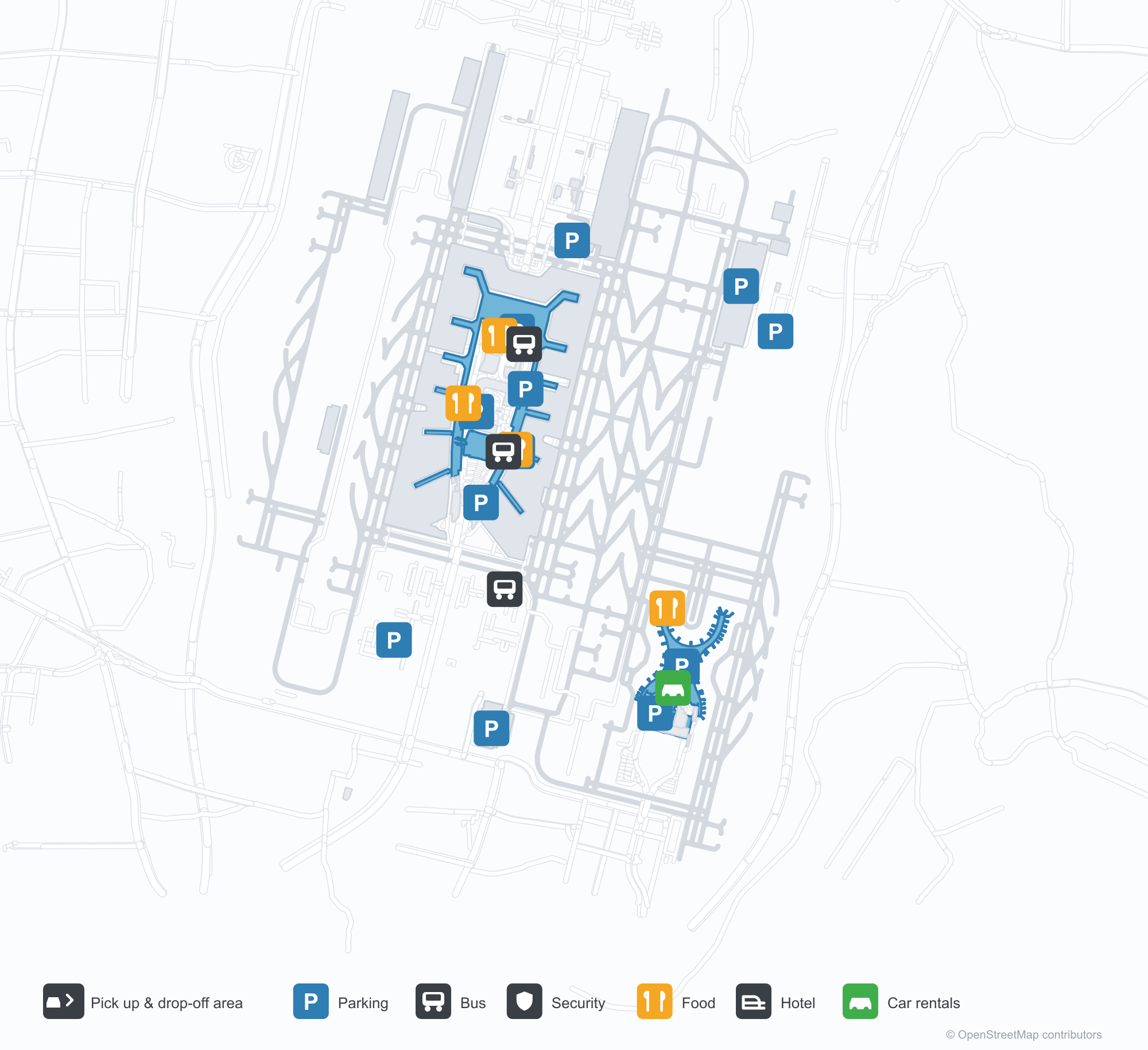
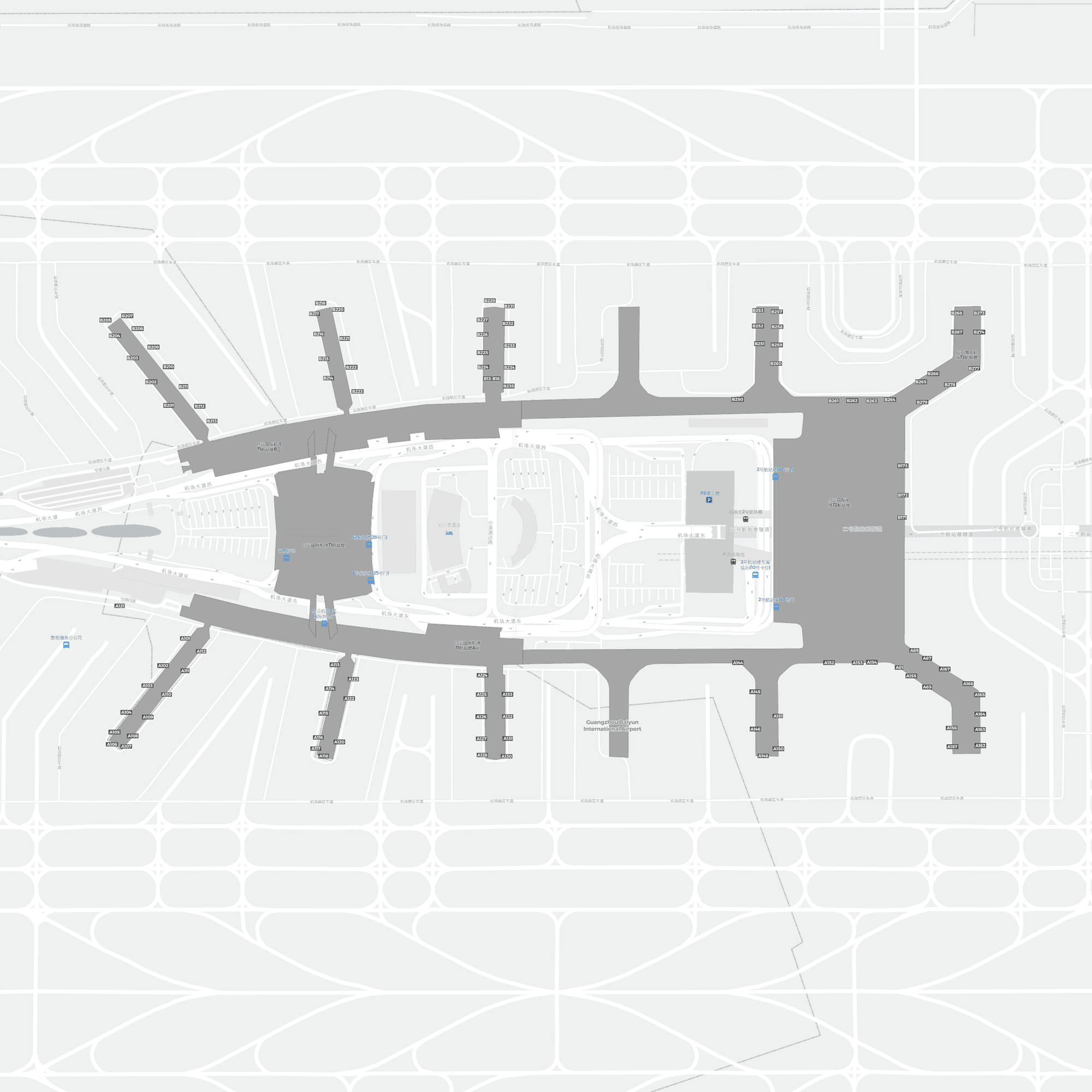
Descargar mapas de aeropuertosDescargas
Fotos del aeropuertoFotos del aeropuerto
Fotos reales de este aeropuerto, cada una con la referencia de la página web pública donde se encontró; los derechos de autor siguen siendo de los fotógrafos originales. Haz clic en una foto para ampliarla o en la línea de crédito para abrir su página de origen.
Vista satelital: el Aeropuerto Internacional de Cantón-Baiyun (CAN) está enmarcado por ciudad, costa o terreno, con la pista cruzando la escena.
Información horaria del aeropuerto — hora actual en CANHora del aeropuerto
Hora actual en CAN (Asia/Shanghai) en comparación con tu hora local.
Mapa de rutas de Aeropuerto Internacional de Cantón-Baiyun — destinos directosMapa de rutas
136 destinos directos: mapa, aerolíneas que operan y distancias.
Vuelos de Aeropuerto Internacional de Cantón-Baiyun — salidas y llegadasPanel de vuelos
3859 números de vuelo de 97 aerolíneas y 216 destinos, divididos por dirección. Se incluyen los números de código compartido.
| Vuelo | Aerolínea | Destino | País/región |
|---|---|---|---|
| 3U1005 | Sichuan Airlines | Beijing Daxing International Airport | China |
| 3U1011 | Sichuan Airlines | Beijing Daxing International Airport | China |
| 3U1013 | Sichuan Airlines | Beijing Daxing International Airport | China |
| 3U1015 | Sichuan Airlines | Beijing Daxing International Airport | China |
| 3U1017 | Sichuan Airlines | Beijing Daxing International Airport | China |
| 3U1019 | Sichuan Airlines | Beijing Daxing International Airport | China |
| 3U1021 | Sichuan Airlines | Beijing Daxing International Airport | China |
| 3U1023 | Sichuan Airlines | Beijing Daxing International Airport | China |
| 3U1025 | Sichuan Airlines | Beijing Daxing International Airport | China |
| 3U1037 | Sichuan Airlines | Tianjin Binhai International Airport | China |
| 3U1039 | Sichuan Airlines | Tianjin Binhai International Airport | China |
| 3U1045 | Sichuan Airlines | Tianjin Binhai International Airport | China |
| 3U1067 | Sichuan Airlines | Beijing Daxing International Airport | China |
| 3U1075 | Sichuan Airlines | Qingdao Jiaodong International Airport | China |
| 3U1077 | Sichuan Airlines | Lanzhou Zhongchuan International Airport | China |
| 3U1079 | Sichuan Airlines | Xi'an Xianyang International Airport | China |
| 3U1081 | Sichuan Airlines | Xi'an Xianyang International Airport | China |
| 3U1085 | Sichuan Airlines | Xi'an Xianyang International Airport | China |
| 3U1087 | Sichuan Airlines | Xi'an Xianyang International Airport | China |
| 3U1089 | Sichuan Airlines | Xi'an Xianyang International Airport | China |
Números de vuelo y rutas del índice de vuelos de aviability.com (instantánea de 26 de octubre de 2026); se incluyen los números de código compartido y no se muestran horarios de salida. Fuente: aviability.com ↗
Información y datos del aeropuertoDatos del aeropuerto
Mapa interactivo — ubicación de Aeropuerto Internacional de Cantón-BaiyunMapa interactivo
Consulta este aeropuerto en otros servicios de mapas:
Guangzhou Baiyun International Airport terminal guideGuía del aeropuerto
Guangzhou Baiyun International Airport lies about 28 km from the city centre and handles around 83.6 million passengers a year (2025). Its biggest change in the past two years has been the opening of Terminal 3 and the closure of Terminal 1 for rebuilding — a great many guides online still refer to T1, and following them will take you straight to the wrong building.
Satellite view
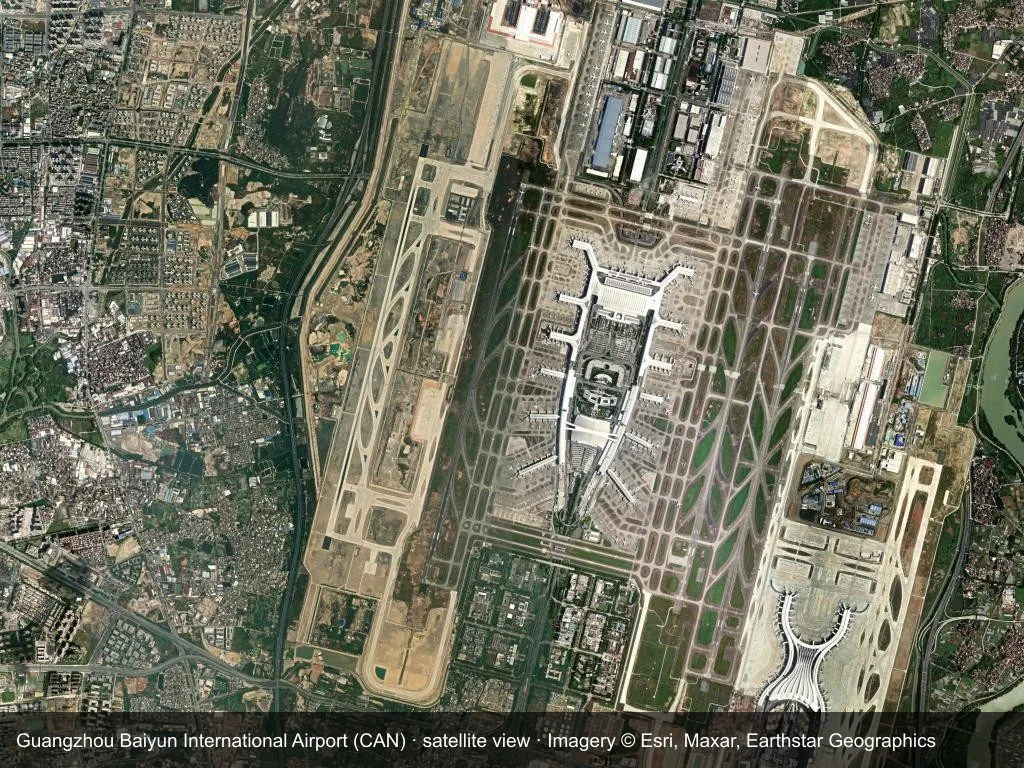
Satellite view: Guangzhou Baiyun International Airport (CAN) is framed by city, coast or terrain, with the runway crossing the scene.
The satellite image comes from Esri World Imagery (© Esri, Maxar, Earthstar Geographics); the field and attribution are labelled in the image. This is a satellite view, not a ground-level photograph.
Only T2 and T3 are in service
| Code | Name | Status | Main users |
|---|---|---|---|
| T2 | Terminal 2 | In service | China Southern and the carriers it handles; domestic and international flights |
| T3 | Terminal 3 | Opened at the end of 2025 | Air China, Shenzhen Airlines, the Hainan Airlines group, Spring Airlines and others; mainly domestic, with some international and regional flights |
| T1 | Terminal 1 | Closed from May 2026 | Under refurbishment; no flights handled |
From 7 May 2026, all flights at T1 have moved to T3. The operating carrier is the quickest way to tell which terminal you need: China Southern is at T2; Air China, Shenzhen Airlines, the Hainan Airlines group and Spring Airlines are at T3. When you are unsure, go by your flight notification, your boarding pass or the airport's own website.
Our diagram keeps only the two buildings T2 and T3 precisely to reflect that change: the T1 on older maps is no longer where you need to be.
Transfers and connections
- A free shuttle bus runs between T2 and T3; before connecting, confirm which building each of your two flights uses.
- A China Southern to China Southern connection is almost always completed inside T2, and is the quickest.
- For a connection involving T3, add the shuttle wait and the walking distance in the new building to your buffer.
Routes and flights
| Aspect | Points |
|---|---|
| Routes | 83.59 million passengers in 2025, ranked second in China and ninth globally; China Southern uses Guangzhou as its core hub, serving major Chinese cities and long-haul points in South-East Asia, Europe, North America and Oceania |
| Flights | 550,000 aircraft movements in 2025, around 1,508 a day |
| Aircraft | China Southern Airlines is overwhelmingly the home carrier, with a group fleet of around 970 aircraft (end of 2025); main types are the Airbus A320 family, A330 and A350, and Boeing 787 and 777 |
Getting into the city
- Metro Line 3 — Airport North station sits right beside T2 and runs straight into the city; the cheapest and most reliable option.
- Airport express buses — cover every district of the city and the Pearl River Delta cities; suited to heavy luggage or night travel.
- Taxi / ride-hailing — about 28 km, and around 40 minutes when the traffic is clear.
- Allow a little extra time when heading to T3; the exact positions of the public transport stops and the shuttle bus are best confirmed from the signs on site.
Practical tips
- Older guides online still say "depart from T1" — T1 closed in May 2026, so use only information updated after May 2026.
- Check-in islands are zoned by airline, and the screens in the departures hall show which island each one uses; read the screen before you queue, or you will wait in the wrong place.
- The Pearl River Delta is dense with airports (Guangzhou, Shenzhen, Hong Kong, Zhuhai), so confirm the three-letter code of your departure airport when booking rather than going by the city name alone.
References
Guías del aeropuerto CANDel blog
7 artículos de este sitio tratan sobre CAN: llegadas, transporte terrestre, equipajes y conexiones.
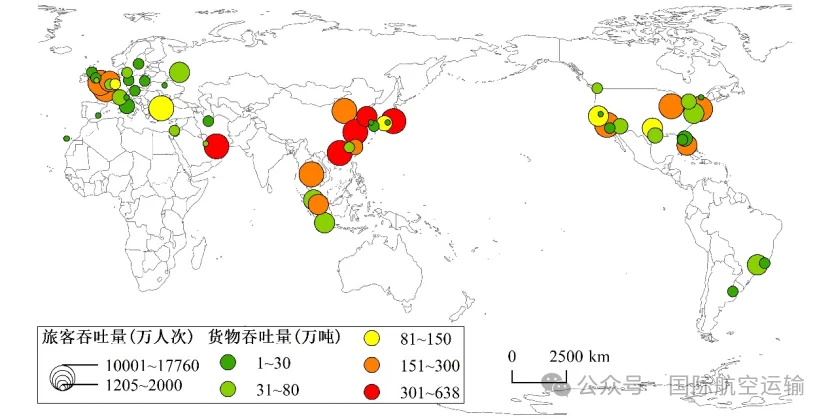
Casi 60 sistemas aeroportuarios múltiples: por qué un área metropolitana construye un segundo y un tercer aeropuerto
Un estudio basado en datos aeroportuarios mundiales de 2018 identificó 59 sistemas aeroportuarios múltiples, el 93,2 % formados por dos o tres aeropuertos, con el patrón “uno principal, uno secundario” como el más común. Este análisis expone las tres condiciones, el umbral de 70 km y la búsqueda en dos pasos que hay detrás del hallazgo, y lo que significa para las ciudades chinas.7 min de lectura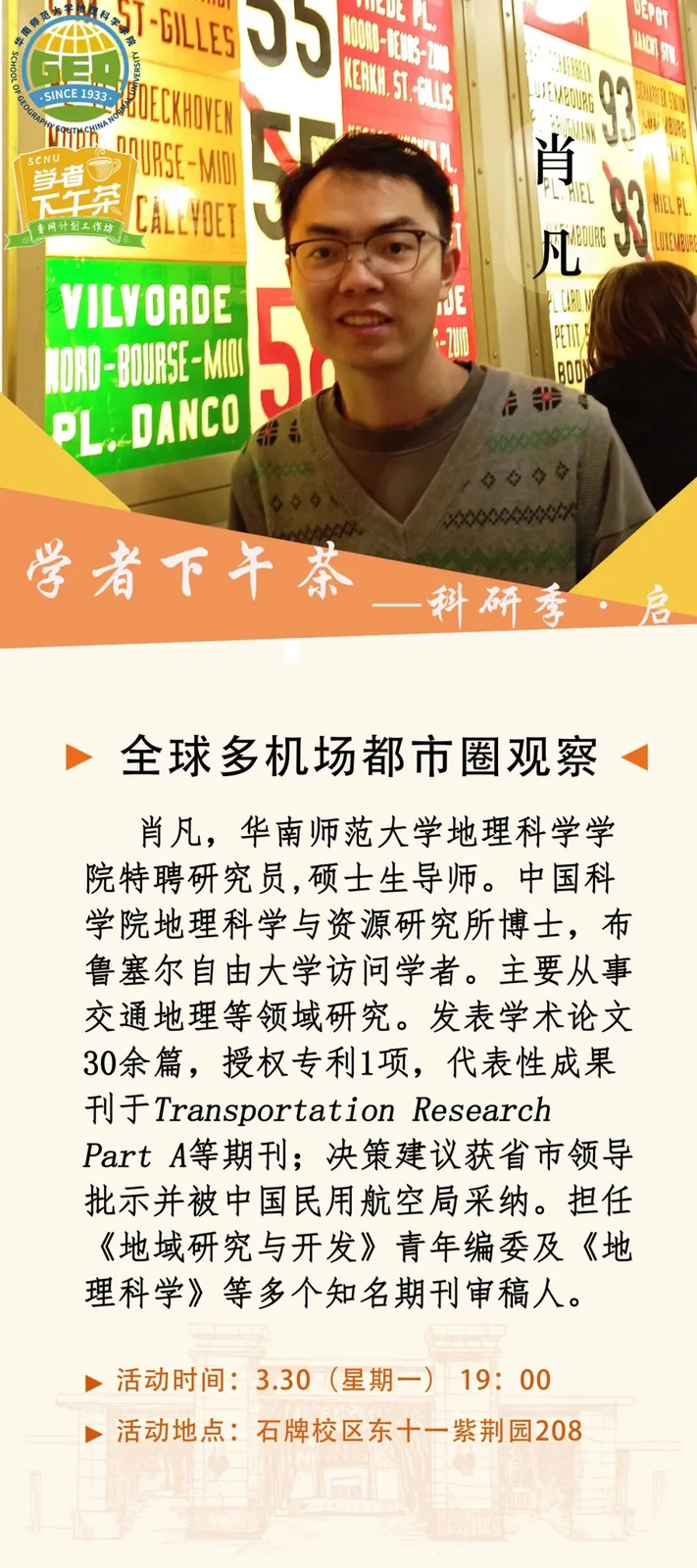
Cuando una megalópolis construye un segundo y un tercer aeropuerto: lecciones de las regiones urbanas con varios aeropuertos
Una conferencia universitaria en torno a los nuevos aeropuertos previstos en Cantón y Nantong vuelve a poner en primer plano las regiones urbanas con varios aeropuertos. Este comentario se pregunta por qué las grandes áreas metropolitanas construyen un segundo y un tercer aeropuerto, cómo pueden repartirse los papeles de hub y cómo puede el Gran Área de la Bahía evitar la competencia homogénea.7 min de lectura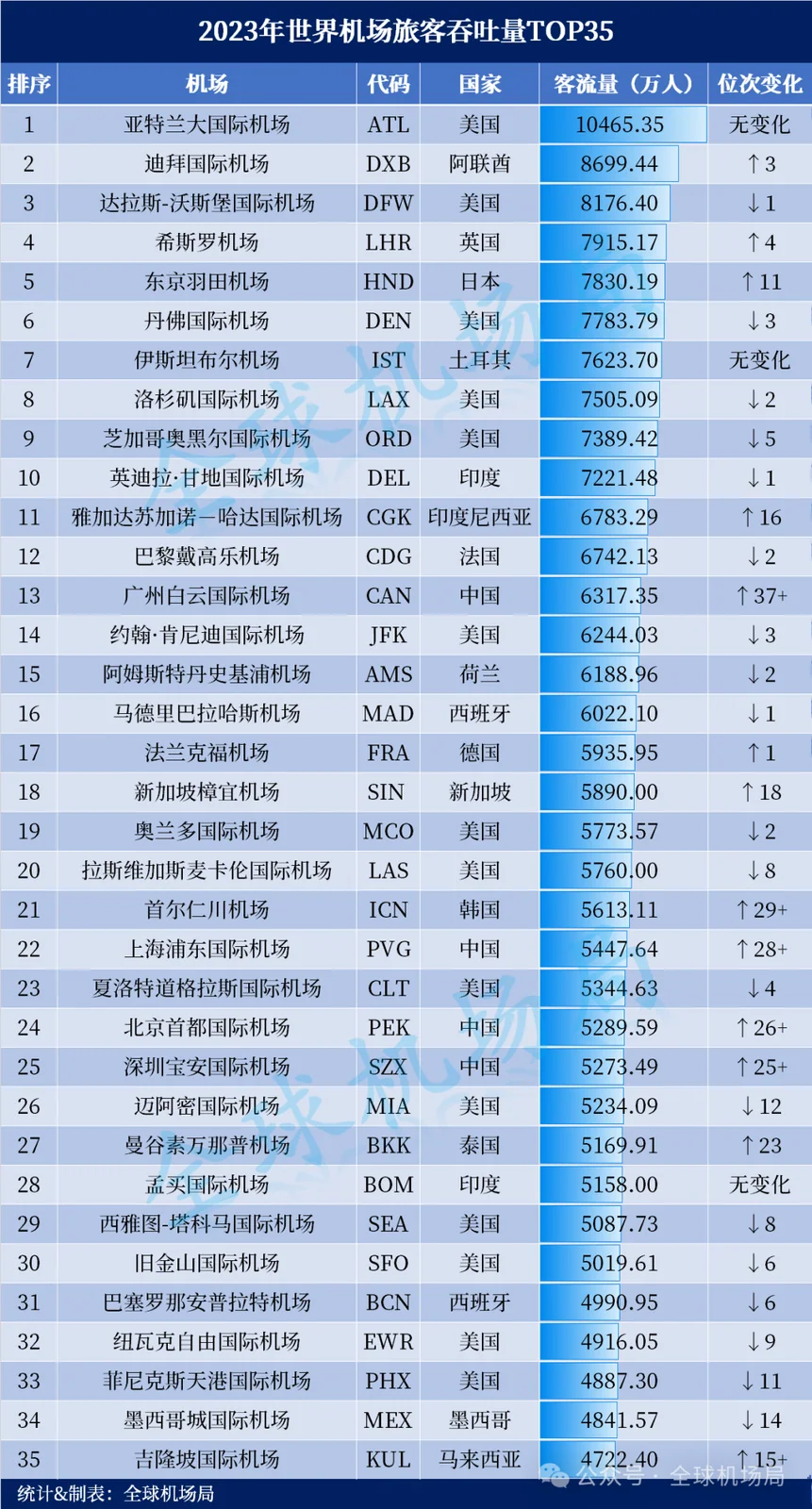
Tráfico mundial de pasajeros: Atlanta lidera por tercer año y cuatro aeropuertos chinos entran en el top 30
La clasificación de pasajeros de 2023 de Airports Council International sitúa a Atlanta primero por tercer año con 104,65 millones, Dubái en un segundo puesto récord, Heathrow de nuevo como número uno de Europa y Haneda de vuelta en el top cinco. Cuatro aeropuertos chinos —Guangzhou, Shanghái Pudong, Shenzhen y Pekín Capital— entraron en el top 30.8 min de lectura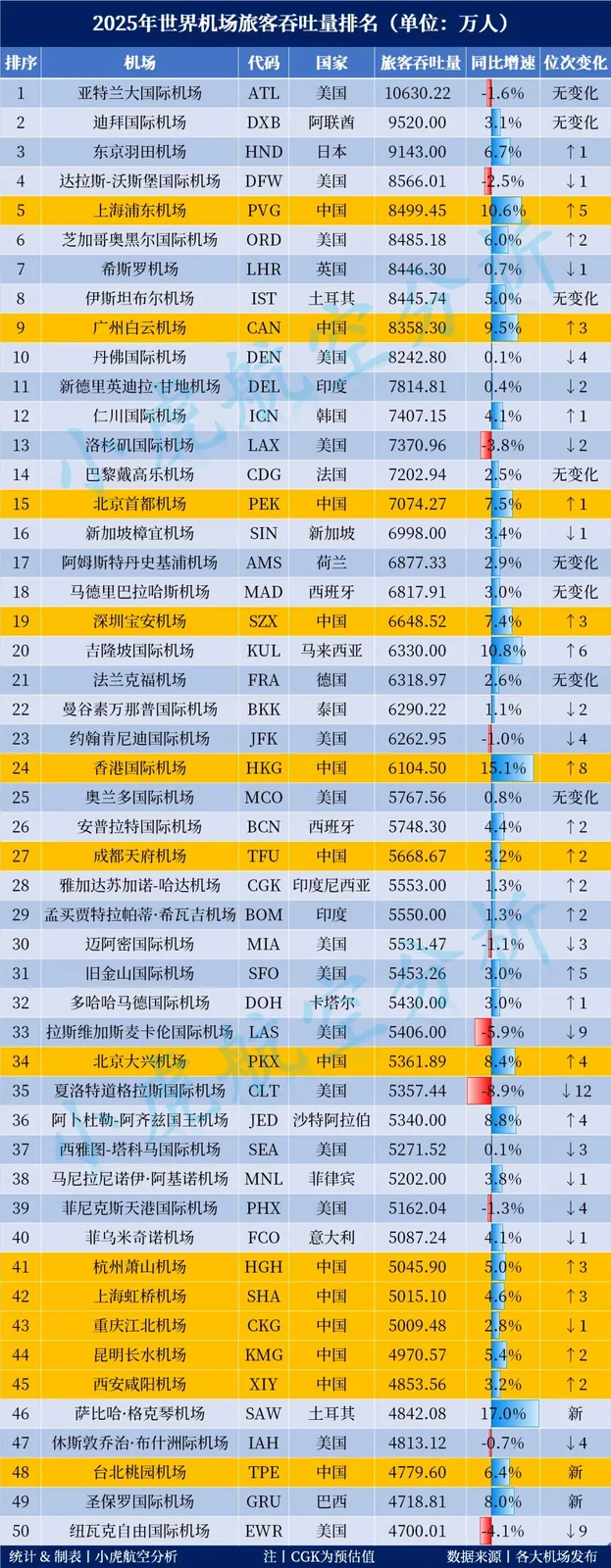
Tráfico mundial de pasajeros: Atlanta suma un quinto año y Shanghái Pudong irrumpe en el top cinco
Atlanta movió 106,3 millones de pasajeros en 2025 y lideró el mundo por quinto año consecutivo, aunque el tráfico cayó un 1,6 %. Shanghái Pudong entró por primera vez en el top cinco mundial con 84,99 millones, Guangzhou Baiyun subió al noveno y 13 aeropuertos chinos entraron en el top 50: 12 de ellos subieron.7 min de lecturaGuía de terminalesGuía de terminales
Rangos de puertas, principales aerolíneas e instalaciones de cada terminal de Aeropuerto Internacional de Cantón-Baiyun.
Comentarios de los lectoresDebate
Las preguntas, los relatos de viaje y las correcciones son bienvenidos. Los comentarios son públicos.
Cargando…
Cargando comentarios…