
แผนที่อาคารผู้โดยสาร ท่าอากาศยานนานาชาตินีโนย อาคีโน
 มะนิลา · ฟิลิปปินส์· Ninoy Aquino International Airport
ท่าอากาศยานนานาชาตินีโนย อาคีโน (IATA: MNL, ICAO RPLL) เป็นสนามบินขนาดใหญ่ที่ให้บริการมะนิลา, ฟิลิปปินส์ โดยมีอาคารผู้โดยสาร 4 แห่ง และประตูขึ้นเครื่อง 70 ประตู ห่างจากใจกลางมะนิลาประมาณ 7 km
Ninoy Aquino International Airport (MNL) serves Manila, Philippines. It has 4 terminals with 70 gates in total and handles about 48 million passengers a year. The airport is about 7 km from the city centre. Ground transport into the city: bus, taxi and car.
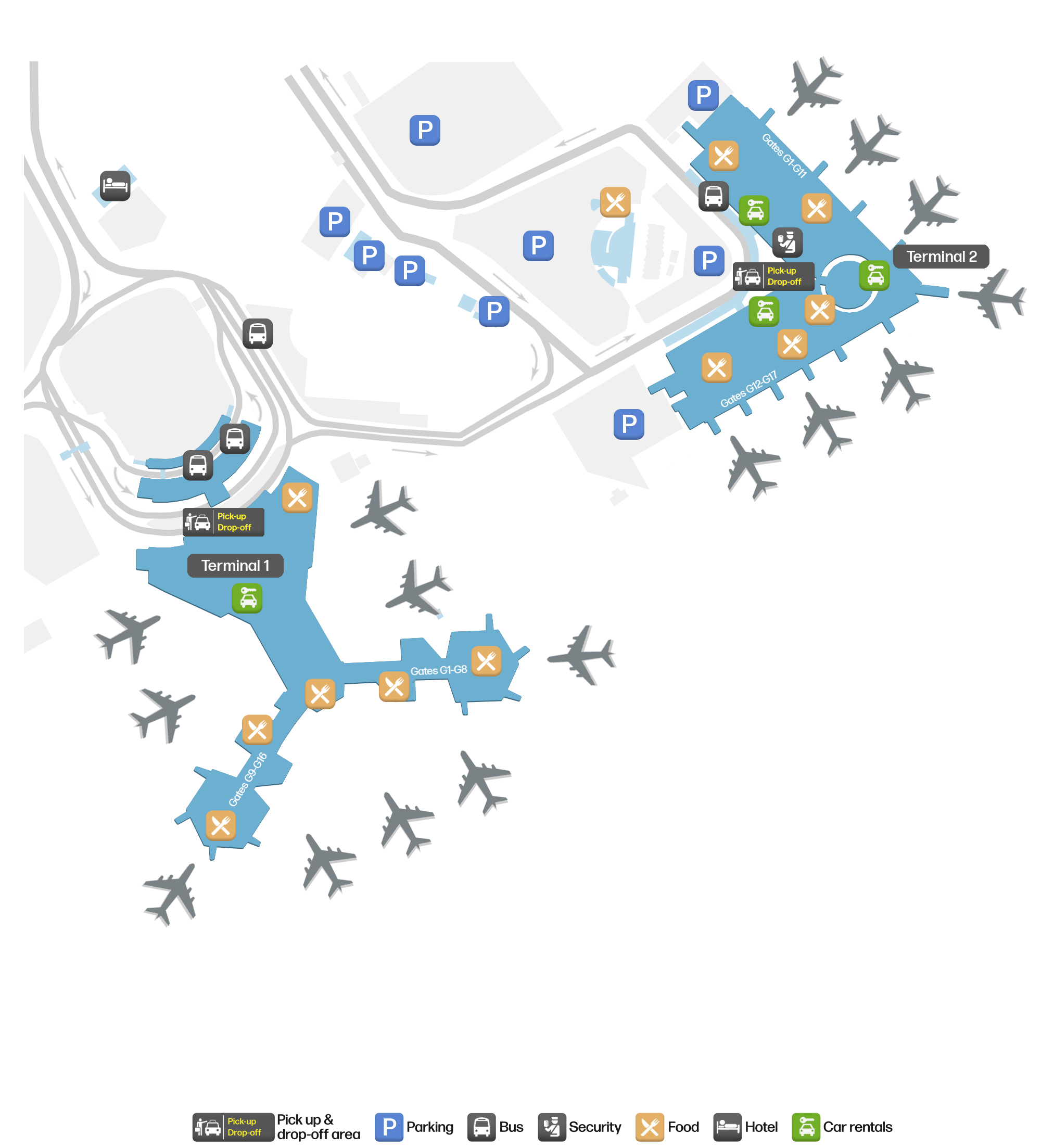
ดาวน์โหลดแผนที่สนามบินดาวน์โหลด
ภาพสนามบินภาพสนามบิน
ภาพจริงของสนามบินแห่งนี้ พร้อมเครดิตของหน้าเว็บสาธารณะที่พบภาพ; ลิขสิทธิ์ยังเป็นของผู้ถ่ายภาพต้นฉบับ คลิกที่ภาพเพื่อขยาย หรือคลิกบรรทัดเครดิตเพื่อเปิดหน้าแหล่งที่มา
ในภาพถ่ายดาวเทียม อาคารผู้โดยสาร ลานจอด และทางวิ่งของท่าอากาศยานนานาชาตินีโนย อาคีโน (MNL) มองเห็นได้ชัดเจน
ข้อมูลเวลาสนามบิน — เวลาปัจจุบันที่ MNLเวลาสนามบิน
เวลาปัจจุบันที่ MNL (Asia/Manila) เทียบกับเวลาท้องถิ่นของคุณ
แผนที่เส้นทาง ท่าอากาศยานนานาชาตินีโนย อาคีโน — จุดหมายบินตรงแผนที่เส้นทาง
76 จุดหมายบินตรง: แผนที่ สายการบินที่ให้บริการ และระยะทาง
เที่ยวบินของท่าอากาศยานนานาชาตินีโนย อาคีโน — ขาออกและขาเข้าป้ายเที่ยวบิน
1,823 หมายเลขเที่ยวบิน ครอบคลุม 67 สายการบิน และ 87 จุดหมายปลายทาง แยกตามทิศทาง หมายเลขเที่ยวบินร่วม (codeshare) รวมอยู่ด้วย
| เที่ยวบิน | สายการบิน | จุดหมายปลายทาง | ประเทศ/ภูมิภาค |
|---|---|---|---|
| 5J14 | Cebu Pacific | ท่าอากาศยานนานาชาติดูไบ | สหรัฐอาหรับเอมิเรตส์ |
| 5J18 | Cebu Pacific | ท่าอากาศยานนานาชาติดูไบ | สหรัฐอาหรับเอมิเรตส์ |
| 5J39 | Cebu Pacific | ท่าอากาศยานซิดนีย์คิงส์ฟอร์ดสมิธ | ออสเตรเลีย |
| 5J49 | Cebu Pacific | Melbourne Airport | ออสเตรเลีย |
| 5J110 | Cebu Pacific | ท่าอากาศยานนานาชาติฮ่องกง | จีน |
| 5J112 | Cebu Pacific | ท่าอากาศยานนานาชาติฮ่องกง | จีน |
| 5J114 | Cebu Pacific | ท่าอากาศยานนานาชาติฮ่องกง | จีน |
| 5J142 | Cebu Pacific | ท่าอากาศยานนานาชาติฮ่องกง | จีน |
| 5J186 | Cebu Pacific | ท่าอากาศยานนานาชาติอินชอน | เกาหลีใต้ |
| 5J188 | Cebu Pacific | ท่าอากาศยานนานาชาติอินชอน | เกาหลีใต้ |
| 5J192 | Cebu Pacific | Cauayan City (CYZ) Cauayan Airport | ฟิลิปปินส์ |
| 5J196 | Cebu Pacific | Cauayan City (CYZ) Cauayan Airport | ฟิลิปปินส์ |
| 5J268 | Cebu Pacific | Xiamen Gaoqi International Airport | จีน |
| 5J272 | Cebu Pacific | ท่าอากาศยานนานาชาติฮ่องกง | จีน |
| 5J279 | Cebu Pacific | Denpasar I Gusti Ngurah Rai International Airport | อินโดนีเซีย |
| 5J281 | Cebu Pacific | Denpasar I Gusti Ngurah Rai International Airport | อินโดนีเซีย |
| 5J286 | Cebu Pacific | ท่าอากาศยานนานาชาติกว่างโจวไป๋หยุน | จีน |
| 5J288 | Cebu Pacific | ท่าอากาศยานนานาชาติกว่างโจวไป๋หยุน | จีน |
| 5J310 | Cebu Pacific | Taiwan Taoyuan International Airport | ไต้หวัน |
| 5J312 | Cebu Pacific | Taiwan Taoyuan International Airport | ไต้หวัน |
หมายเลขเที่ยวบินและเส้นทางจากดัชนีเที่ยวบิน aviability.com (ข้อมูล ณ วันที่ 26 ตุลาคม 2569); รวมหมายเลขเที่ยวบินร่วมและไม่แสดงเวลาเดินทาง ที่มา: aviability.com ↗
ข้อมูลและรายละเอียดสนามบินรายละเอียดสนามบิน
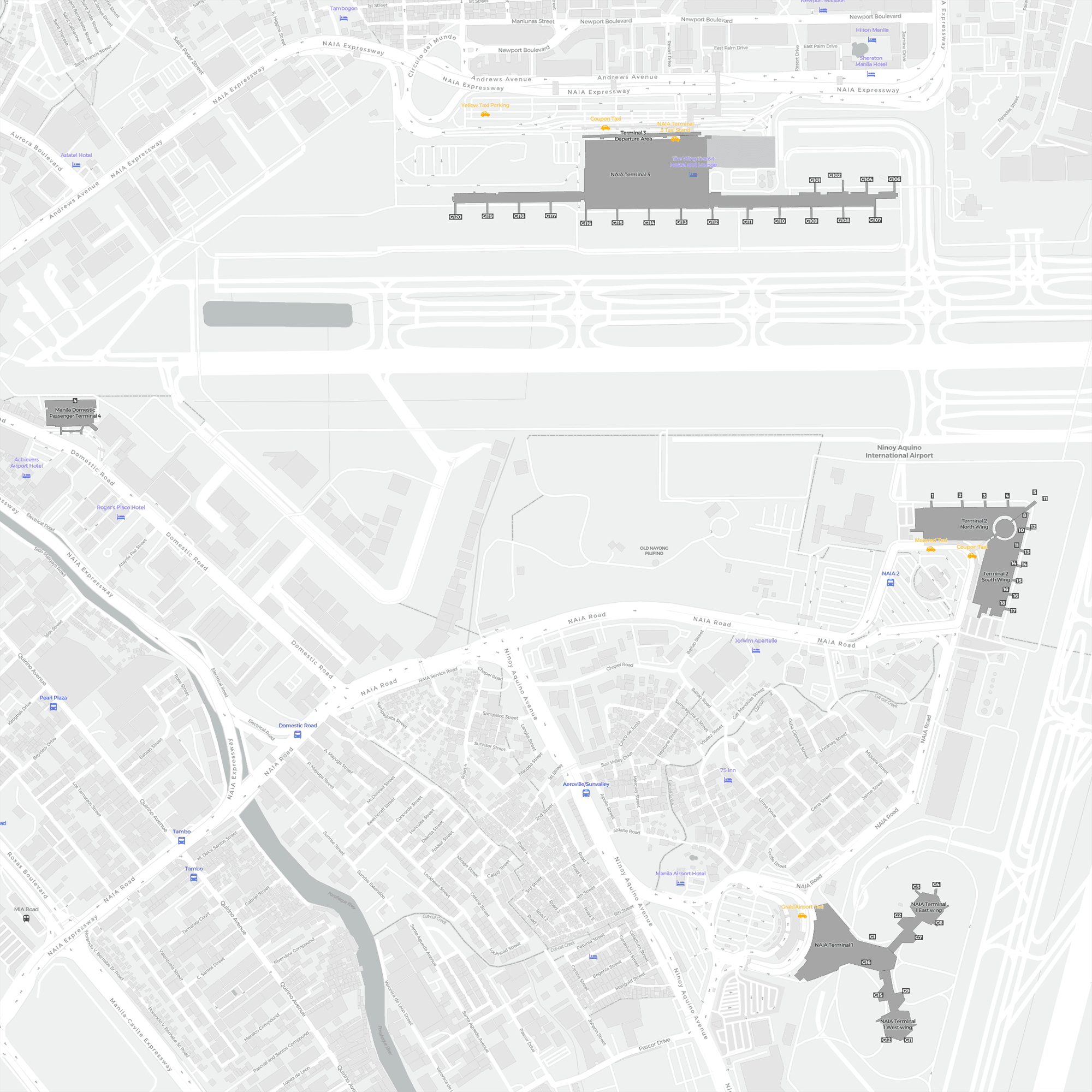
แผนที่อินเทอร์แอกทีฟ — ตำแหน่ง ท่าอากาศยานนานาชาตินีโนย อาคีโนแผนที่อินเทอร์แอกทีฟ
ดูสนามบินนี้บนบริการแผนที่อื่น:
Manila Ninoy Aquino International Airport terminal guideคู่มือสนามบิน
Ninoy Aquino International Airport sits right beside Manila, about 7 km from the city centre, and handles around 52 million passengers a year (2025). It has four terminals with no walkways and no rail link between them, only road shuttles — which makes it one of the airports in Southeast Asia where you most need to leave generous time.
Satellite view
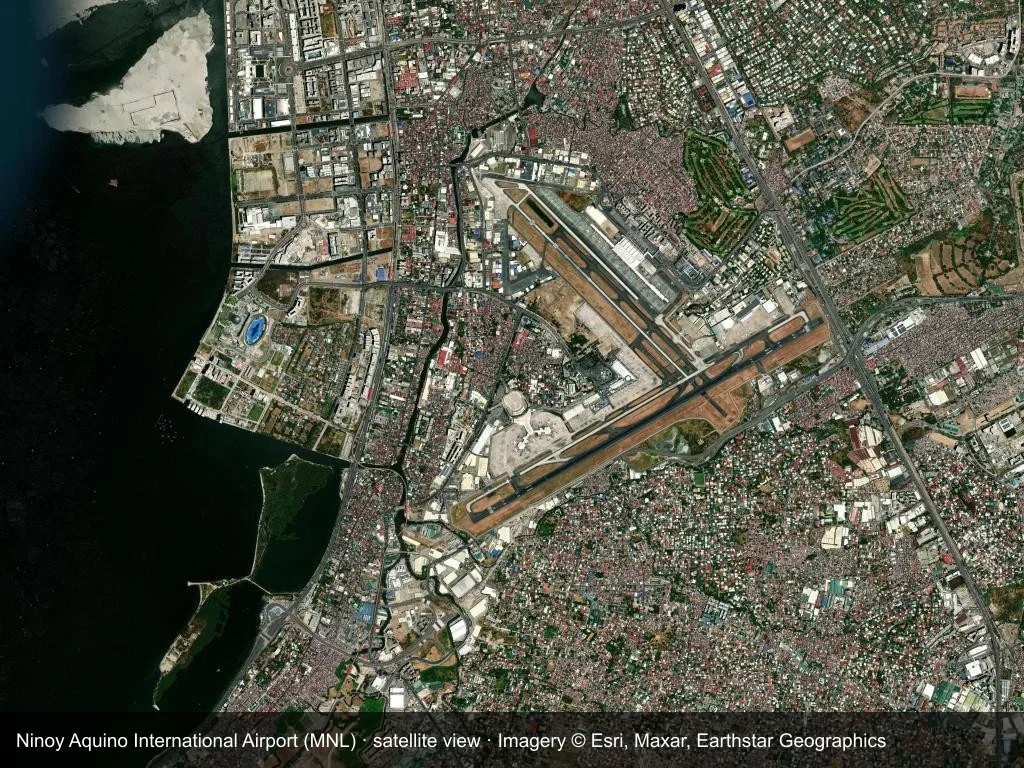
In the satellite image, the terminals, apron and runways at Ninoy Aquino International Airport (MNL) are clearly visible.
The satellite image comes from Esri World Imagery (© Esri, Maxar, Earthstar Geographics); the field and attribution are labelled in the image. This is a satellite view, not a ground-level photograph.
The four terminals
| Code | Name | Main flights | Main carriers |
|---|---|---|---|
| T1 | Terminal 1 | Mostly international | Several foreign carriers; AirAsia Philippines international flights also use it |
| T2 | Terminal 2 | Domestic + international | Philippine Airlines only, split into domestic and international zones |
| T3 | Terminal 3 | International + domestic | The largest and newest; Cebu Pacific, JAL, ANA and others |
| T4 | Terminal 4 | Domestic | Small low-cost carriers and turboprop flights |
How to tell where you are:
- For Philippine Airlines, look to T2; for Cebu Pacific and most international carriers, T3; AirAsia Philippines flies its international routes from T1 and its domestic routes from T2 (changed from March 2026).
- T1 / T2 / T3 are linked by a free inter-terminal shuttle (running 24 hours, boarding pass required), which uses public roads and is exposed to traffic.
- T4 is the furthest from the others, and the drive can take 30–40 minutes.
Our diagram draws the four buildings as separate structures precisely to make the point that every terminal change here is a road journey.
Transfers and connections
- Manila has no airside inter-terminal transit — changing buildings means leaving the terminal, collecting your bags and checking in and clearing security again.
- Official and airline advice: 2 hours for international-to-international in the same building, 3–4 hours for international-to-international across buildings, and 3.5–4 hours for international-to-domestic.
- The early morning (05:00–09:00) and the evening (16:00–20:00) are the congestion peaks, so always budget a cross-terminal connection against peak conditions.
Routes and flights
- Routes — around 30-plus airlines flying to about 60 destinations; long-haul points include Tokyo, Osaka, Seoul, Beijing, Shanghai, Hong Kong, Singapore, Dubai, Sydney, Los Angeles and San Francisco.
- Flights — about 52.02 million passengers in 2025, an all-time record for the airport.
- Aircraft — main bases are Philippine Airlines (T2) and Cebu Pacific (T3), followed by AirAsia Philippines and PAL Express; the fleet is the A320/A321 family, with A330 and A350 on long-haul.
Getting into Manila
- Taxi / rideshare (Grab) — about 7 km, but Manila's congestion can stretch that to an hour, so allow for it.
- Airport buses — linking the main districts of the city with the terminals.
- Light rail / metro — you must first take road transport out of the airport area to reach it, which is not convenient for travellers with heavy luggage.
Practical tips
- Manila is one of the Asian hubs that demands the most patience when connecting: budget 4 hours rather than expecting 2 to cover a cross-terminal transfer.
- In the holiday seasons (Holy Week, All Souls' Day, Christmas and New Year) the crowds stack up, and queues for the inter-terminal shuttle get noticeably longer.
- The city is only a street away from the airport but the congestion is severe, so when you have a flight to catch, plan the ground journey for the worst case.
References
คู่มืออาคารผู้โดยสารคู่มืออาคารผู้โดยสาร
ช่วงประตูขึ้นเครื่อง สายการบินหลัก และสิ่งอำนวยความสะดวกของแต่ละอาคารผู้โดยสารที่ ท่าอากาศยานนานาชาตินีโนย อาคีโน
ความคิดเห็นจากผู้อ่านการสนทนา
ยินดีรับคำถาม รายงานการเดินทาง และการแก้ไข ความคิดเห็นเป็นสาธารณะ
กำลังโหลด…
กำลังโหลดความคิดเห็น…