Shenyang to New York via Seoul: Korean Air, the Incheon Transfer and JFK Arrival
- Shenyang Taoxian Airport
- Korean Air
- Incheon transfer
- JFK
- US entry
- through-checked baggage
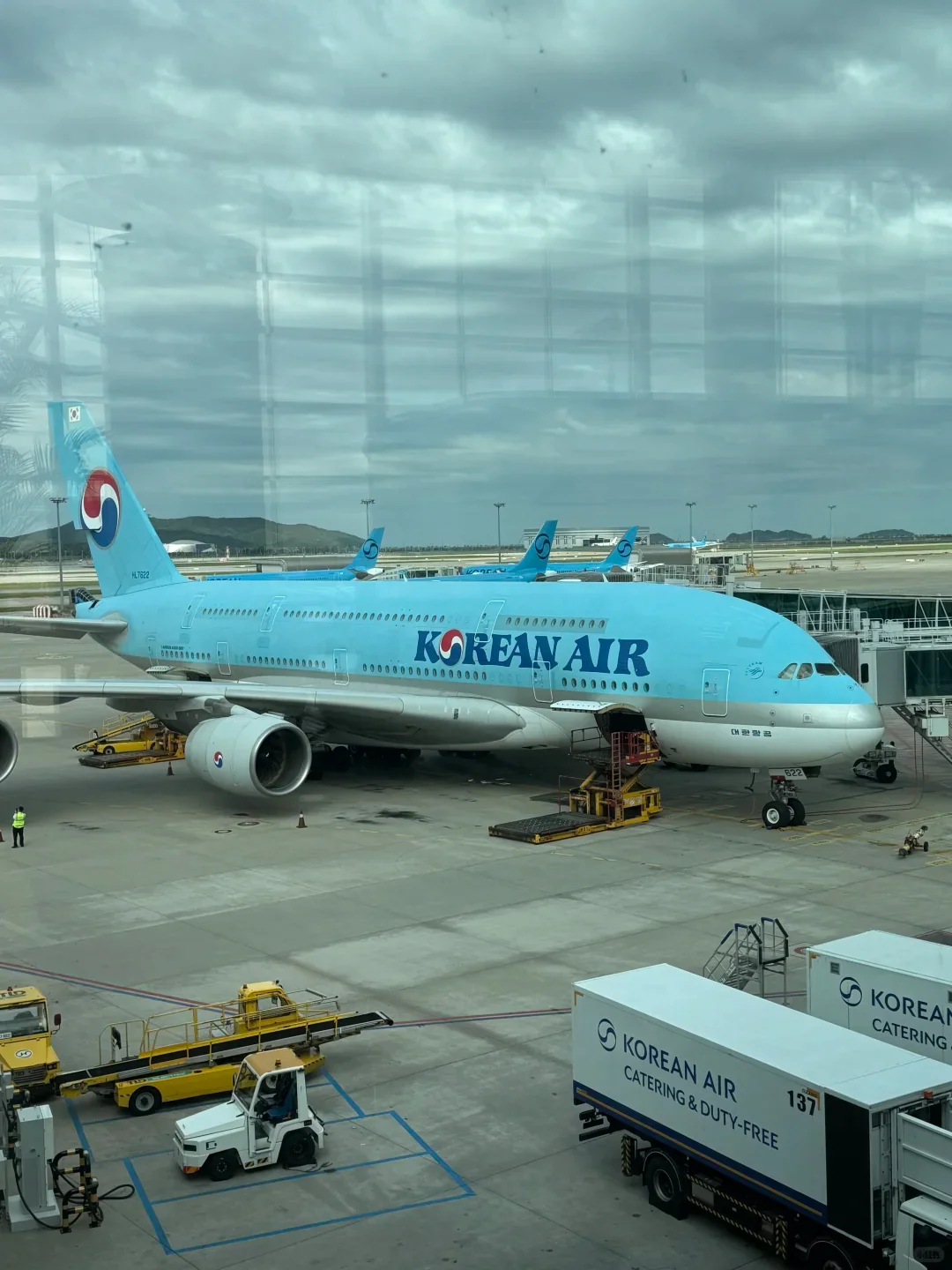
There is no nonstop from Shenyang to New York. The usual routing is one stop in Seoul: a short hop from Taoxian to Incheon, then a transpacific flight, usually with the same airline — Korean Air, for instance. On a single ticket the bags are checked through to New York and both boarding passes are issued in Shenyang, so the connection needs no baggage collection and no second check-in. Incheon's long-haul schedule is dense and its transfers stay inside one terminal, which makes it a calmer change than most hubs.
Every figure below is a reference point; the airline's and airport's current notices prevail.
1. How the route fits together
Shenyang Taoxian (SHE) to Incheon takes about ninety minutes. Incheon to New York JFK is a transpacific leg of 13–14 hours; flying east across the date line, departure and arrival usually fall on the same local date. The two legs could hardly be more different — one is barely a film, the other takes two sleeps.
On a typical schedule you leave Shenyang in the morning, reach Incheon around midday, fly out the next morning and land in New York around midday the same day. The two timings often fail to line up, which is how a night in Seoul appears; Incheon has transit hotels, and a bed beats ten hours in a cabin seat. When you book, check whether the connection is same-day and whether the bags are tagged to New York or only to Incheon.
New York is 12 hours behind Beijing in summer and 13 in winter, so keep your first day light.
2. Shenyang Taoxian: check-in, documents and through-checked bags
Be at the airport two and a half hours ahead. International departures are in Terminal 3, with the Korean Air counters on the same level; they usually close 60 minutes before departure.
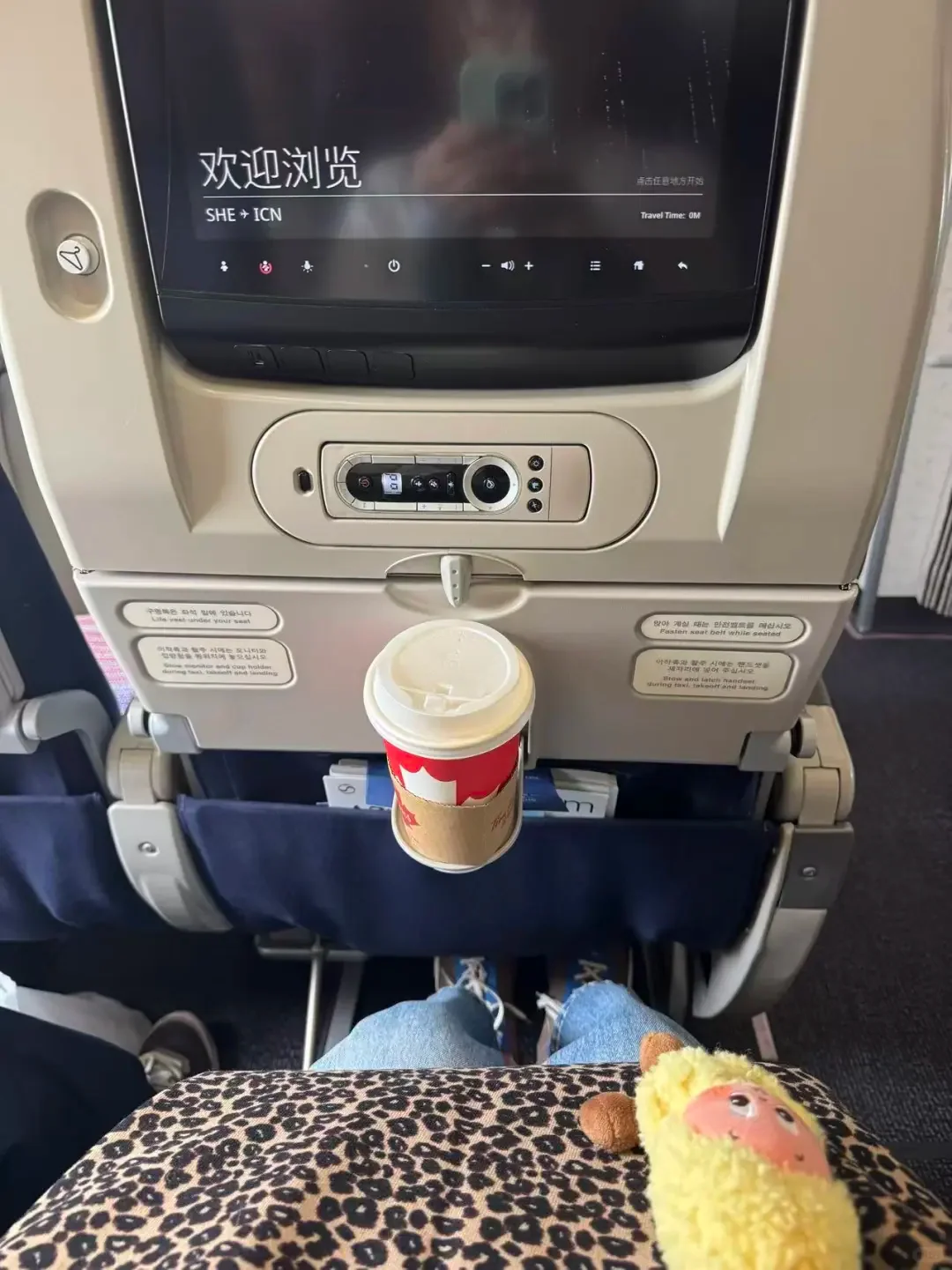
Check-in verifies your passport (six months' validity), a valid US visa and whether your EVUS enrolment is current. Holders of a Chinese passport with a ten-year B1/B2 visa must confirm EVUS before every US trip; one enrolment normally lasts two years. Visa Waiver Program passports use ESTA instead. The counter will also look at your onward or return ticket.
Chinese passport holders transiting Incheon should also check Korean transit rules: with a through ticket, no entry and a valid US (or other qualifying) visa, the airside transfer route usually works, but the policy changes — confirm with the airline or the Korean embassy before departure. If you plan to enter Seoul for a night, you need a Korean visa or to qualify for visa-free entry.
It is also the moment to confirm your seat and special meal on the long leg: thirteen hours is easier in a window or aisle seat away from the lavatories.
On one ticket you get both boarding passes and the bag is tagged to New York. Separate tickets, or a few days in Seoul, usually mean the bag stops at Incheon and must be collected and re-checked.
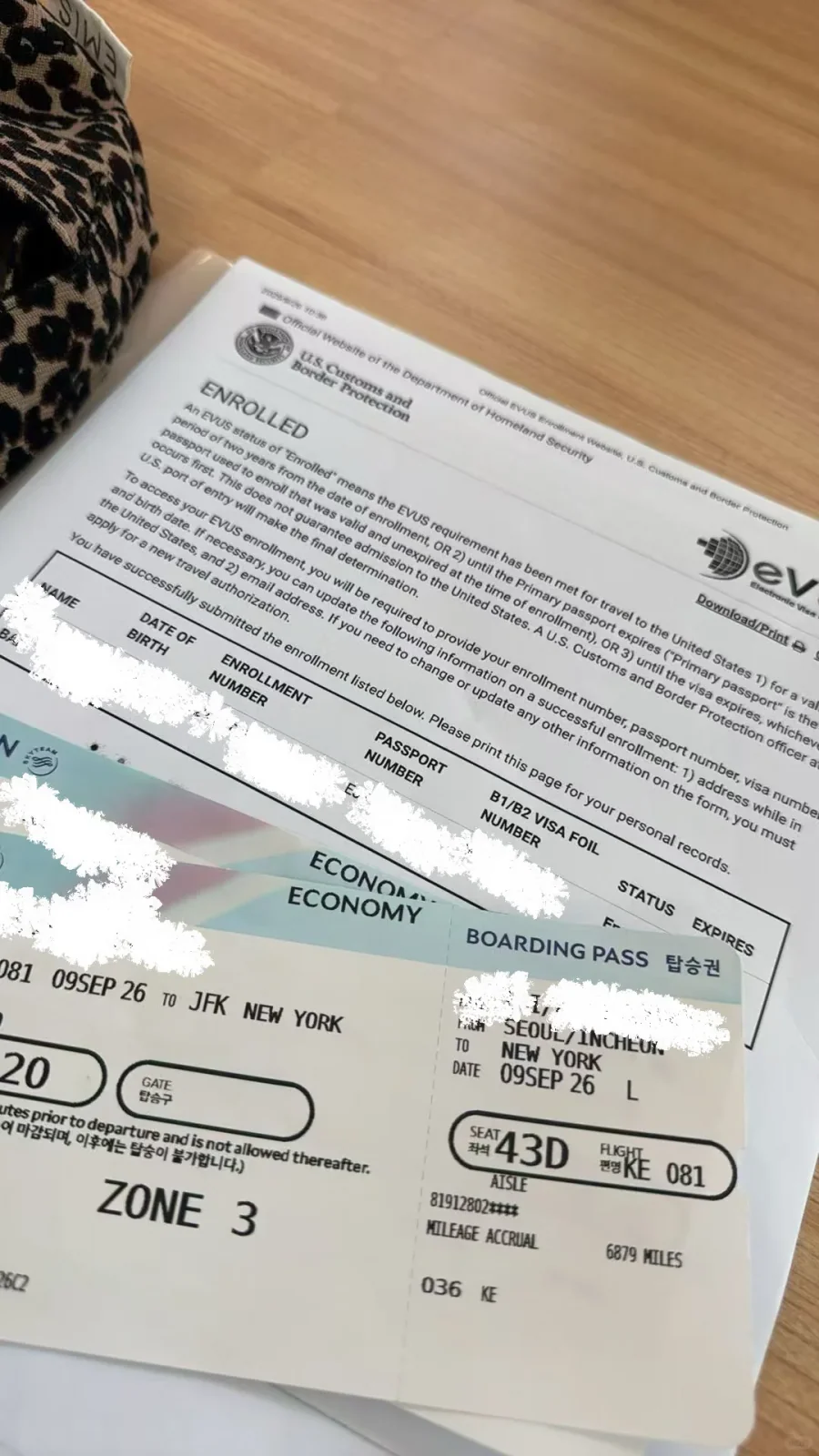
Exit through the automated e-channels — passport, fingerprints, security. Border officers may ask your purpose and length of stay. Power banks stay in the cabin.
3. Incheon Terminal 2: transit security and the transfer desk
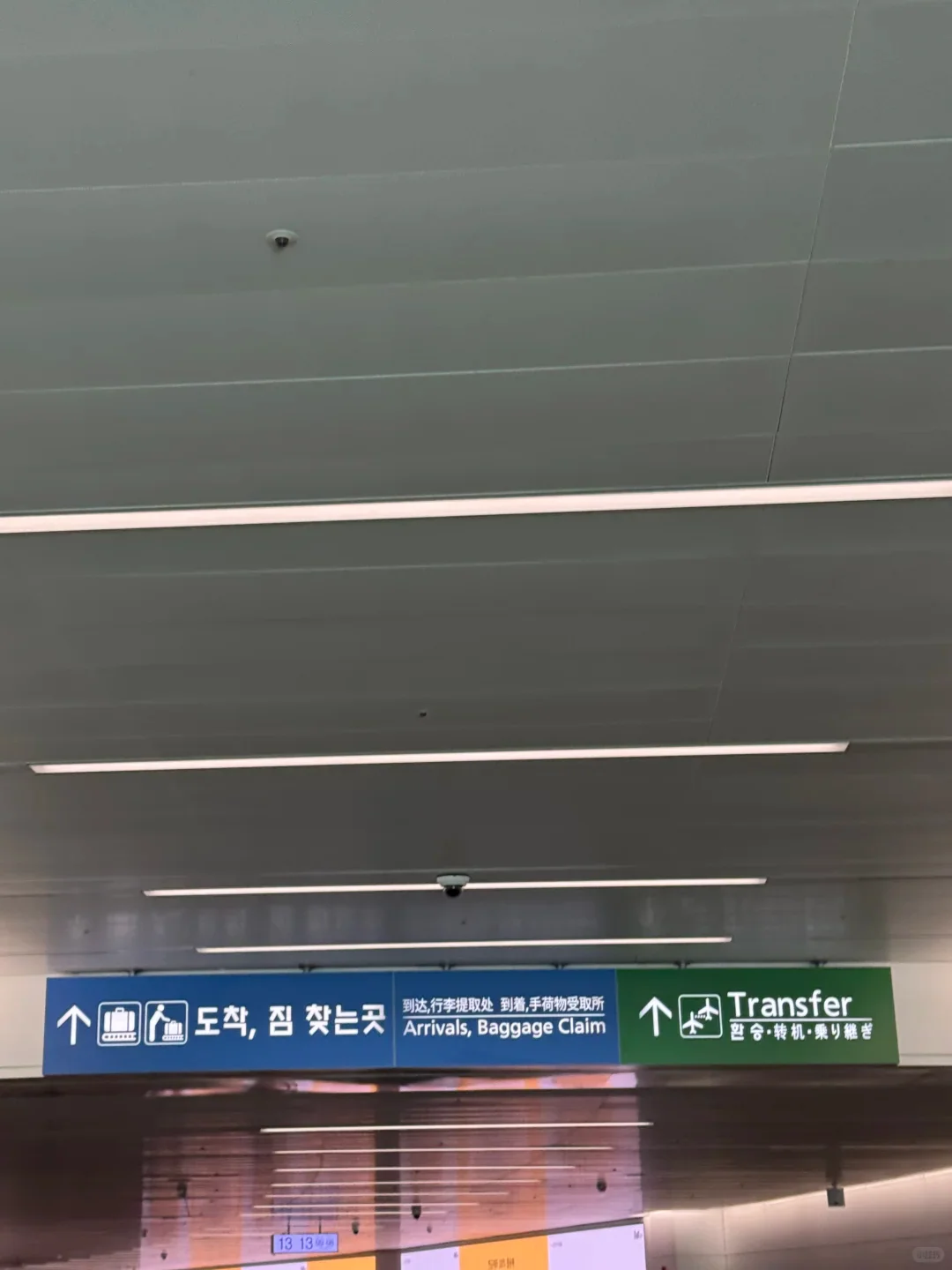
Korean Air uses Terminal 2 at Incheon, and connecting passengers stay in the building. Follow the green "Transfer" signs, not the blue "Arrivals" ones: the channels split at one junction, and the wrong one means clearing Korean immigration. A few partners arrive at Terminal 1, where the free inter-terminal shuttle adds about 30 minutes.
Transit passengers pass one security check on level 2, then go up to the level 3 gates. The transfer desk just outside security handles rebooking and seat confirmation. Boarding starts 30–40 minutes before departure, and the gate level has shops, restaurants and showers; lounges can be booked by the hour.
| Situation | Allow | Why |
|---|---|---|
| One ticket, same-day connection | 2 hours or more | Transit security can queue |
| Two separate tickets | 3 hours or more | No protection if the first leg is late |
| Overnight connection | 8 hours or more | You need a hotel or a transit hotel |
The airport's minimum connecting time is around 45 minutes, but that is the optimistic case — on a first run, add an hour.
An overnight connection works two ways. Stay airside at a transit hotel: bags stay checked through and you never clear immigration. Go into Seoul and a Chinese passport holder needs a Korean visa; travellers with a valid US visa transiting to the United States can usually enter visa-free for 30 days, but the rules change often, so check the embassy's latest note.
4. The long leg, and arrival at JFK
The long leg runs 13–14 hours on a wide-body such as an A380, 777 or 787. Two or three meals are served, with snacks in between, and neck pillows, blankets and slippers are handed out. Order a special meal in the airline app before departure; it cannot be arranged on board.
You land at JFK Terminal 1. Non-US citizens queue in the visitors lane; the wait depends on how many flights arrive at once, and twenty minutes to an hour is normal. Have your passport, EVUS printout, return or onward ticket and hotel booking ready. A CBP officer usually asks only your purpose, length of stay and where you are staying, then takes fingerprints and a photo. If you are sent to secondary inspection, explain the trip calmly.
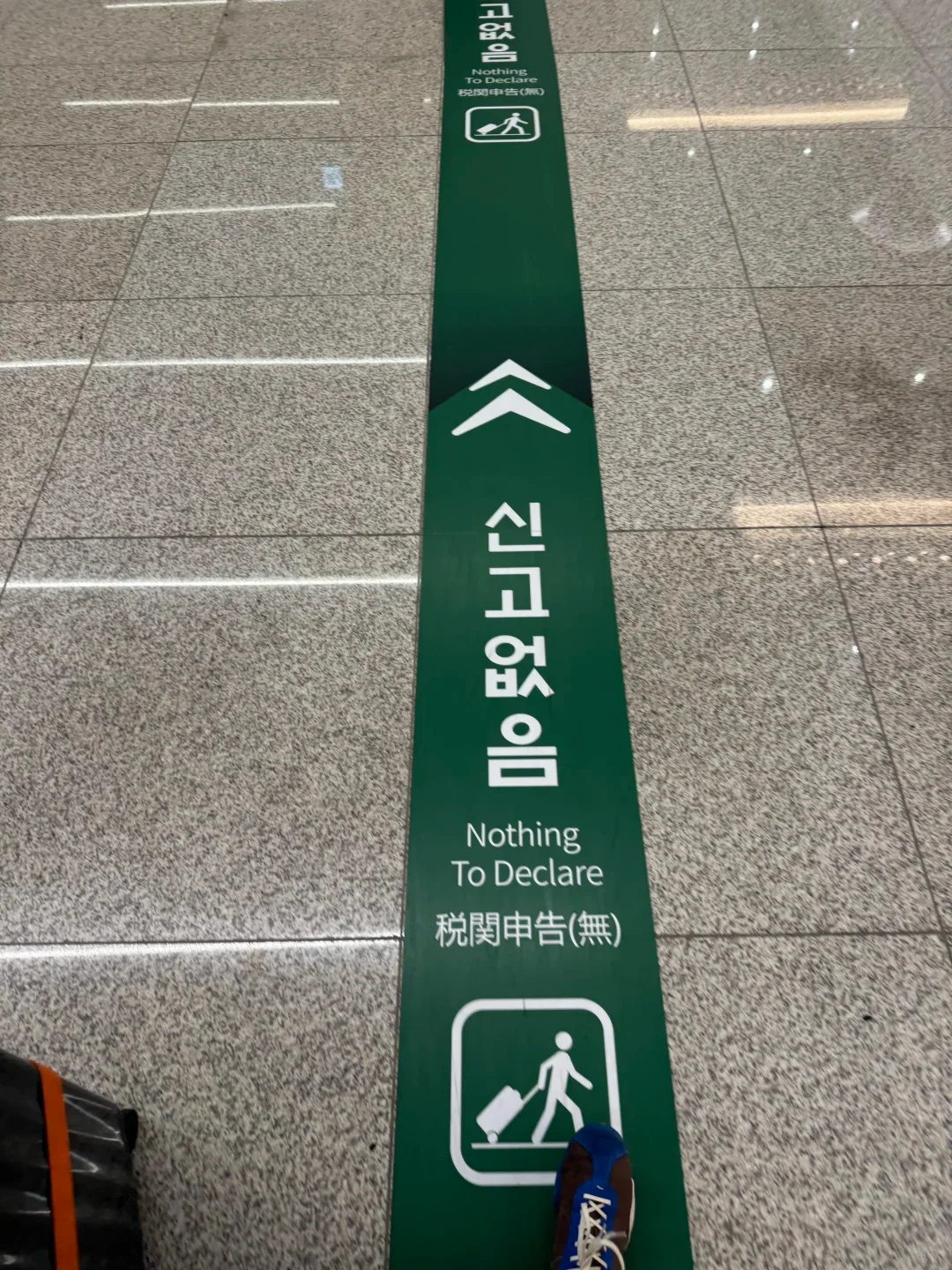
Phones and photography are not allowed in the immigration hall. Collect your bags after immigration, then clear customs — red channel to declare, green if not. Only past that door are you formally in the United States.
5. Getting into the city from JFK
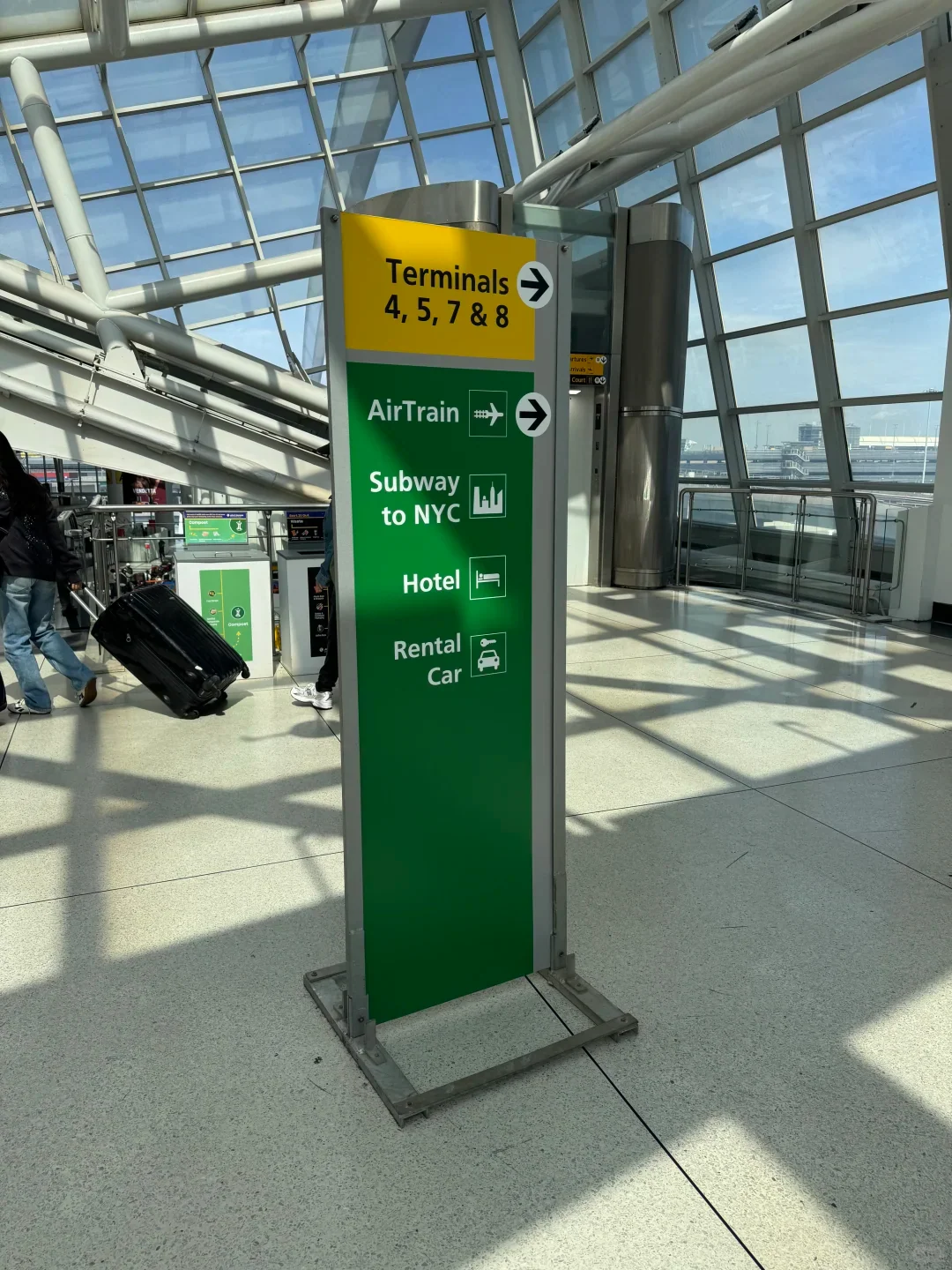
Follow the AirTrain signs after customs. The AirTrain is free between terminals and charges only when you leave the airport. The usual route to Manhattan is the train to Jamaica, where you pay about $8.50 and change to the E, J or Z subway; the subway is $3 a ride, paid by tapping OMNY with a card or phone. The other branch runs to Howard Beach for the A train. Allow 60–90 minutes.
The Long Island Rail Road is faster: change at Jamaica and reach Penn Station or Grand Central in about twenty minutes, for a separate fare. The AirTrain runs around the clock with sparser late-night service; the E train runs overnight, the J and Z thin out after midnight. Most subway stations have no lifts, so two large cases mean stairs.
A taxi to Midtown is usually $70 or more with tolls and tip — reasonable with heavy bags; otherwise the train is steadier.
6. Before you fly
- Passport valid for six months, with a valid US visa.
- EVUS printed; ESTA for a VWP passport.
- Ticket numbers, both boarding passes, bags checked through.
- Return ticket and hotel booking; 2 hours for a same-day connection, 8 for an overnight.
- Re-check Korea's transit rules and your EVUS status before departure.
- Medicine in its original packaging; power banks in the cabin.
Related links
- On this site: Incheon International Airport (ICN), John F. Kennedy International Airport (JFK), South Korea (KR), United States (US), China (CN)
- Wikipedia: Incheon International Airport, John F. Kennedy International Airport
- Baidu Baike: Incheon International Airport, John F. Kennedy International Airport
Schedules, connection times and fares follow the airlines' and airports' published information; visa and entry rules follow the latest notices from Korea's Ministry of Justice, US Customs and Border Protection, and the relevant consulates. Source: WeChat travel guide.
More articlesTravel notes
Arriving at Busan Gimhae: e-Arrival Card, Immigration and Customs
A practical walkthrough of arrival at Gimhae International Airport (PUS): filing the Korean e-Arrival Card three days ahead, preparing a Korean address and five-digit postal code, the foreigner lane with fingerprint and face capture, baggage and customs, and how to reach the light rail, bus or taxi after exit.5 min read
Busan Gimhae Airport by Light Rail: Airport Station to Line 2
A step-by-step guide to the Busan–Gimhae Light Rail Transit from Gimhae International Airport (PUS) into Busan: the walk from international arrivals to Airport Station, T-money and ticket fares, three stops and six minutes to Sasang, the change to the green Line 2, and journey times to Seomyeon and Haeundae.4 min read