Arriving at Busan Gimhae: e-Arrival Card, Immigration and Customs
- Gimhae Airport
- Korea arrival
- e-Arrival Card
- Busan travel
- Korean customs
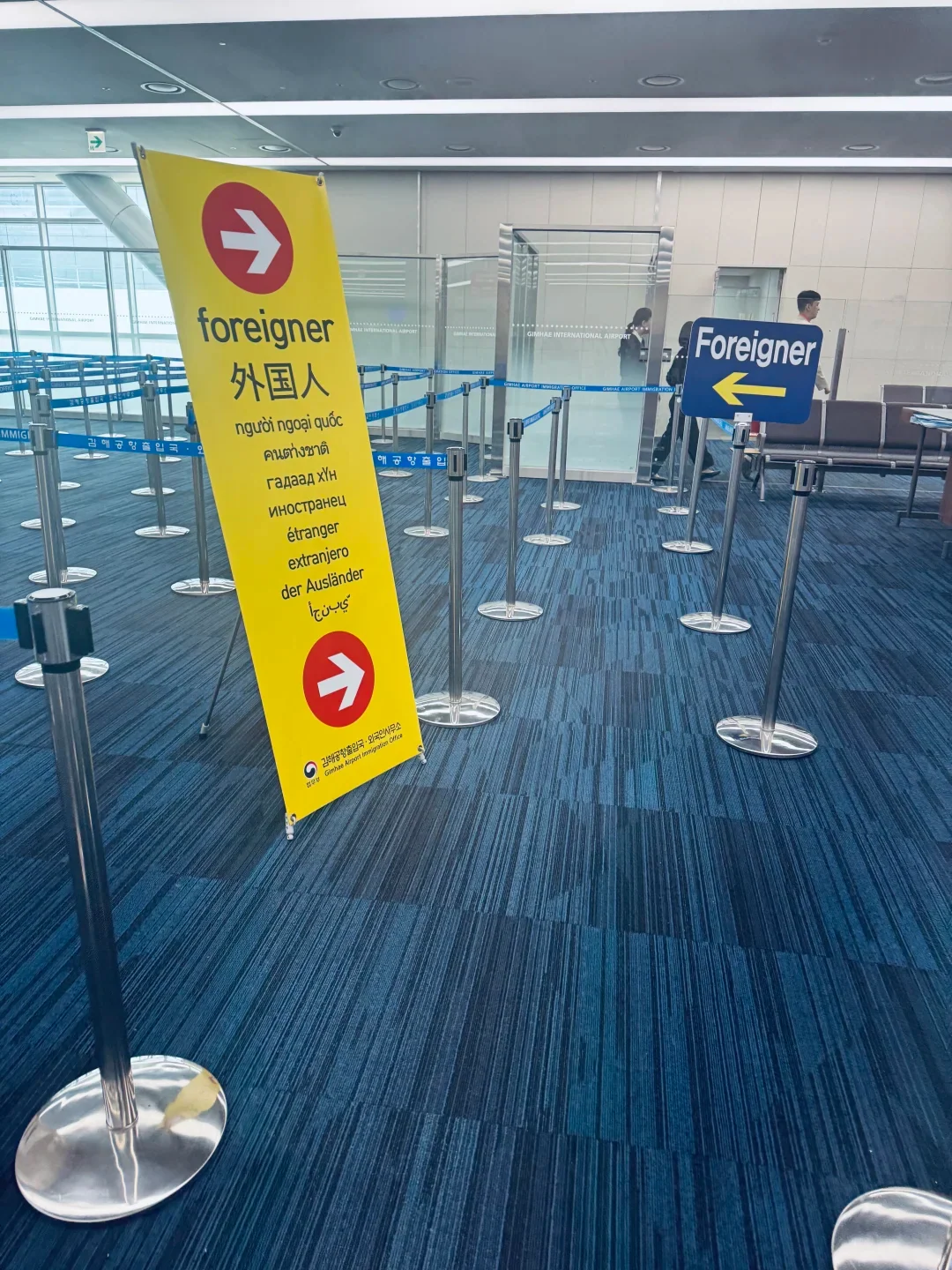
Gimhae International Airport is small and the arrival process is short: off the plane, through the foreigner lane, fingerprints, bags, customs, and out of the terminal in half an hour on a good day. What costs people time is rarely the queue — it is the electronic arrival card they did not finish before landing.
Korea now runs an e-Arrival Card that can be completed on a phone in advance and used instead of the paper card handed out on the plane. This guide follows the process in five steps — the form, the interview, baggage, customs and the exit — and concentrates on the fields that cause trouble: address, passport photo and phone number. The website and rules do change, so check the official page before you travel.
1. Three days before landing: file the e-Arrival Card
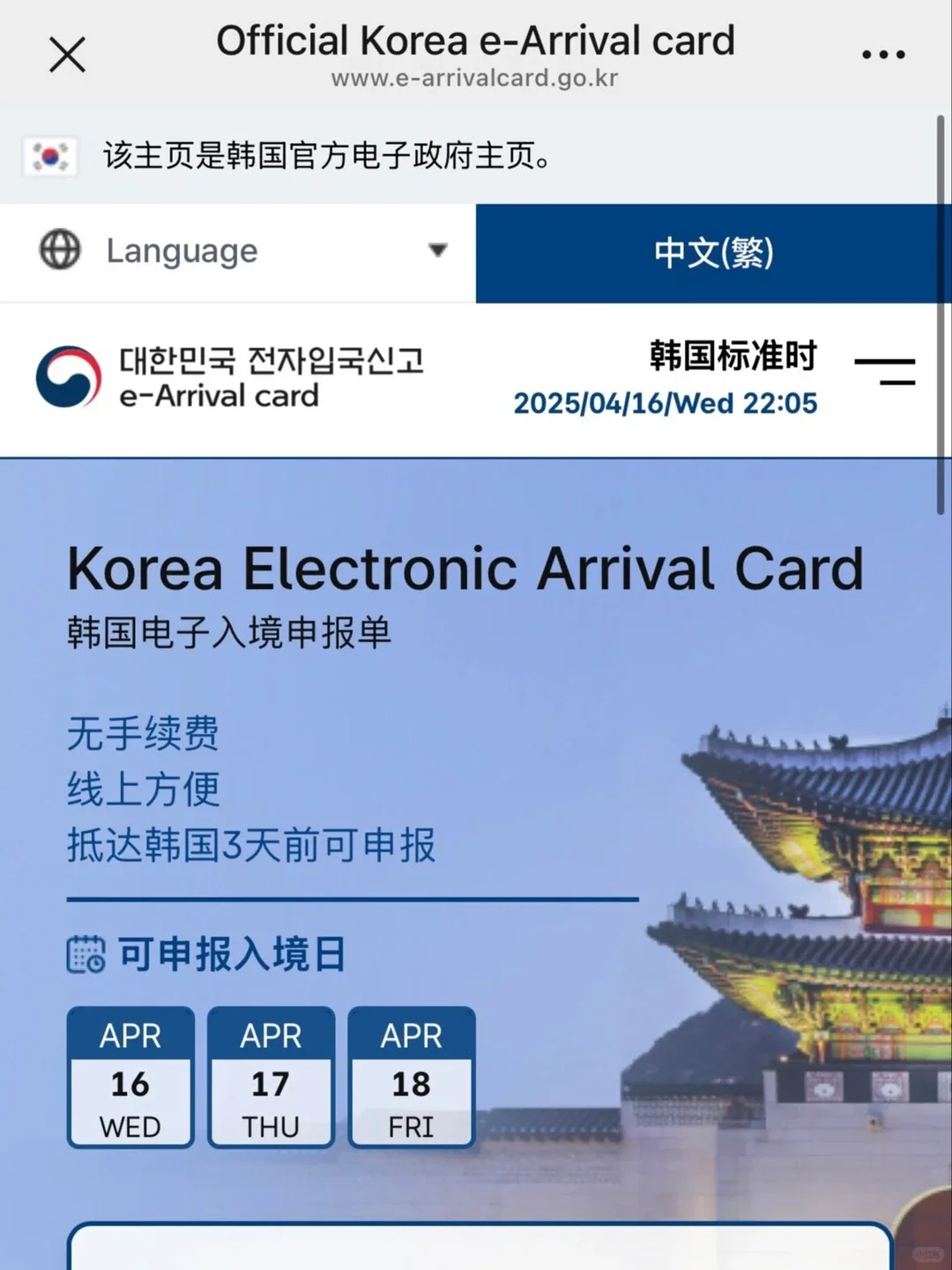
The official portal is www.e-arrivalcard.go.kr, and it is free; there is no need to pay an agent. The form opens three days before arrival — land on 22 October and you can submit from 19 October — and once it is done, save the PDF or a screenshot to show the officer.
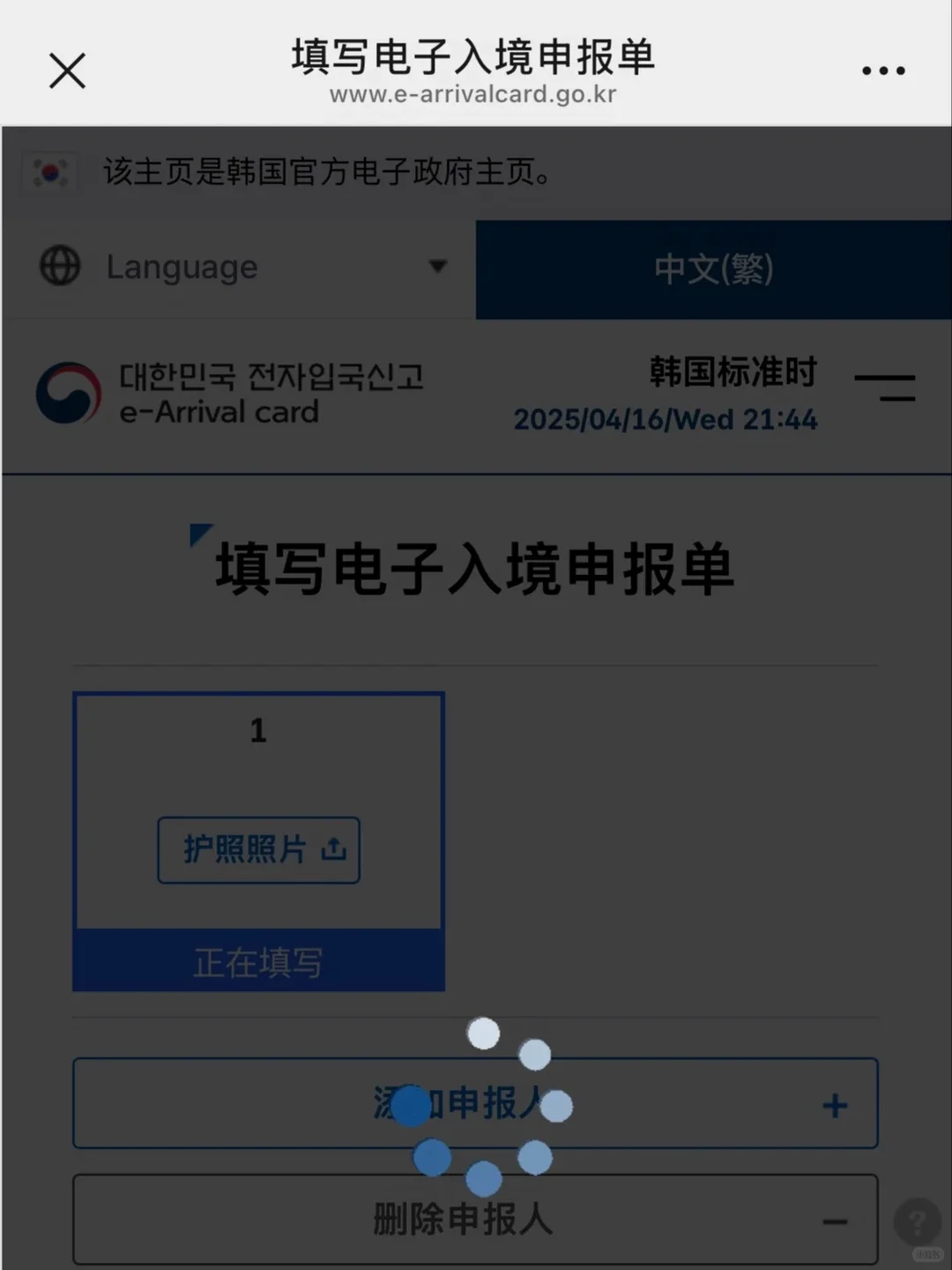
The form runs through five steps: agree to the terms and give an email address, enter your passport details, add your travel details (dates, flight number, address in Korea), check everything and submit. Submitting produces an issue number, which lets you log back in with your email to check or edit the form, so a changed flight or a mis-typed address can still be fixed.
The e-Arrival Card is not a visa and does not replace one. Chinese passport holders still need a valid Korean visa or residence permit; the card only replaces the paper arrival slip. Paper cards remain valid and flight attendants still hand them out, and there are desks in the arrivals hall if you would rather fill one in on the ground — it just means joining another queue.
2. The four fields that trip people up
The first is the address. You need your address in Korea, ideally in both Korean and English, plus the five-digit postal code. Hotel confirmations usually carry both; if the postal code is missing, the form can search by address or postcode and offer the matching Korean address, from which you pick one.
The second is the passport photo. Upload the page with your photograph, and include the machine-readable strip along the bottom edge — crop it off and the upload fails. Glare and blur are rejected too, so take the picture again in even light rather than using a screenshot.
The third is the phone number. A Chinese mobile works if you put 86 in front of it; the wrong format or too few digits leaves the page stuck on the form. The fourth is incomplete information: a missing unit number, a mistyped flight or reversed dates all send the page back to the form, which looks like a broken website but is usually one field failing validation.
Do not close the window as soon as you submit. Save the PDF and take a screenshot showing the issue number, and keep both in your photo library or an offline folder. The airport wifi is not reliable, and the one moment you need the file is the one moment it will not load.
3. Immigration: use the foreigner lane
Follow the "국제선 도착 / International Arrivals" signs off the plane. In the immigration hall, Korean passports go to the domestic counters and foreign visitors to the lane marked "Foreigner / 外国人", usually with a yellow or blue sign that is hard to miss.
At the counter, show your passport and either the e-Arrival screenshot or the paper card. The officer checks your visa, flight and address, then takes fingerprints from both index fingers and a facial image. This step is compulsory: refusing it means being refused entry. Then you go on to baggage.
The wait depends on what else is landing. Early-morning and late-night flights often clear in a few minutes; in the middle of the day, with several arrivals stacked up, 30 to 40 minutes is normal. Walk rather than linger on the jet bridge or in the toilets — the earlier you reach the hall, the earlier you are through.
4. Baggage and customs
After immigration comes the baggage carousel, with screens showing which belt serves your flight. Gimhae does not have many belts, so following your fellow passengers usually works; trolleys are free beside the carousel, and oversize bags have their own collection point.
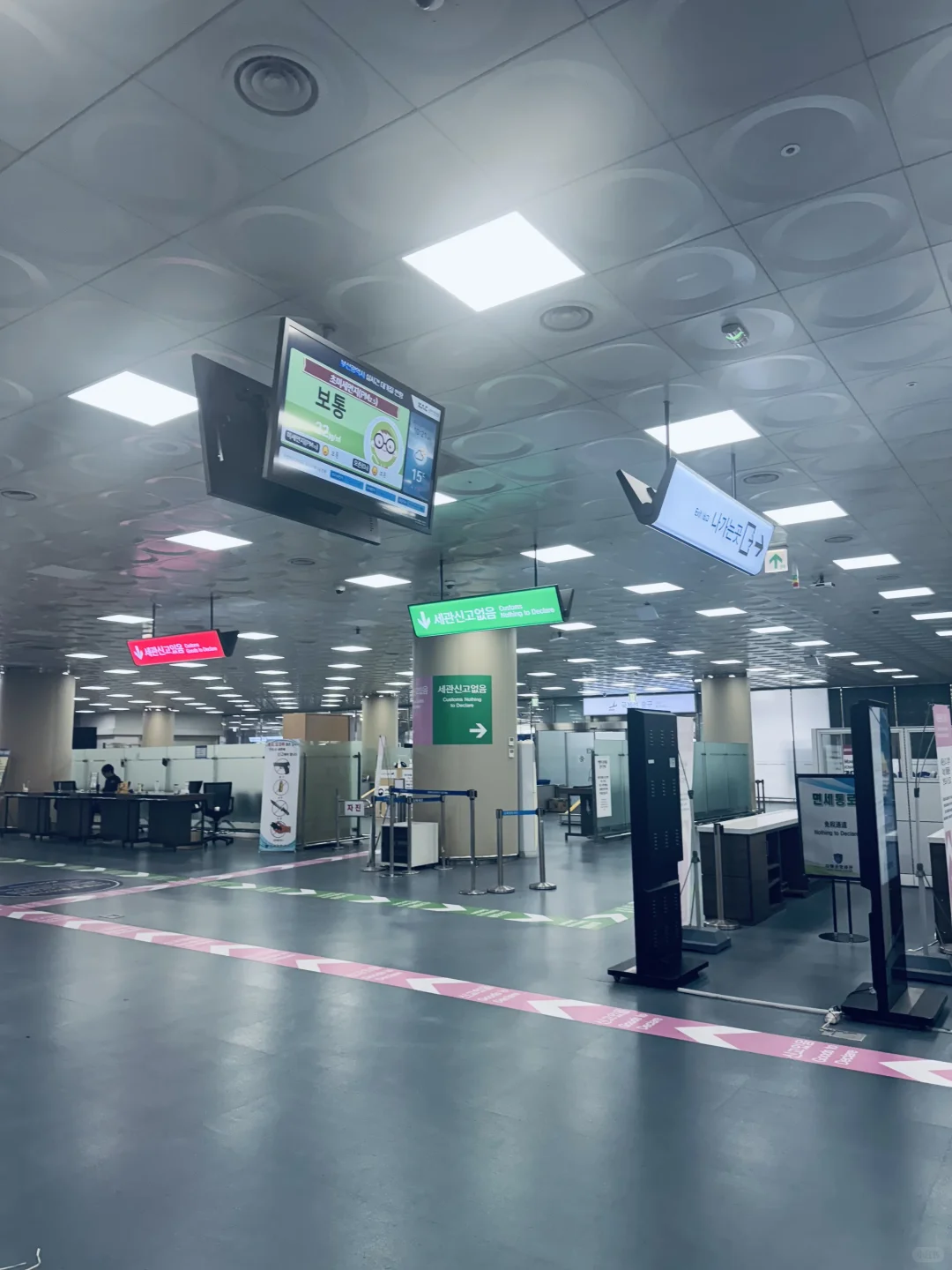
Then customs, which splits into "goods to declare" and "nothing to declare". With nothing to declare, put your bags through the scanner in the green channel. If you are over the duty-free allowance, carrying more than US$10,000 in cash, or bringing in food, meat, seeds or other restricted items, use the declaration channel and fill in the form honestly.
The duty-free allowances to keep in mind: 1 litre of alcohol, 200 cigarettes, 60 ml of perfume, and other goods up to US$800 in total. Most meat products, fruit, vegetables and seeds are prohibited, and anything you bring must be declared — the penalty for not doing so is real. The customs notice in the hall is the final word.
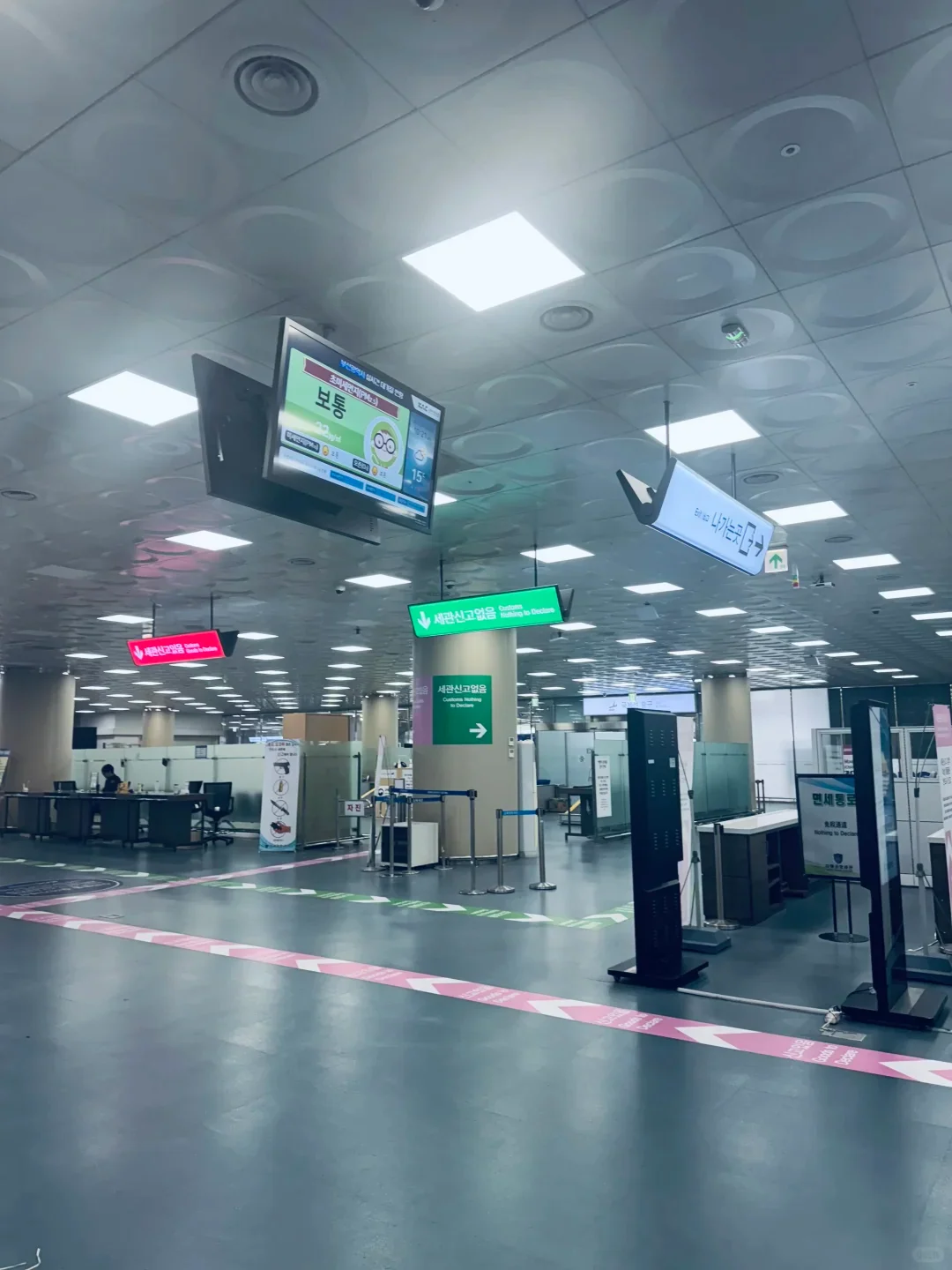
5. Out of the terminal: light rail, bus or taxi
In the arrivals hall, get your bearings before going outside. Airport Station is on the domestic terminal side: leave international arrivals, walk to domestic gate 1, cross the zebra crossing and the entrance is there, five to ten minutes on foot. The bus ticket office is beside gate 4, and the taxi rank is across the crossing.
Buses and taxis both leave from the domestic terminal side, and the signs outside international arrivals point to "대중교통 / Bus·Taxi·Light Rail", so the way is easy to follow. The light rail reaches Sasang in three stops and about six minutes, where Line 2 continues to Seomyeon, Gwangalli and Haeundae; the step-by-step route, fares and transfer are covered in the light rail guide.
With a lot of luggage, or with children or older travellers, a taxi is simpler: about 25 to 30 minutes and 20,000 to 25,000 won to Seomyeon, or 45 to 55 minutes and 35,000 to 45,000 won to Haeundae. Land after the last train and the taxi is the only option left.
Related links
- On this site: South Korea (KR), Gimhae Airport light rail guide
- Wikipedia: Gimhae International Airport
- Baidu Baike: Gimhae International Airport
Source: a WeChat travel guide, edited October 2026. e-Arrival rules, immigration checks and customs limits follow the Korean Ministry of Justice, the Korea Customs Service and current notices at Gimhae Airport.
More articlesTravel notes
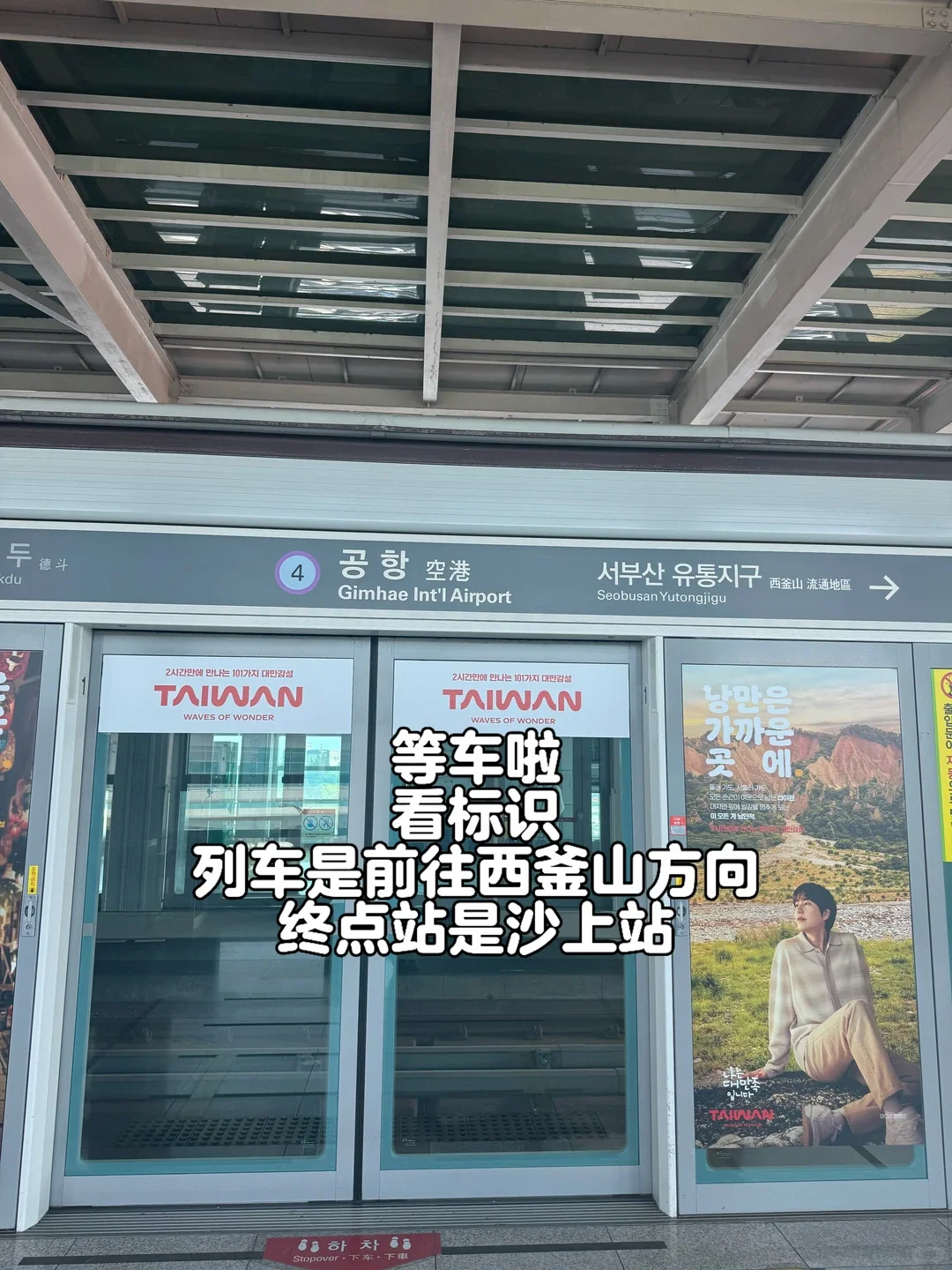
Busan Gimhae Airport by Light Rail: Airport Station to Line 2
A step-by-step guide to the Busan–Gimhae Light Rail Transit from Gimhae International Airport (PUS) into Busan: the walk from international arrivals to Airport Station, T-money and ticket fares, three stops and six minutes to Sasang, the change to the green Line 2, and journey times to Seomyeon and Haeundae.4 min read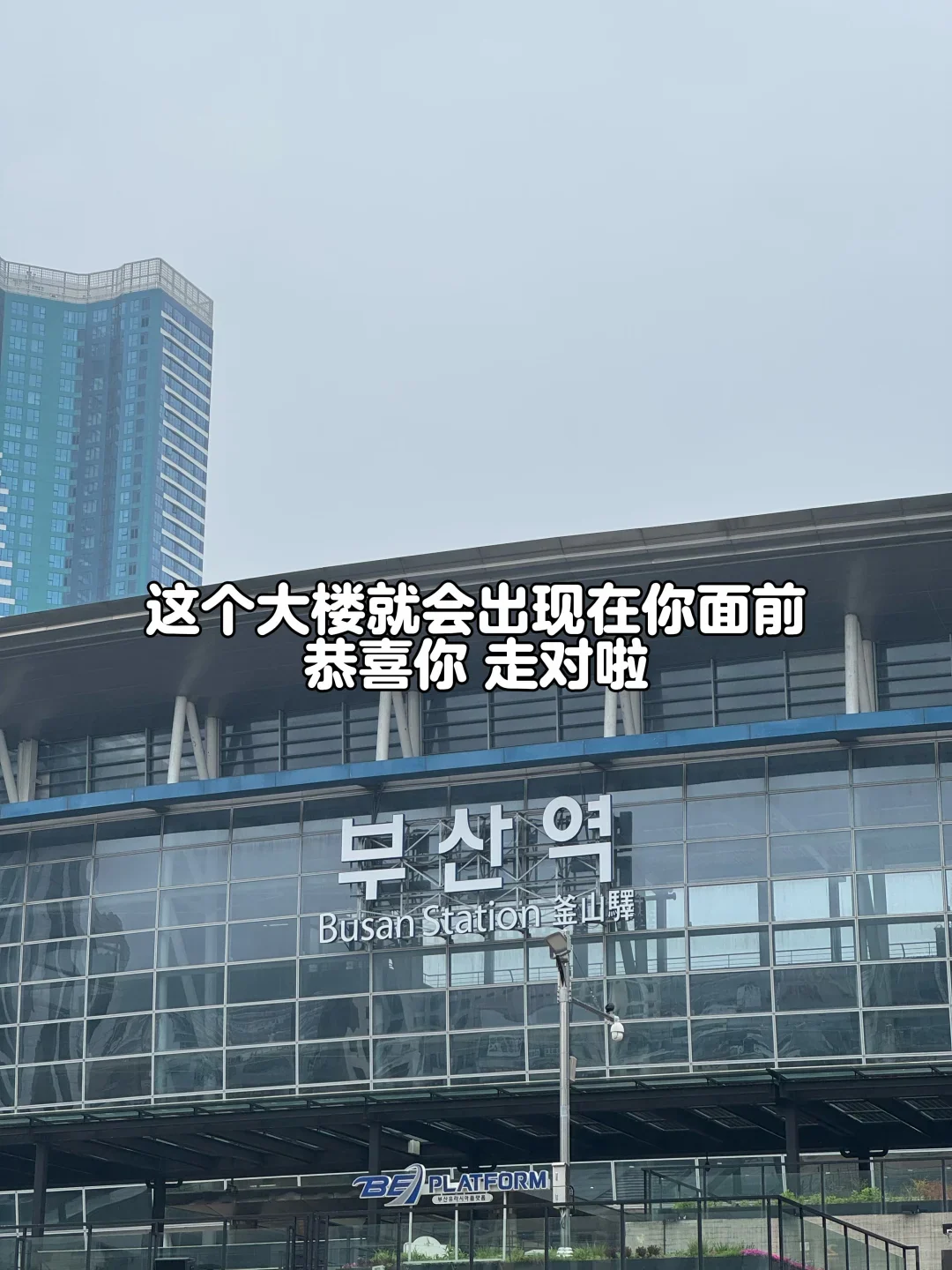
Busan to Seoul by KTX: Tickets, Boarding and the 15-Minute Platform Rule
A practical guide to the KTX from Busan Station to Seoul Station: booking on Korail or a third-party app, saving the e-ticket, a station with no security and no ticket gates, platform numbers that appear 15 minutes before departure, finding your car and seat, luggage, the 2h40 journey and the Seoul Station connections.5 min read