Busan to Seoul by KTX: Tickets, Boarding and the 15-Minute Platform Rule
- Korea high-speed rail
- KTX
- Busan Station
- Seoul Station
- Korea transport
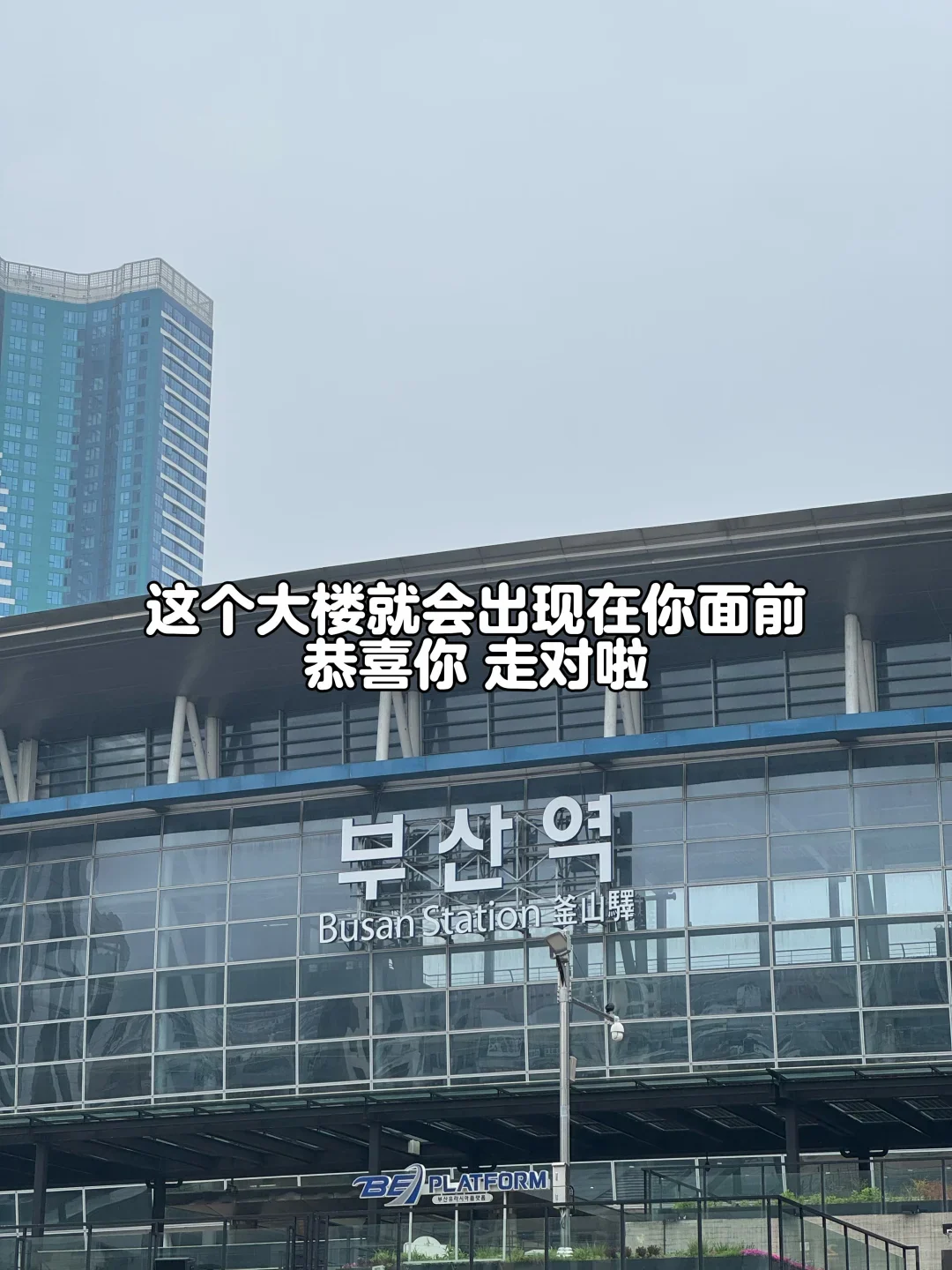
Busan to Seoul is the busiest rail corridor in Korea, and the KTX compresses the two cities into a little over two hours. Riding it feels a bit like flying and nothing like it at the same time: no security, no ticket gates, no boarding call repeated over the tannoy — just a departure board that holds its platform number until fifteen minutes before the train leaves.
What follows walks through the trip in five steps — buying a ticket, entering the station, finding the platform, taking your seat, arriving at Seoul Station. Fares and times here are indicative; check Korail's own site and the station displays before you travel.
Booking: the official site, the app, or a third party
There are two legitimate routes to a KTX ticket. The first is Korail's website and the Korail Talk app, where you pick the date, departure, car and seat yourself and pay with an international card. The second is a third-party platform such as Trip.com, which works in Chinese or English and sends a confirmation email after issuing. Fares are usually identical, and standard class runs about 59,800 won; check Korail for the fare on your date.
Tickets generally go on sale about a month ahead. In peak season and at weekends, popular afternoon departures are often gone two or three days out, leaving the early-morning and late-evening trains. If the dates are fixed, book as soon as you can — an early train means an alarm, but it also puts you in Seoul by lunchtime.
You can choose a car and a seat at the time of booking. Window or aisle is visible on the booking screen, and anyone travelling with children or large cases should aim for a seat near the door.
After payment the platform emails a confirmation, and the order page shows the same details. Save the PDF or a screenshot to your phone, and keep a copy in an offline folder — mobile data inside the station is patchy. Boarding is not gated, but inspectors do walk the train, so have the paper or the screen ready.
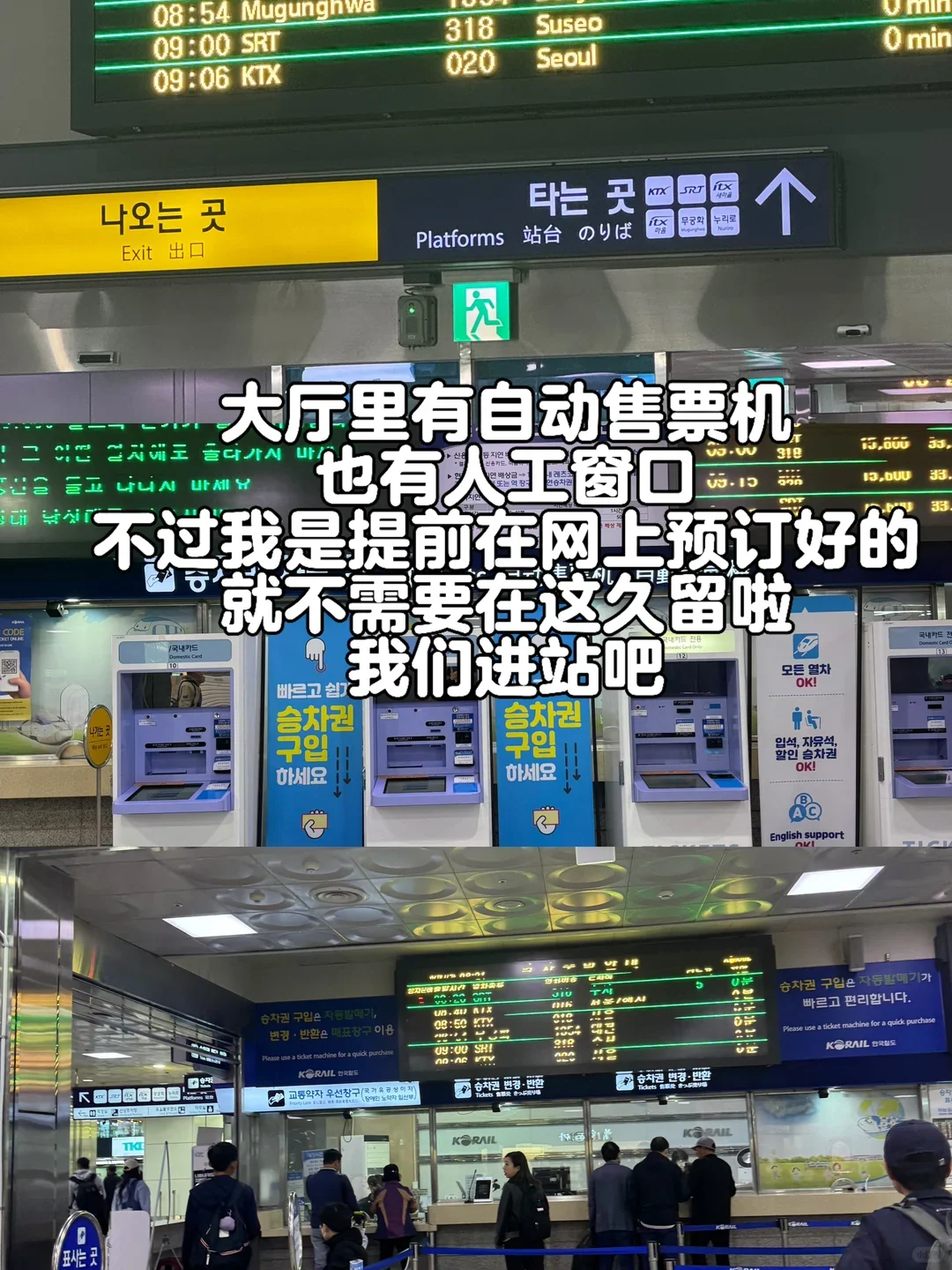
Without a booking, tickets can be bought in the concourse. The machines have an English interface and the counter takes international cards, though adjoining seats may already be gone at busy times.
Entering: no security, no gates
The railway half of Busan Station shares a building with Metro Line 1. Coming up from the metro, follow the KTX signs overhead — through a passage, up an escalator — and you arrive in the rail concourse. The blue KTX logos are clear the whole way and lead to the ticket gate, except that there is no ticket gate.
No security, no barriers: walk in through the entrance and you are effectively on the platform level already. That is the great difference from an airport. No two-hour buffer, no bag through a scanner, no queue for a stamp.
"Not checked" does not mean "not needed", though. Train managers spot-check, more often on long runs. Keep the ticket on your phone or printed in your bag, and be ready to give the car and seat number.
The platform: published 15 minutes out
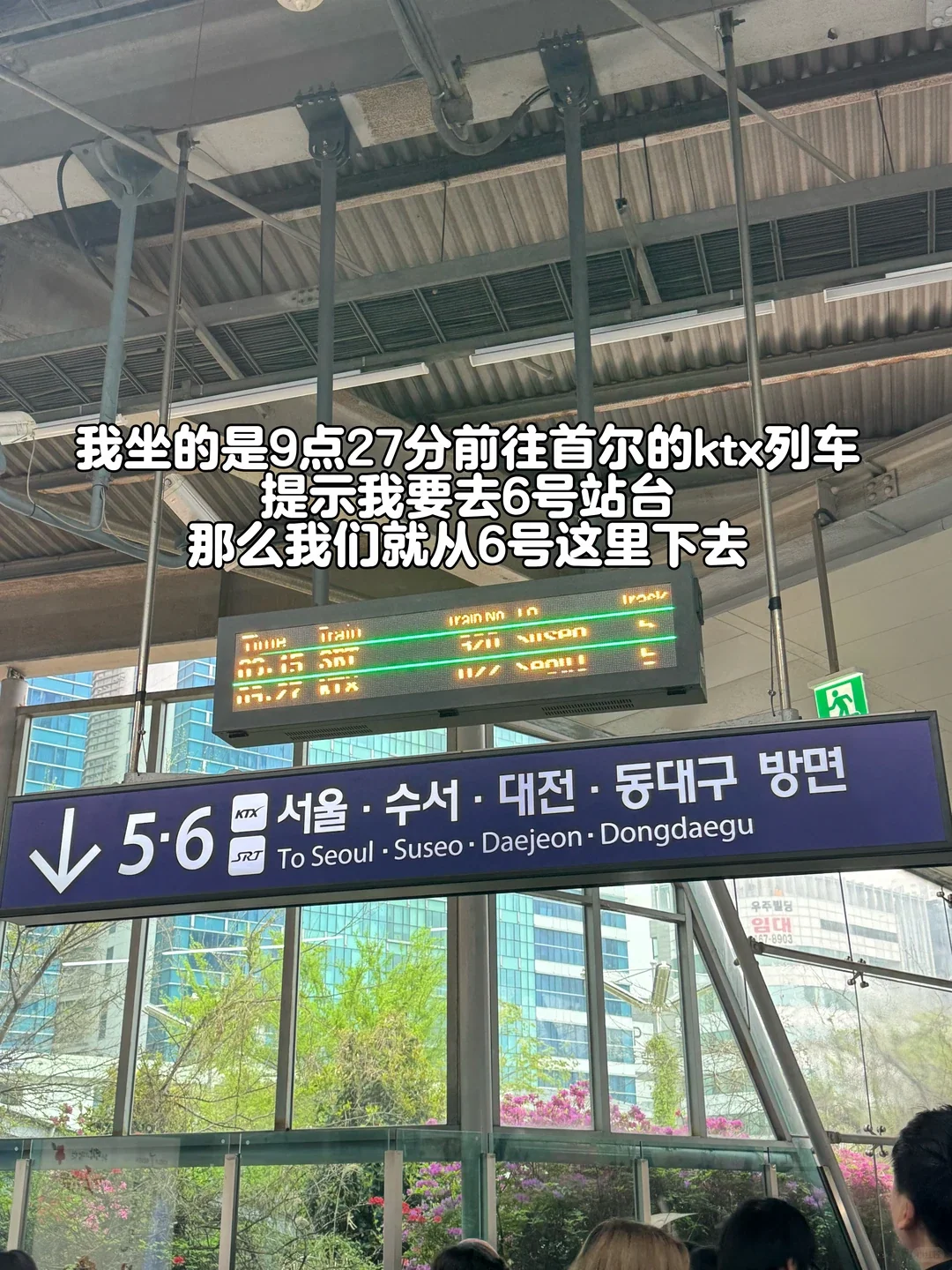
Several screens in the concourse list train number, departure time, destination and platform. The platform column stays blank until fifteen minutes before departure. First-timers tend to panic here; there is no need. Busan is a terminus and the train is already standing at the platform, so waiting for the number costs nothing.
When the screen updates, note the platform and follow the signs overhead. Platforms at Busan are split into two groups — 1 to 6 on one side, 8 to 11 on the other — and choosing the wrong side means walking back around. The blue boards above the stairs read "서울·수서·대전·동대구 방면" with "To Seoul · Suseo · Daejeon · Dongdaegu" beneath, so check the direction before going down.
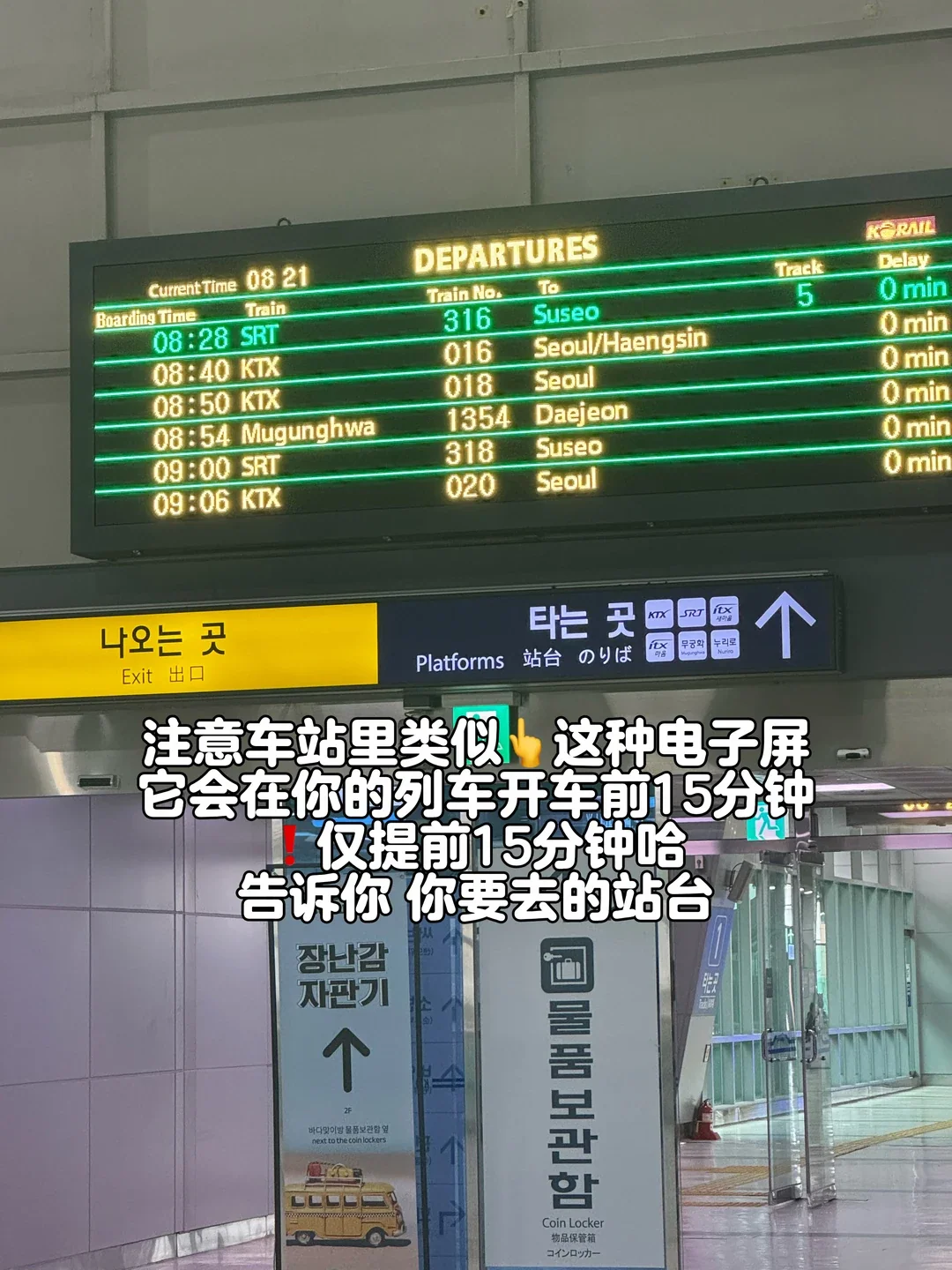
Not every platform has an escalator, so take the lift side with heavy cases. At the bottom, the pillar signs and the small screens confirm the train and platform once more before boarding.
Car and seat: reserved, with the rack above
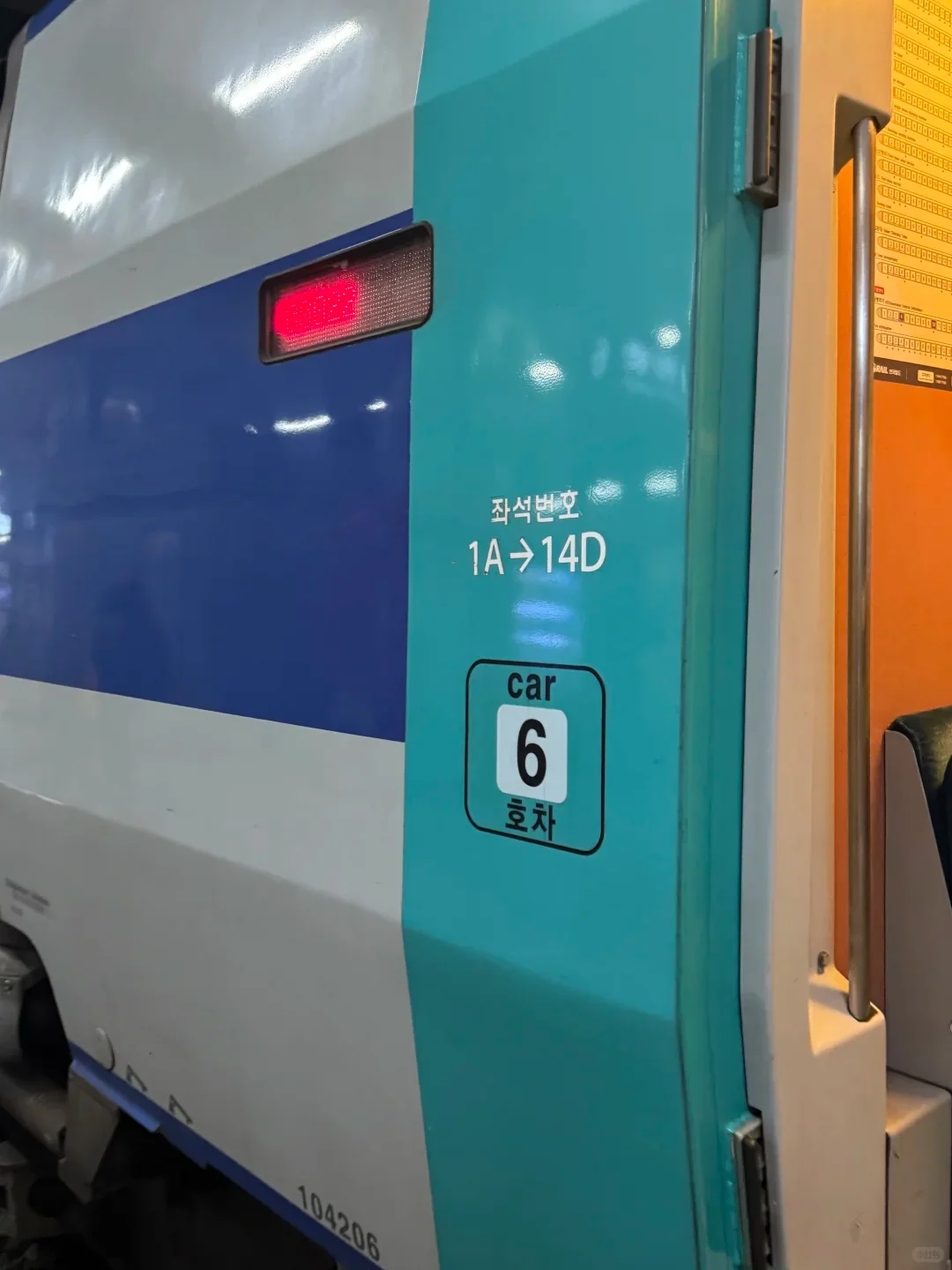
Every KTX seat is reserved. The car number is painted by the door — "car 6", for instance — and you find your place from the number on the ticket. Seat numbers sit on small plates under the luggage rack, above the seats: C is the aisle, D the window, matching what you chose when booking.
The rack above the seats takes small bags and mid-size cases. A 28-inch case will not fit, so use the space at the carriage end or pick a seat near the door where there is room at your feet. Keep valuables with you; the aisle fills at intermediate stops.
Not every carriage has a toilet. Some are marked "no toilet" on the door, and you walk to the next one. Using the concourse before boarding saves trouble later.
On board: four languages, very quiet, nothing for sale
The carriage is almost silent. Koreans rarely take calls on the KTX and keep conversation low, so the loudest thing is usually the station announcement. For a call, use the vestibule between carriages, which has a soundproofed door.
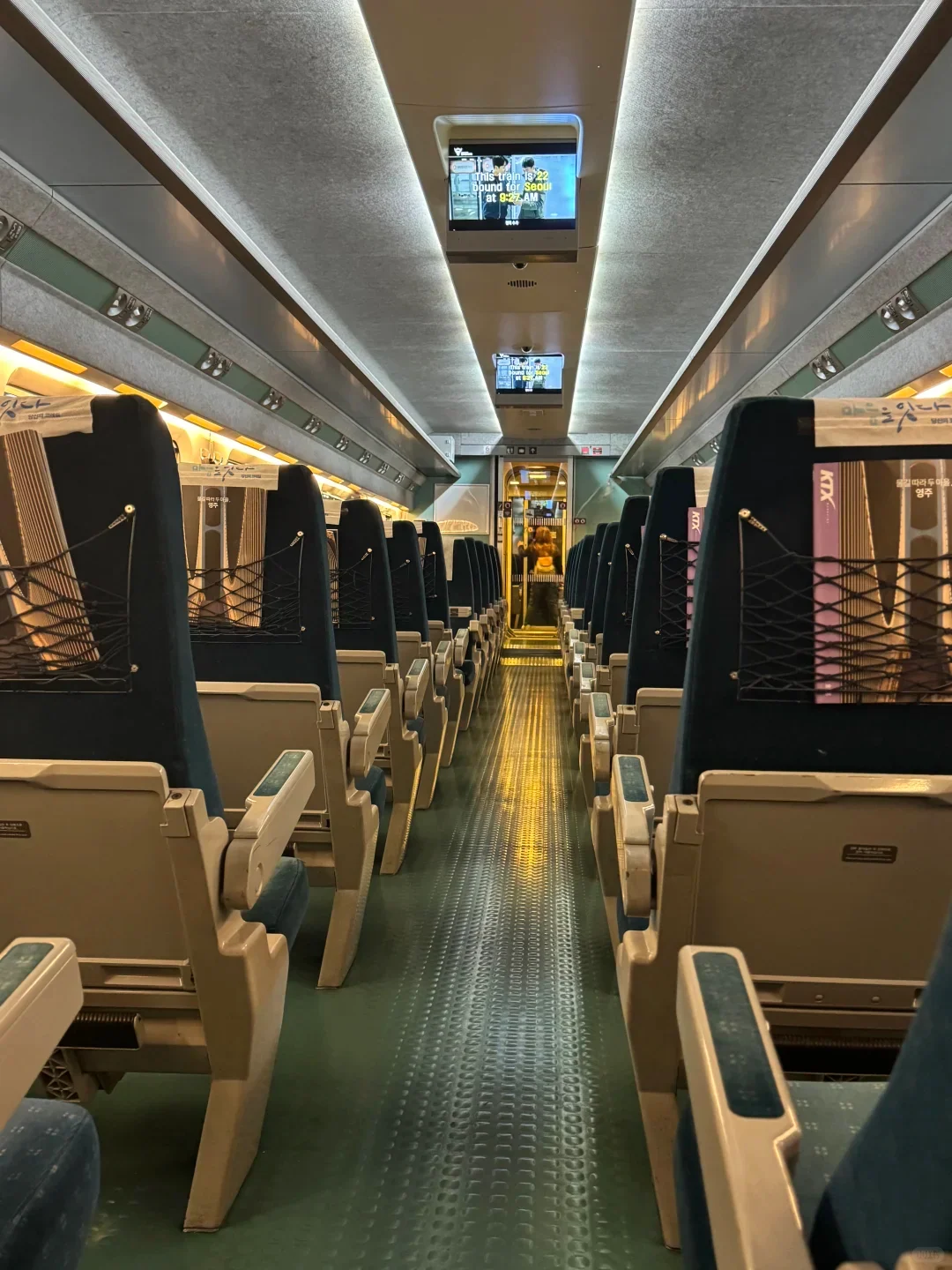
Announcements come in Korean, English, Chinese and Japanese, and the ceiling screens show the next stop and the final destination, so intermediate stops are hard to miss. The train calls at Daejeon, Dongdaegu and others; stops are short, and stepping out for air is a gamble.
There is no trolley service, no free water, no snacks, and no conductor wheeling a cart through. Buying water and a rice ball at the convenience store in the concourse before boarding is the simplest plan.
About 2 hours 40 minutes to Seoul Station
Busan to Seoul takes roughly 2 hours 40 minutes end to end. That is more predictable than flying plus the ground transport at both ends: Gimhae to Gimpo is an hour in the air, but check-in, security and the run into town usually push the door-to-door time past three hours.
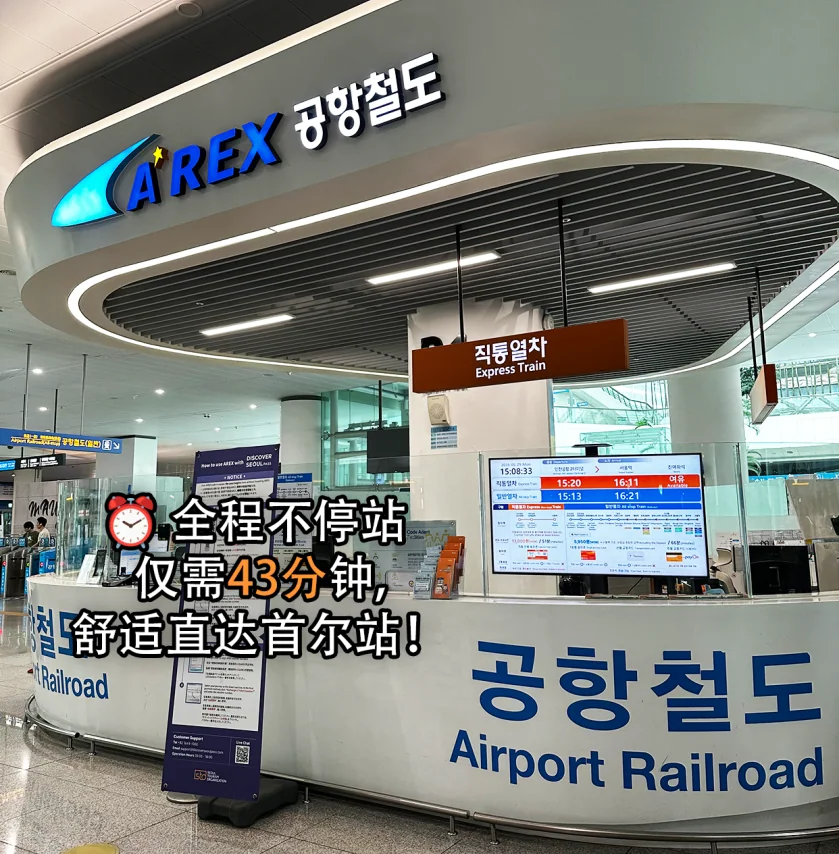
Seoul Station is the country's rail hub and a very large building. Signs split the exits by purpose: KTX trains onward to other cities, Metro Lines 1 and 4, and the AREX airport railway to Incheon all interchange inside, without leaving the station.
Myeongdong and Dongdaemun are on Line 4; City Hall and Jongno on Line 1. For Incheon Airport there is the AREX Express from the same station, and with heavy bags you can check in and drop them at the City Airport Terminal first, then go into the city light.
Allow an extra twenty minutes to find your way on a first visit. The signs are good, but there are many levels and many exits, and dragging a case up and down takes longer than it looks. Changing to the metro means tapping through again, and the recharge machines in the concourse take cash and cards.
Related links
- On this site: South Korea (KR)
- Wikipedia: Korea Train Express, Busan station, Seoul Station
- Baidu Baike: Korea high-speed rail
Fares and times follow Korail's published information; the operator and the station displays are definitive. Image credit: the original travel guide.
More articlesTravel notes
Arriving at Busan Gimhae: e-Arrival Card, Immigration and Customs
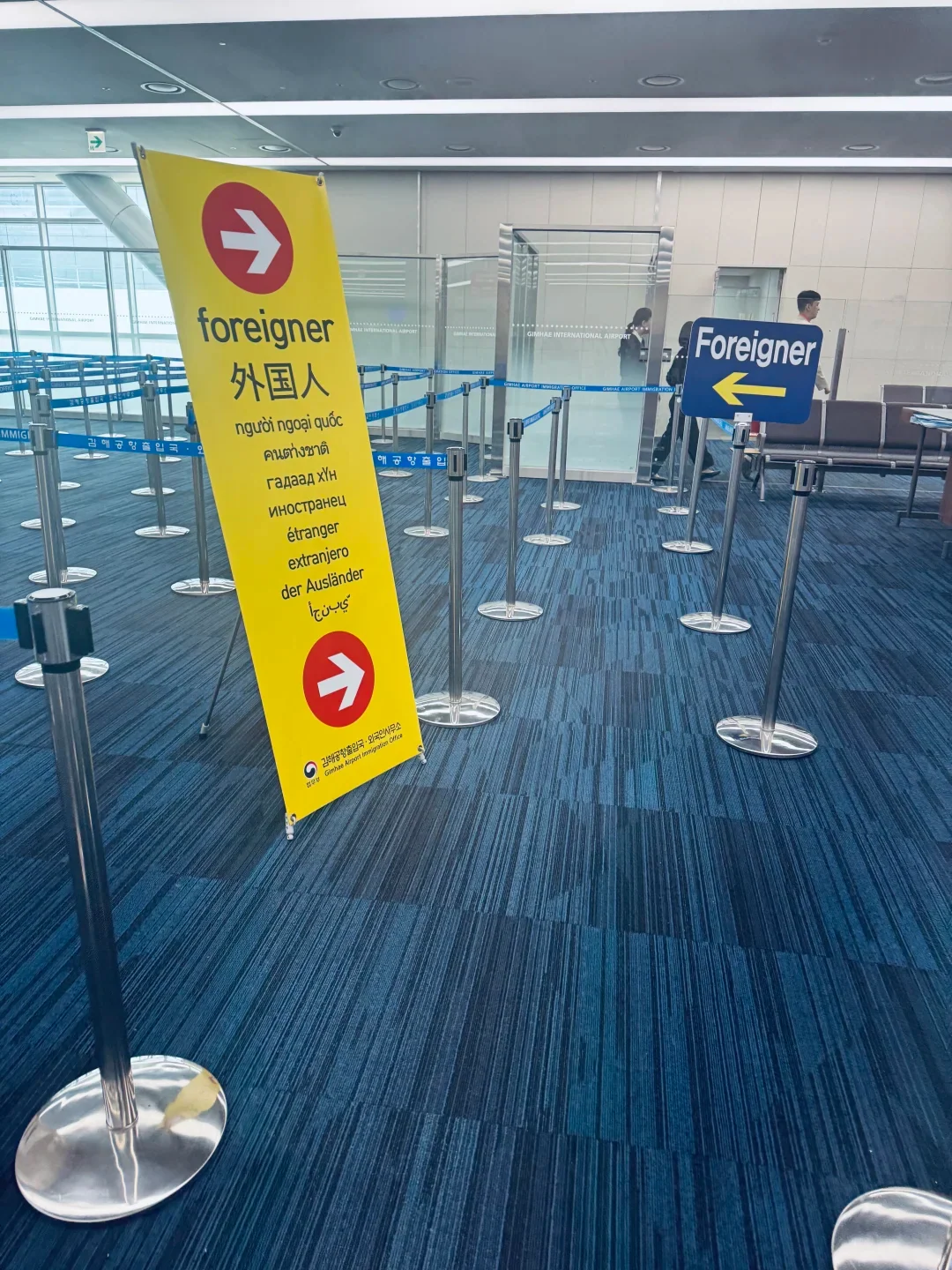
A practical walkthrough of arrival at Gimhae International Airport (PUS): filing the Korean e-Arrival Card three days ahead, preparing a Korean address and five-digit postal code, the foreigner lane with fingerprint and face capture, baggage and customs, and how to reach the light rail, bus or taxi after exit.5 min read
Busan Gimhae Airport by Light Rail: Airport Station to Line 2
A step-by-step guide to the Busan–Gimhae Light Rail Transit from Gimhae International Airport (PUS) into Busan: the walk from international arrivals to Airport Station, T-money and ticket fares, three stops and six minutes to Sasang, the change to the green Line 2, and journey times to Seomyeon and Haeundae.4 min read