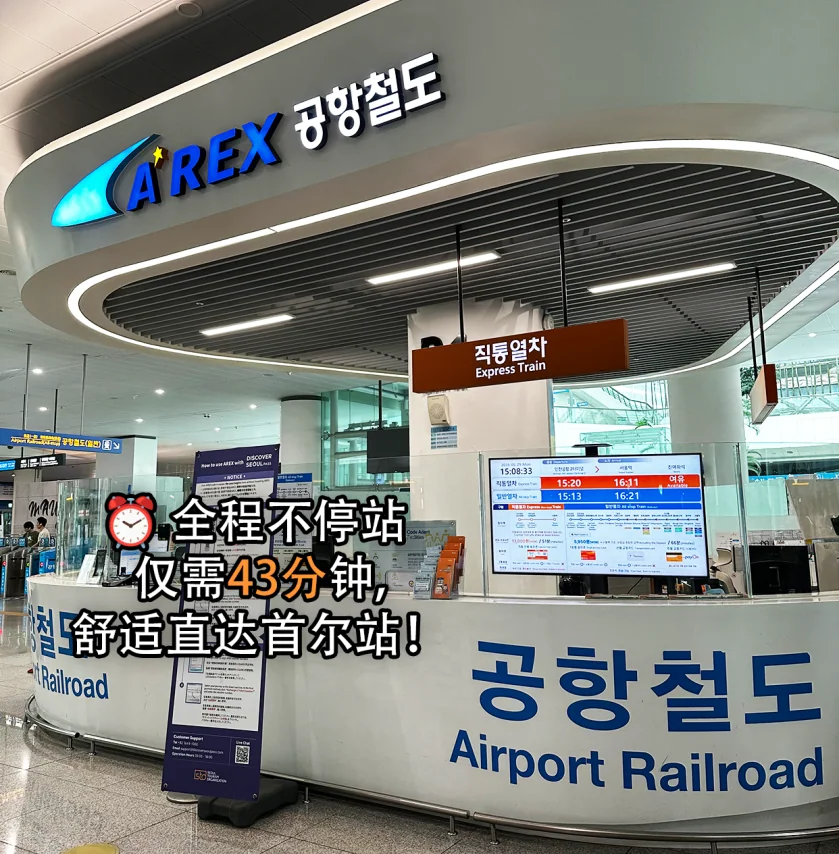
Busan Gimhae Airport by Light Rail: Airport Station to Line 2
- Gimhae Airport
- Busan transport
- Busan-Gimhae Light Rail
- Sasang Station
- Korea travel
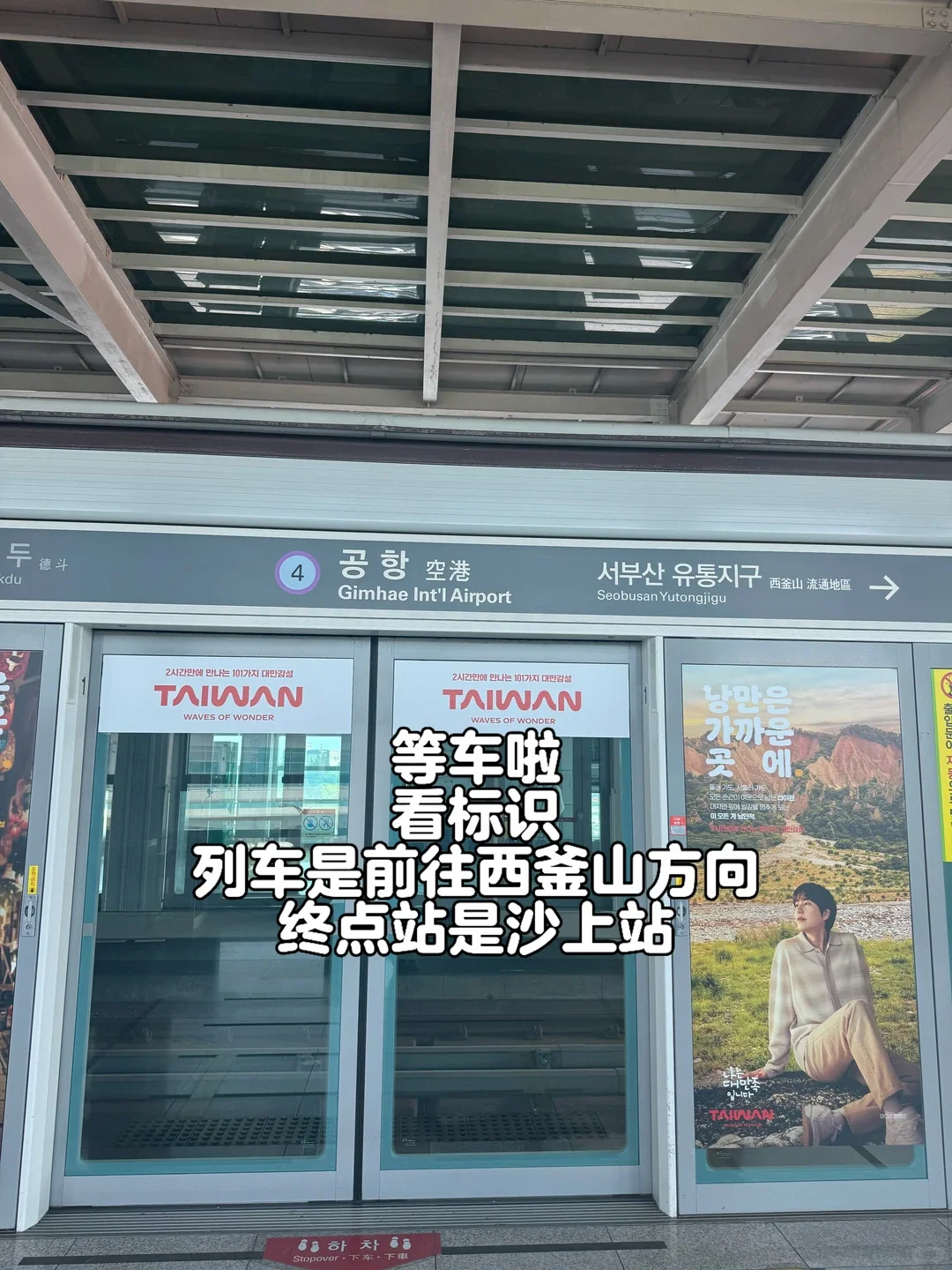
The most dependable way from Gimhae International Airport into Busan is the Busan–Gimhae Light Rail Transit, usually shortened to BGL. It runs from Airport Station to Sasang in three stops, where the green metro Line 2 takes over; Seomyeon, Gwangalli and Haeundae all sit on that line.
The mistakes cluster in three places: the station entrance is not inside the international terminal, the fare depends on the zone, and the change at Sasang involves a fair amount of walking. This guide takes it in five steps — arrivals, tickets, the ride, the change and the city — with fares and times as references only.
1. After arrivals: walk to the domestic terminal side
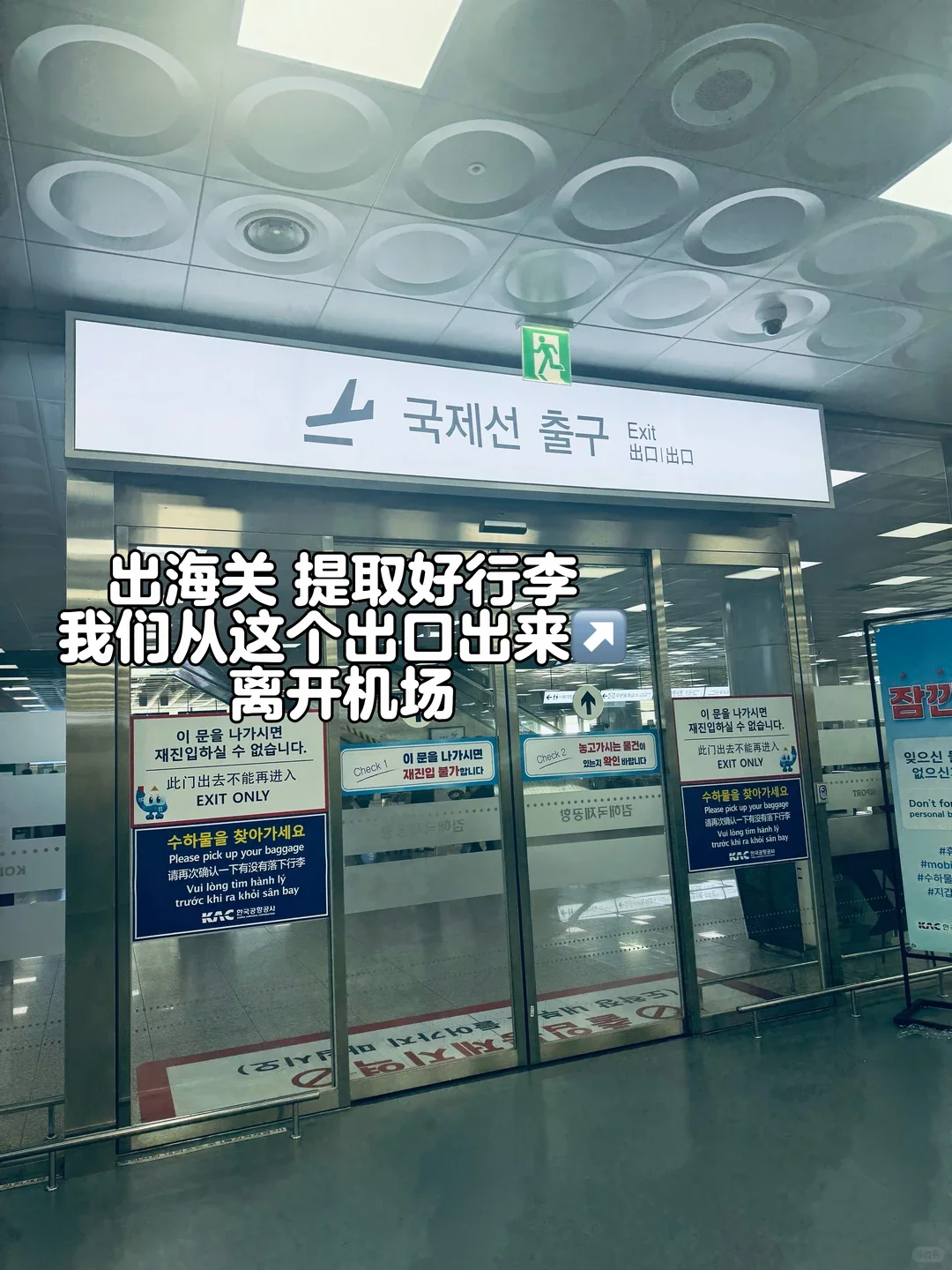
Gimhae's two terminals stand side by side, and Airport Station is outside both, across the road from the domestic terminal entrance. Leaving international arrivals, follow the "대중교통 / Bus·Taxi·Light Rail" sign out of the building.
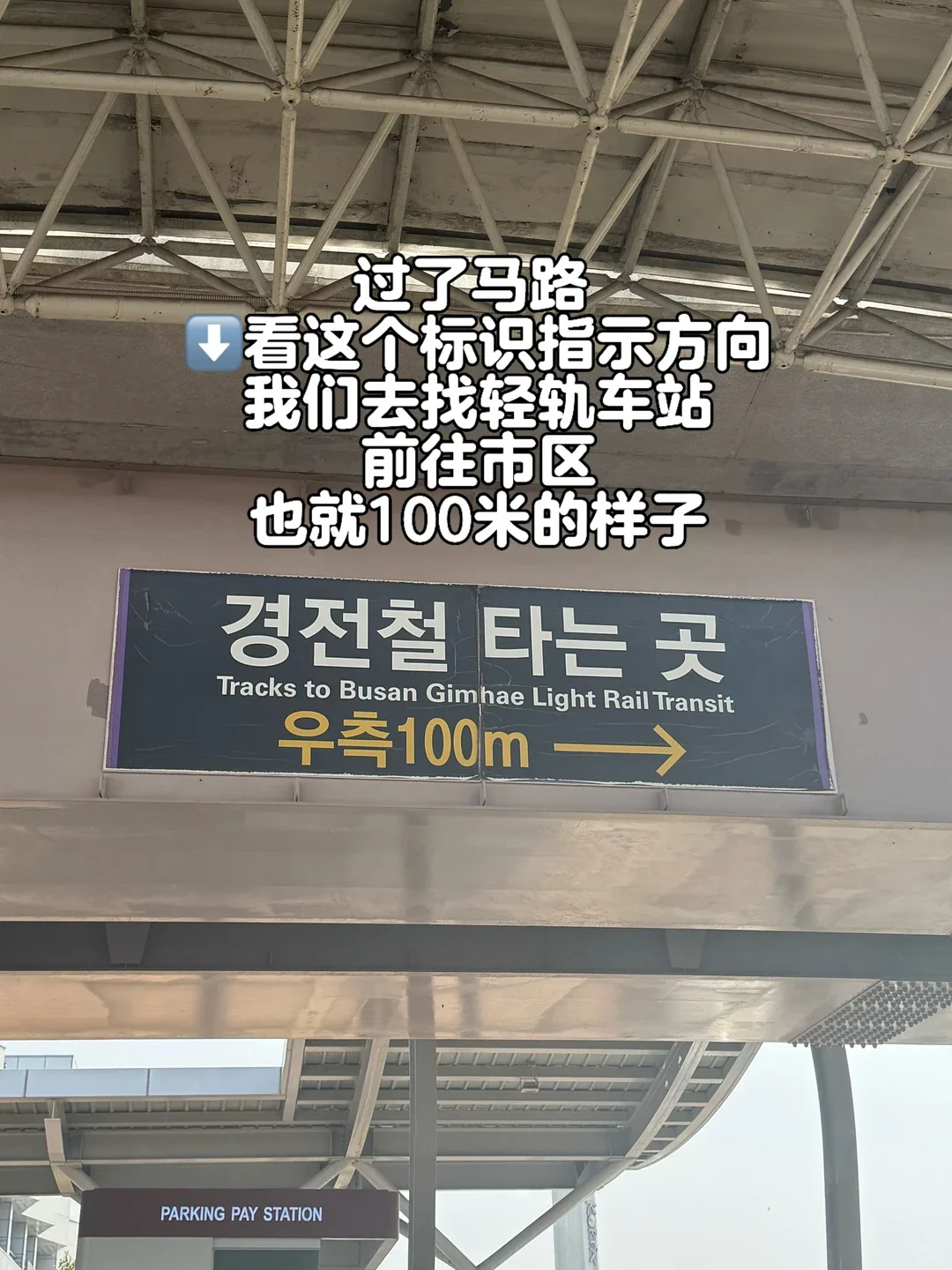
Outside, walk along the terminal frontage to the domestic terminal, cross at the zebra crossing near domestic gate 1, and the station entrance is opposite. Allow five to ten minutes from the international arrivals door. Purple signs reading "경전철 타는 곳 / Tracks to Busan Gimhae Light Rail Transit" put the entrance 100 metres ahead.
The station has lifts and escalators, so heavy bags avoid the stairs. Check the direction before the gate: you want the platform for Sasang and central Busan, not the one towards Gimhae.
2. Tickets and top-ups: one T-money card
The fare is charged by zone. Airport Station to Sasang is zone 1: about 1,600 won on a transport card, 1,700 for a single. Zone 2 costs 1,800 and 1,900 won. These are the September 2025 rates; check the station fare table on the day.
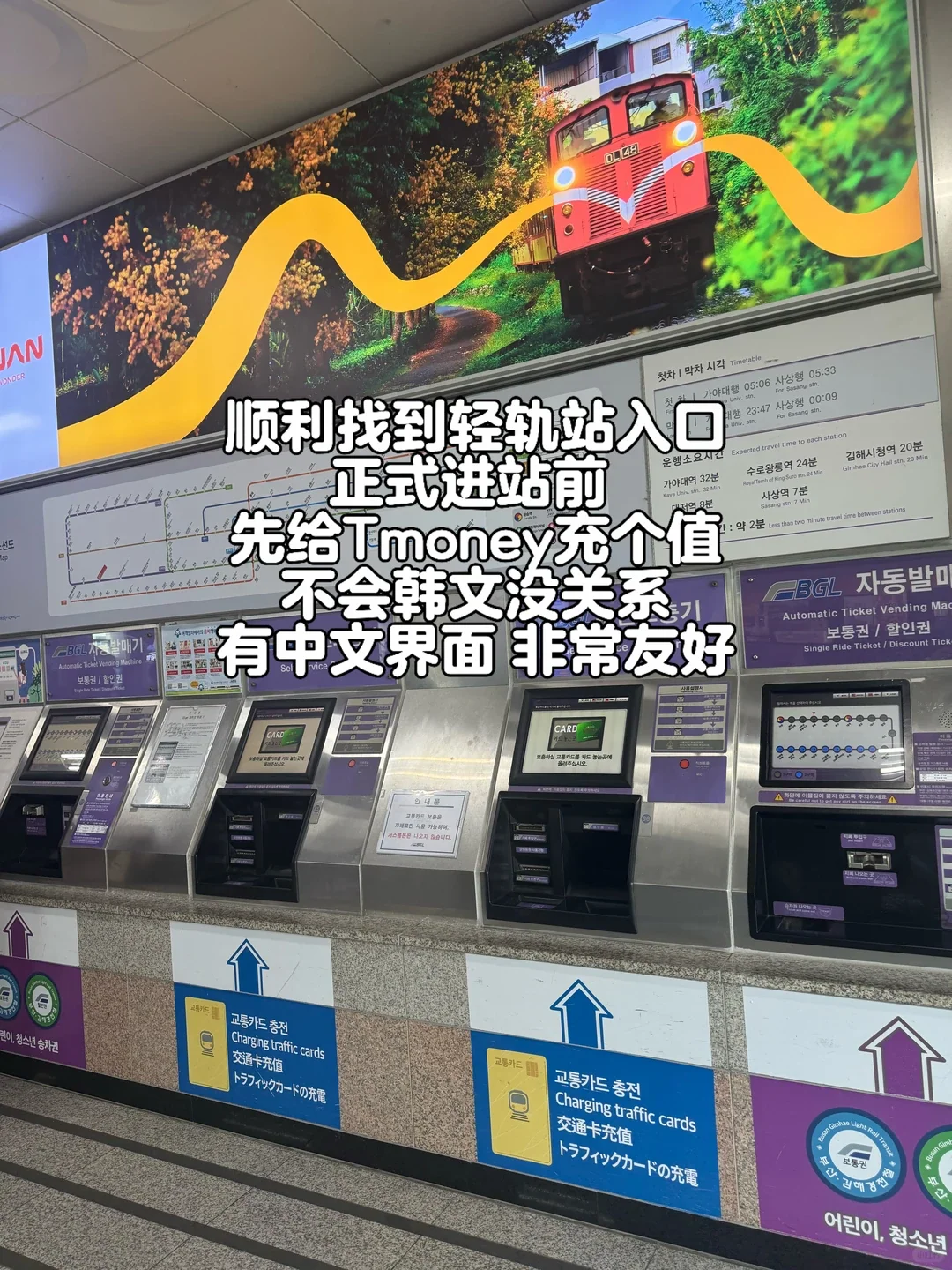
The simplest option is a T-money card bought and topped up at a convenience store in the terminal — CU and GS25 both sell them, with the card fee on top. The same card covers the light rail, the metro, buses and taxis. Recharge machines in the concourse switch to Chinese and walk you through the steps.
Without a card, the ticket machines also have a Chinese interface: choose the destination, pay cash and take a single, then drop it into the collector on the way out. A single costs 100 won more, so the card is the faster move.
3. The ride: three stops, six minutes
Towards Sasang the train calls at three stations — Seobusan Yutongjigu, Goebeop Renecite and Sasang — and takes about six minutes. The trains are driverless, so the front window looks straight down the track.
Announcements are in Korean and English, and most station names and signs also carry Chinese, so no Korean is needed. Trains run roughly every five to eight minutes. Keep cases beside your seat or by the door rather than in the aisle.
The first train towards Sasang leaves Airport Station at about 05:30 and the last at about 00:10; in the other direction, towards Gimhae, the first is around 05:06 and the last around 23:48. Treat those as reference times — holidays and engineering works change them — and if you land close to midnight, check the day's last train before you rely on it.
4. Changing at Sasang: follow the green Line 2
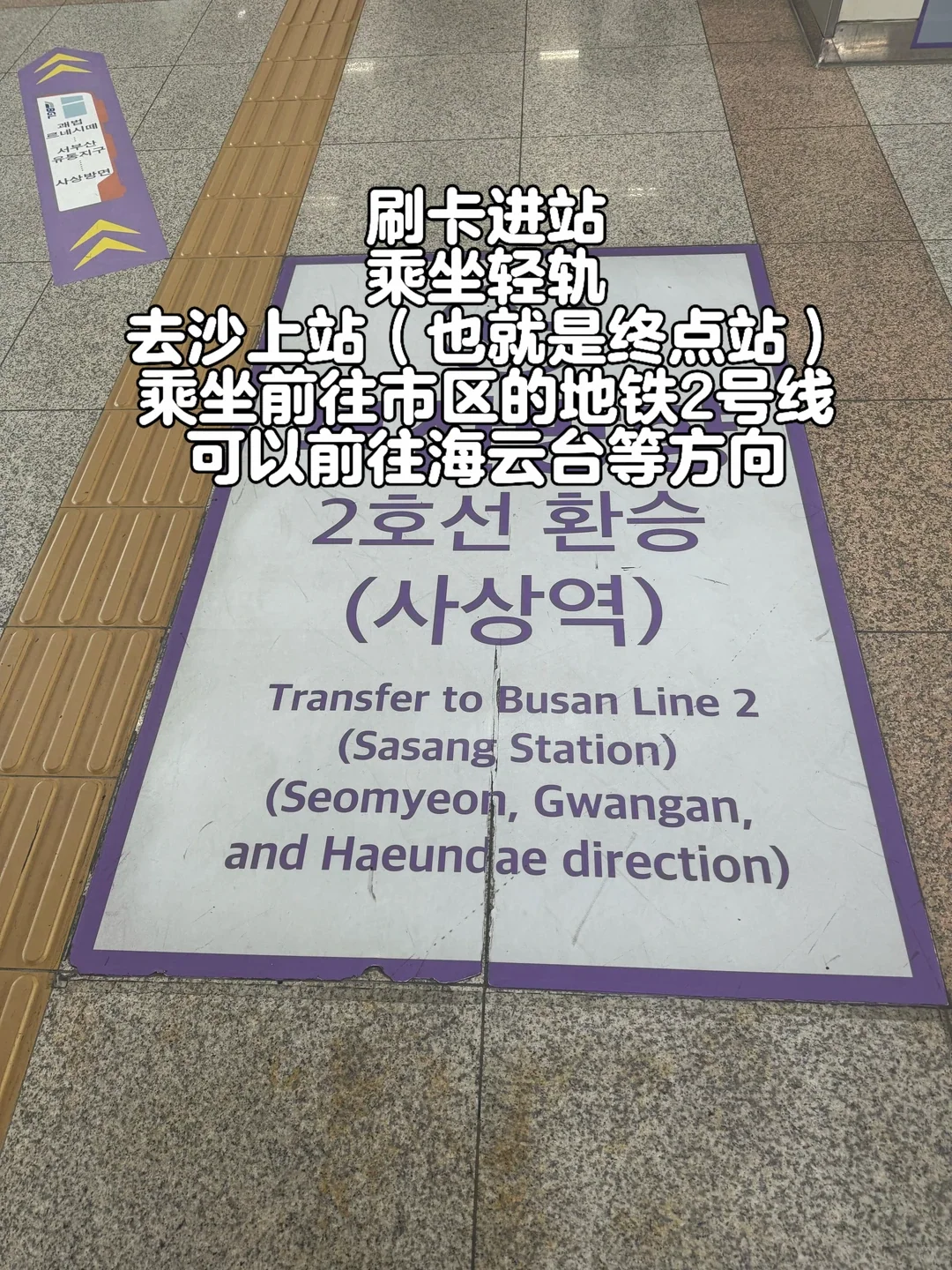
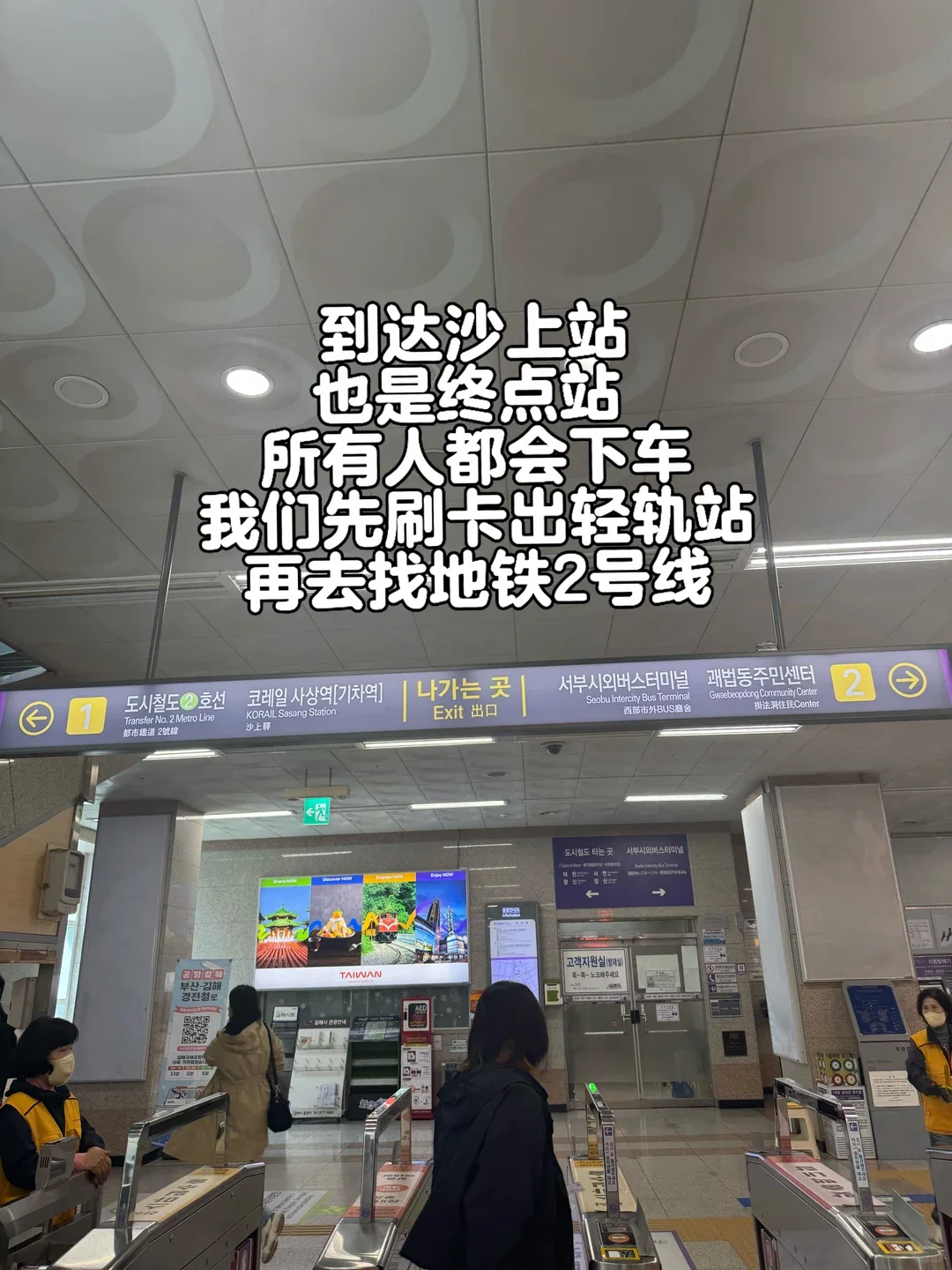
Sasang is the end of the line, so everyone gets off. Tap out at the BGL gate, then look for the "도시철도 2호선 / Transfer to Metro Line 2" signs rather than heading up to the street.
The change goes down two levels, along a long underground corridor and down once more to the Line 2 platform: five to eight minutes in total, longer with a large case, though the signs are clear the whole way. Trains towards Seomyeon, Gwangalli and Haeundae run in the "장산 (Jangsan)" direction; check the destination on the platform screen before boarding.
With T-money, the change is free within 30 minutes and up to two transfers, charged once at the highest single fare. The extra Busan–Gimhae–Yangsan transfer surcharge was scrapped in September 2025, so the airport to Seomyeon normally comes to about 1,600 won.
5. Times to Seomyeon and Haeundae
From Airport Station, including the walk at Sasang, expect roughly the following. At rush hour, when trains are crowded and waits are longer, add about ten minutes.
| Destination | Route | Time | Fare (transport card) |
|---|---|---|---|
| Sasang | Light rail, 3 stops | about 6 min | 1,600 won |
| Seomyeon | Light rail + Line 2 | 25–30 min | about 1,600 won |
| Gwangalli | Light rail + Line 2 | 40–45 min | 1,600–1,800 won |
| Haeundae | Light rail + Line 2 | 55–65 min | 1,600–1,800 won |
| Nampo-dong | Light rail + Line 2 + Line 1 | 40–50 min | about 1,800 won |
| Seomyeon by taxi | From the airport | 25–30 min | about 20,000–25,000 won |
For Seomyeon and Nampo-dong, the light rail plus metro is the clear choice. Haeundae takes about an hour, so with a lot of luggage compare a taxi: 25 to 30 minutes and 20,000 to 25,000 won to Seomyeon, or 45 to 55 minutes and 35,000 to 45,000 won to Haeundae.
Two final points. Airport Station is outside the terminal, so on the way back allow ten extra minutes to reach the platform. The Sasang corridor is long: with two large cases, take the lift, because stairs and escalators queue at peak times.
Related links
- On this site: South Korea (KR)
- Wikipedia: Gimhae International Airport, Busan–Gimhae Light Rail Transit
- Baidu Baike: Gimhae International Airport
Source: a WeChat travel guide, edited October 2026. Fares, first and last trains and transfer rules follow the Busan–Gimhae Light Rail Transit and Busan Transportation Corporation notices.
More articlesTravel notes
Arriving at Busan Gimhae: e-Arrival Card, Immigration and Customs
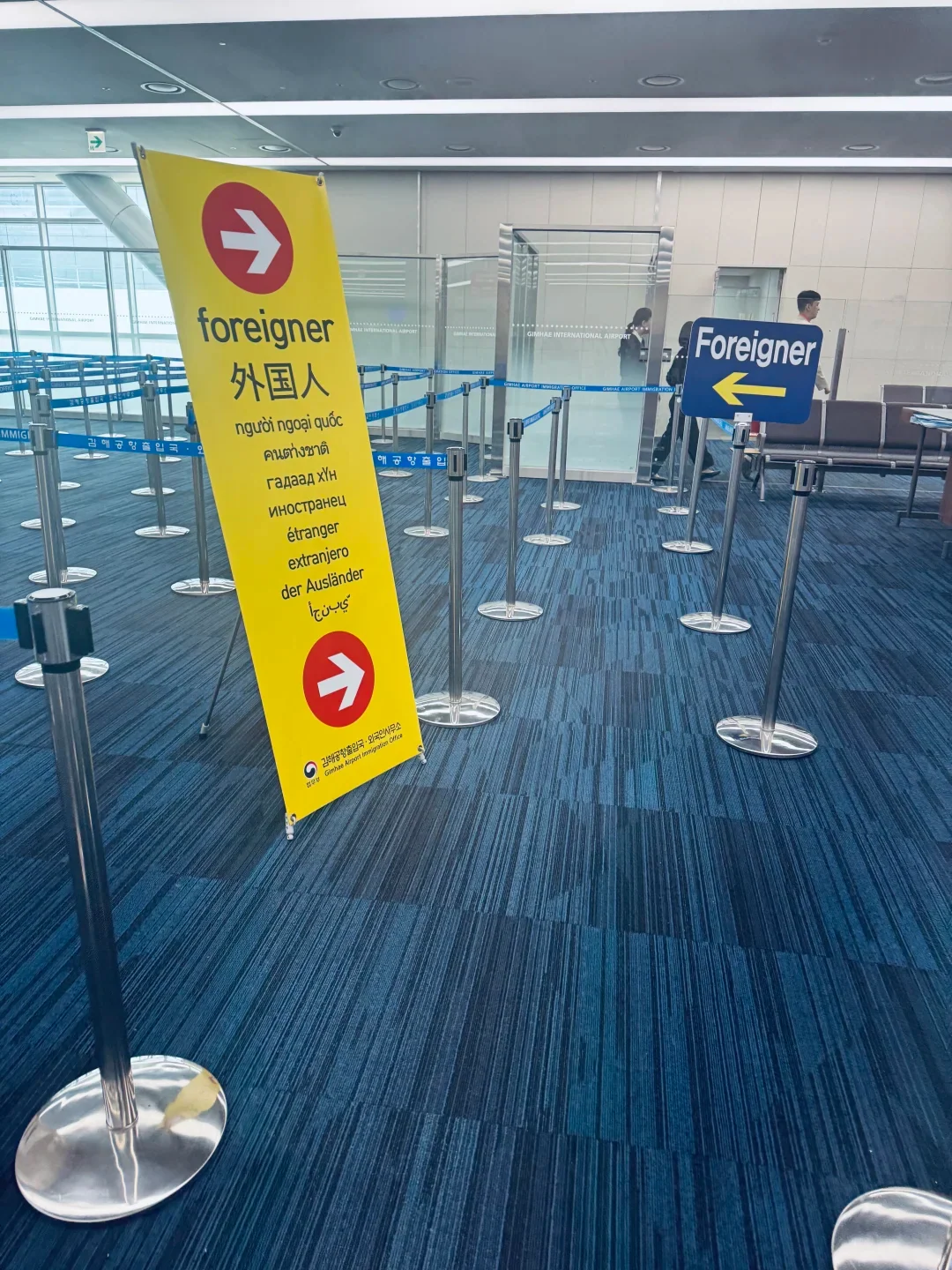
A practical walkthrough of arrival at Gimhae International Airport (PUS): filing the Korean e-Arrival Card three days ahead, preparing a Korean address and five-digit postal code, the foreigner lane with fingerprint and face capture, baggage and customs, and how to reach the light rail, bus or taxi after exit.5 min read
Busan to Seoul by KTX: Tickets, Boarding and the 15-Minute Platform Rule
A practical guide to the KTX from Busan Station to Seoul Station: booking on Korail or a third-party app, saving the e-ticket, a station with no security and no ticket gates, platform numbers that appear 15 minutes before departure, finding your car and seat, luggage, the 2h40 journey and the Seoul Station connections.5 min read