Priority Pass Lounges: What the Three Tiers Cost, How Credit Cards Get You In, and Where the Lounges Are
- Priority Pass
- PP card
- airport lounges
- credit card benefits
- lounge access
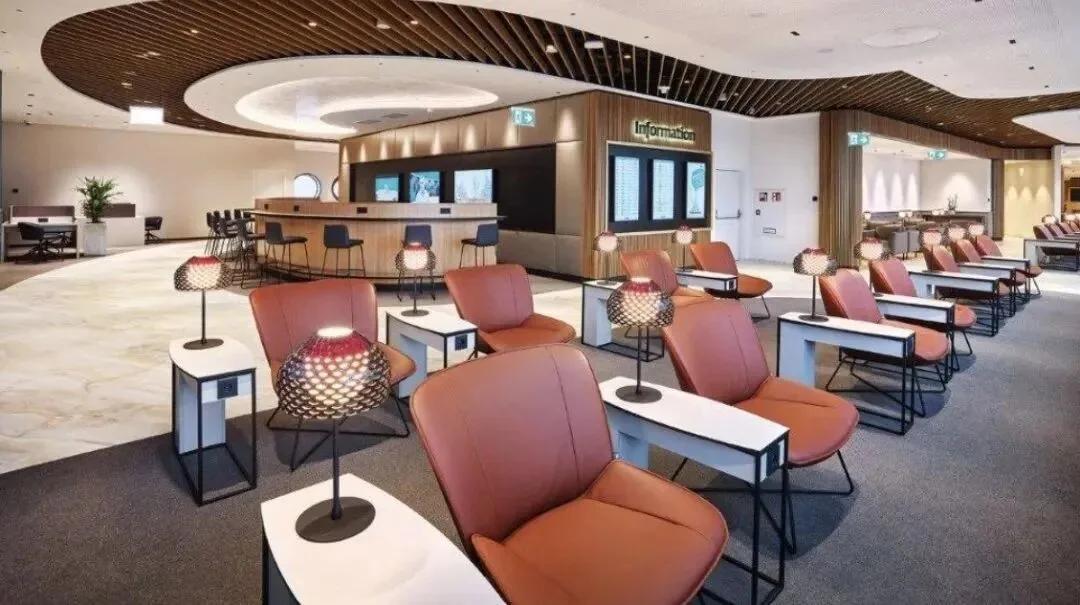
Sooner or later the arithmetic becomes concrete: a three-hour connection, every seat near the gate taken, a queue at the restaurant. What is a card that opens lounge doors actually worth at that moment? For holders of mid- and high-tier credit cards, airport lounge access usually arrives through three channels — a bank's own lounge, DragonPass, and Priority Pass. The first two are denser inside mainland China; the third is what usually fills the gap abroad.
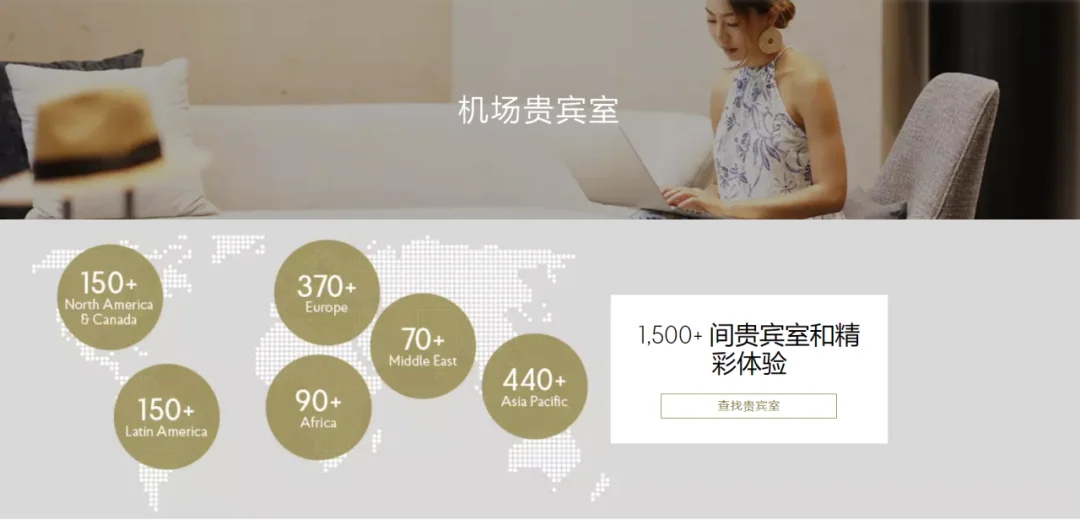
Priority Pass (PP) is a lounge network and the largest airport lounge access provider in the world. It rarely builds its own rooms; it signs contracts with independent and airline-operated lounges, then distributes access through memberships and bank benefits. On its 2024 figures, PP lists more than 1,500 partner lounges in 145 countries and regions, spread across more than 6,000 cities. Cardholders get in free or for a fee, trading a gate-area seat for somewhere quieter with a power socket and hot food.
1. Priority Pass and Priority Pass Select
Two names need separating. Priority Pass is the retail membership, which anyone can buy on the website. Priority Pass Select (PPS) is the version a bank buys from PP and attaches to a credit card. Both point at the same contracted lounges; the rooms you can enter are identical. The only difference is who pays, and how much.
That is why the practical route to lounge freedom is a credit card carrying PPS rather than a membership. It also explains why cards, not memberships, dominate the discussion: the annual fee has usually been paid for other benefits, so lounge access rides along.
2. The three tiers: what $99, $329 and $469 buy
PP sells three tiers. The price difference sits entirely in how many times the member can enter; guest charges are the same on all three.
| Tier | Annual fee | Member access | Guests |
|---|---|---|---|
| Standard | $99 | $35 per visit | $35 per person per visit |
| Plus | $329 | First 10 visits free, then $35 each | $35 per person per visit |
| Prestige | $469 | Unlimited | $35 per person per visit |
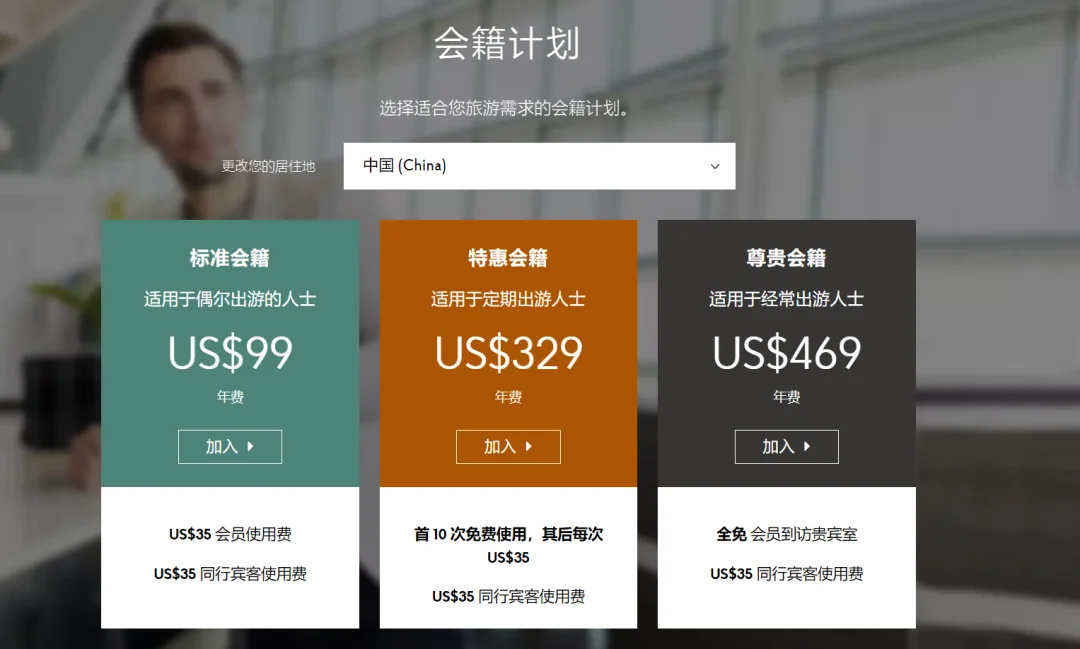
Do the arithmetic and the tiers sort themselves out. On Standard, n visits cost 99 + 35n dollars, which only overtakes Prestige's flat $469 at the eleventh visit. Plus includes ten free visits, so its break-even against Standard falls at the seventh. Unless you enter a lounge ten times a year, buying a membership outright is not cheap. A blunter verdict: none of the three tiers is good value for an individual traveller. The retail price buys the right to walk in whenever you like, not a discount.
3. How a credit card hands you the entitlement
Banks issue PPS in very different shapes, but the common threads are that the benefit usually covers only the cardholder, that guests are charged separately, and that allowances are counted in visits rather than days. The table below sets out the cards banks commonly issue.
| Card | Annual fee | Lounge benefit |
|---|---|---|
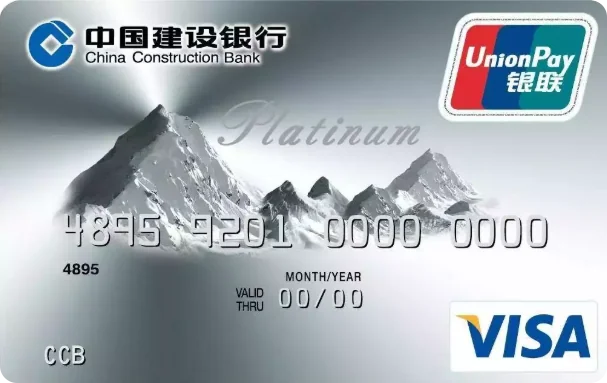
| CCB Dashanbai (Platinum) | Waivable with points | 5 visits a year each on primary and supplementary cards, cardholder only |
| CEB World Elite package | RMB 5,000 in year one, waivable with 500,000 points thereafter | Unlimited |
| Minsheng Centurion Platinum | RMB 3,600 (no waiver) | Unlimited; one supplementary card free, also unlimited |
| CMB Centurion Platinum | RMB 3,600 (no waiver) | Unlimited; supplementary card RMB 1,800 a year with no PP |
| BoCom World Elite | RMB 4,800, waivable with 1.2 million points | Primary unlimited and may bring 3 guests per visit; supplementary unlimited, cardholder only |
| Minsheng Centurion Black | RMB 36,000 (no waiver) | Unlimited on primary and supplementary; first supplementary free, others RMB 6,000 a year |
Two variables matter here: whether the annual fee can be offset with points, and whether the benefit is cardholder-only. CCB's Dashanbai is the low-volume, low-cost option, suited to someone who leaves the country once or twice a year. CEB's World Elite package is the cheapest unlimited route, but only for existing customers — applying for the diamond card no longer comes with World Elite attached. Minsheng and CMB both charge a hard RMB 3,600 for their Centurion Platinum cards; the difference is the supplementary card, which Minsheng gives away free with unlimited PP while CMB charges RMB 1,800 a year for a card with no PP at all. BoCom's World Elite is one of the few that writes "bring the family" into the benefit, with three guests per visit on the primary card. The RMB 36,000 Black card is a different spending tier altogether.
4. The 2024 map: regional counts and key hubs
PP's strength is global coverage; its weakness is density inside mainland China. In the March 2024 list, 73 mainland airports had a partner lounge — most provincial capitals and major tourist cities, though still short of DragonPass. Compressing the eight regional lists into one table gives a clearer sense of the shape.
| Region | Airports in the list | Hubs worth remembering |
|---|---|---|
| Mainland China | 73 | Beijing Capital, Beijing Daxing, Shanghai Pudong, Shanghai Hongqiao, Guangzhou Baiyun, Shenzhen Bao'an, Chengdu Tianfu, Hangzhou Xiaoshan |
| Asia-Pacific (excl. mainland China) | 178 | Hong Kong, Singapore Changi, Seoul Incheon, Tokyo Haneda, Osaka Kansai, Taipei Taoyuan, Bangkok Suvarnabhumi, Kuala Lumpur |
| Europe | 136 | Amsterdam, Paris CDG, Frankfurt, Munich, Rome, Madrid, Barcelona, Zurich, Vienna, Istanbul |
| UK and Ireland | 32 | London Heathrow, London Gatwick, London Stansted, Manchester, Edinburgh, Dublin |
| Middle East | 31 | Dubai, Doha, Abu Dhabi, Jeddah, Riyadh, Kuwait, Muscat, Tel Aviv |
| North America | 91 | Atlanta, Los Angeles, San Francisco, Seattle, Chicago O'Hare, Dallas-Fort Worth, Toronto, Vancouver |
| Latin America and the Caribbean | 121 | Bogotá, Lima, Panama City, San José, Buenos Aires |
| Africa | 62 | Cairo, Johannesburg, Nairobi, Casablanca, Addis Ababa, Lagos |
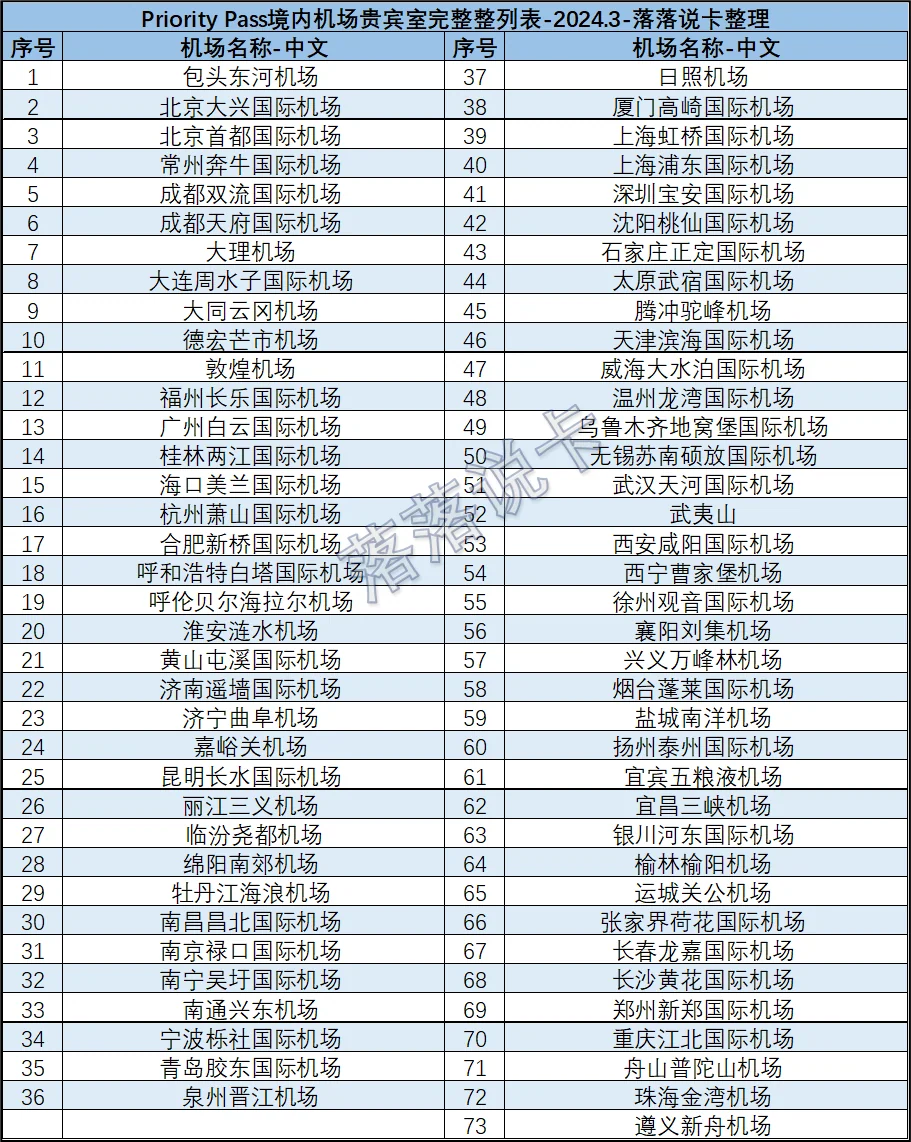
The counts are the entries visible in each regional screenshot, not PP's official lounge total, and the Latin America screenshot is cut at entry 121. One airport often hosts more than one lounge, which is how "1,500 lounges" and "700 airports" can both be true. The lists were compiled by hand; whether a lounge is open today is still a question for the website or app.
5. Checking eligibility, finding a lounge, and six things that go wrong
Before a trip, the work splits into three steps: check your issuer's app for how many visits are left and whether the benefit is cardholder-only; search by airport code on the PP app for the terminal, airside or landside position and the hours; then line the lounge up against your boarding time, because walking twenty minutes across a terminal for a coffee is a poor trade.
The details are where it goes wrong. First, not every entry is a traditional lounge: at some airports the partner is a restaurant or café that deducts a fixed amount from the bill, a different experience from a self-service room. Second, peak-hour restrictions are common — when the evening banks are full, the desk puts out a "no third-party access" sign and PPS holders queue behind business-class passengers. Third, most partner lounges cap a single visit at around three hours from the time on your boarding pass. Fourth, position matters: landside and airside lounges are not interchangeable, terminals are usually not connected, and a wrong turn during a connection can leave you unable to get in and unable to get back. Fifth, guest rules are easier to overlook than visit counts — retail guests cost $35 per person per visit on every tier, while most bank-issued PPS cards include no guest allowance at all. Sixth, contracts change: a lounge can close for refurbishment or leave the network, so last year's room may not be there this year.
6. Is it worth it?
Three cases. If you fly once or twice a year and your home airport has no PP lounge, do not take out a card for this alone. If you fly four or five times a year through hubs such as Hong Kong, Singapore, Dubai, Seoul Incheon or London Heathrow, an unlimited PP card can earn back its fee — those airports have plenty of partner lounges in good positions, and walk-up prices are not low. In between, prefer a card with a fixed number of visits and pay for what you use.
One point is easy to miss: PP and DragonPass complement each other rather than compete. DragonPass is denser at mainland airports, PP is more reliable overseas. If you hold both, two minutes spent checking which network covers your departure airport is worth more than memorising the rulebook.
Related links
- On this site: London Heathrow (LHR), Singapore Changi (SIN), Hong Kong International (HKG), Dubai International (DXB), Seoul Incheon (ICN)
- Country pages: United Kingdom (GB), Singapore (SG)
- Wikipedia: Airport lounge, Priority Pass
- Baidu Baike: Airport lounge
Image source: Priority Pass and the compilation by Luoluo Talks Cards. Membership prices, lounge lists and card benefits reflect public information as of March 2024 and may have changed since; check the Priority Pass website or app and your issuer's current terms before you travel.
More articlesTravel notes
Adelaide Airport Wins Two Skytrax Awards for Staff and Regional Service
Adelaide Airport has been named Best Airport Staff in Australia/Pacific for the first time and Best Regional Airport in Australia/Pacific for the fourth time in five years at the Skytrax World Airport Awards in London. Passenger numbers passed nine million in 2025, international traffic grew more than 20%, and a A$600 million expansion called Project Flight is under way.4 min read
Buying Whisky at Airport Duty-Free: A Global Shelf Guide by Flight Time
From Taoyuan and Changi to Heathrow and Sydney, airport duty-free is where whisky's travel-retail exclusives live: single casks, cask strength and no local duty. A region-by-region survey of what stood on the shelves around Chinese New Year 2020, plus how to choose by age, cask, bottle size and the liquid rules on connections.7 min read