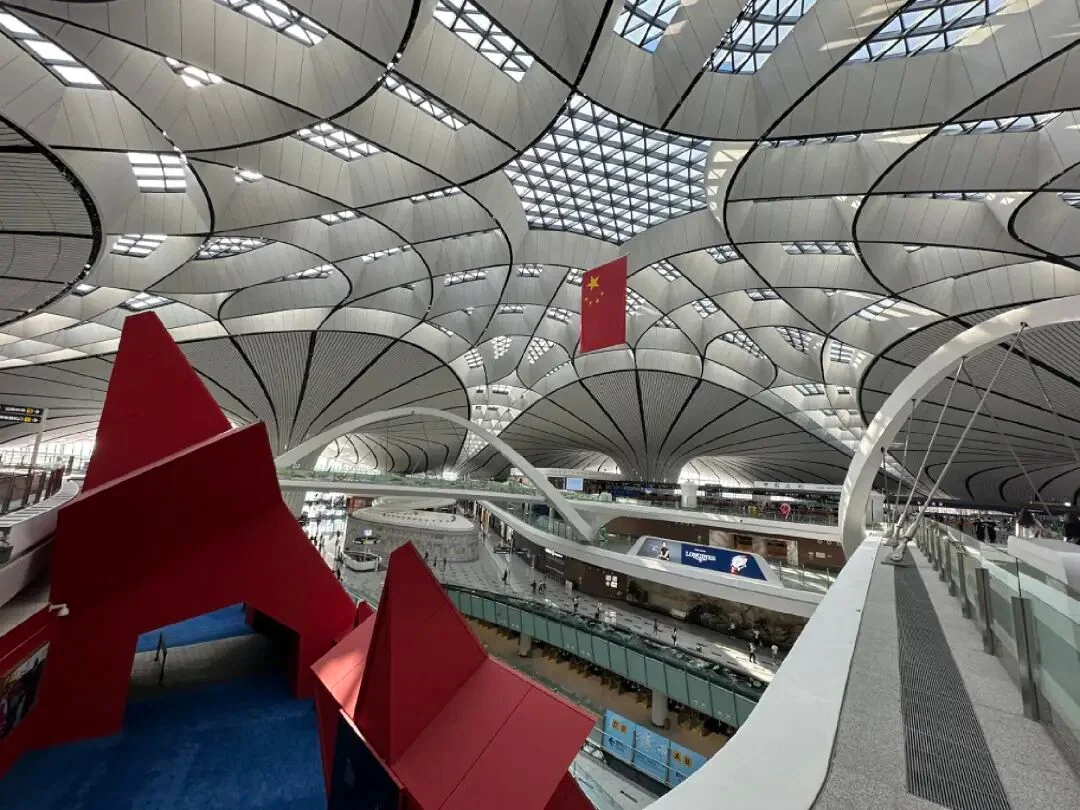
When a Megacity Builds a Second and Third Airport: Lessons from Multi-Airport City Regions
- multi-airport city regions
- Greater Bay Area
- hub specialisation
- Guangzhou new airport
- Nantong new airport
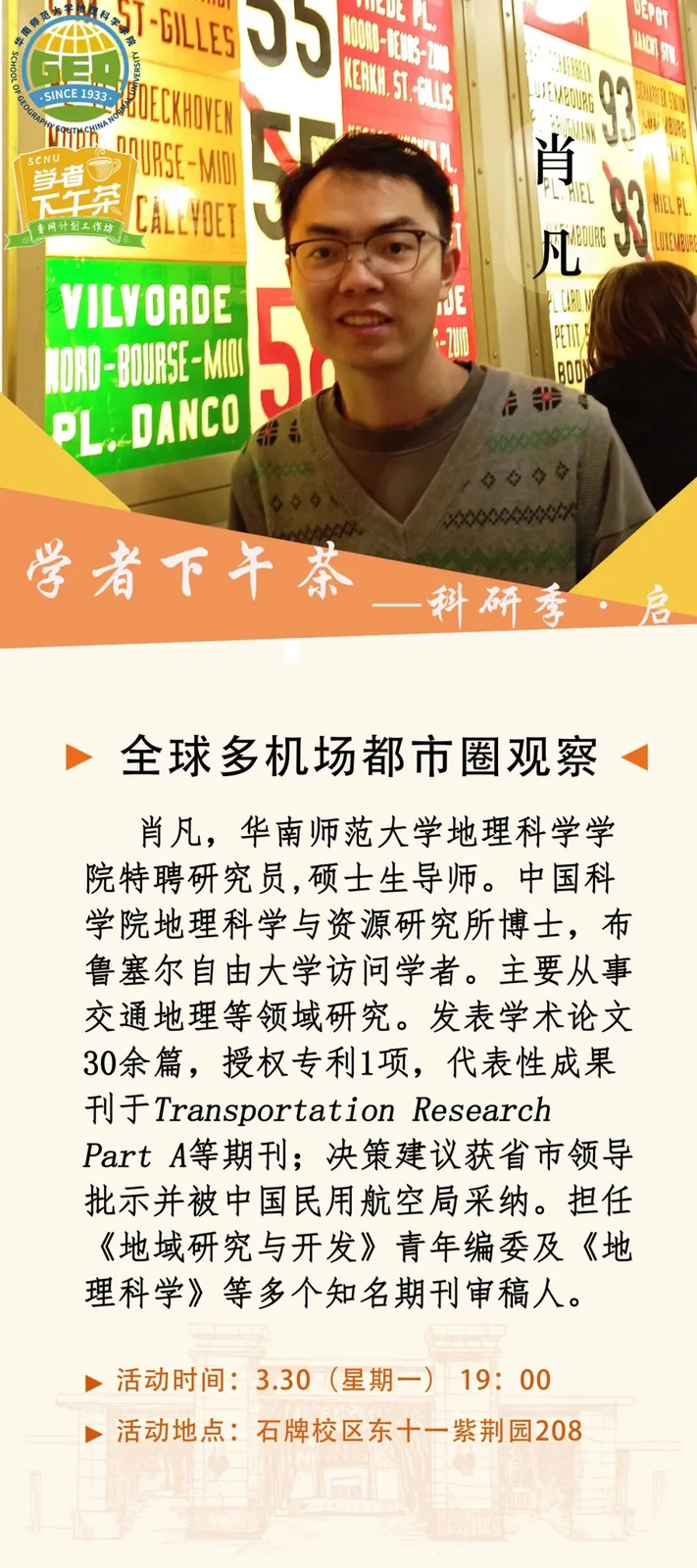
On 26 March, the School of Geography at South China Normal University posted a notice for its next "scholars' afternoon tea": on 30 March, Xiao Fan, a research fellow at the school, would discuss "observing global multi-airport city regions". The hook was the new airports planned for Guangzhou and Nantong, against the 15th Five-Year Plan's push for a modern comprehensive transport system.
A campus talk, but not a campus question: when a metropolitan region already has two or three large airports, what should their relationship be? Should each expand and chase the same routes, or divide roles the way London, New York and Tokyo do? The summary's judgement is that one airport can no longer carry growing demand and multi-airport coordination is inevitable; the hard part is avoiding homogeneous competition in a core region such as the Greater Bay Area.
Why large metropolitan areas build second and third airports
Aviation demand and a metropolitan area behave like a metro line and its city: people and industry follow the line, and once they gather, the line is no longer enough. Airports are harder to expand: runways and terminals take large tracts of land, noise carries for ten kilometres, and airspace is scarcer still. When runways, terminals and slots approach their limits, extra demand has to go to a second airport.
Most large metropolitan regions have taken this road. London has Heathrow, Gatwick, Stansted and others; New York has JFK, Newark and LaGuardia; Tokyo has Haneda and Narita; Paris has Charles de Gaulle, Orly and Beauvais; Shanghai has Pudong and Hongqiao; Beijing entered a two-airport era when Daxing opened in 2019.
The 15th Five-Year Plan puts a modern comprehensive transport system among its priorities. For Guangzhou and Nantong, a new airport is both a capacity project and a spatial strategy: it can push aviation services in a new direction and seed an airport-industry belt. Capacity is the easy part; function is the hard part — what the second airport is to the first decides whether it works.
Four ways to divide the roles
The enemy of a multi-airport system is not competition but homogeneity. If every airport chases the same long-haul routes and connecting passengers, the result is duplicated investment and mutual undercutting. Mature markets divide roles in four ways.
International versus domestic: Haneda leans domestic and near-haul, Narita long-haul; Pudong leans long-haul international, Hongqiao domestic and business. Passenger versus cargo: Hong Kong has long ranked first worldwide for cargo, Shenzhen carries a large share of freight, Macau serves regional and low-cost traffic. Full-service versus low-cost: Heathrow is the full-service long-haul hub, Stansted and Luton are low-cost, London City handles business; Charles de Gaulle is the international hub, Beauvais the low-cost field. Hub versus supplement: JFK takes long-haul international, Newark mixes international and domestic, LaGuardia is domestic business.
These divisions were not drawn in an office. They evolved from airline bases, slots, surface transport, traffic rights and passenger choice; governments can prepare the conditions but cannot tell the market which airport flies where.
The Greater Bay Area: three big airports and a homogeneity problem
Back to the Greater Bay Area: Hong Kong, Guangzhou and Shenzhen, plus Macau and Zhuhai, sit within 200 km. Each core hub has its base carriers and hinterland: Hong Kong serves international transfers and high-value traffic, Guangzhou Baiyun is southern China's comprehensive gateway, Shenzhen Bao'an draws on manufacturing on the eastern bank of the Pearl River.
Their ambitions overlap heavily. Long-haul international routes are a shared priority, cargo a shared growth area, connecting passengers a shared prize. If every airport wants to be an "international aviation hub", resources thin out: long-haul routes nobody can fill, cargo facilities built twice. The talk summary names this as the need to "avoid homogeneous competition and achieve differentiated positioning".
Public documents show airport-cluster plans for the Greater Bay Area have long recognised the problem; "differentiated positioning" is a recurring phrase. Delivery is harder: airspace must be coordinated, surface links connected, customs arrangements aligned, route subsidies restrained. Guangzhou's planned new airport is the next variable. It is expected to relieve pressure on Baiyun; if it flies the same routes and chases the same passengers, the capacity dividend will be consumed by internal competition.
International experience: how five metro areas divide the work
| Metro area | Main airports | Division of roles |
|---|---|---|
| London | Heathrow (LHR), Gatwick (LGW), Stansted (STN), Luton (LTN), London City (LCY) | Heathrow is the full-service long-haul hub; Gatwick takes leisure and long-haul; Stansted and Luton are low-cost; London City handles business |
| New York | JFK, Newark (EWR), LaGuardia (LGA) | JFK for long-haul international; Newark mixes international and domestic; LaGuardia for domestic business |
| Tokyo | Haneda (HND), Narita (NRT) | Haneda leans domestic and near-haul international; Narita long-haul and low-cost |
| Paris | Charles de Gaulle (CDG), Orly (ORY), Beauvais (BVA) | Charles de Gaulle is the international hub; Orly serves domestic and francophone markets; Beauvais is low-cost |
| Shanghai | Pudong (PVG), Hongqiao (SHA) | Pudong for long-haul international and cargo; Hongqiao for domestic and business |
Three lessons follow. First, a second airport is above all a capacity tool: Heathrow's third runway has been discussed for decades without being built, and growth went to Gatwick and Stansted instead. Second, roles evolve in the market; planning can guide but cannot replace airlines and passengers. Third, surface transport decides whether a second airport competes: if the trip from the city centre takes longer than the flight, it is "another airport", not part of "the same system".
What Guangzhou, Nantong and the 15th Five-Year Plan can learn
Nantong's new airport is positioned as part of Shanghai's international aviation hub, often called Shanghai's "third airport". Its meaning is not only to relieve Pudong but to carry aviation services north of the Yangtze, creating a cross-river division of labour with Shanghai. Public information suggests rail links are bringing Nantong into Shanghai's one-hour circle — the precondition for joining Shanghai's airport system.
For Guangzhou, the question is not another terminal but three answers: whom it serves, where it flies, and how it divides work with Baiyun. If it takes domestic, regional and low-cost traffic and leaves long-haul international to Baiyun, the two complement each other; if it also wants to be an international hub, it needs a clearer route division and stronger surface links, or it becomes an airport that tries to do everything.
For the 15th Five-Year Plan, Guangzhou and Nantong point to the same lesson: define the function before the capacity, connect the ground transport before the route network, build cross-city coordination before arguing over who does international, domestic and cargo. A multi-airport city region is not a contest in airport numbers but a test of coordinating airspace, land, slots and industrial layout.
The talk recommends three books: Geographical Review (Vol. 9), Economic Geography of Northeast China and The Economics of Location.

The "scholars' afternoon tea" is less likely to produce an answer than a better question: when the second and third airports are on the planning map, is the city ready to give them different roles?
Related links
- On this site: Guangzhou Baiyun (CAN), Shanghai Pudong (PVG), Heathrow (LHR), JFK, Haneda (HND), China (CN), United Kingdom (GB)
- Wikipedia: Pearl River Delta, Metropolitan area
- Baidu Baike: Greater Bay Area (粤港澳大湾区)
Image source: School of Geography, South China Normal University. Details of the talk are as published by the organisers; check government and airport operator announcements for planning and route information.
More articlesTravel notes

Adelaide Airport Wins Two Skytrax Awards for Staff and Regional Service
Adelaide Airport has been named Best Airport Staff in Australia/Pacific for the first time and Best Regional Airport in Australia/Pacific for the fourth time in five years at the Skytrax World Airport Awards in London. Passenger numbers passed nine million in 2025, international traffic grew more than 20%, and a A$600 million expansion called Project Flight is under way.4 min read
Buying Whisky at Airport Duty-Free: A Global Shelf Guide by Flight Time
From Taoyuan and Changi to Heathrow and Sydney, airport duty-free is where whisky's travel-retail exclusives live: single casks, cask strength and no local duty. A region-by-region survey of what stood on the shelves around Chinese New Year 2020, plus how to choose by age, cask, bottle size and the liquid rules on connections.7 min read