Getting Out of Dubai Airport: T1 and T3 Arrivals, Currency, SIM Cards and the Metro
- Dubai Airport
- DXB
- Dubai arrivals
- Dubai Metro
- Dubai transport
- Middle East travel
Dubai International Airport (DXB) is consistently among the busiest airports in the world for international passengers. Its three terminals line up along the same runways, and on a good day you can be out of arrivals within half an hour of stepping off the plane — but without knowing which terminal you are in and which way to walk, the duty-free halls and transfer corridors can swallow a lot of time.
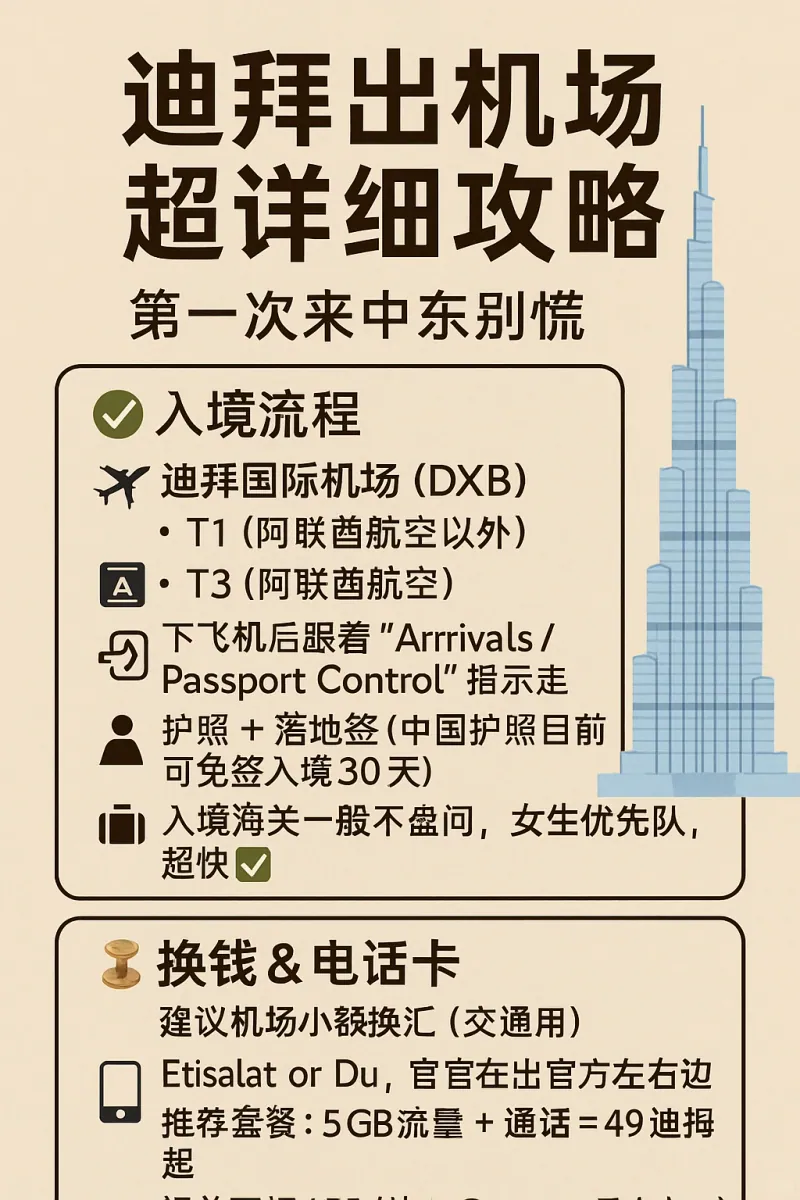
This guide follows the order of events after landing: work out which terminal you are in, clear immigration, handle money and a SIM card, then choose between the metro, a taxi and a ride-hailing app. Prices are from the author's trip in 2025; policies and fares change, so check the official sources before you travel.
1. Work out which terminal you are in
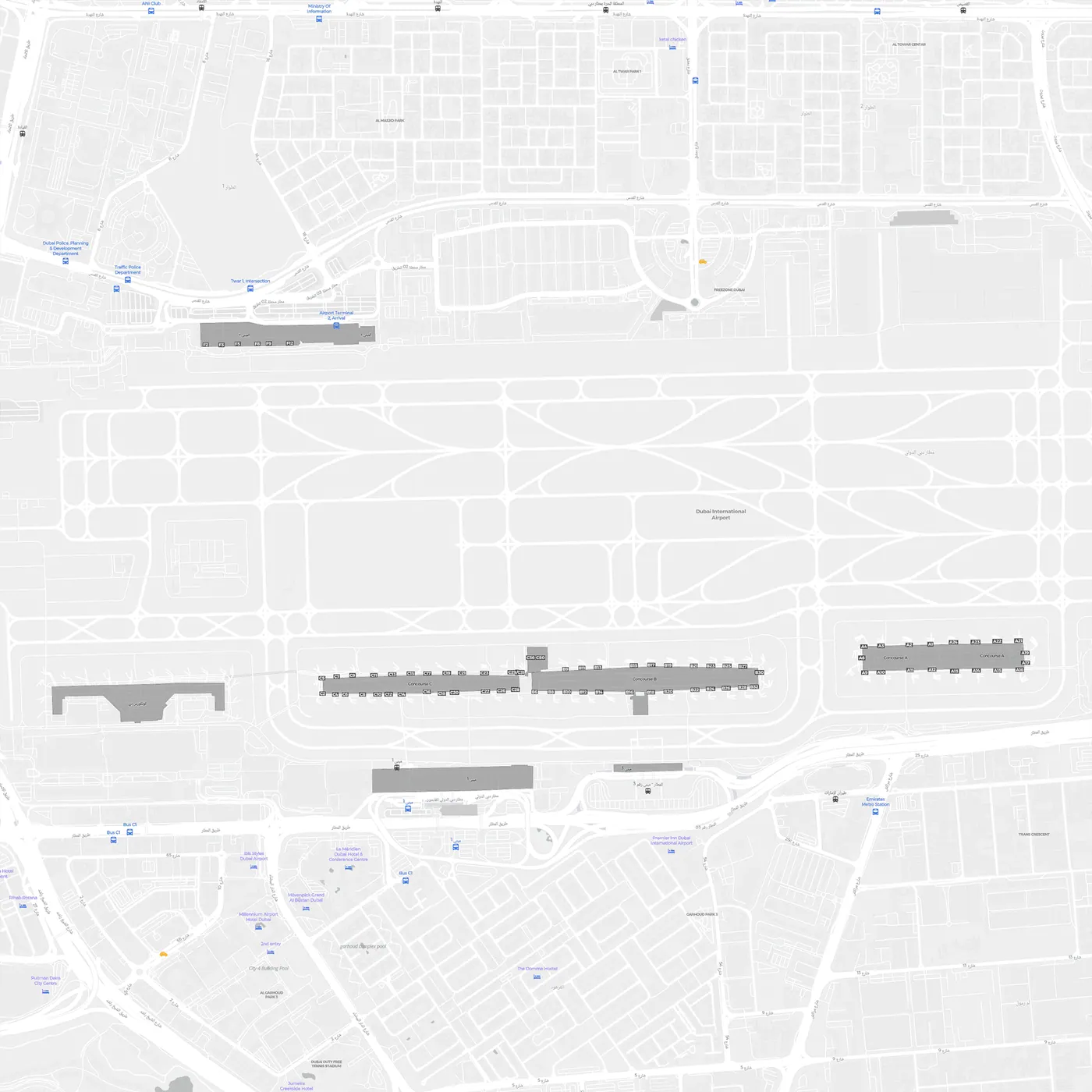
Dubai's three terminals are cleanly divided by airline, and confirming this before anything else matters more than any sign:
| Terminal | Main airlines | Character |
|---|---|---|
| T3 | Emirates and some codeshare partners | One of the largest terminal buildings in the world, with concourses A, B and C; international departures and arrivals |
| T1 | Most international carriers other than Emirates | Connected to T3, walkable or reachable by the internal people mover |
| T2 | flydubai and other low-cost carriers | On the far side of T1 and T3; needs a bus or taxi, older building |
T1 and T3 are linked by a free internal shuttle — follow the Connections signs. There is no walking route between T2 and the other two terminals, so a bus or taxi is the only option; if your connection is under three hours and involves T2, allow 40 minutes extra.
2. Immigration: follow Arrivals
Once off the aircraft, the signs point two ways: Arrivals and Connections. Inbound travellers follow Arrivals and Passport Control to the immigration hall.
What to expect with the two most common passport cases:
- Chinese passports: currently visa-free for the UAE with a 30-day stay, subject to the rules in force on the day. Officers usually check the passport and fingerprints and do not question the itinerary.
- Passports needing a visa: apply for an e-visa in advance, or use the visa desk at the airport. The visa-on-arrival queue is at one side of the hall and takes longer than the ordinary lanes.
Beyond immigration is the baggage hall, with belt numbers shown by flight on the screens. DXB's baggage waits are middling for a hub of its size; in peak season (December to January) half an hour is normal when several widebodies land together. After collecting your bags, take the green channel — customs screening is mostly X-ray based, with food and medicines getting the closest look.
Total time: 15–30 minutes from aircraft to arrivals hall on a smooth run; allow an hour when it is busy or you need a visa on arrival.
3. Money and SIM cards: to the left after customs
The arrivals hall is a row of desks — currency exchange, SIM cards, car rental, hotel transfers. Two of them are worth doing in one stop.
Currency: airport rates are ordinary, so change only what you need for the first day's transport and small purchases (AED 100–200 is plenty). The dirham is pegged to the dollar, and exchange desks in town usually beat the airport; for larger amounts, withdraw from an ATM or change money in the city.
SIM cards: the Etisalat and Du desks are to the left after customs and sell to a passport. A common package is 5 GB with local calls from AED 49; for stays over a week, the 10 GB-and-up bundles work out cheaper per gigabyte. If you plan to install local apps such as Careem or Talabat, make sure you have a number that can receive SMS — plenty of mainland Chinese numbers do not receive verification texts abroad, which is exactly where ride-hailing trips go wrong.
4. Getting into town: metro, taxi or ride-hailing
There are four options from DXB: the metro, a taxi, a ride-hailing app, and the airport bus. For a first visit, the metro or a taxi is the safe choice; if you want to avoid traffic without spending much, the metro is close to unbeatable.
The Red Line metro (recommended)
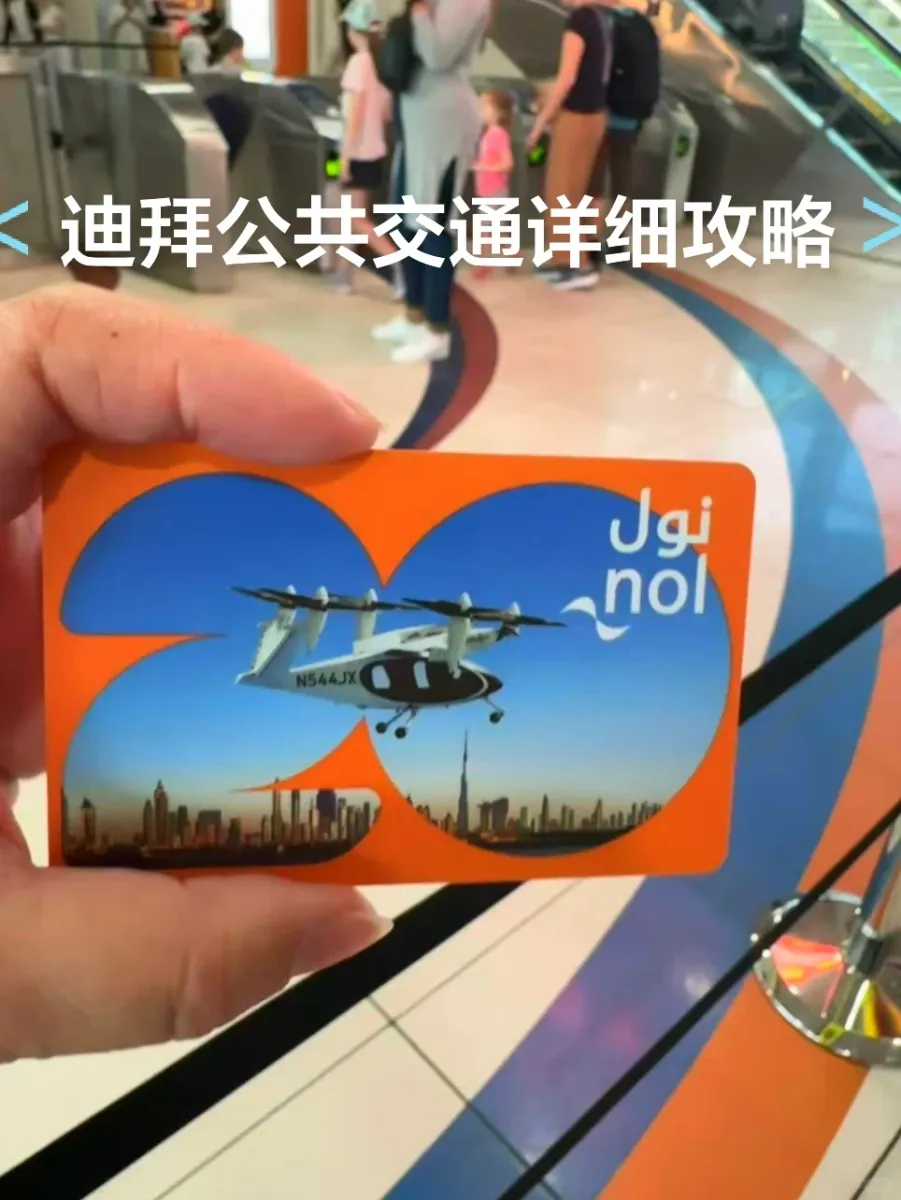
T1 and T3 each have their own metro station, 5–8 minutes' walk from arrivals and easy to find by following the red Metro signs. The Red Line runs through Deira, BurJuman, World Trade Centre and Burj Khalifa/Dubai Mall, reaching the centre in 20–30 minutes; fares are by zone and you tap in and out with a Nol card.
Nol cards come from the ticket machines or the staffed counter. The usual choice is the silver card at AED 25, of which AED 6 is the card fee and AED 19 is balance. On a first purchase, top up to AED 40–50, which covers several days of city travel.
Taxi
The taxi rank is outside the exits and runs on the meter. The airport to the centre (around Burj Khalifa/Dubai Mall) is roughly AED 70–90, and more for the Jumeirah beach areas. Write the destination in English for the driver — "Dubai Tower" in Chinese will not help, but Burj Khalifa will.
Ride-hailing: Careem and Bolt
Careem is Dubai's established platform, priced close to a taxi with the fare fixed at booking. Bolt has expanded quickly in Dubai over the past couple of years, usually a notch cheaper, and it is friendlier to mainland Chinese numbers — the SMS verification arrives, which is more than can be said for Careem.
One thing to know: DXB's ride-hailing pick-up is not at the arrivals door but in a designated area of the car park. Follow the walking directions in the app instead of waiting at the exit.
Airport buses
The airport buses are infrequent and limited in coverage, mainly serving nearby hotels and a few outlying areas. Not a first choice for a first visit.
| Option | Time to the centre | Rough cost | Best for |
|---|---|---|---|
| Red Line metro | 20–30 minutes | Zonal fare (Nol card) | Light luggage, avoiding traffic |
| Taxi | 15–25 minutes | AED 70–90 | Two or more people, lots of bags |
| Careem/Bolt | 15–25 minutes | Similar to or below a taxi | A local number, fixed prices |
| Airport bus | 40 minutes and up | Lower | Hotels along a bus route |
5. Small details for a first visit to the Gulf
- Clothing: Dubai is more liberal than its neighbours, but malls and mosques have dress codes. The airport is heavily air-conditioned, so carry a light layer; mosques want long sleeves and trousers, and women need a headscarf.
- Time difference: the UAE is four hours behind Beijing. Set your phone to automatic time so you do not misread a departure.
- Plugs: UK-style three-pin (type G), as in Hong Kong; mainland Chinese plugs need an adapter.
- Language: Arabic is official, but English is widely spoken — airport, metro and mall staff all manage in English.
- Friday: the UAE weekend is Saturday and Sunday, and Friday is the prayer day, when some shops close in the morning and the metro starts later. Plan around it.
- Tipping: restaurant bills usually include service, so nothing extra is needed; rounding up is fine for taxis.
6. Put the transport card to work
The Nol card you buy on arrival is the most useful thing in your pocket for the rest of the trip: metro, buses and the Abra water bus all take it, and top-up machines are in every station. Dubai buses take no cash at all, so without a Nol card you simply cannot ride them; metro single tickets are paper QR tickets that are not collected at the exit, so you can keep them as a souvenir.
For card types, top-ups, metro interchanges and bus routes in more detail, see the separate guide: Dubai public transport and the Nol card.
Related links
- On this site: Dubai International Airport (DXB), United Arab Emirates (AE), Dubai public transport and the Nol card
- Wikipedia: Dubai International Airport
- Baidu Baike: Dubai International Airport
- Airport website: Dubai Airports
- Metro and buses: Dubai RTA
- Original post: Xiaohongshu @秦人在迪拜
Image source: the author's photographs and this site's airport diagram. Fares, hours and transport policies may change; check official announcements before travelling.
More articlesTravel notes
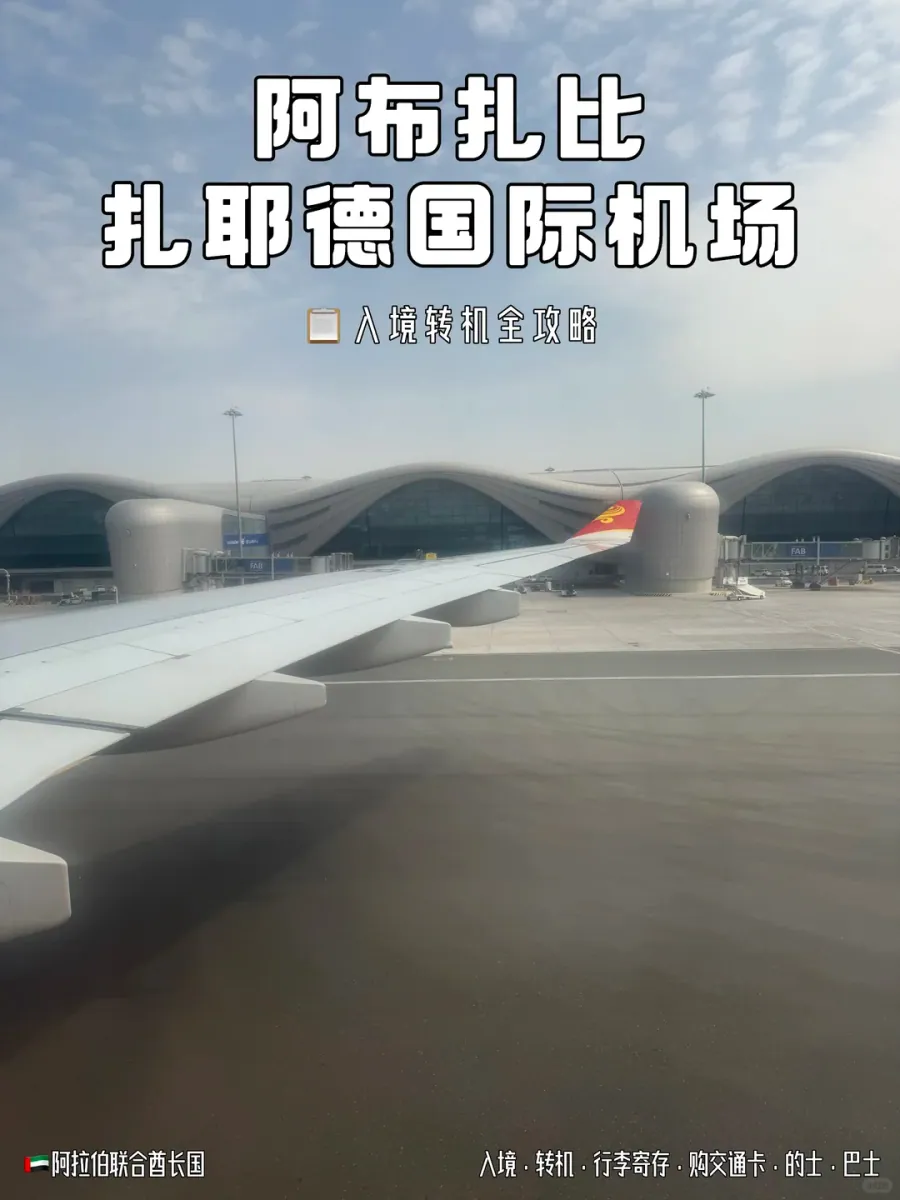
Zayed International Airport, Abu Dhabi: Arrivals, Baggage Storage and Getting to Dubai
A step-by-step guide to landing at Abu Dhabi Zayed International Airport (AUH), Terminal A: the yellow Arrivals route to passport control, e-gates versus the manual counters, baggage belts and oversized luggage, what sits on each side of the arrivals hall, baggage storage prices, the Hafilat card, the A10 bus to the Sheikh Zayed Grand Mosque, taxi and ride-hailing fares, and the coach to Dubai.8 min read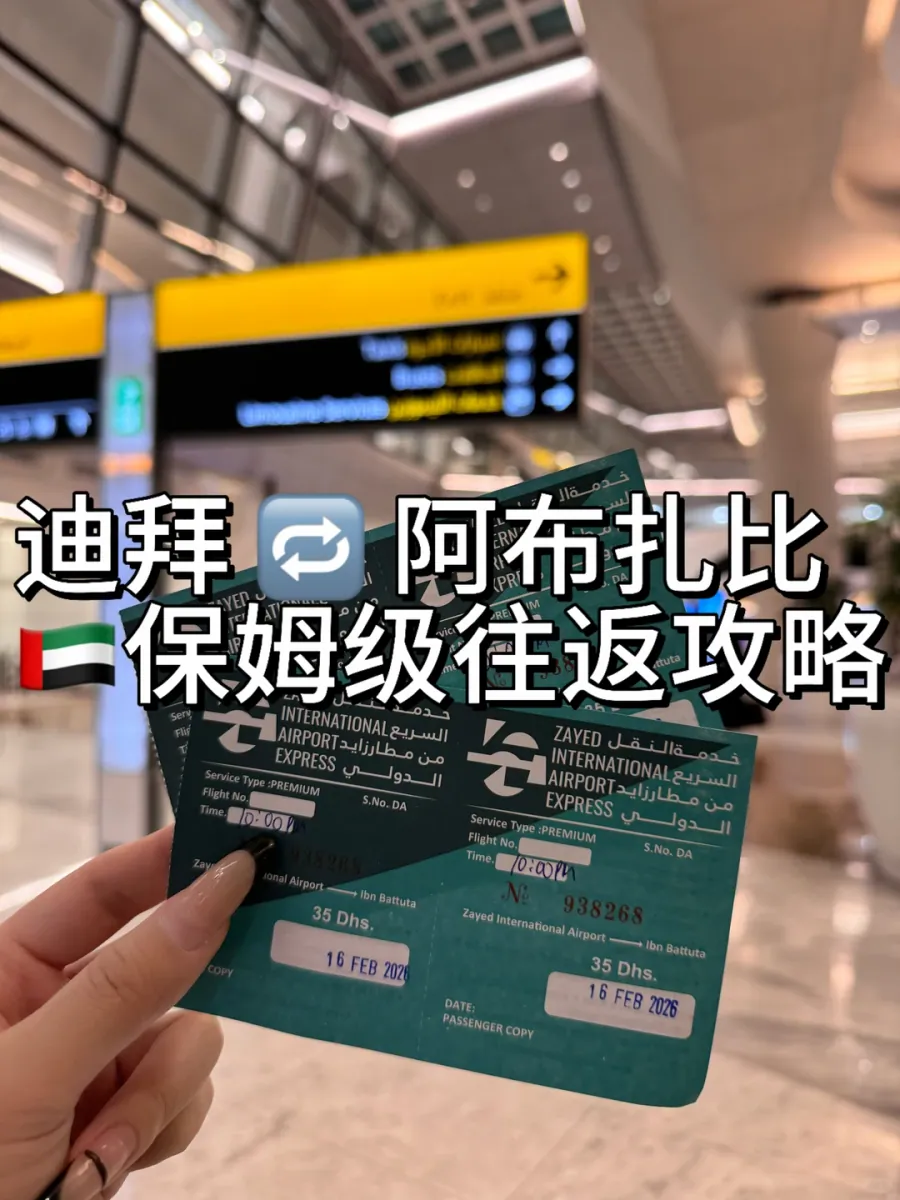
Abu Dhabi to Dubai by Bus: The AED 35 Airport Express and the E101 Back
How to travel between Abu Dhabi and Dubai on public transport: the Zayed International Airport Express from Gate 7 at AED 35, hourly and non-stop to Ibn Battuta; the RTA E101 back, Nol card only at AED 25, every 20 minutes to Abu Dhabi Main Bus Terminal; the free Hafilat card for Abu Dhabi city buses; and what the round trip really costs in time and money.6 min read