Zayed International Airport, Abu Dhabi: Arrivals, Baggage Storage and Getting to Dubai
- Abu Dhabi Airport
- AUH
- Zayed International Airport
- UAE travel
- airport arrivals
- baggage storage
- Hafilat card
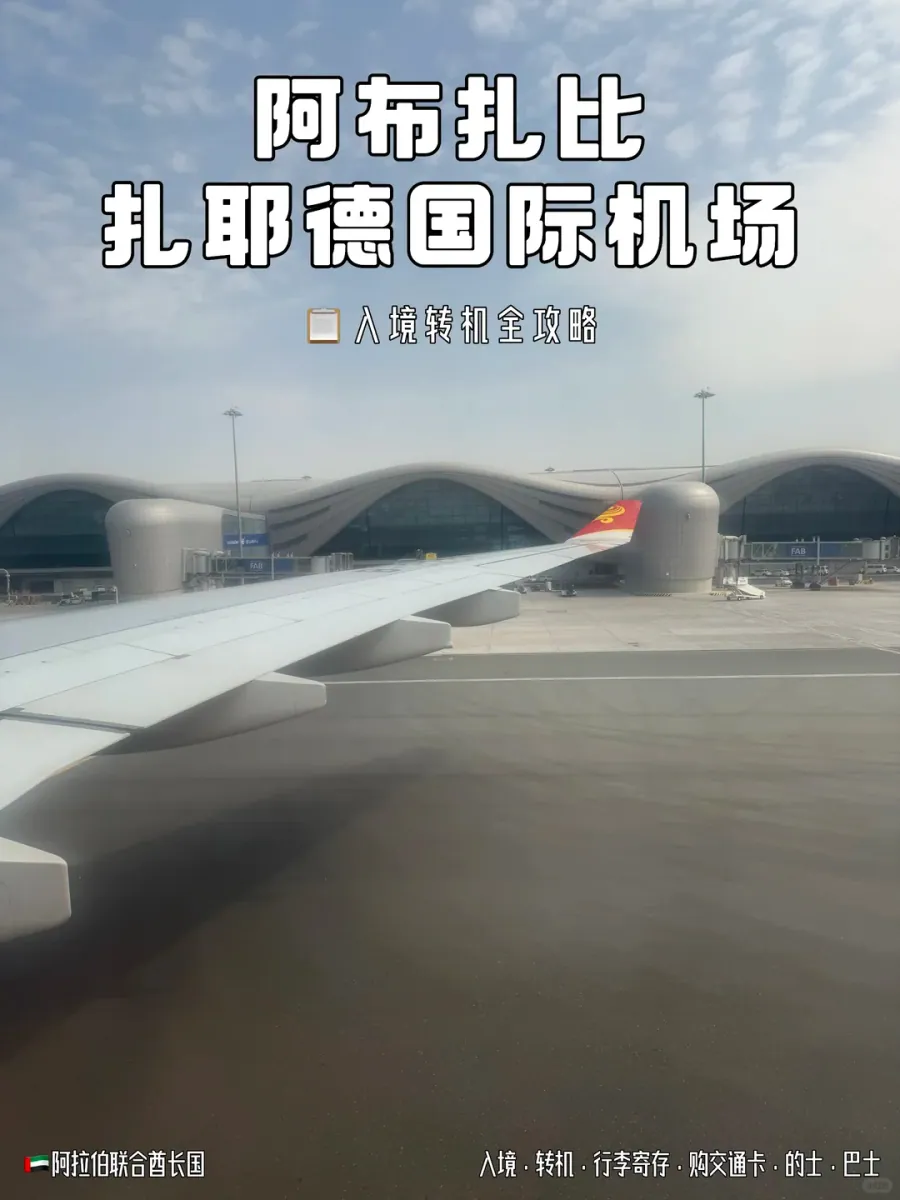
Abu Dhabi's Zayed International Airport (AUH) opened Terminal A at the end of 2023, folding the old T1, T2 and T3 into one X-shaped building. For travellers from China it is both the gateway to the Emirati capital and a stepping stone to Dubai or the Sheikh Zayed Grand Mosque — which means the first hour after landing is spent answering the same few questions: which way now, where do I leave my bags, how do I get a transport card, and which door does the Dubai coach leave from.
Compared with Dubai, Terminal A is the easier airport to walk through: the building has a single spine, so arrivals, baggage claim and the exit form an almost straight line. The hard part is not direction but choice — e-gates or a manual counter, left or right in the arrivals hall, the silver or the green Hafilat card. What follows walks through the whole sequence in the order you will meet it.
1. After landing: follow the yellow signs
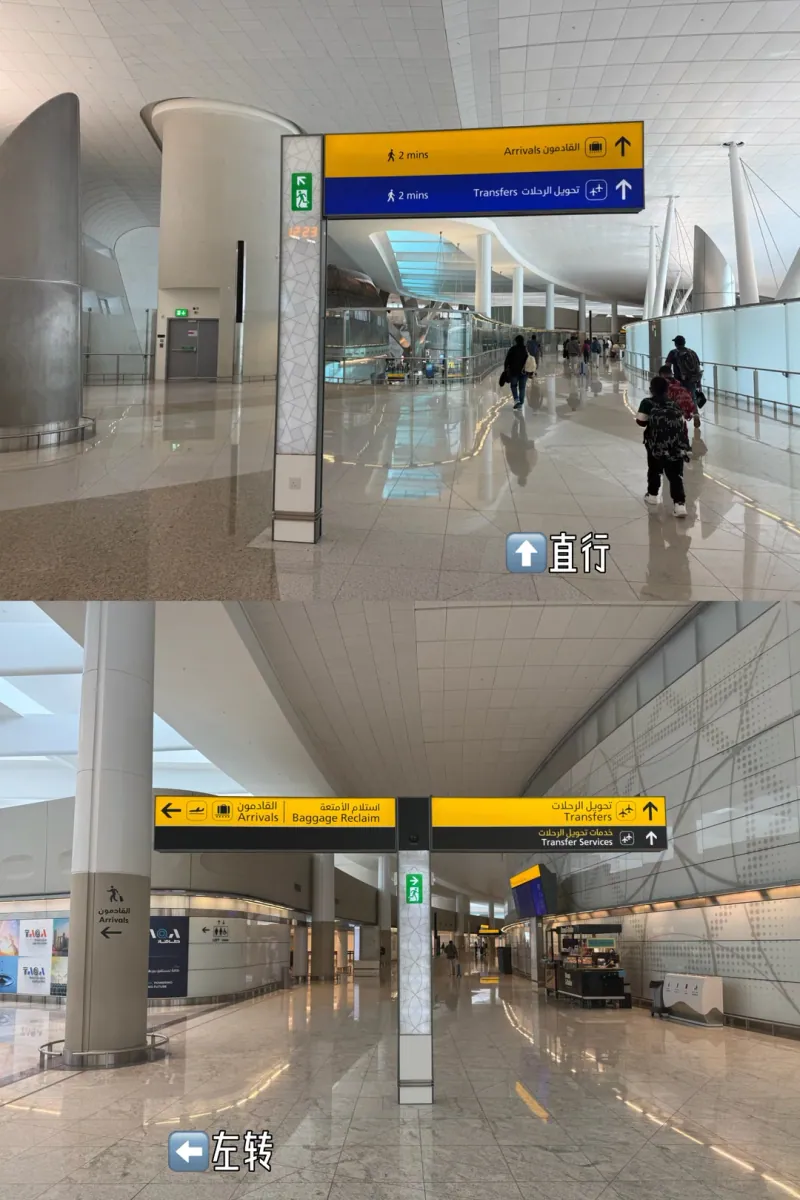
The first thing you see inside the terminal is a row of yellow signs with Arrivals (القادمون) in black. Signage at Zayed is Arabic plus English, and the colour coding does the work: yellow for arrivals and baggage, blue for transfers, green for exits. Even without reading a word, following the colour gets you there.
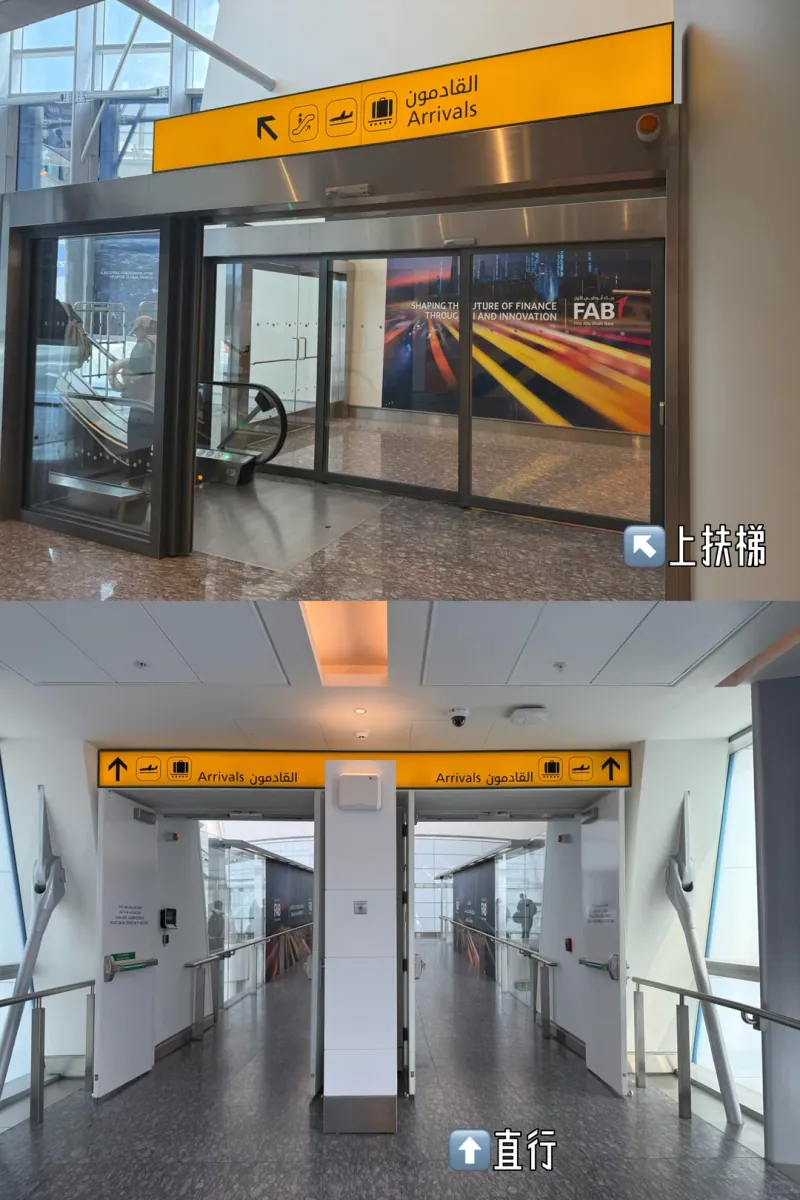
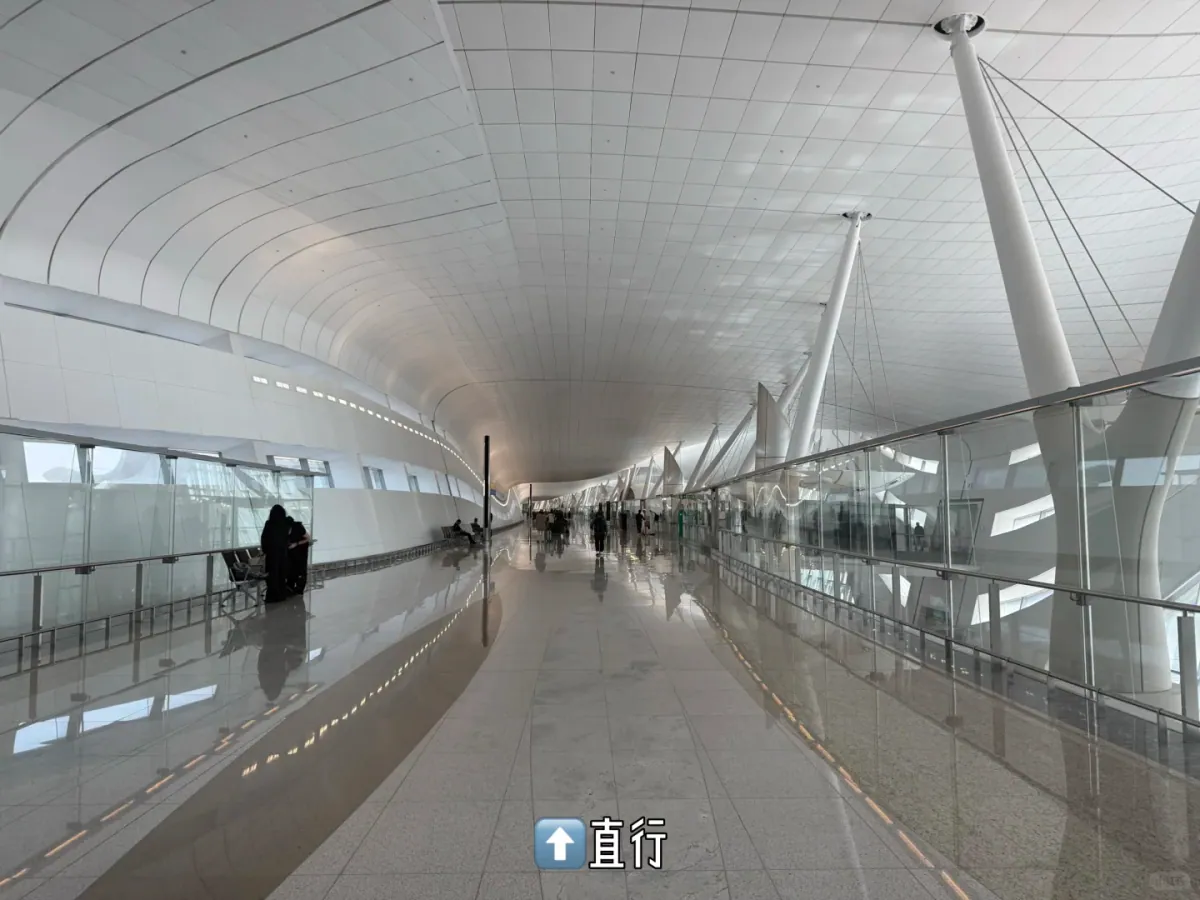
Keep straight along the glass-walled corridor. There is no turn and no people mover on this stretch — Terminal A funnels arriving passengers straight towards passport control, with only toilets and a nursing room off to the side.
Further on, the signs split Arrivals from Transfers: travellers heading into Abu Dhabi and collecting bags take the yellow side, while those connecting without entering the country take the blue side. If your boarding pass already has the next flight and your bags are checked through, follow blue and stay airside.
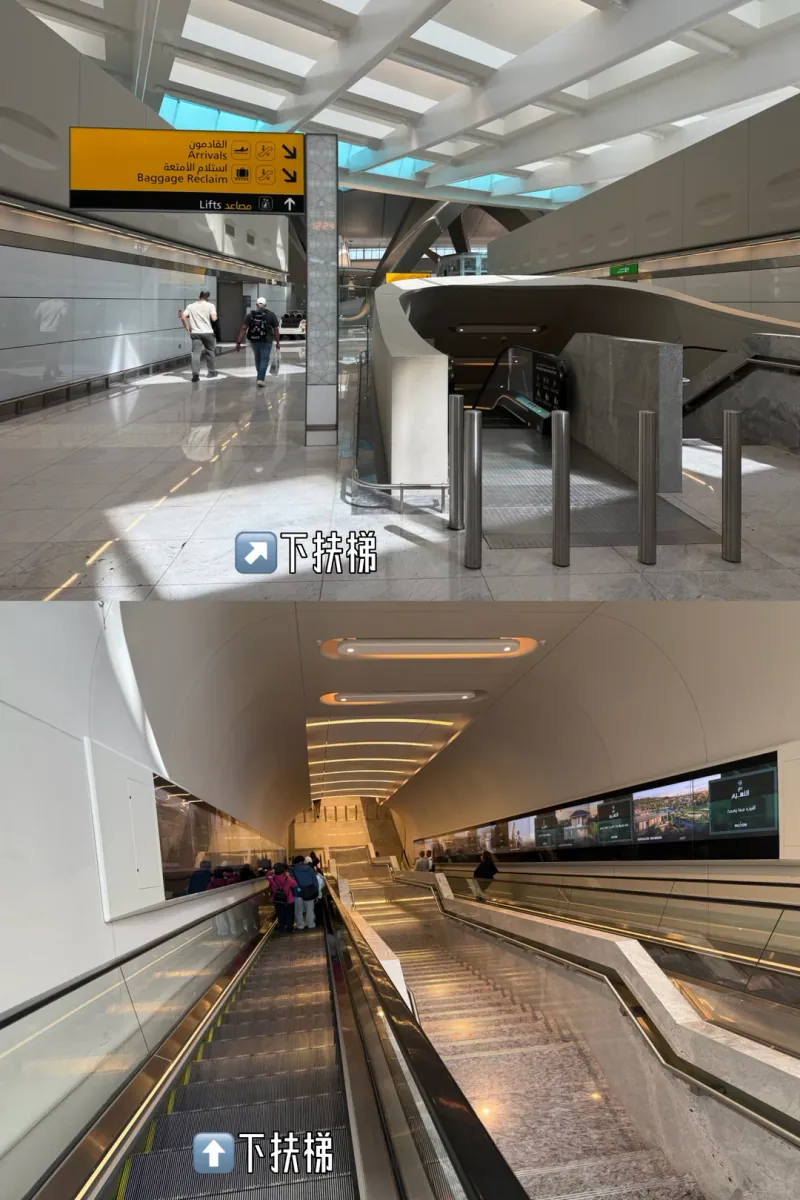
After the split you go down an escalator, with large city lightboxes on both sides. Trolleys can use the lift alongside, so there is no need to wrestle a big case onto the steps.
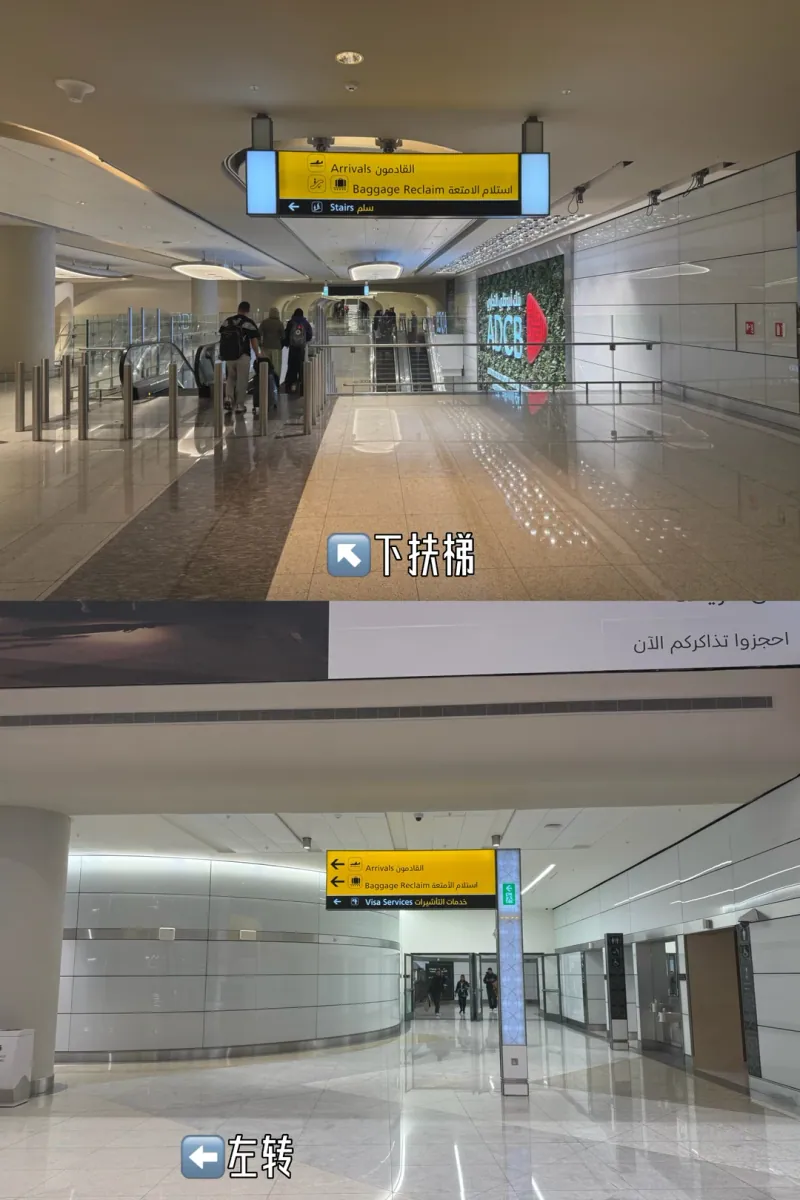
At the bottom, turn left once and the passport hall appears. The signs here add a small green line for Visa Services (خدمات التأشيرات) — that is the side for visa-on-arrival and visa problems; ordinary arrivals keep following Arrivals.
2. Passport control: e-gates or a counter
The hall divides into two parallel routes, and this is the one decision worth making before you join a queue.
- Straight ahead: the e-gates. Scan your passport, let the camera match your face, and the gate opens — ten-odd seconds in all. It suits travellers with a biometric passport whose details are already on file.
- To the right: the manual counters. The right choice when the machine will not read you, the passport has no chip, you are travelling with children, or you need a stamp. Counters are numbered from 25 upwards and the screens read Foreign Passports.
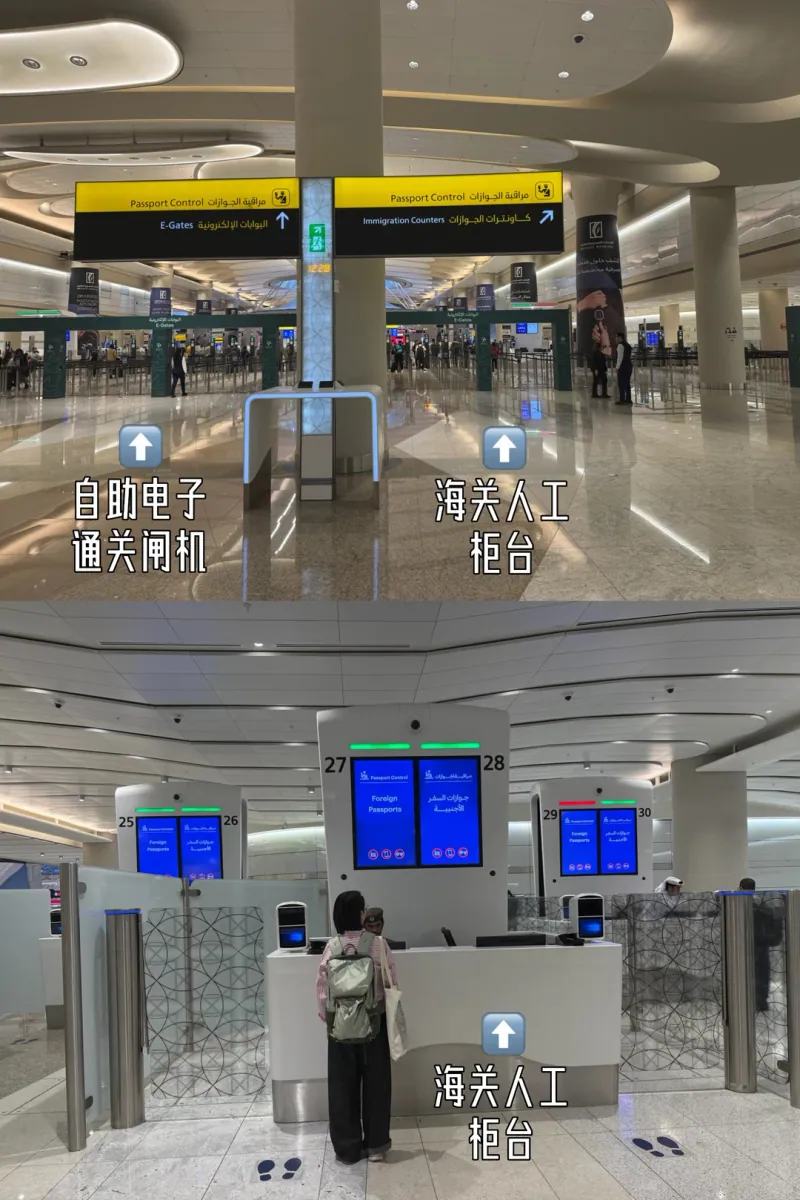
If it is your first visit, or the passport is new, do not stand at a gate trying again and again — take the counter, which is usually faster than troubleshooting. Officers rarely ask more than a passport, a fingerprint and a glance at the camera. The hall is wide enough that even several widebody arrivals at once rarely push the queue past twenty minutes.
3. Baggage: find your belt on the screen
Past passport control is the baggage hall. The signs group Baggage Reclaim 8–10 on one panel and point separately to Oversize Baggage — surfboards, pushchairs and outsized boxes do not come out on the ordinary belts and have their own desk.
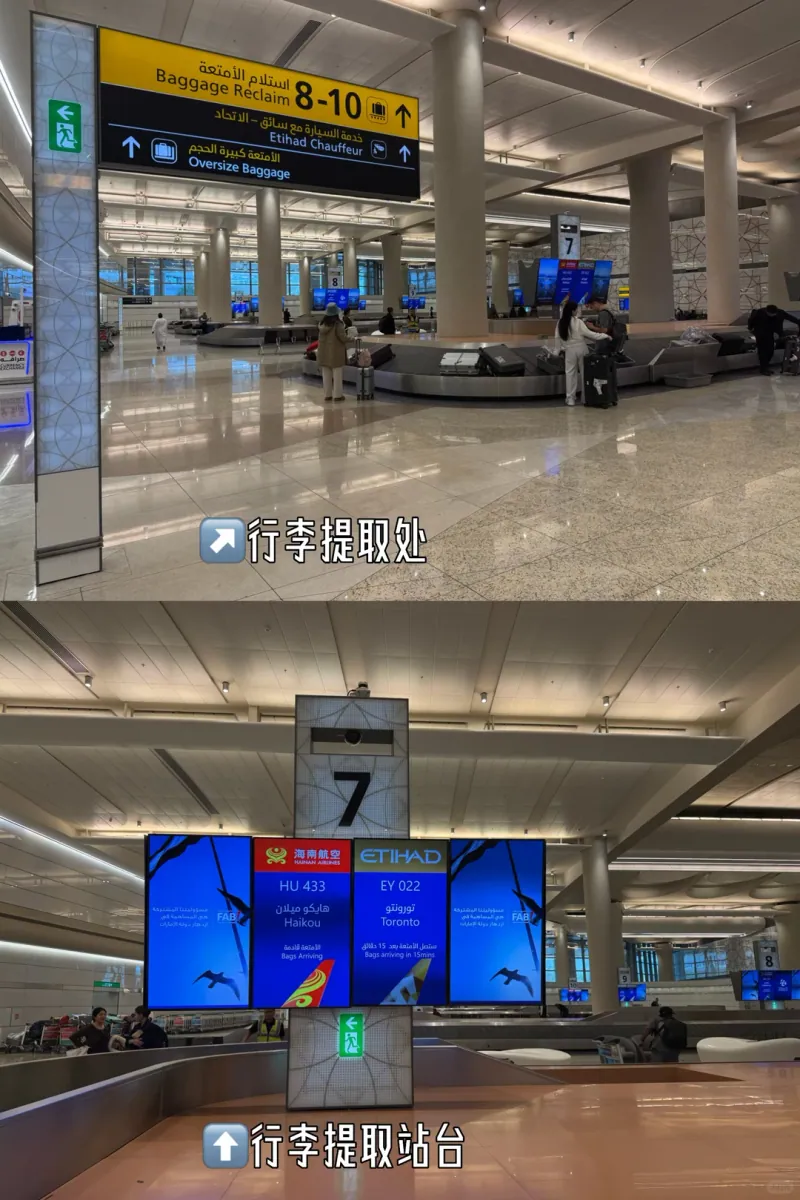
Every belt has a screen above it showing flight number, origin and status. On belt 7 in the photo, Hainan Airlines HU433 from Haikou and Etihad EY022 from Toronto are both unloading onto the same belt. Look up for your flight number rather than following the crowd.
While you wait, sort out two things: whether your phone has joined the free airport Wi-Fi (Terminal A asks for a mobile number to text a code, and Chinese numbers generally work), and whether the next leg of your trip needs a ticket bought in advance.
4. The exit: left or right
Follow the green EXIT (مخرج) signs after collecting your bags; one set of automatic doors opens into the arrivals hall. Zayed splits the hall's functions left and right, and knowing which is which saves a lot of walking back and forth.
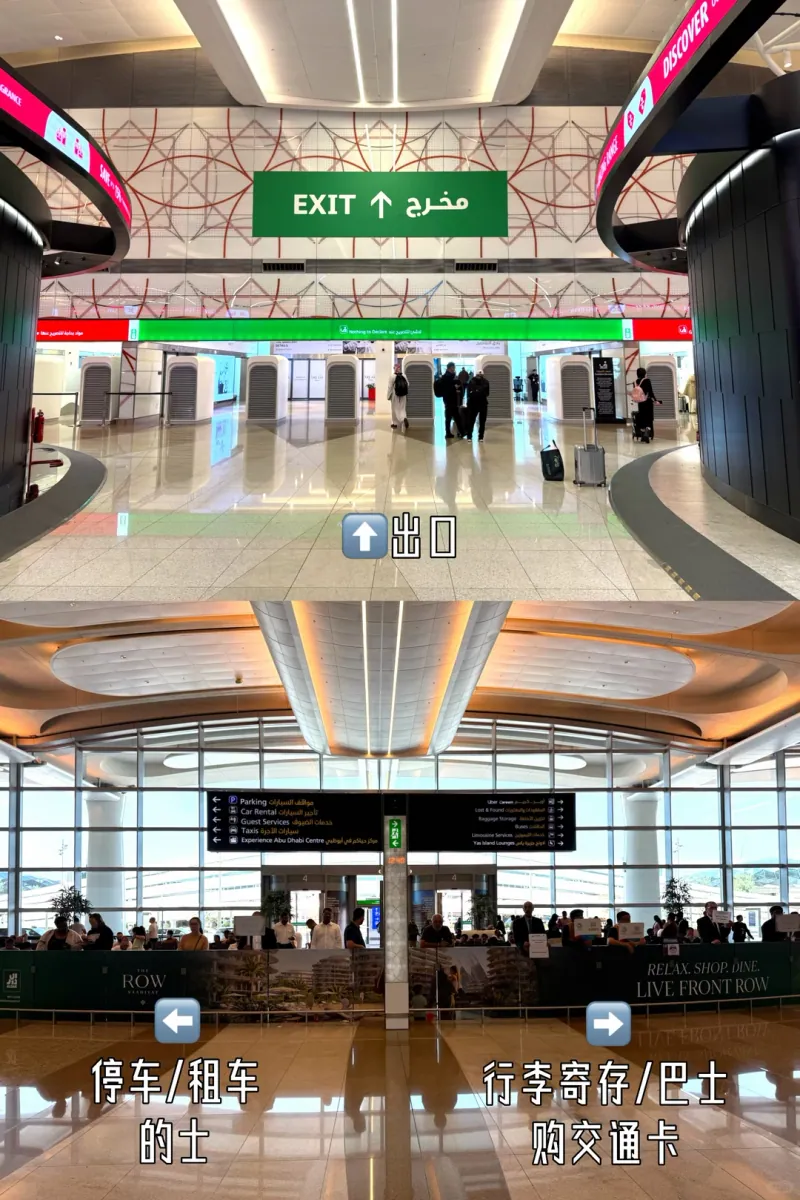
Facing the exit:
| Direction | What is there |
|---|---|
| ⬅️ Left | Parking, car rental desks, taxis, lost and found, guest services |
| ➡️ Right | Baggage storage, buses, transport-card counters, limousine and airport transfers |
Opposite the doors is a row of red sculptural columns with café seating; the ATMs and currency exchange sit behind them. The blue overhead sign in this zone lists parking, lost and found, baggage storage and buses in one glance, and the AED Exchange / ATM lightbox is the handiest place to draw cash — rates at the airport are ordinary, so take only what you need for the day's transport.
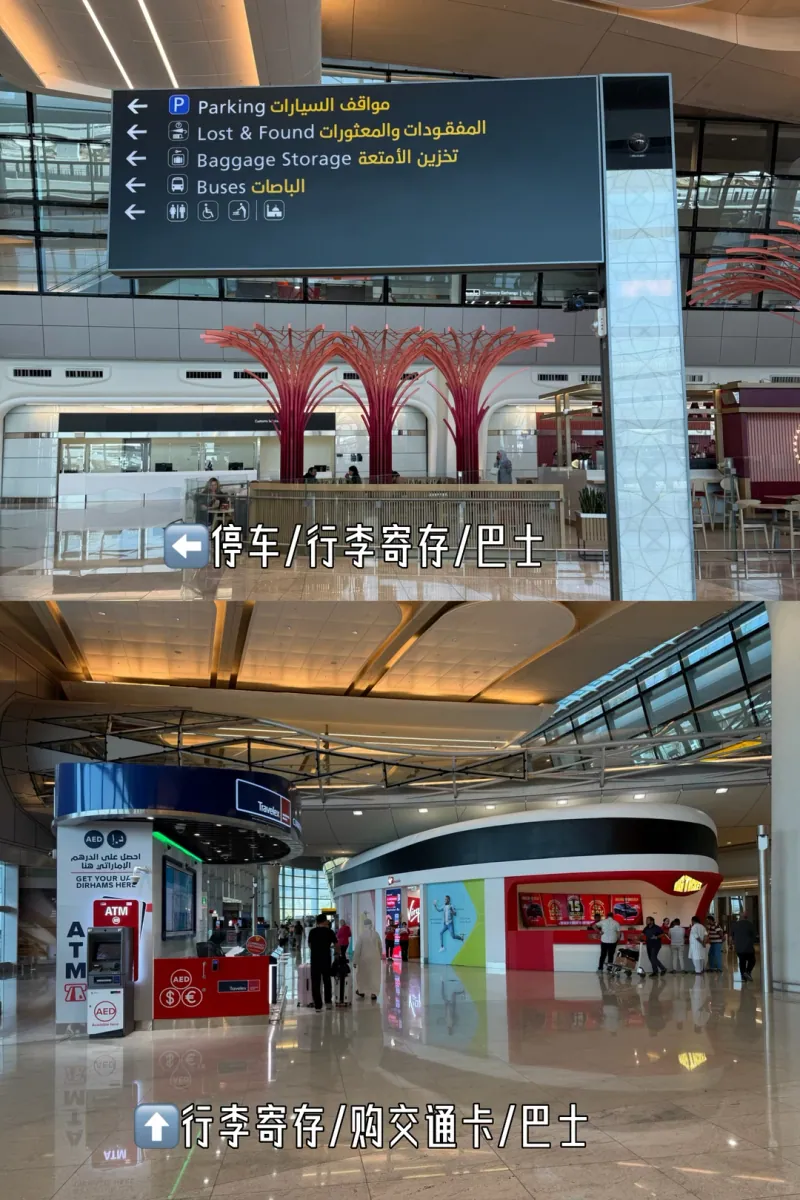
5. Baggage storage: priced by time band
If you are not heading into the city straight away — say you want the Grand Mosque first, or are going on to Dubai — your bags need somewhere to live. Storage is on the right-hand side of the arrivals hall, signed Excess Baggage Company, with a stack of cardboard size templates outside (from AED 20 for a small item to AED 40 for a large one) and a white pillar marked Baggage Storage.
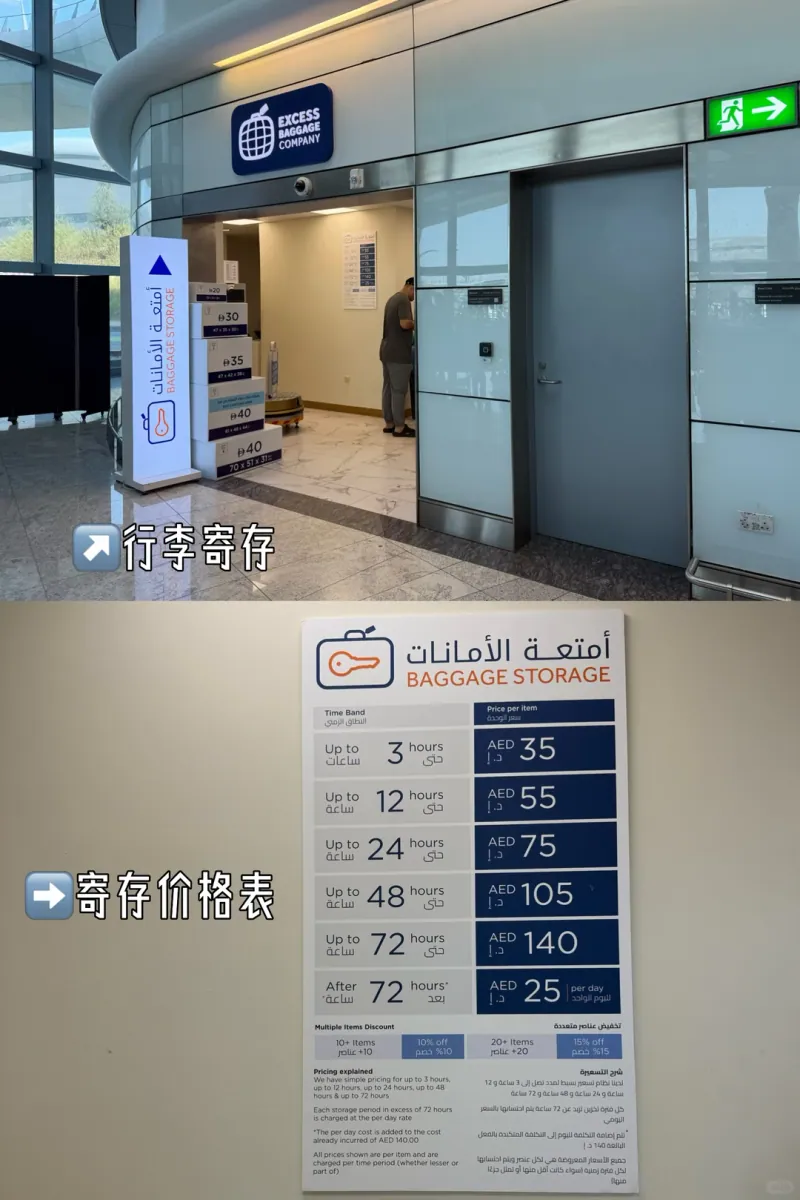
Charges run in time bands, with a daily rate after 72 hours. The board is worth photographing:
| Storage period | Price per item (AED) |
|---|---|
| Up to 3 hours | 35 |
| Up to 12 hours | 55 |
| Up to 24 hours | 75 |
| Up to 48 hours | 105 |
| Up to 72 hours | 140 |
| Beyond 72 hours | +25 per day |
There are discounts for volume: 10% off from 10 items, 15% off from 20. Pricing is per item — one suitcase or one bag — so consolidating before you hand things over is worth the effort.
6. The Hafilat card: silver or green
Abu Dhabi buses run on the Hafilat card and take no cash on board, much as Dubai runs on Nol. The Integrated Transport Centre (ITC) counter and self-service top-up machines are on the right of the arrivals hall, so get the card at the airport rather than hunting for an outlet in town.
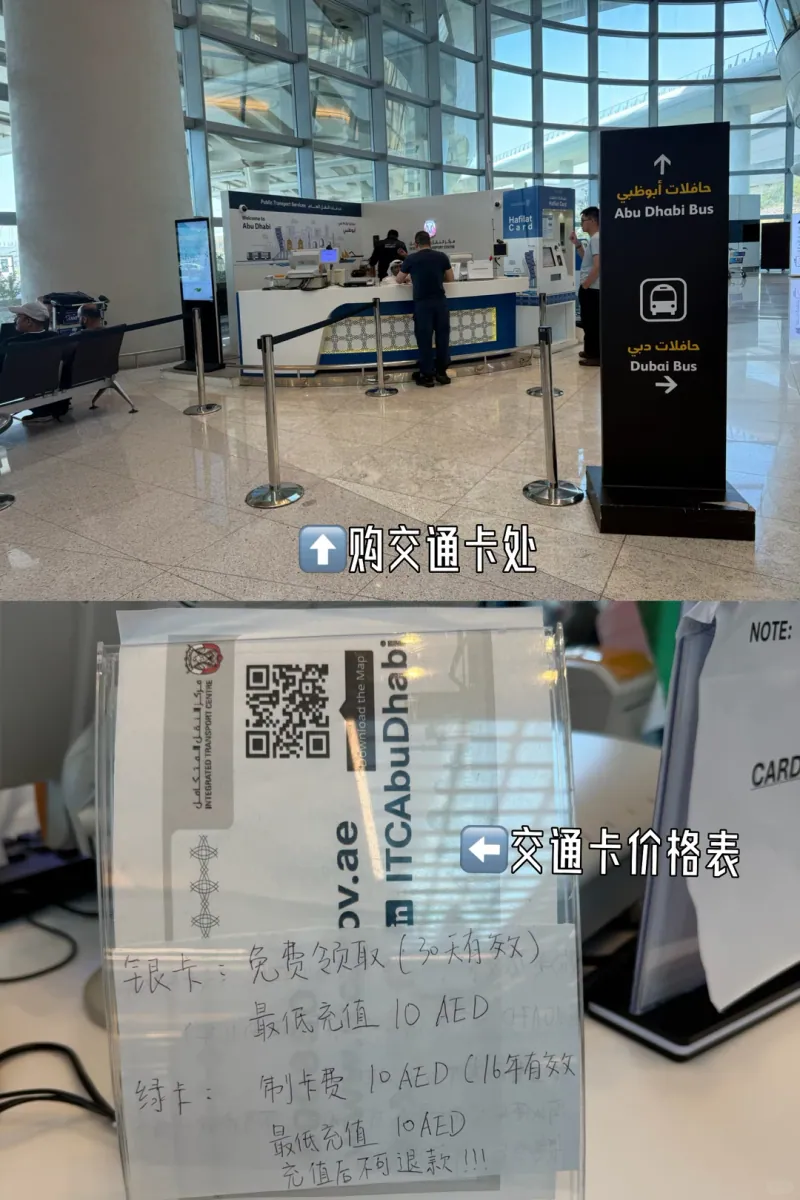
Two cards, picked by length of stay:
| Card | Issue fee | Validity | Minimum top-up | Notes |
|---|---|---|---|---|
| Silver | Free | 30 days | AED 10 | The short-stay default; the card itself costs nothing |
| Green | AED 10 | 16 years | AED 10 | For residents and repeat visitors; balance is not refundable |
One caution: staff may take a small tax out of the amount you hand over (travellers have been charged AED 3 tax on a AED 30 top-up), so do not calculate the balance down to the last fare. Silver cards expire after 30 days and the balance with them, so spend it down before you fly home.
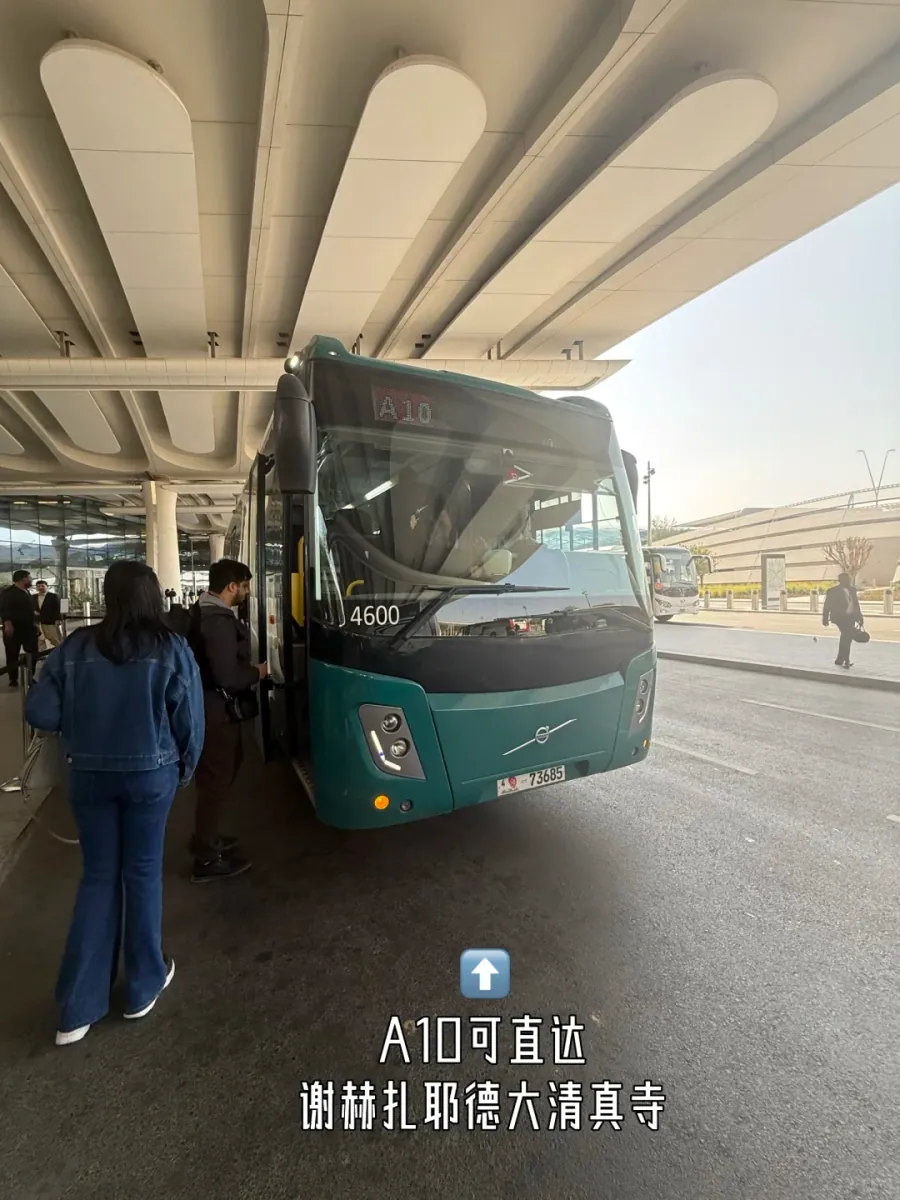
7. The A10 bus to the Sheikh Zayed Grand Mosque
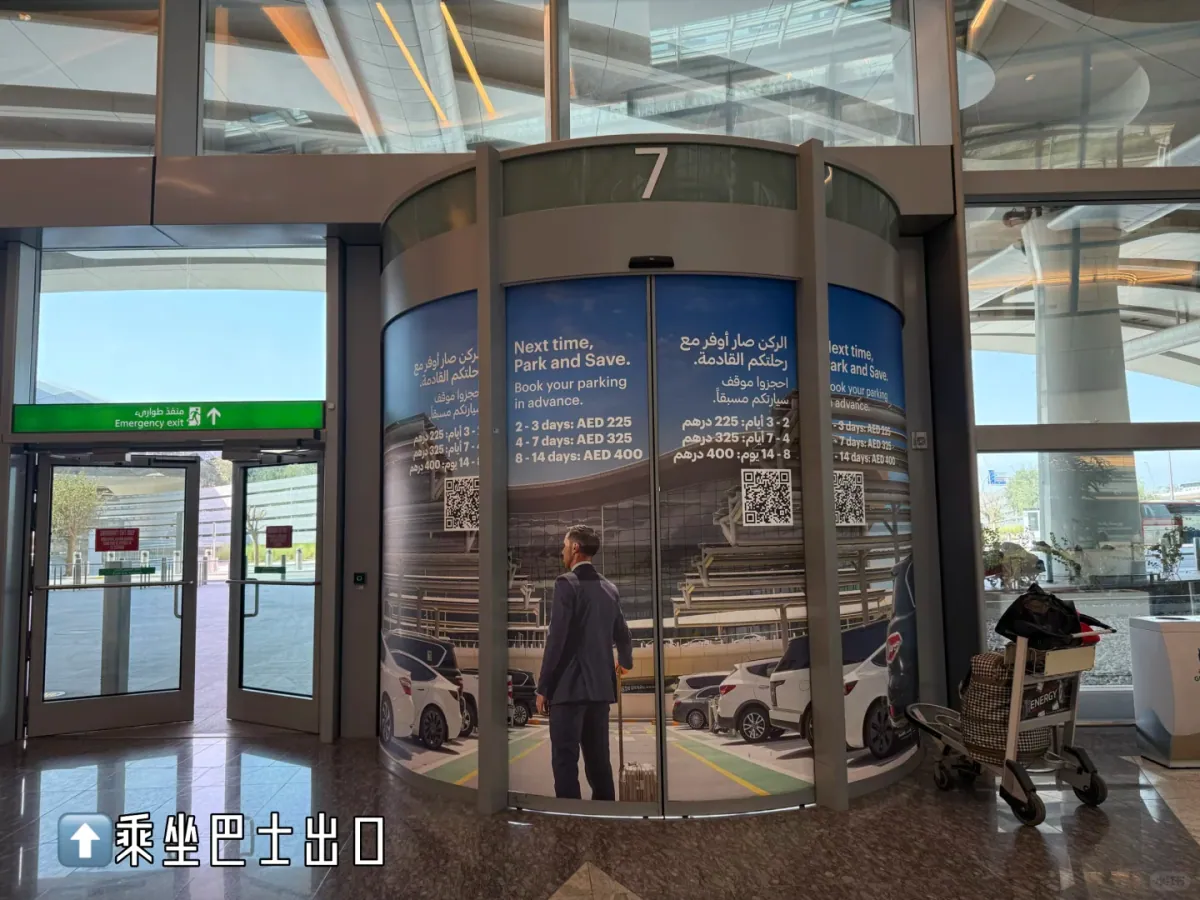
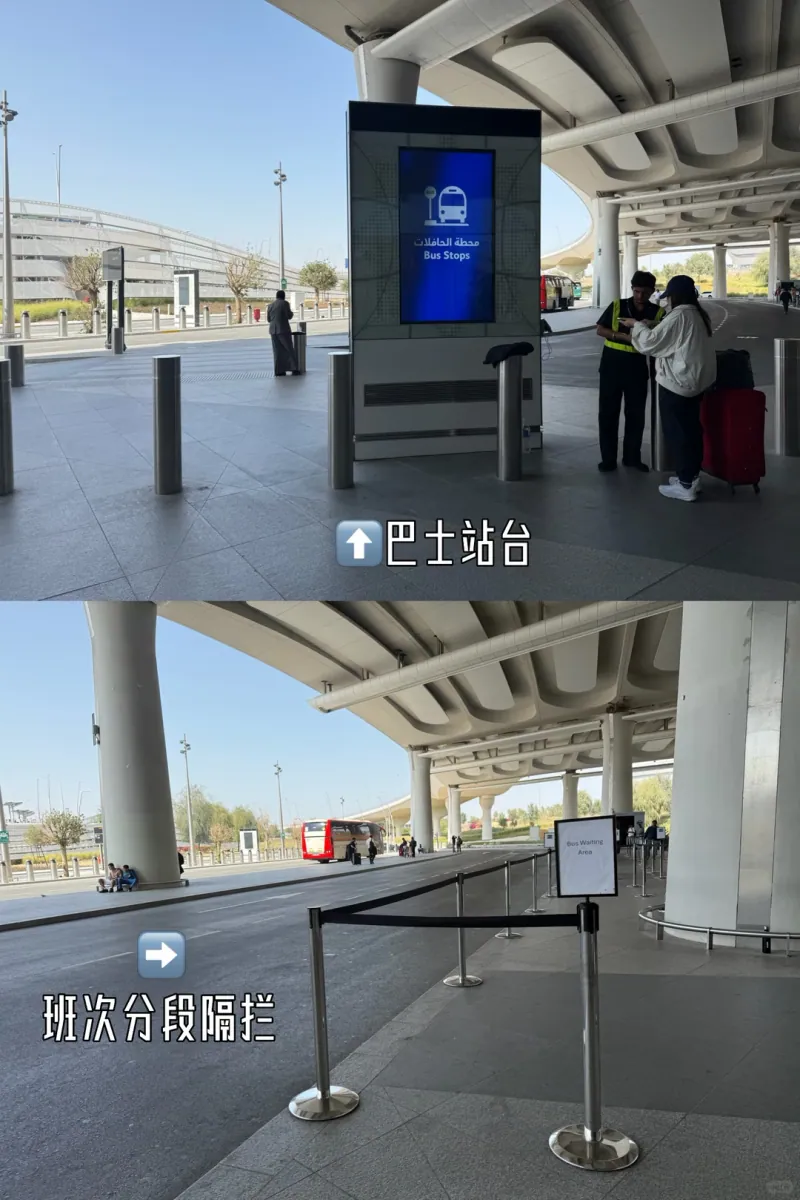
The Sheikh Zayed Grand Mosque is Abu Dhabi's essential stop and the airport has a direct bus, the A10, with no changes. The stop is to the right as you come out of Gate 7 in the arrivals hall; a blue screen on the platform reads Bus Stops (محطة الحافلات).
Barriers separate the routes and a small sign marks the Bus Waiting Area. The A10 to the mosque shares the zone with the city routes, so join the right queue — departures are not frequent and a miss costs half an hour.
The A10 in numbers:
| Item | Detail |
|---|---|
| Fare | AED 4, Hafilat card only — no cash on board |
| Journey time | About 45–55 minutes |
| Frequency | Every 30–40 minutes |
| Hours | Roughly 05:00–23:30 |
| Stop | Sheikh Zayed Grand Mosque |
The stop is not the mosque entrance: it is about an 800 m walk to the visitor entrance. Entry is free but needs a booking on the official website; opening hours are 09:00–22:00 Saturday to Thursday and 16:30–22:00 on Friday, with closures during prayer times. Dress code is long sleeves and trousers, and women need a headscarf — buying one at the airport is easier than renting at the gate.
8. Taxis, ride-hailing and the coach to Dubai
Taxis pick up on the left of the exit and run on the meter. The airport to central Abu Dhabi (the Corniche) is roughly AED 60–80 depending on the hour and traffic; evenings and Friday prayer times see fewer cars.
Ride-hailing: Careem is the local standard, priced close to a taxi but with the fare locked at booking, which removes any worry about detours. Uber works in Abu Dhabi too but has thinner coverage. Pick-up points follow the app and are usually in the dedicated bays outside arrivals.
Coaches to Dubai: the ticket desk and dedicated stand are on the right of the arrivals hall, the journey takes about 1.5 hours, and departures are frequent — check the desk for the current timetable. The detail of that route (fares, where to board, and how to come back) has its own guide, linked below.
9. Small things that help on day one
- Bilingual signage: Arabic and English throughout, and colour beats text — yellow for arrivals, blue for transfers, green for exits.
- Time difference: the UAE is four hours behind Beijing, so set your phone to automatic time and avoid misreading a boarding time.
- Plugs: UK-style three-pin (type G), as in Hong Kong; mainland Chinese plugs need an adapter.
- Clothing: the terminal is heavily air-conditioned, so carry a light layer; the mosque wants the opposite, with shoulders and knees covered.
- Water: there are drinking fountains in the arrivals hall, so a reusable bottle saves buying water.
Fares, opening hours and counter locations come from airport and operator publications plus the author's own notes; check the official sites and the desks on the day.
Related links
- On this site: Zayed International Airport (AUH), United Arab Emirates (AE), Abu Dhabi–Dubai bus guide
- Wikipedia: Zayed International Airport
- Baidu Baike: Abu Dhabi International Airport
- Airport website: Zayed International Airport
- Buses and transport cards: Abu Dhabi Integrated Transport Centre (ITC)
- Original post: Xiaohongshu @曜光纪JACK
Image source: the author's own photographs. Fares, storage prices and frequencies are as posted at the desks when the photos were taken and may change.
More articlesTravel notes
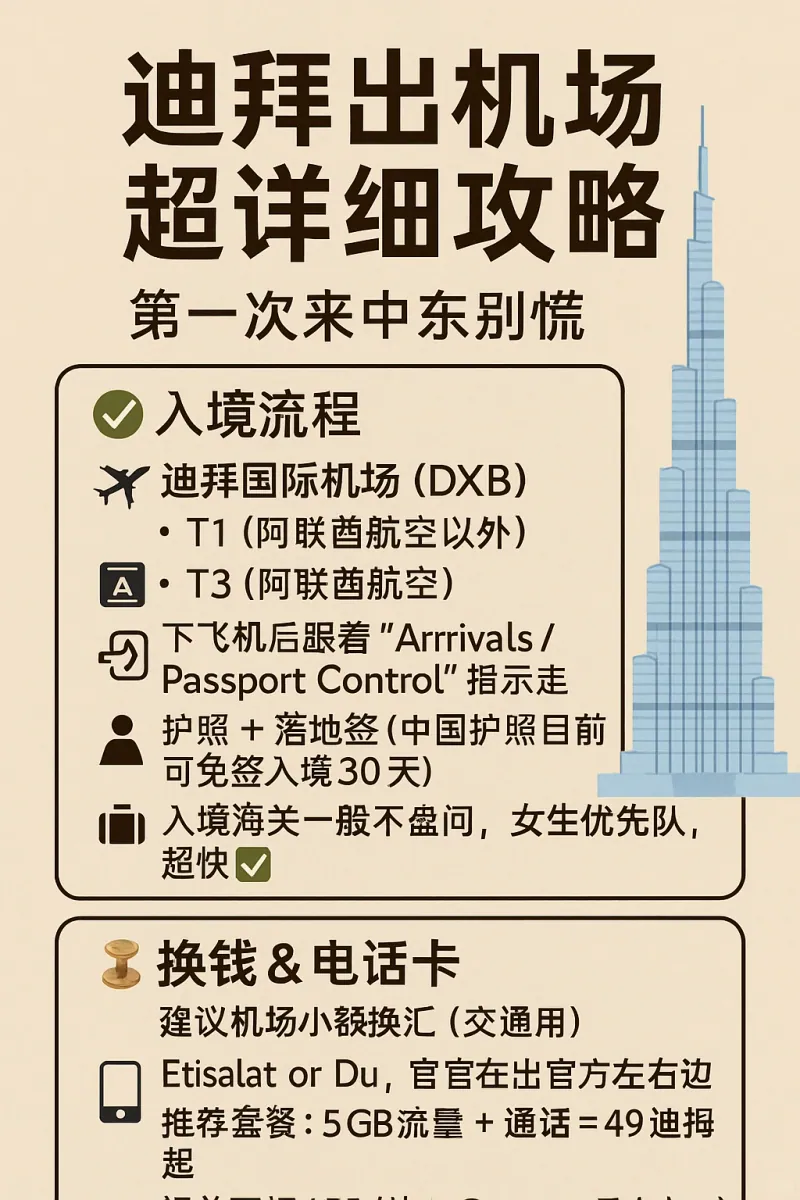
Getting Out of Dubai Airport: T1 and T3 Arrivals, Currency, SIM Cards and the Metro
"A first-timer's guide to Dubai International Airport (DXB): which airline uses T1, T2 or T3, the Arrivals and Passport Control route, how long visa-free entry lasts for a Chinese passport, where to change money and buy a SIM card, and how the Red Line metro, metered taxis and Careem or Bolt compare on time and price.'6 min read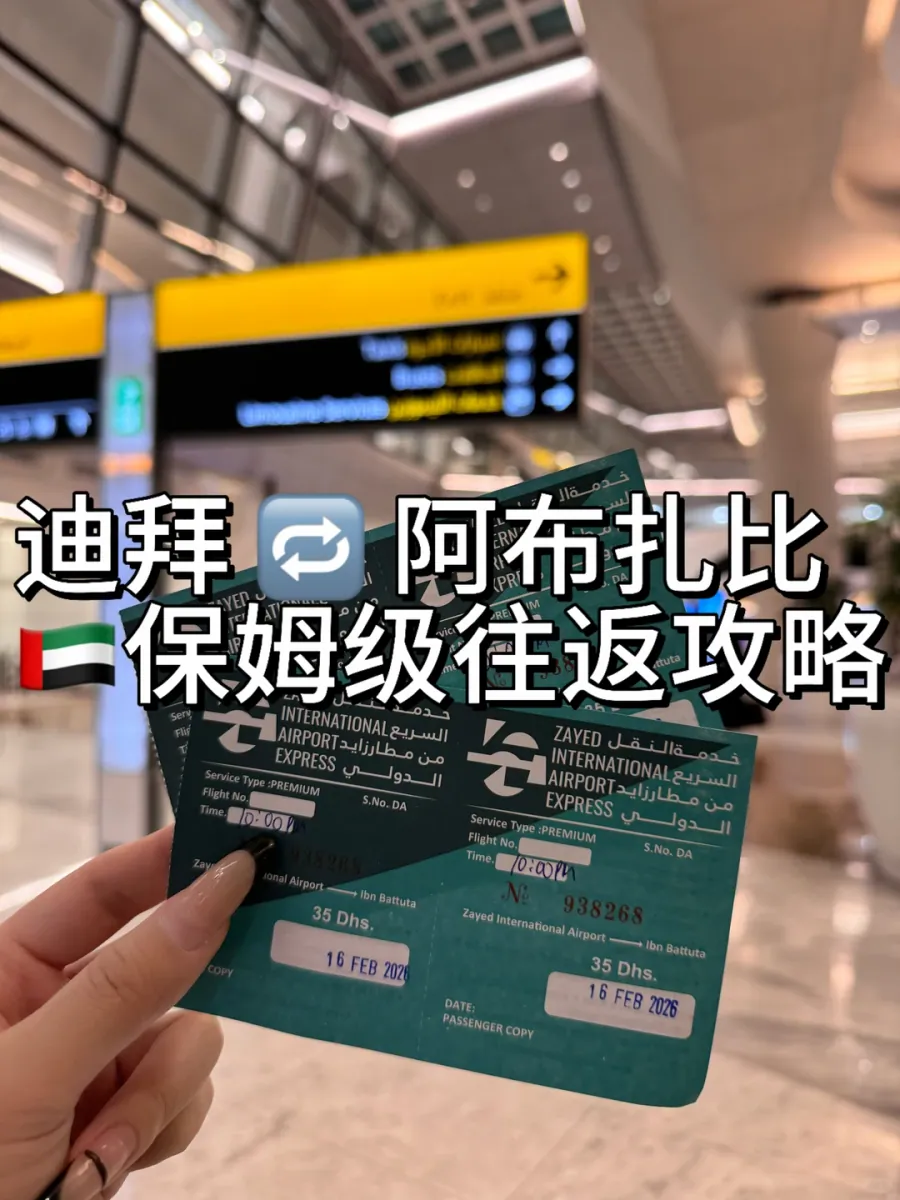
Abu Dhabi to Dubai by Bus: The AED 35 Airport Express and the E101 Back
How to travel between Abu Dhabi and Dubai on public transport: the Zayed International Airport Express from Gate 7 at AED 35, hourly and non-stop to Ibn Battuta; the RTA E101 back, Nol card only at AED 25, every 20 minutes to Abu Dhabi Main Bus Terminal; the free Hafilat card for Abu Dhabi city buses; and what the round trip really costs in time and money.6 min read