Getting Around Dubai: Metro, Buses and the Nol Card Explained
- Dubai transport
- Dubai Metro
- Nol card
- Dubai buses
- Dubai travel
- UAE
Dubai's public transport is underrated. Many visitors assume the city only works by taxi or rental car, when in fact the metro is clean, punctual and reaches almost everywhere a tourist wants to go, and the buses are cheap enough to use as sightseeing. There are really only two hurdles: get a Nol card, and understand that a metro line runs in two directions.
This guide follows the order you will use things: the card, the metro, the buses, then taxis and apps. Prices are from the author's trip at the end of 2025, and the RTA adjusts fares from time to time — check the official site before you travel.
1. The Nol card: one card for metro, buses and the water bus
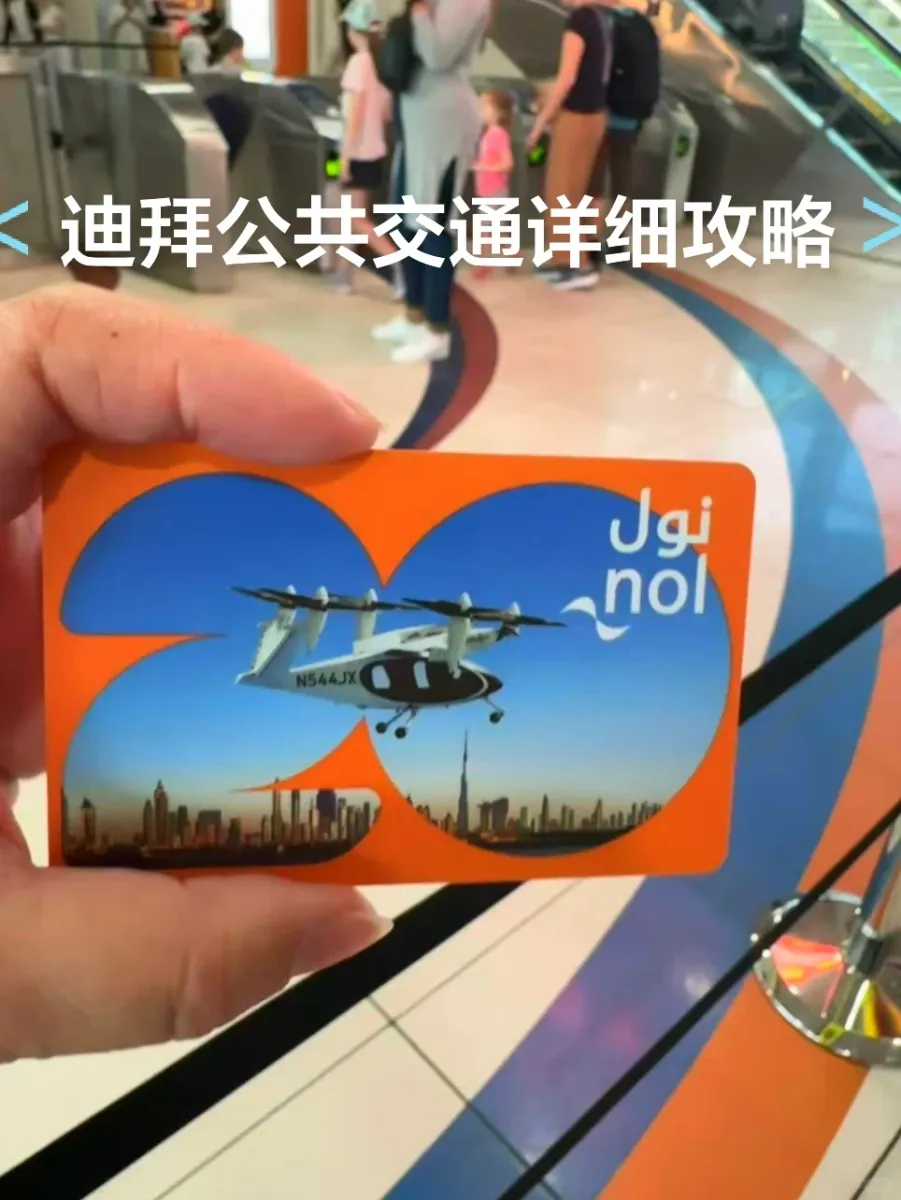
The Nol card is the stored-value ticket issued by Dubai's Roads and Transport Authority (RTA). It works on the metro, buses, the Abra water bus and some car parks. Its real value is not the discount but the access: on many services you cannot board without one. Dubai buses take no cash at all, and although metro ticket machines sell paper single tickets, a card is far simpler once you are changing lines or travelling more than once.
Pick a card by use case:
| Card | Price | Who it suits | Notes |
|---|---|---|---|
| Red ticket | About AED 4 | One or two rides | Paper ticket, pay-as-you-go, not for regular use |
| Silver | AED 25 (AED 6 card fee + AED 19 balance) | Almost every visitor | The default; balance can be topped up |
| Gold | AED 50 | Anyone wanting first class | Access to the Gold Class carriage |
| Blue | AED 70 | Residents | Personalised, tied to your details |
For a short trip the silver card is the answer. The AED 25 includes AED 19 of usable balance, enough for four or five metro rides; top up at the station machines (they take bank cards) or at the staffed counter (cash, Visa or UnionPay).
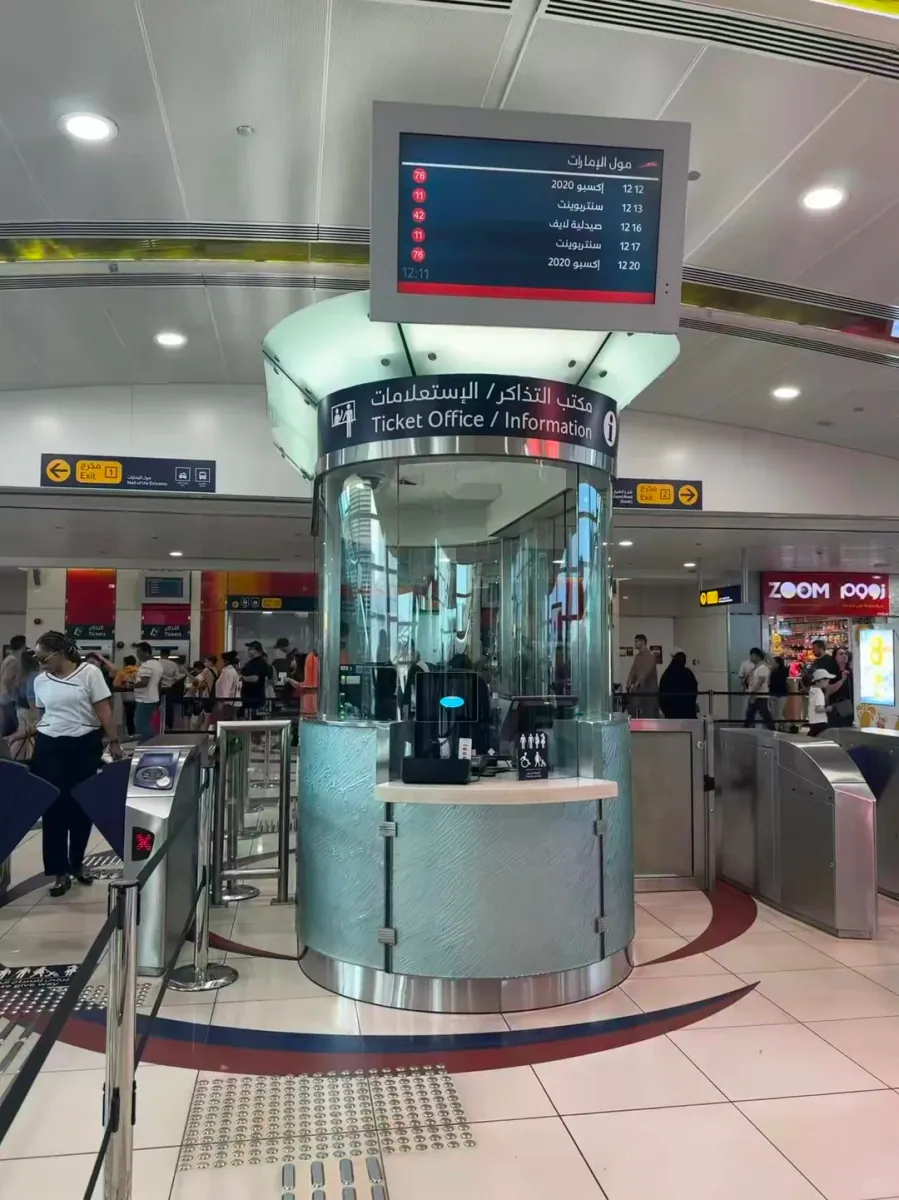
Cards come from airport metro stations, staffed counters at the big interchanges and some convenience stores. Buying one on arrival is the smoothest route — DXB's T1 and T3 both have metro stations, 5–8 minutes' walk from arrivals following the red Metro signs.
2. The metro: two lines, and a direction trap
Dubai's metro has two driverless lines, with platform screen doors and carriages divided into standard, women-and-children, and Gold Class sections:
- Red Line: from Centrepoint in the north down through the airport T1 and T3 stations, Deira, BurJuman, World Trade Centre, Burj Khalifa/Dubai Mall, Business Bay, Marina and Ibn Battuta — the line visitors use most.
- Green Line: across the old city of Deira and Bur Dubai, terminating around Al Qusais and Creek.
- Interchanges: Union and BurJuman, where the two lines cross.
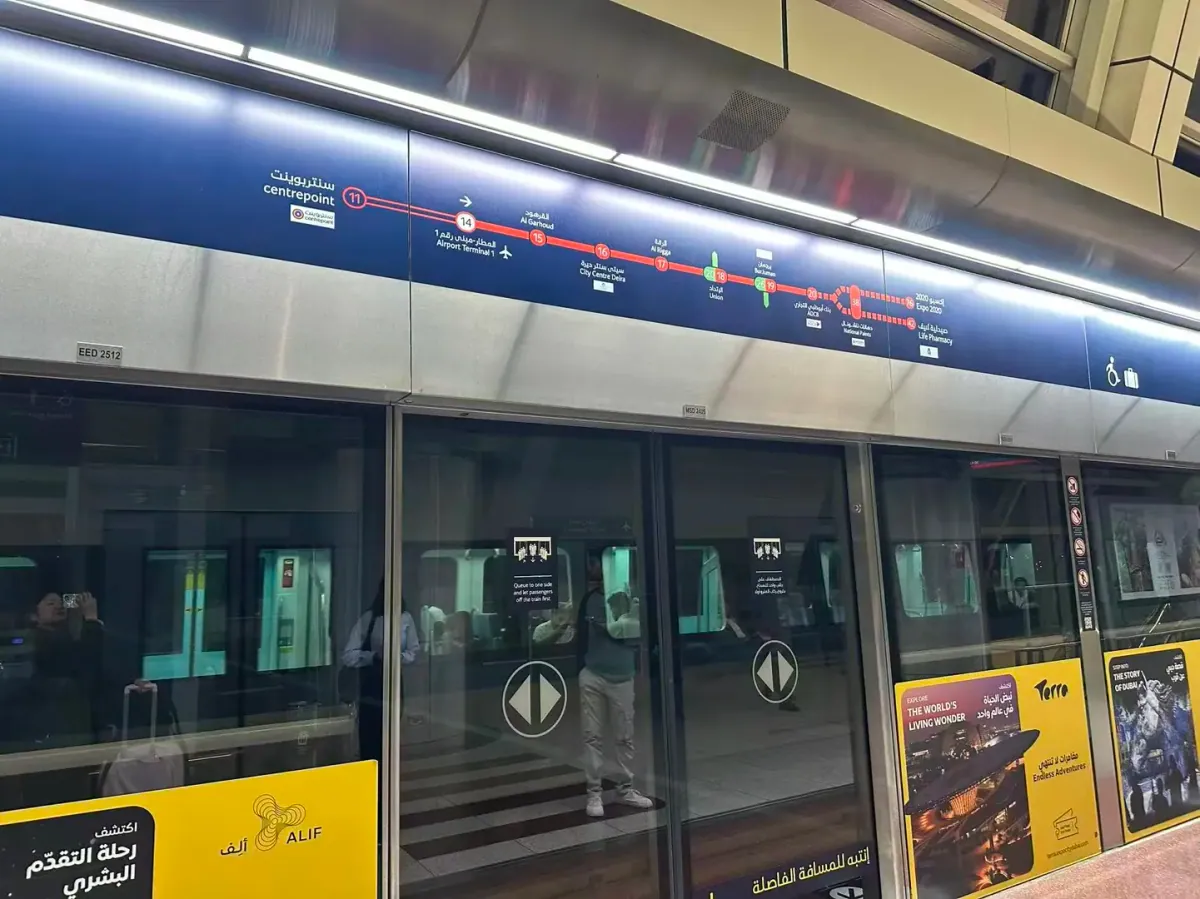
The classic mistake is direction. On the same line, the two directions use different platforms, so read the destination on the platform screen before choosing a level. Google Maps is sometimes wrong about which platform to use; the in-station displays are more reliable, and if in doubt, tell a member of staff the station you want and they will point you the right way.
Tickets come three ways: ticket machines (bank cards), the staffed counter (cash, Visa, UnionPay) or tapping straight through with a Nol card. Paper single tickets are not collected on exit, unlike in many cities, so you can keep them.
Hours vary by day, roughly early morning to midnight, and on Fridays the service starts later because of midday prayers. Check the last train before a late-night trip.
3. Buses: no card, no ride
Dubai's buses are clean, cheap and reliable, but the rule is strict: no cash, Nol card only, and unlike Singapore you cannot simply tap a Visa card. You tap once on boarding and once on alighting, and the fare is charged by zone.
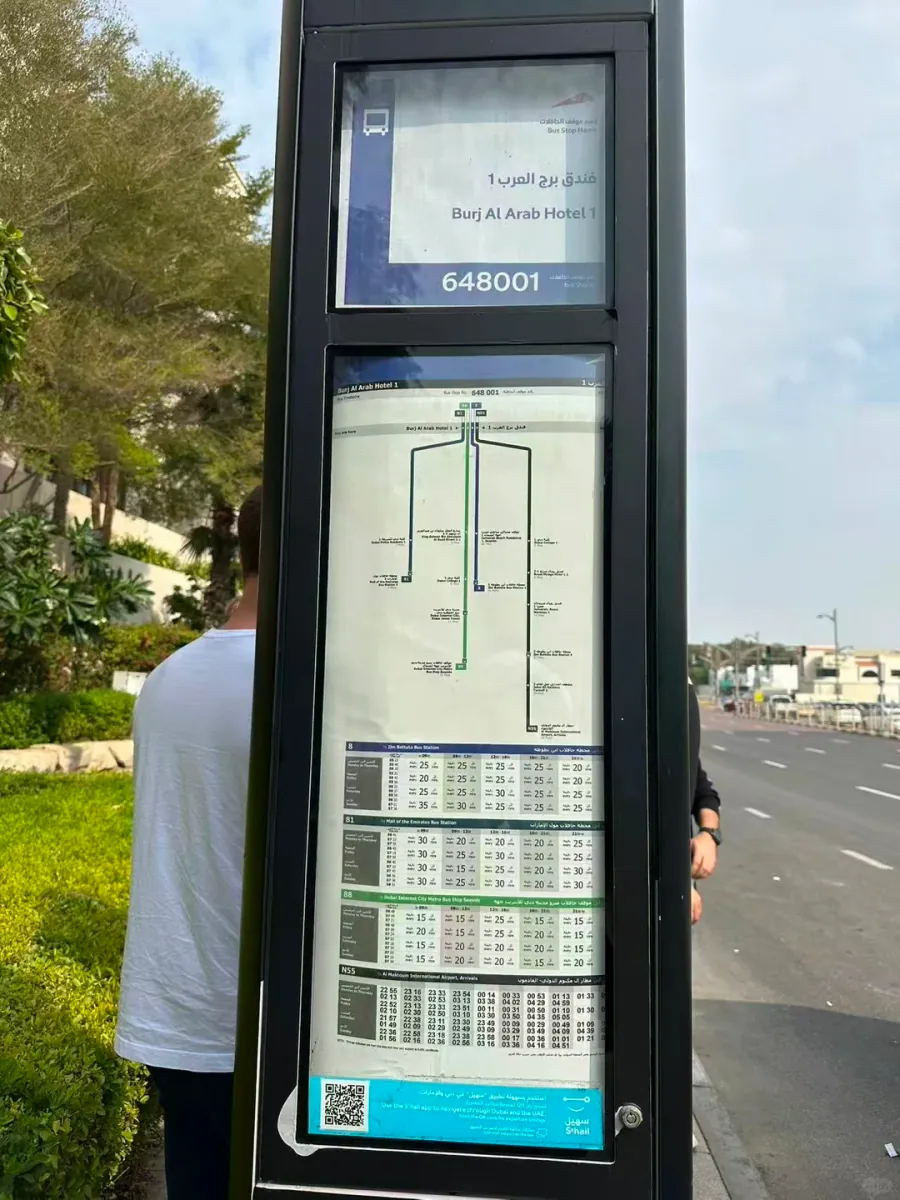
The stop displays are thorough: stop name, stop number, routes served, and first and last departures with headways for each route, all on one board. At the Burj Al Arab Hotel 1 stop in the photo, the board lists route 8 (to Ibn Battuta bus station), 81 (to Mall of the Emirates), 88 (to Deira City Centre) and the night route N55 (to the airport).
A few practical notes:
- Keep enough balance: if the balance is below the minimum fare the card will not validate. Check in the app or at a machine before you set out.
- Front door on, middle door off: tap in at the front, tap out at the middle door, following what locals do.
- Women-and-children seating: the front section is marked in pink; men should leave it alone.
- Night routes: the N-prefixed services cover the airport and main roads, which is useful if you land at 3 a.m. and would rather not take a taxi.
4. Taxis and apps: Careem or Bolt
Dubai taxis are cream with red roofs, hailable from the street or from ranks at malls and hospitals. Flagfall is low and a short city trip usually comes to AED 15–30, more like AED 50 and up across zones or out to the Marina. They run on the meter — just check the driver starts it.
Two apps matter:
- Careem: the established local platform, plenty of cars, prices close to a taxi. The catch is registration, which needs an SMS code — some mainland Chinese numbers never receive it, and without verification the app is useless.
- Bolt: the European entrant, which has grown quickly in Dubai and usually prices a notch below Careem. In practice mainland Chinese numbers do receive its verification text, and registering, ordering and paying all work; you can pay the driver in cash at the end.
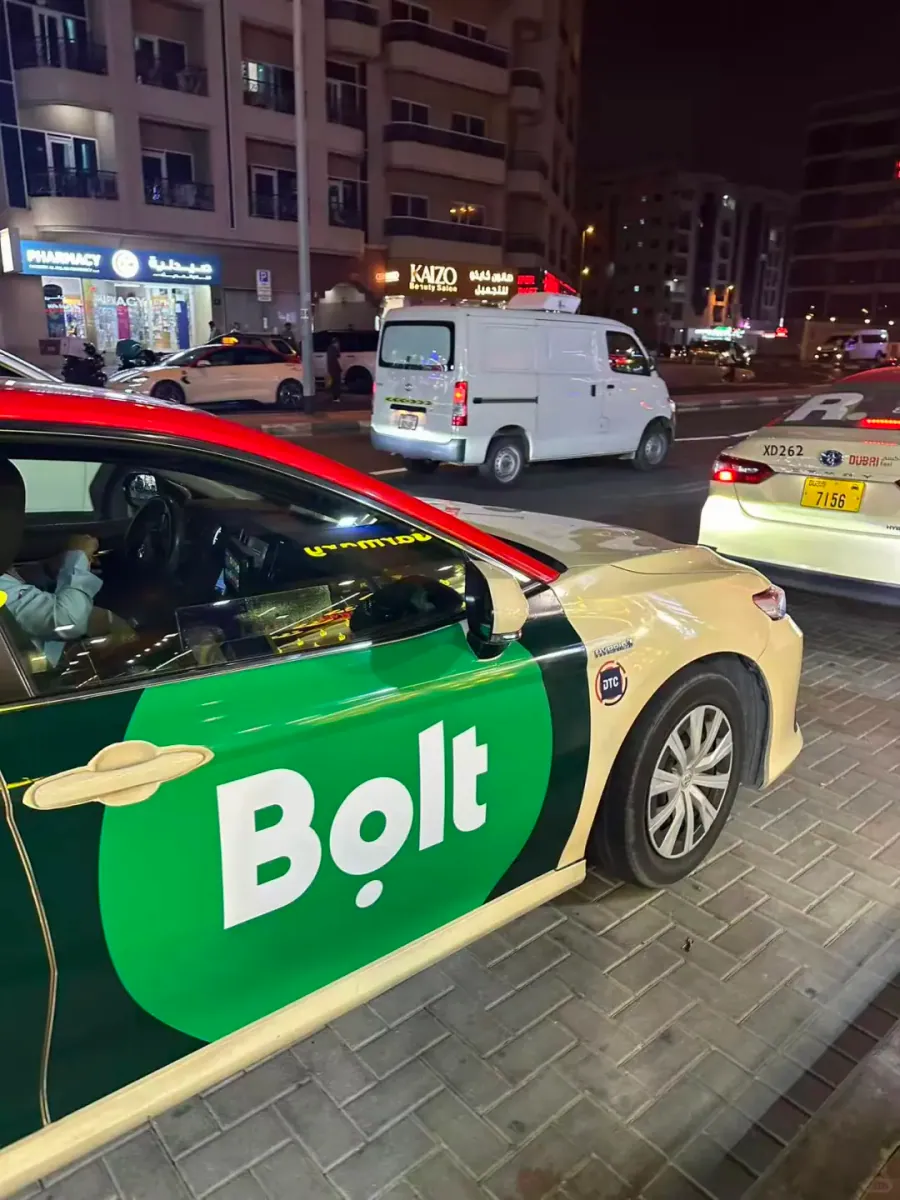
If both verifications fail, there is a third way: ask hotel or mall staff to call a car, or use a taxi rank. Dubai has plenty of taxis, and waits in the city are rarely over ten minutes.
5. A few things that make the trip smoother
- Buy the card on arrival: the airport metro station sells Nol silver cards — do not wait until downtown.
- Avoid the peaks: weekdays 07:00–09:00 and 17:00–19:00 are crowded on the Red Line towards the centre.
- Friday rhythm: shops close on Friday mornings and the metro starts late, so push outdoor plans to the afternoon.
- Women-and-children carriage: the second carriage is reserved; men should use another.
- The Abra: the old-town water bus across Dubai Creek costs AED 1 with a Nol tap, the cheapest sightseeing in the city.
- English addresses: drivers may not know Chinese place names — give the hotel's English name and the district together.
Fares, routes and hours come from RTA publications and the author's own notes; fares change with policy, so check the RTA website or station notices before travelling.
Related links
- On this site: Dubai International Airport (DXB), United Arab Emirates (AE), Getting out of Dubai Airport
- Wikipedia: Dubai Metro
- Baidu Baike: Dubai Metro
- Operator: Dubai RTA
- Original post: Xiaohongshu @巴拉克
Image source: the author's photographs. Fares, card types and routes are as published by the RTA.
More articlesTravel notes
Zayed International Airport, Abu Dhabi: Arrivals, Baggage Storage and Getting to Dubai
A step-by-step guide to landing at Abu Dhabi Zayed International Airport (AUH), Terminal A: the yellow Arrivals route to passport control, e-gates versus the manual counters, baggage belts and oversized luggage, what sits on each side of the arrivals hall, baggage storage prices, the Hafilat card, the A10 bus to the Sheikh Zayed Grand Mosque, taxi and ride-hailing fares, and the coach to Dubai.8 min read
Getting Out of Dubai Airport: T1 and T3 Arrivals, Currency, SIM Cards and the Metro
"A first-timer's guide to Dubai International Airport (DXB): which airline uses T1, T2 or T3, the Arrivals and Passport Control route, how long visa-free entry lasts for a Chinese passport, where to change money and buy a SIM card, and how the Red Line metro, metered taxis and Careem or Bolt compare on time and price.'6 min read