
แผนที่อาคารผู้โดยสาร ท่าอากาศยานนานาชาติเตินเซินเญิ้ต
 นครโฮจิมินห์ · เวียดนาม· Tan Son Nhat International Airport
ท่าอากาศยานนานาชาติเตินเซินเญิ้ต (IATA: SGN, ICAO VVTS) เป็นสนามบินขนาดใหญ่ที่ให้บริการนครโฮจิมินห์, เวียดนาม โดยมีอาคารผู้โดยสาร 2 แห่ง และประตูขึ้นเครื่อง 30 ประตู ห่างจากใจกลางนครโฮจิมินห์ประมาณ 6 km
Tan Son Nhat International Airport (SGN) serves Ho Chi Minh City, Vietnam. It has 2 terminals with 30 gates in total and handles about 40 million passengers a year. The airport is about 6 km from the city centre. Ground transport into the city: bus, taxi and car.
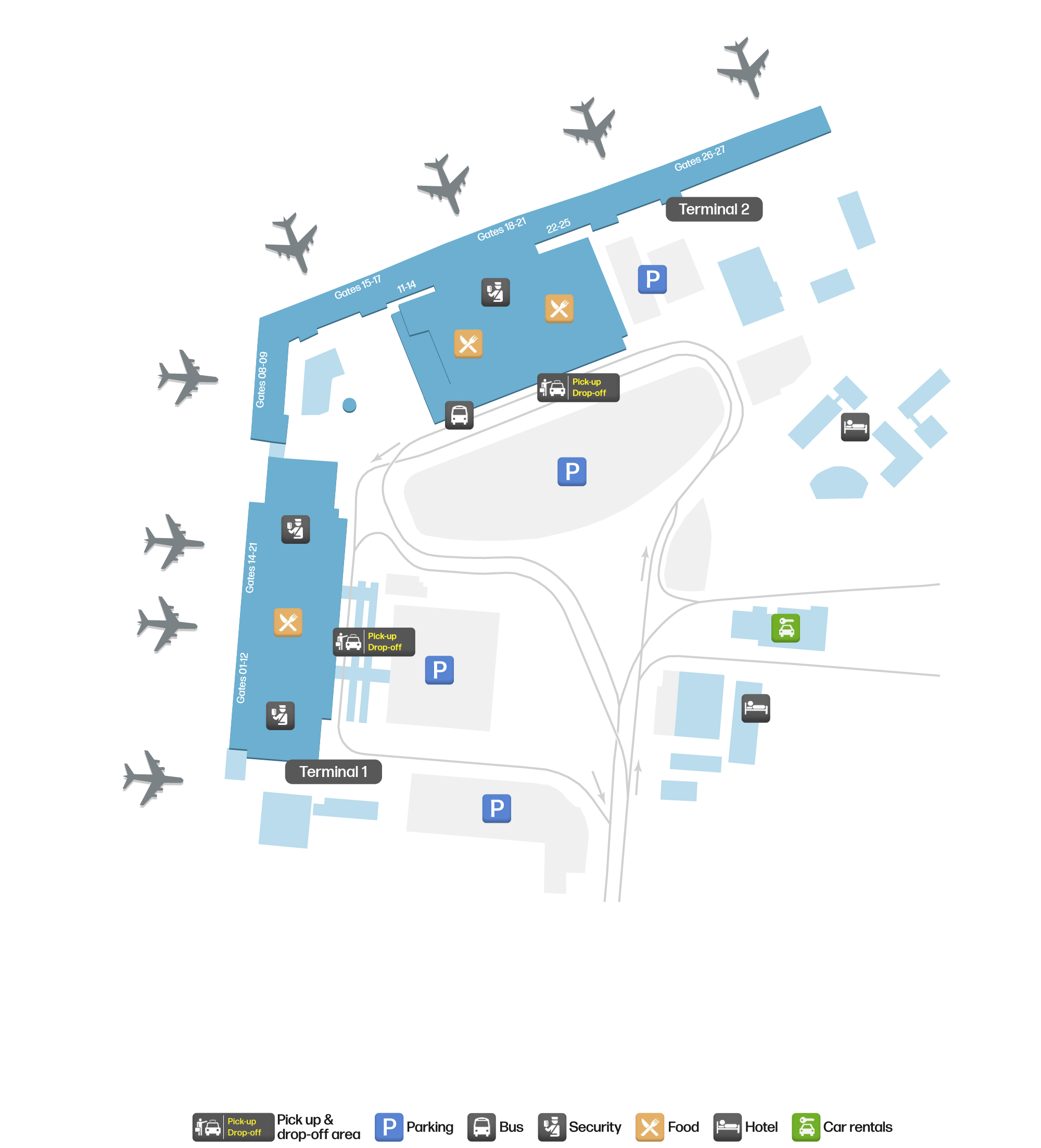
ดาวน์โหลดแผนที่สนามบินดาวน์โหลด
ภาพสนามบินภาพสนามบิน
ภาพจริงของสนามบินแห่งนี้ พร้อมเครดิตของหน้าเว็บสาธารณะที่พบภาพ; ลิขสิทธิ์ยังเป็นของผู้ถ่ายภาพต้นฉบับ คลิกที่ภาพเพื่อขยาย หรือคลิกบรรทัดเครดิตเพื่อเปิดหน้าแหล่งที่มา
ภาพถ่ายดาวเทียม: อาคารผู้โดยสาร ทางวิ่ง และเมืองโดยรอบที่ท่าอากาศยานนานาชาติเตินเซินเญิ้ต (SGN)
ข้อมูลเวลาสนามบิน — เวลาปัจจุบันที่ SGNเวลาสนามบิน
เวลาปัจจุบันที่ SGN (Asia/Ho_Chi_Minh) เทียบกับเวลาท้องถิ่นของคุณ
แผนที่เส้นทาง ท่าอากาศยานนานาชาติเตินเซินเญิ้ต — จุดหมายบินตรงแผนที่เส้นทาง
50 จุดหมายบินตรง: แผนที่ สายการบินที่ให้บริการ และระยะทาง
เที่ยวบินของท่าอากาศยานนานาชาติเตินเซินเญิ้ต — ขาออกและขาเข้าป้ายเที่ยวบิน
2,752 หมายเลขเที่ยวบิน ครอบคลุม 90 สายการบิน และ 89 จุดหมายปลายทาง แยกตามทิศทาง หมายเลขเที่ยวบินร่วม (codeshare) รวมอยู่ด้วย
| เที่ยวบิน | สายการบิน | จุดหมายปลายทาง | ประเทศ/ภูมิภาค |
|---|---|---|---|
| 3U3904 | Sichuan Airlines | Chengdu Tianfu International Airport | จีน |
| 3U7006 | Sichuan Airlines | ท่าอากาศยานนานาชาติกว่างโจวไป๋หยุน | จีน |
| 3U7048 | Sichuan Airlines | ท่าอากาศยานนานาชาติกว่างโจวไป๋หยุน | จีน |
| 3U7050 | Sichuan Airlines | ท่าอากาศยานนานาชาติกว่างโจวไป๋หยุน | จีน |
| 3U7066 | Sichuan Airlines | ท่าอากาศยานนานาชาติกว่างโจวไป๋หยุน | จีน |
| 5J752 | Cebu Pacific | ท่าอากาศยานนานาชาตินีโนย อาคีโน | ฟิลิปปินส์ |
| 5J754 | Cebu Pacific | ท่าอากาศยานนานาชาตินีโนย อาคีโน | ฟิลิปปินส์ |
| 5J5781 | Cebu Pacific | Mactan Cebu International Airport | ฟิลิปปินส์ |
| 8M453 | Myanmar Airways International | ย่างกุ้ง (RGN) Yangon International Airport | เมียนมา |
| 9C7348 | Spring Airlines | ท่าอากาศยานนานาชาติกว่างโจวไป๋หยุน | จีน |
| 9C7546 | Spring Airlines | ท่าอากาศยานนานาชาติเซี่ยงไฮ้ผู่ตง | จีน |
| 9C7558 | Spring Airlines | ท่าอากาศยานนานาชาติเซี่ยงไฮ้ผู่ตง | จีน |
| 9G400 | Sun Phuquoc Airways | ท่าอากาศยานนานาชาติอินชอน | เกาหลีใต้ |
| 9G634 | Sun Phuquoc Airways | ท่าอากาศยานนานาชาติเซี่ยงไฮ้ผู่ตง | จีน |
| 9G640 | Sun Phuquoc Airways | Chengdu Tianfu International Airport | จีน |
| 9G802 | Sun Phuquoc Airways | Noi Bai International Airport | เวียดนาม |
| 9G804 | Sun Phuquoc Airways | Noi Bai International Airport | เวียดนาม |
| 9G808 | Sun Phuquoc Airways | Noi Bai International Airport | เวียดนาม |
| 9G810 | Sun Phuquoc Airways | Noi Bai International Airport | เวียดนาม |
| 9G816 | Sun Phuquoc Airways | Noi Bai International Airport | เวียดนาม |
หมายเลขเที่ยวบินและเส้นทางจากดัชนีเที่ยวบิน aviability.com (ข้อมูล ณ วันที่ 26 ตุลาคม 2569); รวมหมายเลขเที่ยวบินร่วมและไม่แสดงเวลาเดินทาง ที่มา: aviability.com ↗
ข้อมูลและรายละเอียดสนามบินรายละเอียดสนามบิน
แผนที่อินเทอร์แอกทีฟ — ตำแหน่ง ท่าอากาศยานนานาชาติเตินเซินเญิ้ตแผนที่อินเทอร์แอกทีฟ
ดูสนามบินนี้บนบริการแผนที่อื่น:
Tan Son Nhat International Airport terminal guideคู่มือสนามบิน
Tan Son Nhat sits right up against Ho Chi Minh City, about 8 km from the city centre, and handles around 43 million passengers a year. It is a city airport, and its layout changed significantly in 2025: the new T3 opened in April 2025 and takes domestic flights only, carrying about 80% of domestic traffic — the three terminals now have clearly divided roles, and turning up at the wrong building is a wasted trip.
Satellite view
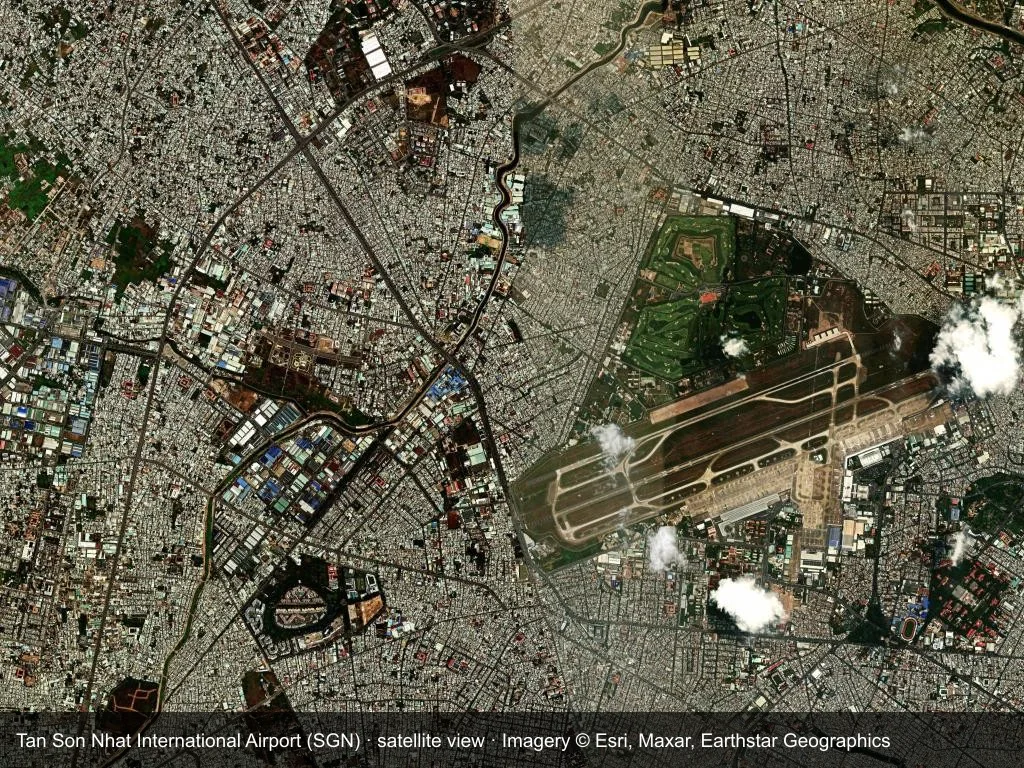
Satellite view: the terminals, runways and surrounding city at Tan Son Nhat International Airport (SGN).
The satellite image comes from Esri World Imagery (© Esri, Maxar, Earthstar Geographics); the field and attribution are labelled in the image. This is a satellite view, not a ground-level photograph.
The three terminals
| Code | Name | Main flights | Main users |
|---|---|---|---|
| T1 | Terminal 1 | Domestic | Vietjet Air only |
| T2 | Terminal 2 | International | All international flights |
| T3 | Terminal 3 | Domestic (opened 2025) | Vietnam Airlines and five other carriers; about 80% of domestic flights |
Working out which building you need:
- International flights are always at T2 — that one is the simplest rule.
- Domestic flights depend on the airline: Vietjet is at T1; Vietnam Airlines, Pacific Airlines, Bamboo Airways and three others — six carriers in all — are at T3.
- The three are separate buildings, linked by a free shuttle bus (roughly every 20 minutes).
Our diagram draws the three terminals separately, with the T3 added in 2025 marked out on its own, precisely to make the point that on the domestic side it is the airline that decides which building you need.
Transfers and connections
- International to domestic is the most common connection: first confirm whether your domestic leg leaves from T1 or T3, then add the shuttle time.
- For a connection between buildings, allow more than 3 hours — you have to leave the building, take the shuttle and clear security again.
- Vietnamese domestic routes are dense and punctuality is only average, so err on the side of a longer connection.
Routes and flights
| Aspect | Detail |
|---|---|
| Routes | Vietnam's largest airport and main international gateway, with around 50 international points covering China, Northeast Asia, South-East Asia, Europe and Oceania (long-haul examples: Tokyo, Seoul, Singapore, Bangkok, Taipei, Frankfurt); domestic routes are dense to Hanoi, Da Nang, Phu Quoc and others. |
| Flights | Around 42.5 million passengers in 2025, on roughly 256,000 flights (about 700 a day); before T3 opened the airport had been running at around 110% of its designed capacity, and T3 lifted annual capacity to about 50 million in 2025. |
| Aircraft | The main bases are Vietnam Airlines (SkyTeam; A321 workhorses with A350 and 787 widebodies on long-haul) and Vietjet Air (an all-A320 low-cost fleet, using T1 exclusively). |
Getting into Ho Chi Minh City
- Taxi / ride-hailing — only about 8 km, but the city centre congests badly and the journey can take twice as long at peak times; use a licensed taxi company or order through an app.
- Local buses — routes run direct to the city centre at very low fares; a new city route now serves T3 directly.
- Airport buses (routes 109, 152 and others) — link the main sights and the hotel districts.
- No rail link — the city metro does not yet reach the airport, so the road is the only way in.
Practical tips
- Ho Chi Minh City Metro Line 1 is open but does not go to the airport; to reach the metro you first need road transport to a station.
- For domestic flights arrive 2 hours ahead, for international flights 3 hours — that is the airport's own official advice.
- Low-cost carriers (Vietjet) enforce strict baggage rules and their check-in queues are long, so allow extra time.
References
คู่มือสนามบิน SGNจากบล็อก
1 บทความในเว็บไซต์นี้ครอบคลุม SGN: การมาถึง การเดินทางภาคพื้นดิน กระเป๋าเดินทาง และการต่อเครื่อง
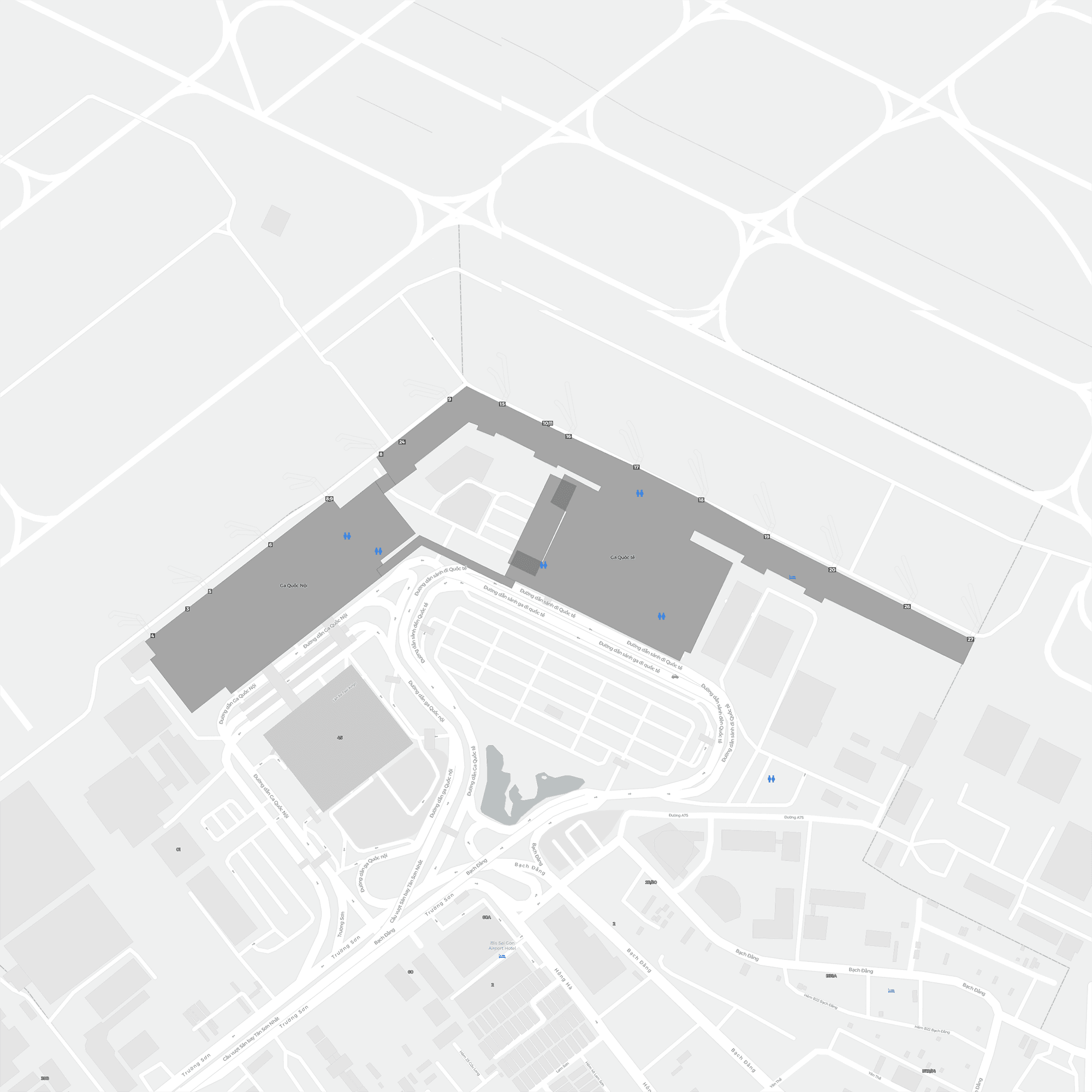
คู่มืออาคารผู้โดยสารคู่มืออาคารผู้โดยสาร
ช่วงประตูขึ้นเครื่อง สายการบินหลัก และสิ่งอำนวยความสะดวกของแต่ละอาคารผู้โดยสารที่ ท่าอากาศยานนานาชาติเตินเซินเญิ้ต
ความคิดเห็นจากผู้อ่านการสนทนา
ยินดีรับคำถาม รายงานการเดินทาง และการแก้ไข ความคิดเห็นเป็นสาธารณะ
กำลังโหลด…
กำลังโหลดความคิดเห็น…