
Tan Son Nhat International Airport Terminal Map
 Ho Chi Minh City · Vietnam· Tan Son Nhat International Airport
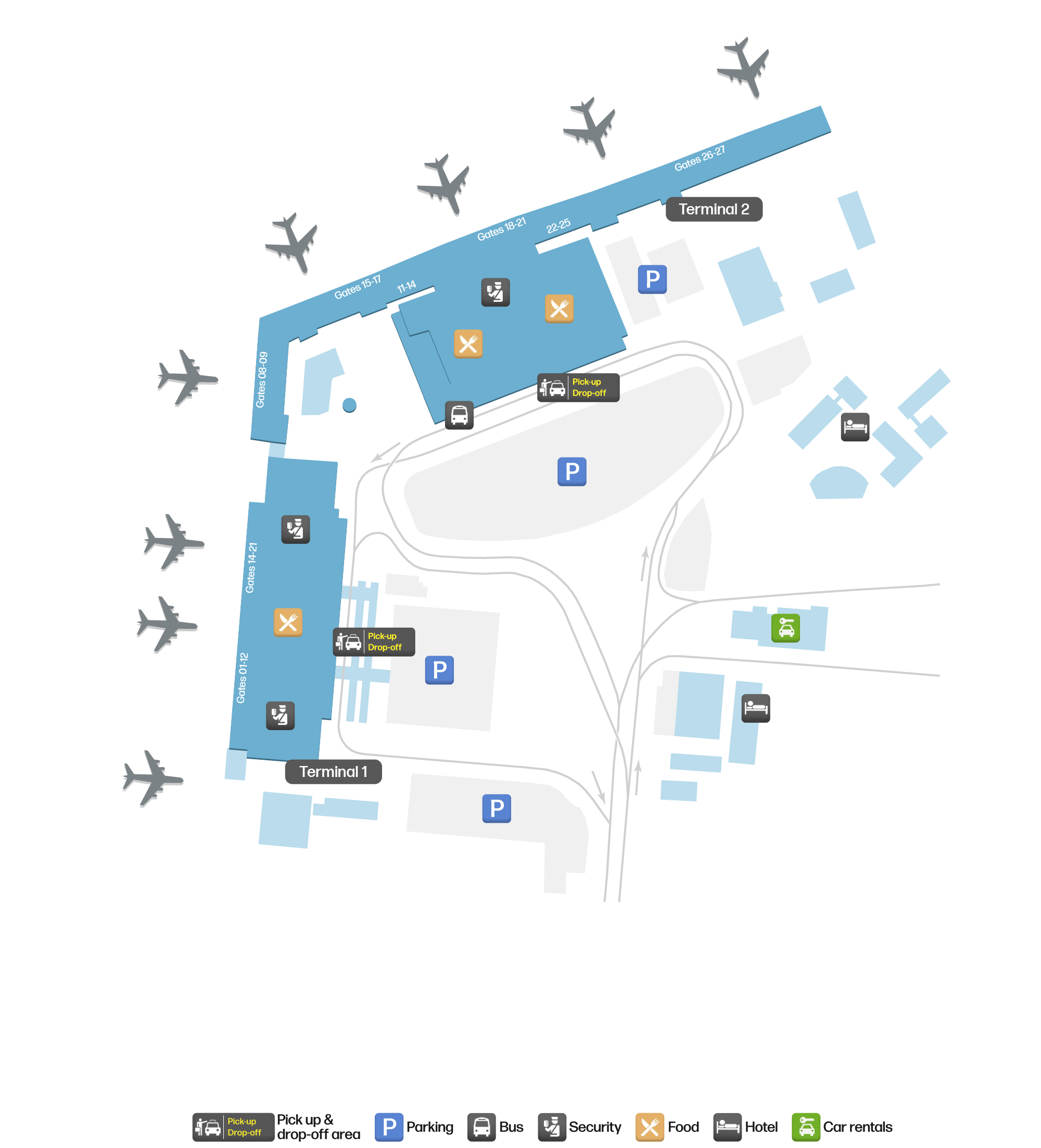
Tan Son Nhat International Airport (IATA: SGN, ICAO VVTS) is a large airport serving Ho Chi Minh City, Vietnam, with 2 terminals and 30 gates, about 6 km from central Ho Chi Minh City.
Tan Son Nhat International Airport (SGN) serves Ho Chi Minh City, Vietnam. It has 2 terminals with 30 gates in total and handles about 40 million passengers a year. The airport is about 6 km from the city centre. Ground transport into the city: bus, taxi and car.
Download Airport MapsDownloads
Airport time information — SGN current timeAirport Time
Current time at SGN (Asia/Ho_Chi_Minh) compared with your local time.
Tan Son Nhat International Airport route map — direct destinationsRoute Map
50 direct destinations: map, operating airlines and distances.
Airport information & detailsAirport Details
Interactive map — Tan Son Nhat International Airport locationInteractive Map
View this airport on other map services:
Tan Son Nhat International Airport terminal guideAirport Guide
Tan Son Nhat sits right up against Ho Chi Minh City, about 8 km from the city centre, and handles around 43 million passengers a year. It is a city airport, and its layout changed significantly in 2025: the new T3 opened in April 2025 and takes domestic flights only, carrying about 80% of domestic traffic — the three terminals now have clearly divided roles, and turning up at the wrong building is a wasted trip.
The three terminals
| Code | Name | Main flights | Main users |
|---|---|---|---|
| T1 | Terminal 1 | Domestic | Vietjet Air only |
| T2 | Terminal 2 | International | All international flights |
| T3 | Terminal 3 | Domestic (opened 2025) | Vietnam Airlines and five other carriers; about 80% of domestic flights |
Working out which building you need:
- International flights are always at T2 — that one is the simplest rule.
- Domestic flights depend on the airline: Vietjet is at T1; Vietnam Airlines, Pacific Airlines, Bamboo Airways and three others — six carriers in all — are at T3.
- The three are separate buildings, linked by a free shuttle bus (roughly every 20 minutes).
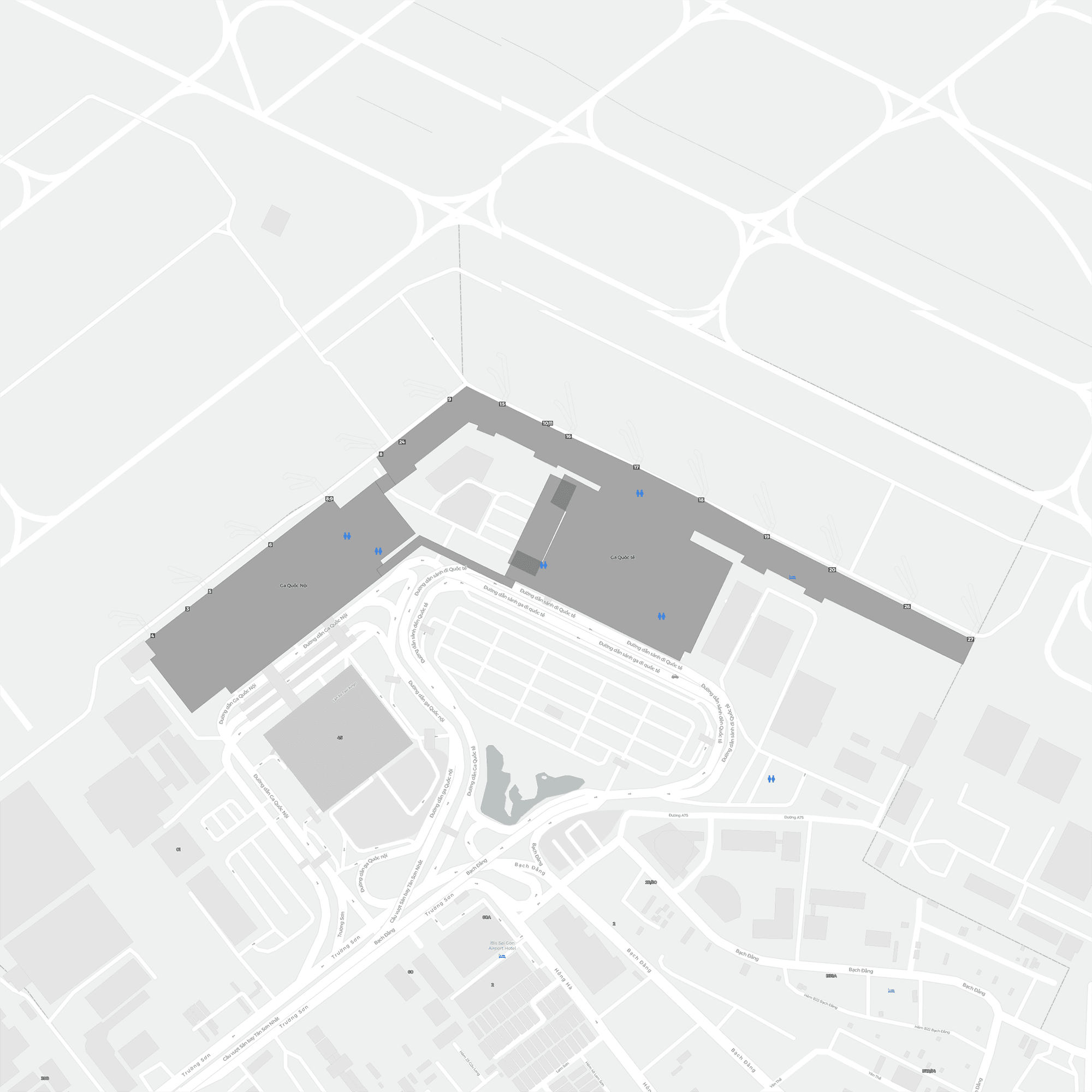
Our diagram draws the three terminals separately, with the T3 added in 2025 marked out on its own, precisely to make the point that on the domestic side it is the airline that decides which building you need.
Transfers and connections
- International to domestic is the most common connection: first confirm whether your domestic leg leaves from T1 or T3, then add the shuttle time.
- For a connection between buildings, allow more than 3 hours — you have to leave the building, take the shuttle and clear security again.
- Vietnamese domestic routes are dense and punctuality is only average, so err on the side of a longer connection.
Routes and flights
| Aspect | Detail |
|---|---|
| Routes | Vietnam's largest airport and main international gateway, with around 50 international points covering China, Northeast Asia, South-East Asia, Europe and Oceania (long-haul examples: Tokyo, Seoul, Singapore, Bangkok, Taipei, Frankfurt); domestic routes are dense to Hanoi, Da Nang, Phu Quoc and others. |
| Flights | Around 42.5 million passengers in 2025, on roughly 256,000 flights (about 700 a day); before T3 opened the airport had been running at around 110% of its designed capacity, and T3 lifted annual capacity to about 50 million in 2025. |
| Aircraft | The main bases are Vietnam Airlines (SkyTeam; A321 workhorses with A350 and 787 widebodies on long-haul) and Vietjet Air (an all-A320 low-cost fleet, using T1 exclusively). |
Getting into Ho Chi Minh City
- Taxi / ride-hailing — only about 8 km, but the city centre congests badly and the journey can take twice as long at peak times; use a licensed taxi company or order through an app.
- Local buses — routes run direct to the city centre at very low fares; a new city route now serves T3 directly.
- Airport buses (routes 109, 152 and others) — link the main sights and the hotel districts.
- No rail link — the city metro does not yet reach the airport, so the road is the only way in.
Practical tips
- Ho Chi Minh City Metro Line 1 is open but does not go to the airport; to reach the metro you first need road transport to a station.
- For domestic flights arrive 2 hours ahead, for international flights 3 hours — that is the airport's own official advice.
- Low-cost carriers (Vietjet) enforce strict baggage rules and their check-in queues are long, so allow extra time.
Terminal guideTerminal Guide
Gate ranges, main airlines and facilities for each terminal at Tan Son Nhat International Airport.