
Aeroporto Internacional de Cantão-Baiyun — mapa do terminal
 Cantão · China· Guangzhou Baiyun International Airport
O Aeroporto Internacional de Cantão-Baiyun (IATA: CAN, ICAO ZGGG) é um aeroporto grande que atende Cantão, China, com 2 terminais e 48 portões, a cerca de 28 km do centro de Cantão.
Guangzhou Baiyun International Airport (CAN) serves Guangzhou, China. It has 2 terminals with 48 gates in total and handles about 76 million passengers a year. The airport is about 28 km from the city centre. Ground transport into the city: rail, bus, taxi and car.
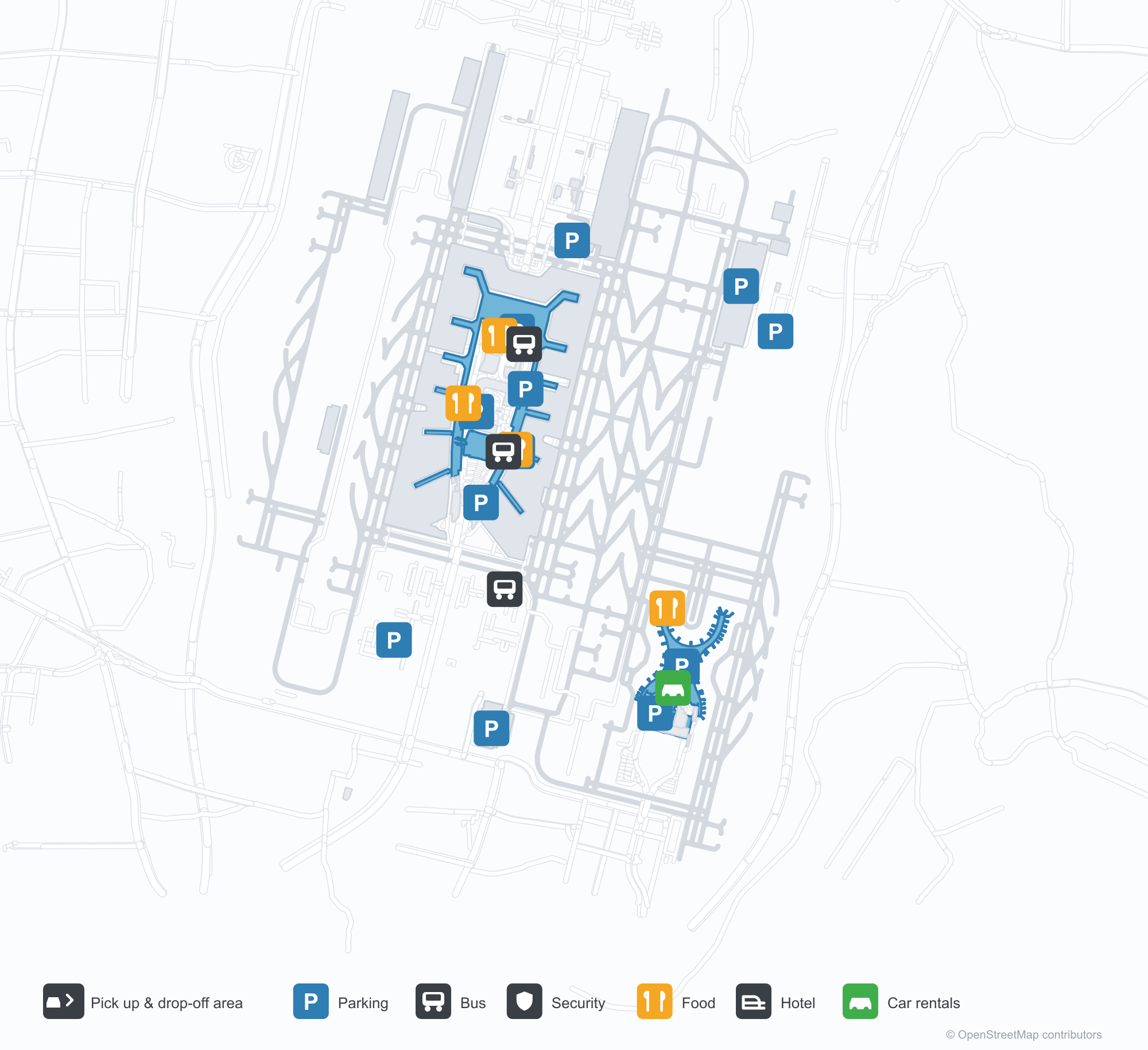
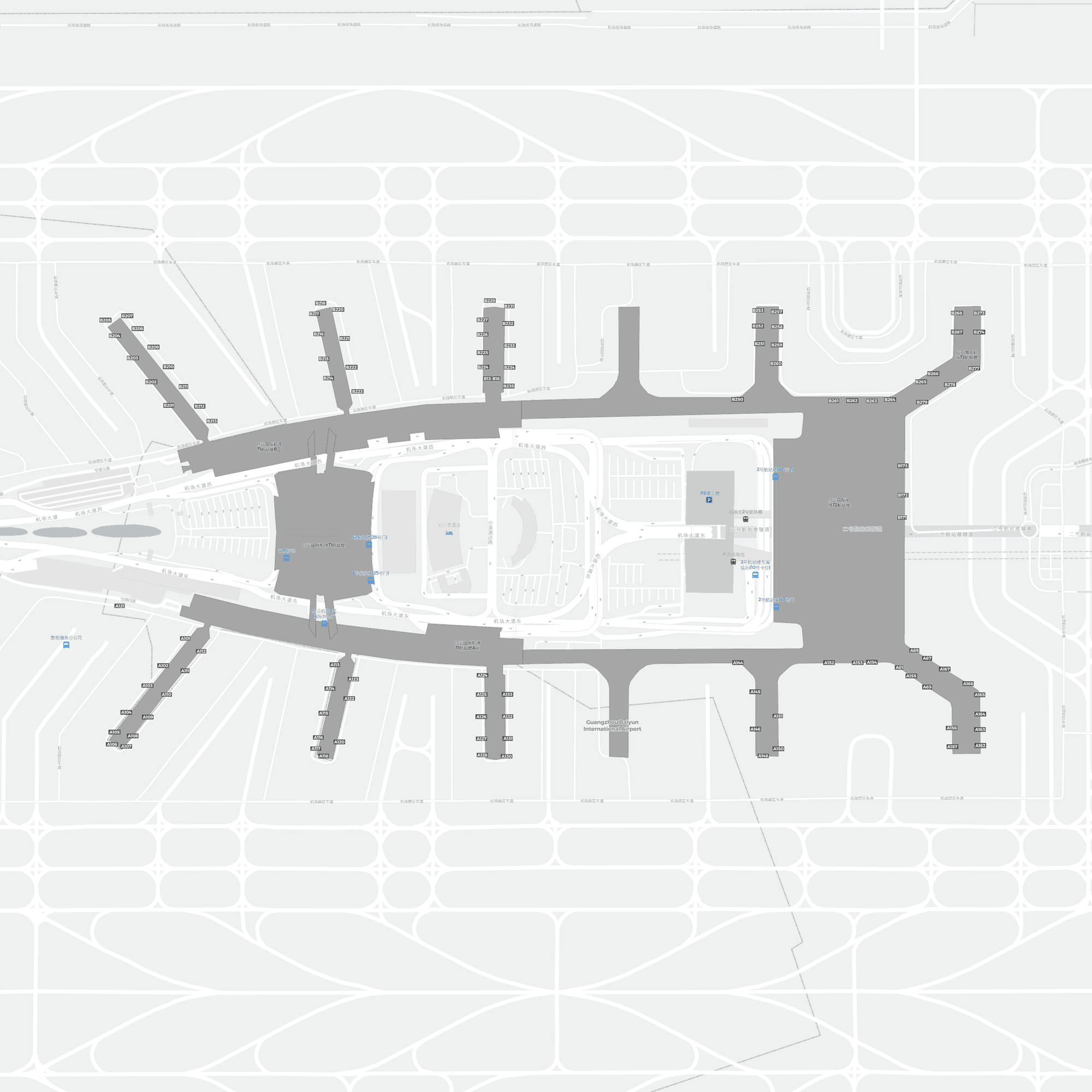
Baixar mapas do aeroportoDownloads
Fotos do aeroportoFotos do aeroporto
Fotos reais deste aeroporto, cada uma creditada à página pública da web onde foi encontrada; os direitos autorais continuam com os fotógrafos originais. Clique em uma foto para ampliar ou em uma linha de crédito para abrir a página de origem.
Vista de satélite: o Aeroporto Internacional de Cantão-Baiyun (CAN) é emoldurado por cidade, costa ou relevo, com a pista cruzando a cena.
Horário do aeroporto — horário atual em CANHorário do aeroporto
Horário atual em CAN (Asia/Shanghai) comparado ao seu horário local.
Aeroporto Internacional de Cantão-Baiyun: mapa de rotas — destinos diretosMapa de rotas
136 destinos diretos: mapa, companhias aéreas em operação e distâncias.
Aeroporto Internacional de Cantão-Baiyun: voos — partidas e chegadasPainel de voos
3.859 números de voo de 97 companhias aéreas para 216 destinos, separados por direção. Números de codeshare estão incluídos.
| Voo | Companhia aérea | Destino | País/região |
|---|---|---|---|
| 3U1005 | Sichuan Airlines | Beijing Daxing International Airport | China |
| 3U1011 | Sichuan Airlines | Beijing Daxing International Airport | China |
| 3U1013 | Sichuan Airlines | Beijing Daxing International Airport | China |
| 3U1015 | Sichuan Airlines | Beijing Daxing International Airport | China |
| 3U1017 | Sichuan Airlines | Beijing Daxing International Airport | China |
| 3U1019 | Sichuan Airlines | Beijing Daxing International Airport | China |
| 3U1021 | Sichuan Airlines | Beijing Daxing International Airport | China |
| 3U1023 | Sichuan Airlines | Beijing Daxing International Airport | China |
| 3U1025 | Sichuan Airlines | Beijing Daxing International Airport | China |
| 3U1037 | Sichuan Airlines | Tianjin Binhai International Airport | China |
| 3U1039 | Sichuan Airlines | Tianjin Binhai International Airport | China |
| 3U1045 | Sichuan Airlines | Tianjin Binhai International Airport | China |
| 3U1067 | Sichuan Airlines | Beijing Daxing International Airport | China |
| 3U1075 | Sichuan Airlines | Qingdao Jiaodong International Airport | China |
| 3U1077 | Sichuan Airlines | Lanzhou Zhongchuan International Airport | China |
| 3U1079 | Sichuan Airlines | Xi'an Xianyang International Airport | China |
| 3U1081 | Sichuan Airlines | Xi'an Xianyang International Airport | China |
| 3U1085 | Sichuan Airlines | Xi'an Xianyang International Airport | China |
| 3U1087 | Sichuan Airlines | Xi'an Xianyang International Airport | China |
| 3U1089 | Sichuan Airlines | Xi'an Xianyang International Airport | China |
Números de voo e rotas do índice de voos da aviability.com (instantâneo de 26 de outubro de 2026); números de codeshare estão incluídos e nenhum horário de partida é exibido. Fonte: aviability.com ↗
Informações e detalhes do aeroportoDetalhes do aeroporto
Mapa interativo — localização do Aeroporto Internacional de Cantão-BaiyunMapa interativo
Veja este aeroporto em outros serviços de mapas:
Guangzhou Baiyun International Airport terminal guideGuia do aeroporto
Guangzhou Baiyun International Airport lies about 28 km from the city centre and handles around 83.6 million passengers a year (2025). Its biggest change in the past two years has been the opening of Terminal 3 and the closure of Terminal 1 for rebuilding — a great many guides online still refer to T1, and following them will take you straight to the wrong building.
Satellite view
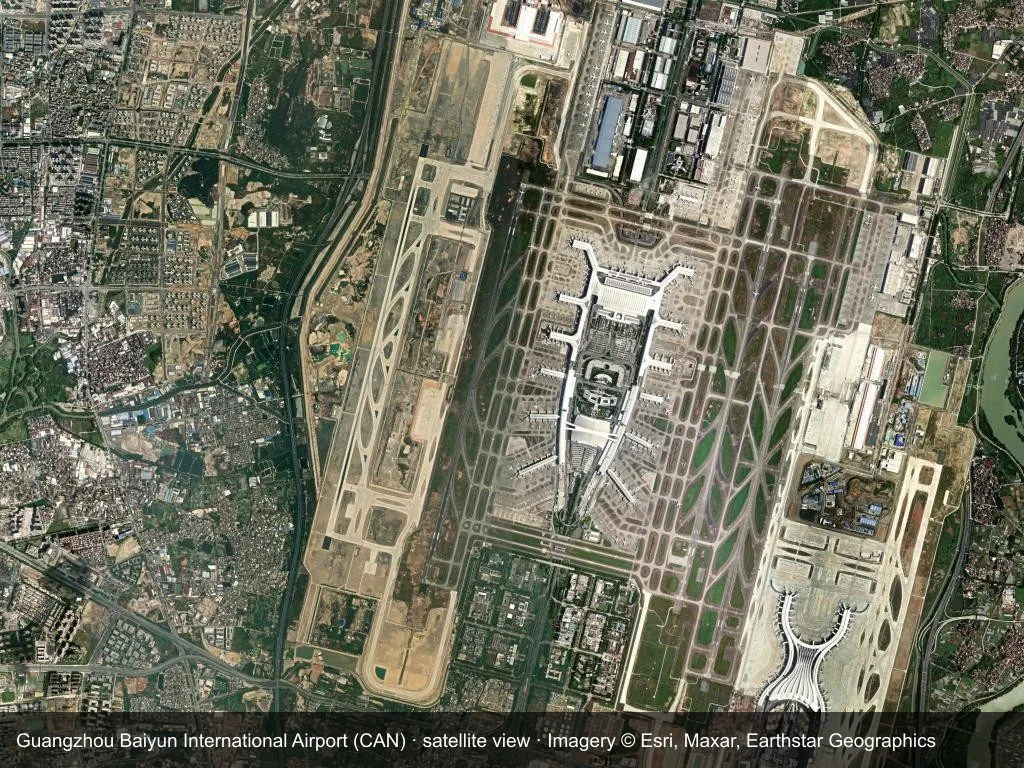
Satellite view: Guangzhou Baiyun International Airport (CAN) is framed by city, coast or terrain, with the runway crossing the scene.
The satellite image comes from Esri World Imagery (© Esri, Maxar, Earthstar Geographics); the field and attribution are labelled in the image. This is a satellite view, not a ground-level photograph.
Only T2 and T3 are in service
| Code | Name | Status | Main users |
|---|---|---|---|
| T2 | Terminal 2 | In service | China Southern and the carriers it handles; domestic and international flights |
| T3 | Terminal 3 | Opened at the end of 2025 | Air China, Shenzhen Airlines, the Hainan Airlines group, Spring Airlines and others; mainly domestic, with some international and regional flights |
| T1 | Terminal 1 | Closed from May 2026 | Under refurbishment; no flights handled |
From 7 May 2026, all flights at T1 have moved to T3. The operating carrier is the quickest way to tell which terminal you need: China Southern is at T2; Air China, Shenzhen Airlines, the Hainan Airlines group and Spring Airlines are at T3. When you are unsure, go by your flight notification, your boarding pass or the airport's own website.
Our diagram keeps only the two buildings T2 and T3 precisely to reflect that change: the T1 on older maps is no longer where you need to be.
Transfers and connections
- A free shuttle bus runs between T2 and T3; before connecting, confirm which building each of your two flights uses.
- A China Southern to China Southern connection is almost always completed inside T2, and is the quickest.
- For a connection involving T3, add the shuttle wait and the walking distance in the new building to your buffer.
Routes and flights
| Aspect | Points |
|---|---|
| Routes | 83.59 million passengers in 2025, ranked second in China and ninth globally; China Southern uses Guangzhou as its core hub, serving major Chinese cities and long-haul points in South-East Asia, Europe, North America and Oceania |
| Flights | 550,000 aircraft movements in 2025, around 1,508 a day |
| Aircraft | China Southern Airlines is overwhelmingly the home carrier, with a group fleet of around 970 aircraft (end of 2025); main types are the Airbus A320 family, A330 and A350, and Boeing 787 and 777 |
Getting into the city
- Metro Line 3 — Airport North station sits right beside T2 and runs straight into the city; the cheapest and most reliable option.
- Airport express buses — cover every district of the city and the Pearl River Delta cities; suited to heavy luggage or night travel.
- Taxi / ride-hailing — about 28 km, and around 40 minutes when the traffic is clear.
- Allow a little extra time when heading to T3; the exact positions of the public transport stops and the shuttle bus are best confirmed from the signs on site.
Practical tips
- Older guides online still say "depart from T1" — T1 closed in May 2026, so use only information updated after May 2026.
- Check-in islands are zoned by airline, and the screens in the departures hall show which island each one uses; read the screen before you queue, or you will wait in the wrong place.
- The Pearl River Delta is dense with airports (Guangzhou, Shenzhen, Hong Kong, Zhuhai), so confirm the three-letter code of your departure airport when booking rather than going by the city name alone.
References
CAN: guias do aeroportoDo blog
7 artigos deste site cobrem CAN: chegadas, transporte terrestre, bagagem e conexões.
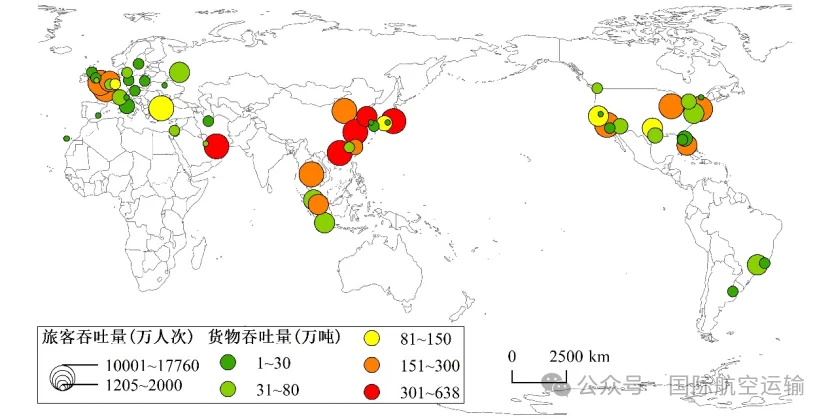
Quase 60 sistemas de múltiplos aeroportos: por que uma região metropolitana constrói um segundo e um terceiro aeroporto
Um estudo baseado em dados globais de aeroportos de 2018 identificou 59 sistemas de múltiplos aeroportos, 93,2% deles formados por dois ou três aeroportos, com o padrão “um principal, um secundário” como o mais comum. Esta explicação apresenta as três condições, o limite de 70 km e a busca em duas etapas por trás do resultado, e o que isso significa para as cidades chinesas.7 min de leitura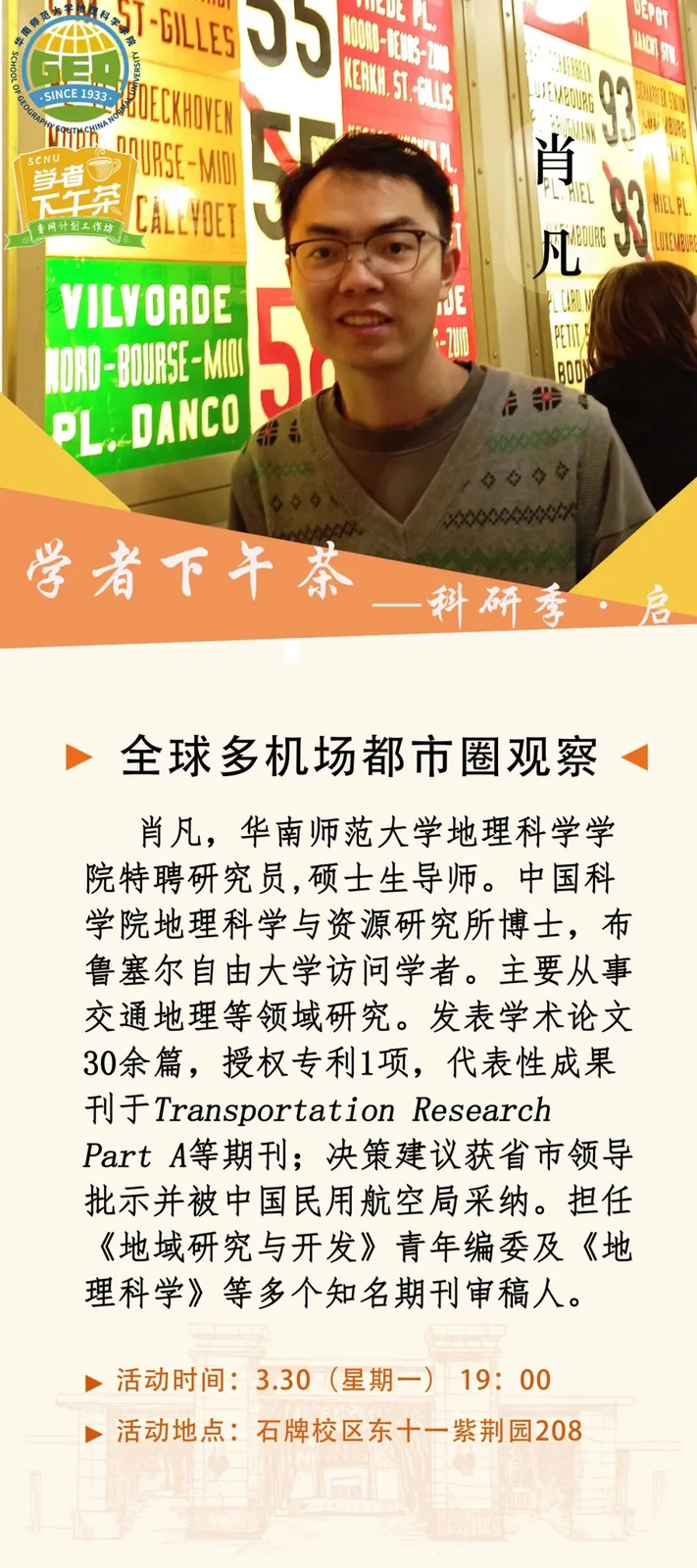
Quando uma megacidade constrói um segundo e um terceiro aeroporto: lições de regiões metropolitanas com vários aeroportos
Uma palestra universitária em torno dos novos aeroportos planejados para Cantão e Nantong traz as regiões metropolitanas com vários aeroportos de volta ao debate. Este comentário pergunta por que grandes áreas metropolitanas constroem segundo e terceiro aeroportos, como os papéis de hub podem ser divididos e como a Grande Baía pode evitar a concorrência homogênea.7 min de leitura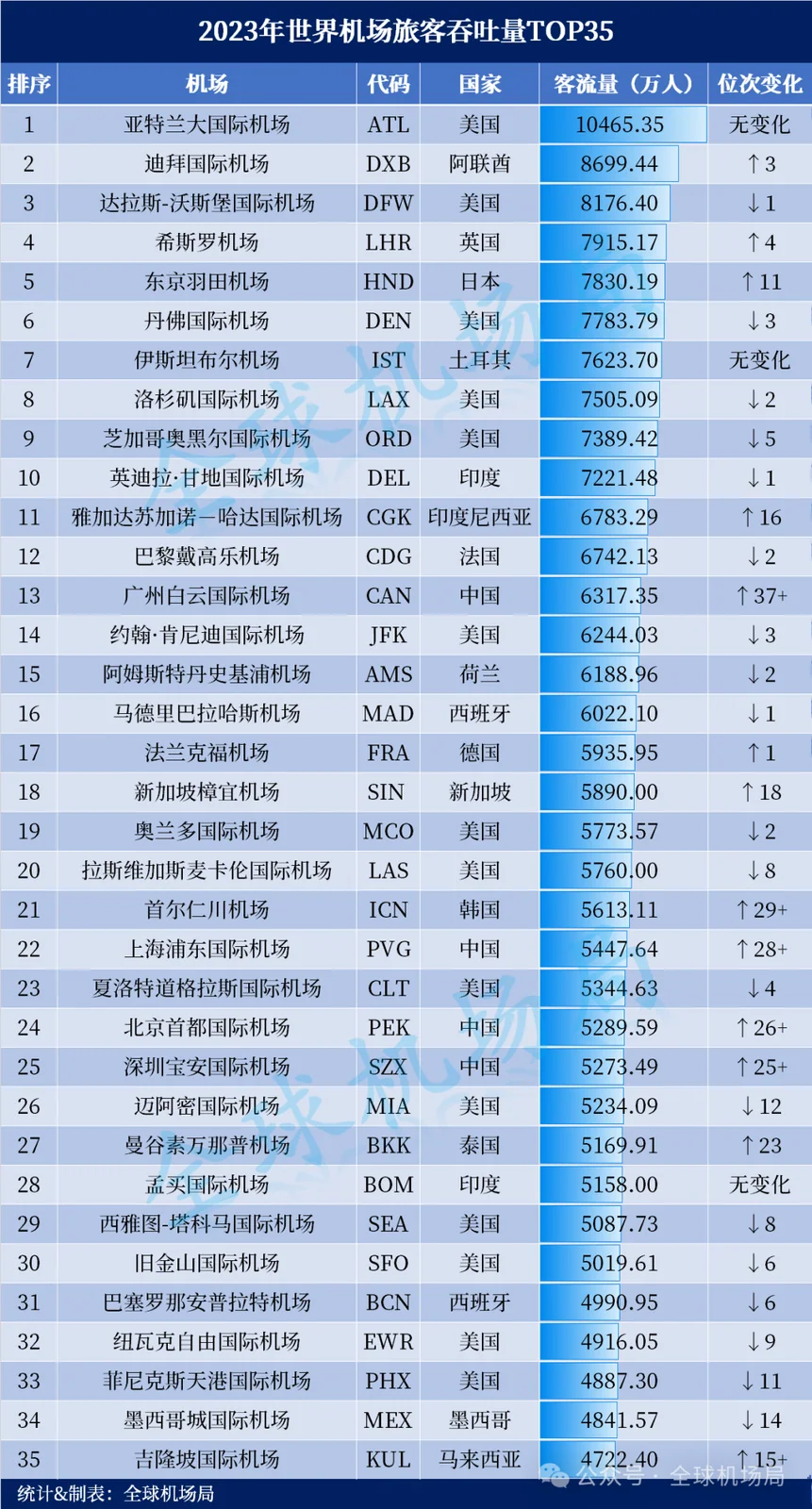
Tráfego de passageiros em aeroportos do mundo: Atlanta lidera pelo terceiro ano e quatro aeroportos chineses entram no top 30
O ranking de passageiros de 2023 do Airports Council International coloca Atlanta em primeiro pelo terceiro ano, com 104,65 milhões, Dubai em segundo em um recorde, Heathrow de volta como número um da Europa e Haneda de volta ao top cinco. Quatro aeroportos chineses — Cantão, Xangai Pudong, Shenzhen e Pequim Capital — entraram no top 30.8 min de leitura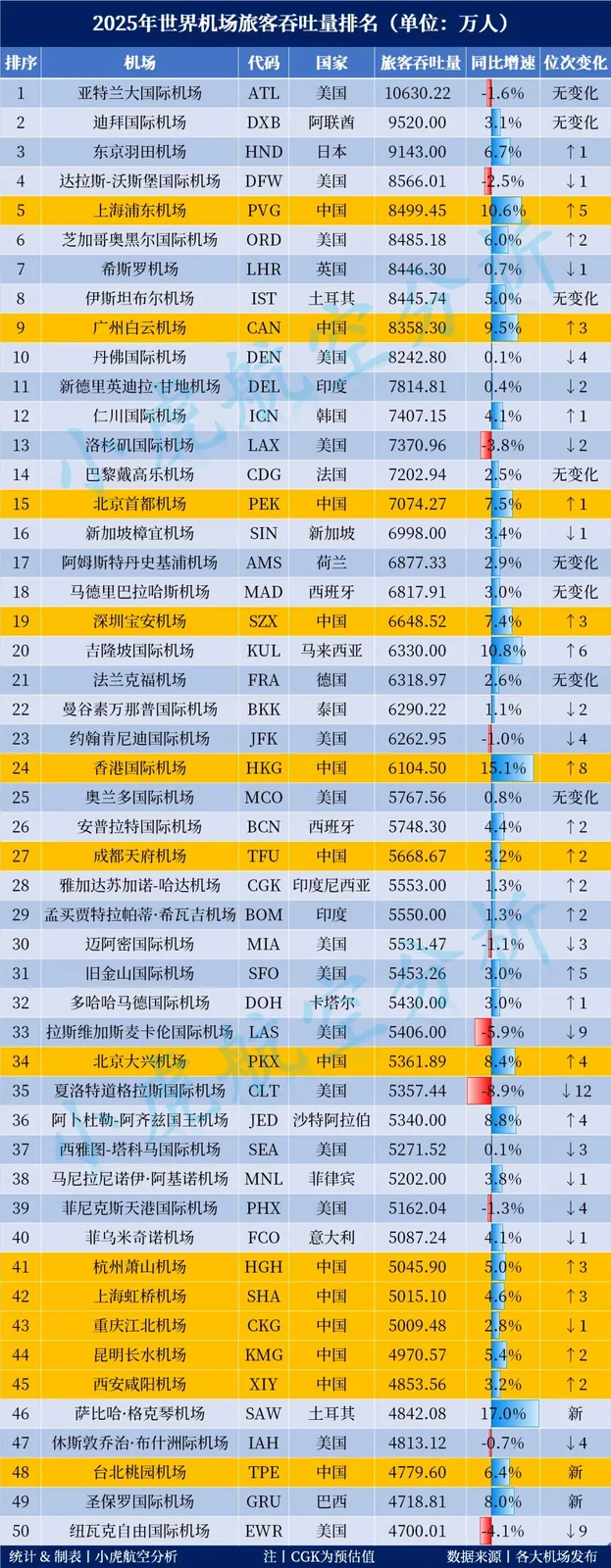
Tráfego de passageiros em aeroportos do mundo: Atlanta leva o quinto ano, Xangai Pudong entra no top cinco
Atlanta movimentou 106,3 milhões de passageiros em 2025 e lidera o mundo pelo quinto ano consecutivo, embora o tráfego tenha caído 1,6%. Xangai Pudong entrou no top cinco global pela primeira vez com 84,99 milhões, Cantão Baiyun subiu para nono, e 13 aeroportos chineses entraram no top 50 — 12 deles subindo.7 min de leituraGuia dos terminaisGuia dos terminais
Faixas de portões, principais companhias aéreas e instalações de cada terminal do Aeroporto Internacional de Cantão-Baiyun.
Comentários dos leitoresDiscussão
Perguntas, relatos de viagem e correções são bem-vindos. Os comentários são públicos.
Carregando…
Carregando comentários…