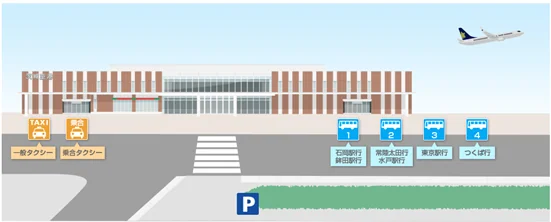
Narita Airport by Bus: The Low-Cost Coach to Tokyo Station
- Narita Airport
- airport bus
- Tokyo Station
- Tokyo transport
- NRT
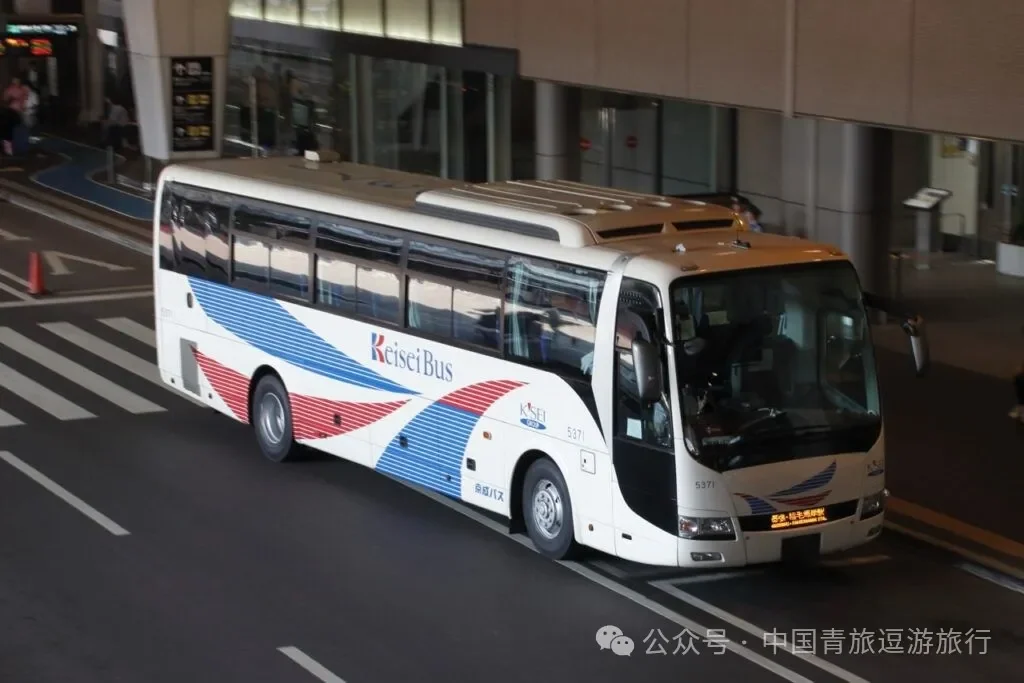
Getting from Narita into Tokyo, the express trains are quickest — but with a large suitcase and no appetite for stairs in a transfer corridor, the coach that costs about ¥1,500 is often the easier option. AIRPORT BUS TYO-NRT runs from Terminals 1, 2 and 3 to Tokyo Station, with some services continuing towards Ginza, and you never change vehicles or carry your own bags.
This guide covers what the service is, fares and timetables, buying a ticket, where to board at each terminal and at Tokyo Station, luggage and on-board rules, and how it compares with the Skyliner and the N'EX. Fares, times and counter locations are 2025 figures; confirm them with the operator before you travel.
1. What the bus is
Narita Airport has three terminals. Terminals 1 and 2 have both rail and bus stops; Terminal 3 is bus-only, so anyone taking a train walks or rides the terminal shuttle across to Terminal 2. The coach has a ticket counter and a stop at all three terminals, both visible as soon as you come through arrivals.
LCB stands for Low Cost Bus, the cheaper product on this route. It runs to Tokyo Station and Ginza, costs about ¥1,500 one way, and takes about 65 minutes at best — in practice 60 to 70 minutes, depending on the roads. The vehicles are full-size coaches with more than 40 seats, all of them unreserved.
Frequency is the real selling point: since 1 August 2024 the route has run 212 services a day in both directions, roughly every 10 minutes from the airport and every 10 to 20 from Tokyo Station.
The trade-off is that a coach sits in traffic. The operator's own figures for December 2024 to January 2025 show most departures on time, about 15% delayed by congestion, and an average delay of 6 to 18 minutes.
2. Fares and timetables
| Ticket | Fare |
|---|---|
| Adult | about ¥1,500 (¥3,000 on the 23:00 late-night service) |
| Child | about ¥750 (¥1,500 late at night) |
| Infant | one free with each adult; ¥750 if a seat is needed (¥1,500 late at night) |
About ¥1,500 one way, with fares and times set by the operator. The late-night departure around 23:00 is priced separately, so check which band your coach falls into.
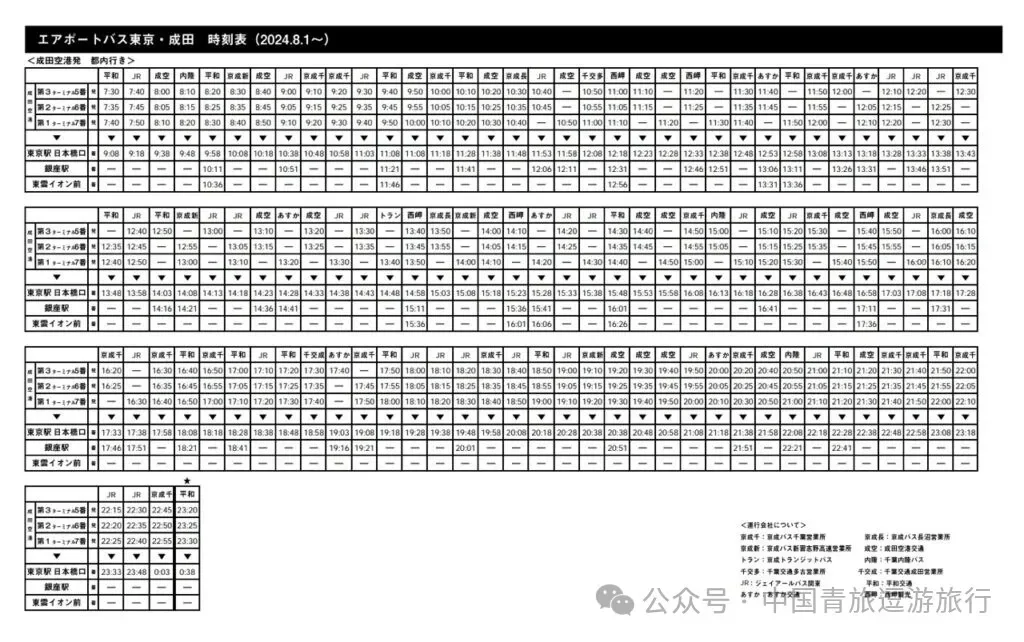
Timetables run in both directions — Narita Airport to Tokyo Station, and central Tokyo back to the airport. Daytime is the densest; late evening and early morning thin out. Check the operator's website or the board at the stop on the day, above all for the first departure of the morning and the last at night.
3. Buying a ticket: look for the green counter
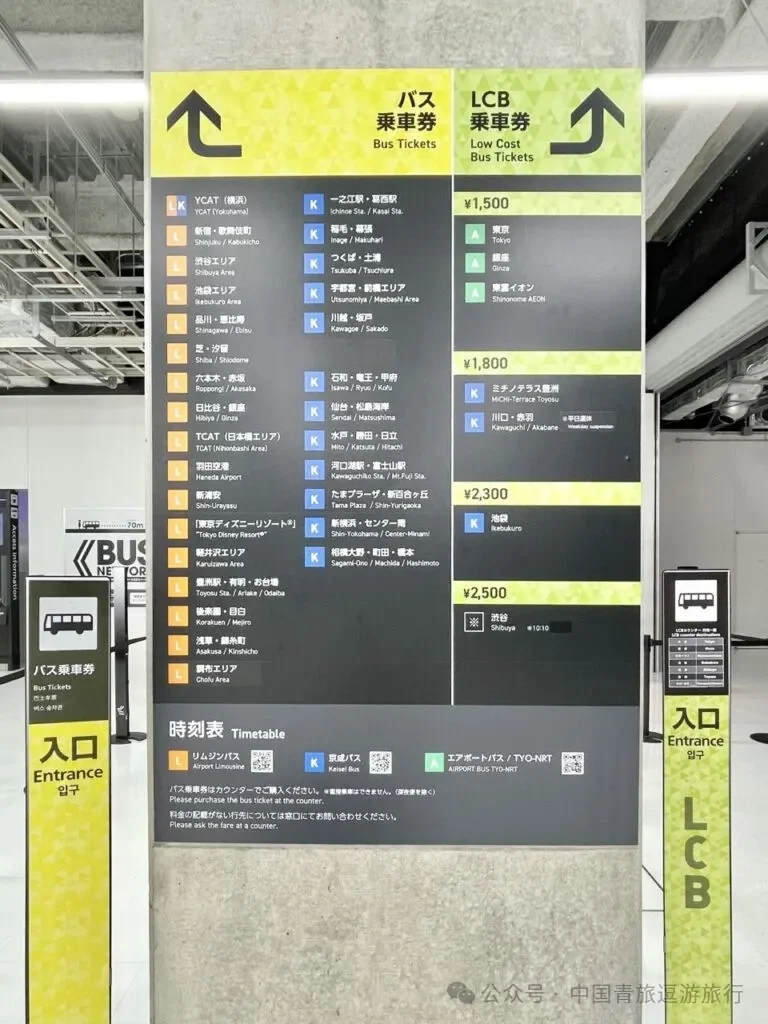
The counters in the arrivals hall come in two colours. Yellow sells the ordinary bus and limousine-style services; green is the LCB counter, where the ¥1,500 ticket is sold. The fare board above it lists Tokyo, Ginza and the Shinjuku area at ¥1,500.
Tell the clerk your destination — Tokyo Station or Ginza, the latter less frequent — and pay. Cash, credit cards and IC transport cards such as Suica are all accepted. The board lists other LCB destinations at higher fares; confirm at the counter what is on sale on the day.
Two things on the ticket matter: the stop number and the departure time. It is valid only for the departure printed on it, so a missed coach means buying again. Seating is unreserved and tickets are sold only up to the number of seats. Tickets can also be bought online through the operator's website; how you collect and board with an online ticket is explained there.
4. Where to board: three terminals and Yaesu South Exit
Terminal 1. Counters sit outside both the south and north exits of the arrivals hall, hard to miss. Follow the number on your ticket: Tokyo Station services leave from stop 7. Every bay is numbered; in busy seasons, join the queue a little early.
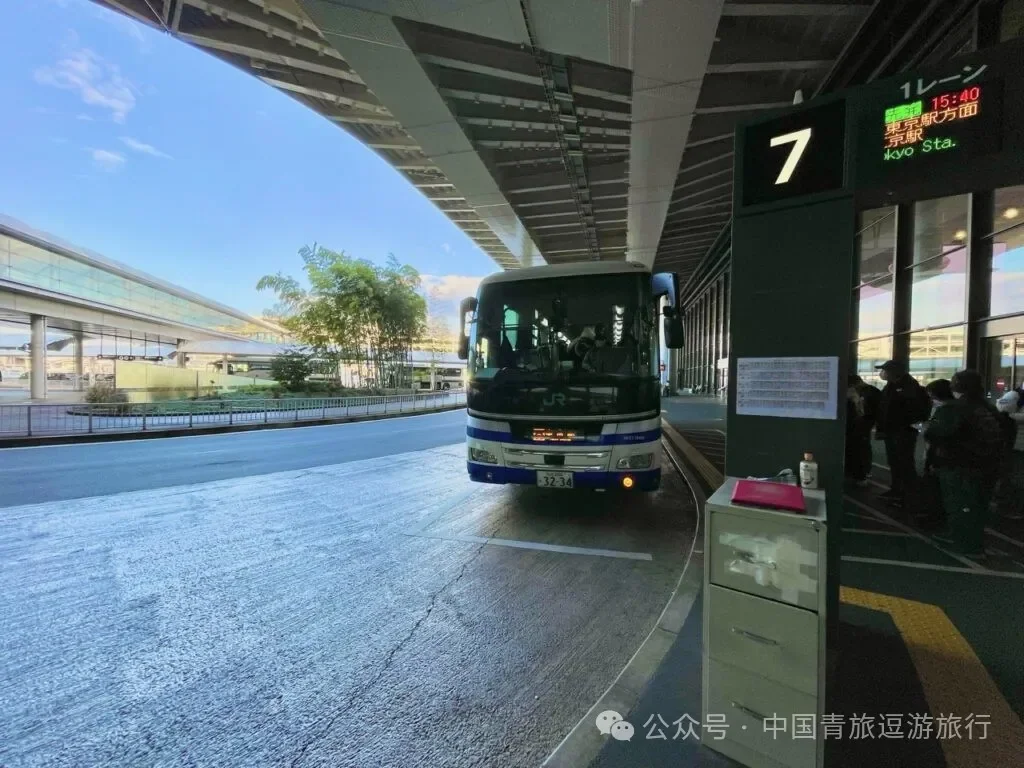
Terminal 2. Arrivals open onto exits A and B. Most passengers come out of B, where the counter is directly opposite; from A, it is just in front of the exit. Tokyo Station services leave from stop 6.
Terminal 3. The arrivals hall is small, the counter is inside it and the stop is just outside — the shortest walk of the three. For anyone arriving on a budget airline it is the obvious option; a train would mean walking or shuttling back to Terminal 2 with your bags.
For the return leg, the coach leaves from Tokyo Station's Yaesu South Exit. There is a staffed counter and ticket machines, taking cash and cards. Holders of an IC card such as Suica can join the queue directly; anyone paying cash or by card buys a ticket first. On departures between 05:00 and 06:00 the counter is not yet open: queue at the stop and pay on board.
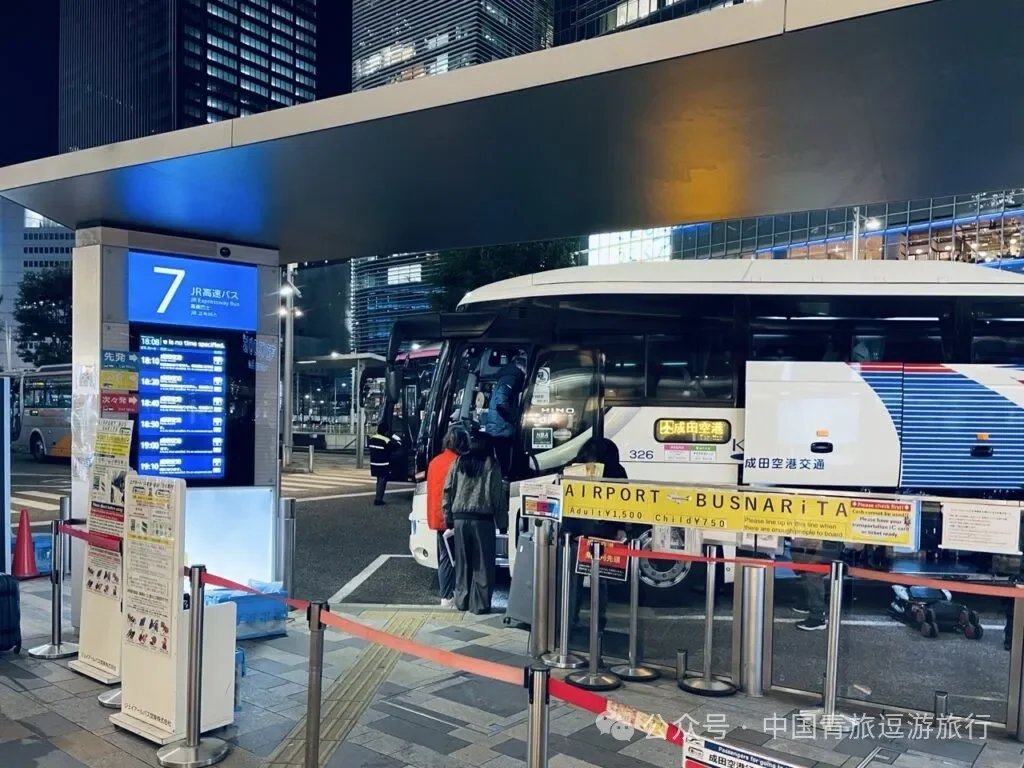
5. Luggage, seating and rules on board
Luggage is where the coach earns its keep. Before boarding, the driver loads each case into the hold and hands you a tag with a number on it. Keep that tag — it is what you hand back to reclaim the bag at the other end.
The allowance is one piece per passenger, the three sides totalling no more than 158 cm. Oversized items, cardboard boxes, bicycles (folding ones included), skis, snowboards, surfboards, golf bags and large musical instruments are not carried, so arrange a courier in advance.
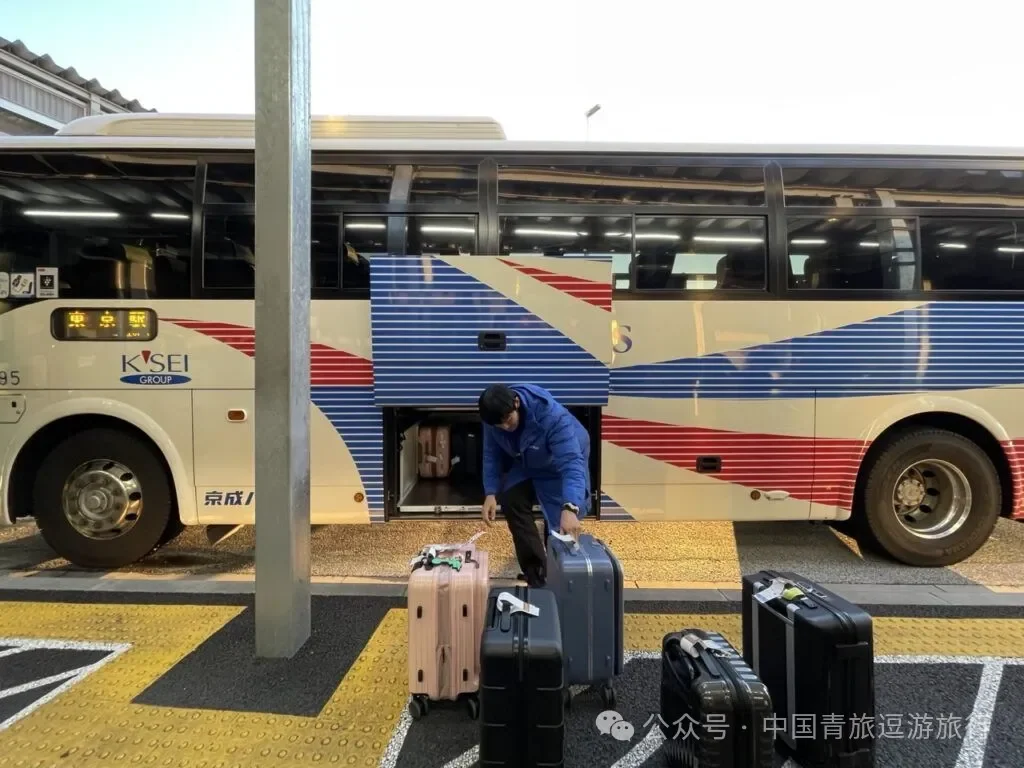
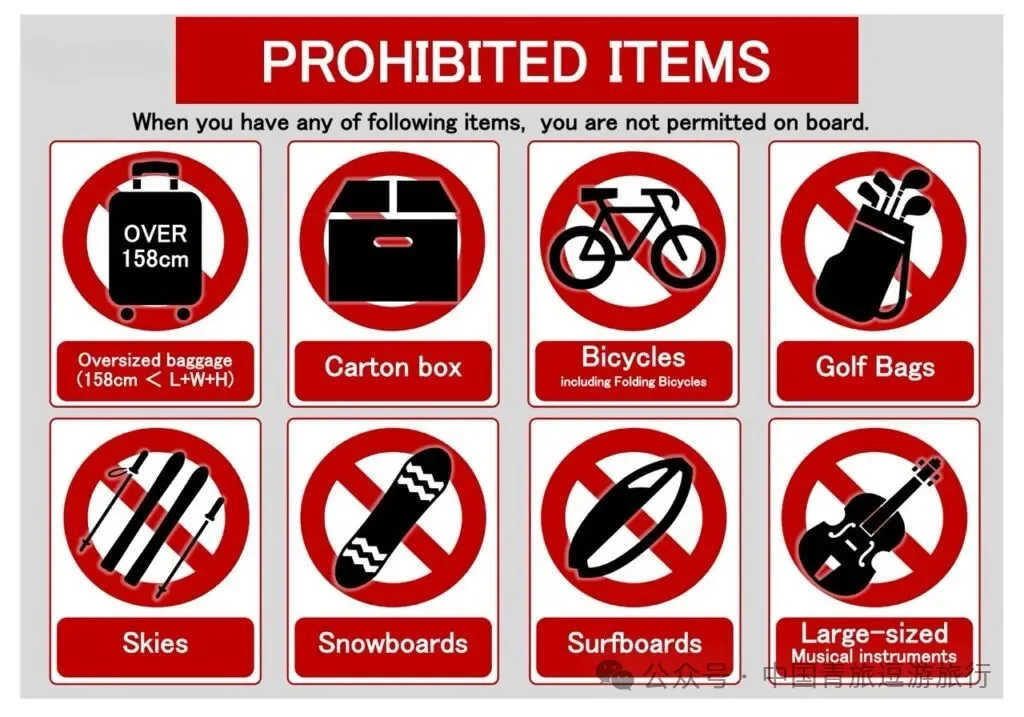
On board it is a full-size coach with more than 40 seats, rather more room than a commuter train at rush hour, and you sit wherever you like. A scrolling display shows the next stop, and announcements are made in Japanese, English and Chinese, so a lack of Japanese is no obstacle. Smoking is not allowed, and you should wear the seat belt while the coach is moving.
The advantage with heavy bags is simply that you never lift them: the walk from arrivals to the stand is flat, staff put the cases in the hold, and you pick them up at Tokyo Station without dragging anything through a transfer.
6. Bus, Skyliner or N'EX
| Option | Main stops | Journey time | Fare |
|---|---|---|---|
| JR East N'EX (Narita Express) | Tokyo Station, Shinjuku, Shibuya | about 1 hr 30 min | ¥3,070 ordinary car, ¥5,340 green car |
| Keisei Skyliner | Ueno, Nippori | about 36 min | ¥2,730 |
| AIRPORT BUS TYO-NRT | Tokyo Station, Ginza | about 65 min | about ¥1,500 |
The choice is fairly clear-cut. The Skyliner is fastest, reaching Ueno in 36 minutes, and is the natural pick for Ueno, Nippori and Asakusa. The N'EX runs direct to Tokyo Station, Shinjuku and Shibuya in relative comfort, at the highest fare. The bus is cheapest by a wide margin — half to a third of the train fares — and sets you down on the Yaesu side of Tokyo Station, handy for Ginza and Nihonbashi too.
What you pay for that is time. Trains are immune to traffic; coaches are not. If you are connecting to a shinkansen, catching a flight or running a tight schedule, add 30 minutes to the bus estimate or take the train. Weekday mornings between 07:00 and 09:00 and evenings between 17:00 and 19:00 are the worst for the expressway and city roads; late at night and early in the morning the coach tends to be punctual.
In short:
- In a hurry, or heading for Ueno and Nippori: Skyliner.
- Want a direct ride to Shinjuku or Shibuya: N'EX.
- Heavy bags, a tight budget and a destination at Tokyo Station or Ginza: AIRPORT BUS TYO-NRT.
Related links
- On this site: Narita International Airport (NRT), Japan (JP)
- Wikipedia: Narita International Airport
- Baidu Baike: Narita Airport
Image source: 中国青旅逗游旅行. Fares, timetables, counter locations and luggage rules are 2025 figures and may change; check the AIRPORT BUS TYO-NRT website (tyo-nrt.com) and the notices at the stop before you travel.
More articlesTravel notes
Duty-Free at Haneda Airport: T2 and T3 Shops, Brands and Transit Rules
A practical guide to duty-free shopping at Haneda Airport (HND): the T2 TIAT DUTY FREE SOUVENIR, the two T3 shops by gate 109, their hours and brands, ANA vouchers and online pre-order, plus duty-free versus tax-free, liquids on connections and what is worth buying at the airport rather than in town.5 min read
Getting from Haneda Airport into Tokyo: Monorail, Keikyu or Bus?
A practical guide to the Haneda Airport (HND) run into Tokyo: the Tokyo Monorail to Hamamatsucho, Keikyu trains to Shinagawa and through to Asakusa, airport buses to hotels and the wider Kanto region, taxis and late arrivals, with fares, transfer stations and a which-line-for-which-area table.6 min read