Kyoto to Umeda on the Hankyu Line: Six Train Types, One 410-Yen Fare
- Hankyu Railway
- Kyoto transport
- Osaka Umeda
- Kyoto-Kawaramachi
- Japan transport
The most direct line from Kyoto's Shijo district to Osaka's Umeda is not JR but the Hankyu Kyoto Line. It runs from Kyoto-Kawaramachi, under Shijo-dori, to Hankyu Osaka-Umeda: a flat 410 yen, about 43 minutes on the fastest limited express. No shinkansen ceremony, no luggage racks — a commuter railway, and that is exactly why it works.
Four things decide whether the trip goes smoothly: where you get in, how the six train types differ, how to read the platform, and how to leave the terminal at the other end. Fares and times are indicative; Hankyu's own site is definitive.
Two starting points: Kawaramachi and Karasuma
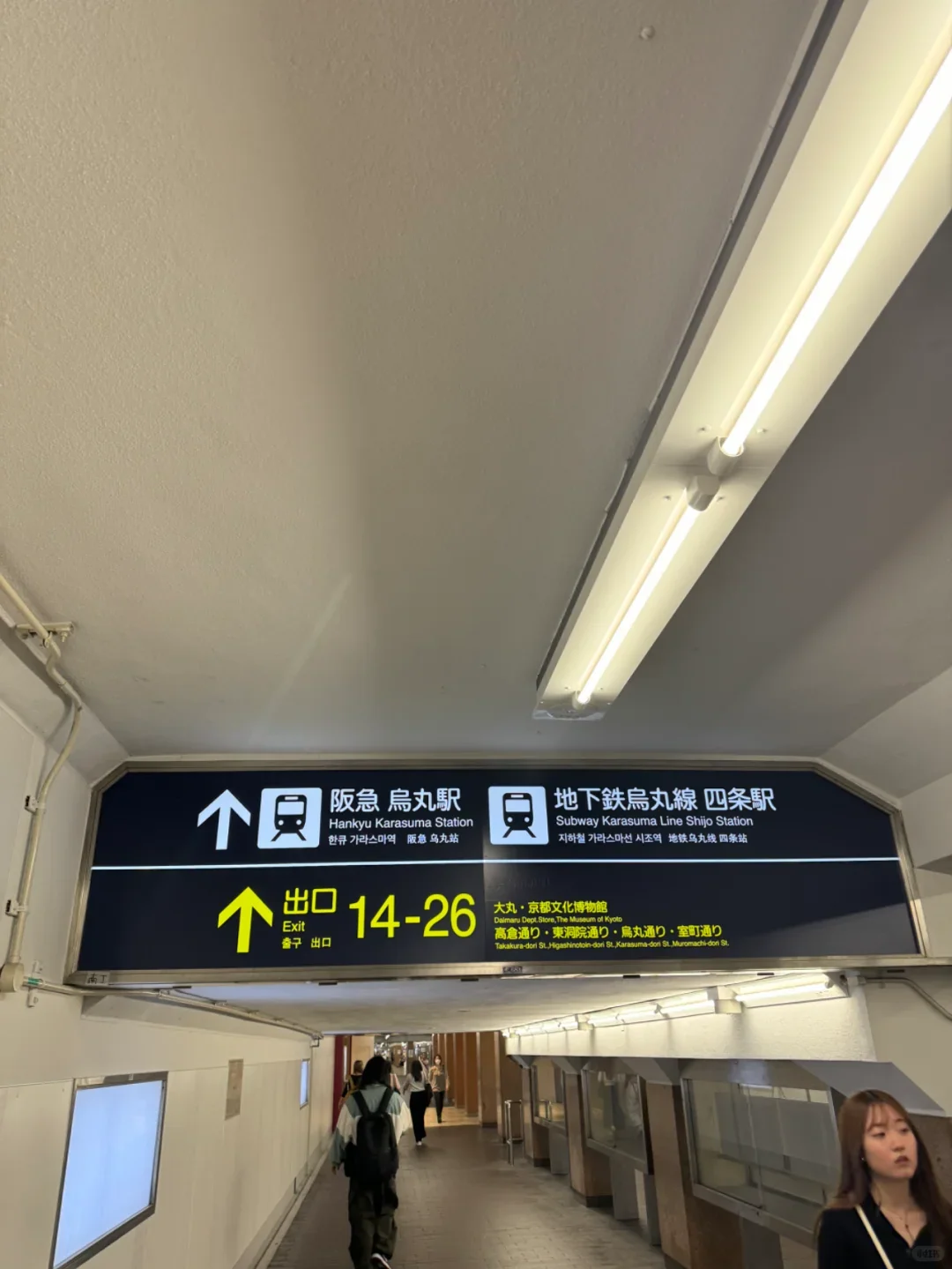
Hankyu has two stations in the centre. Kyoto-Kawaramachi is the terminus, on the west bank of the Kamo River at the east end of Shijo-dori. Hankyu Karasuma sits under the Shijo-Karasuma crossing and connects to Shijo station on the Karasuma subway; Kawaramachi is one stop east.
Around Shijo-Karasuma or the Nishiki market, Karasuma saves a walk; by the river, in Gion or near Kennin-ji, Kawaramachi is closer. The fare to Umeda falls in the same band from either — usually 410 yen even from Karasuma, though the station fare table is the final word.
Navigate to "Hankyu Karasuma" or "Kyoto-Kawaramachi" and go underground at the red Hankyu sign; the passages below branch in every direction.
Six train types, one fare
The line runs six classes: limited express, commuter express, rapid express, rapid, semi-express and local. The names look daunting; the rule is simple — the higher the class, the fewer the stops, and the fare never changes.
Limited expresses take about 43 minutes from Kawaramachi to Umeda, semi-express about 1 hour 7 minutes. Rapid express, rapid and commuter express sit in between, and commuter express runs only at the peaks, so it will not appear at midday.
| Item | Kyoto-Kawaramachi → Osaka-Umeda |
|---|---|
| Fare | 410 yen, same on every train type (including limited express) |
| Limited express | about 43 minutes |
| Semi-express | about 1 hour 7 minutes |
| Seating | Unreserved; some limited expresses carry a PRiVACE reserved car at an extra charge |
| Payment | IC card or paper ticket, tapped or inserted at both ends |
Unlike JR, Hankyu levies no limited-express supplement: "特急" on the board is simply the fastest train. Where a PRiVACE car is attached, the platform marks where it stops; ordinary cars stay unreserved.
Getting in: find "Hankyu", tap through
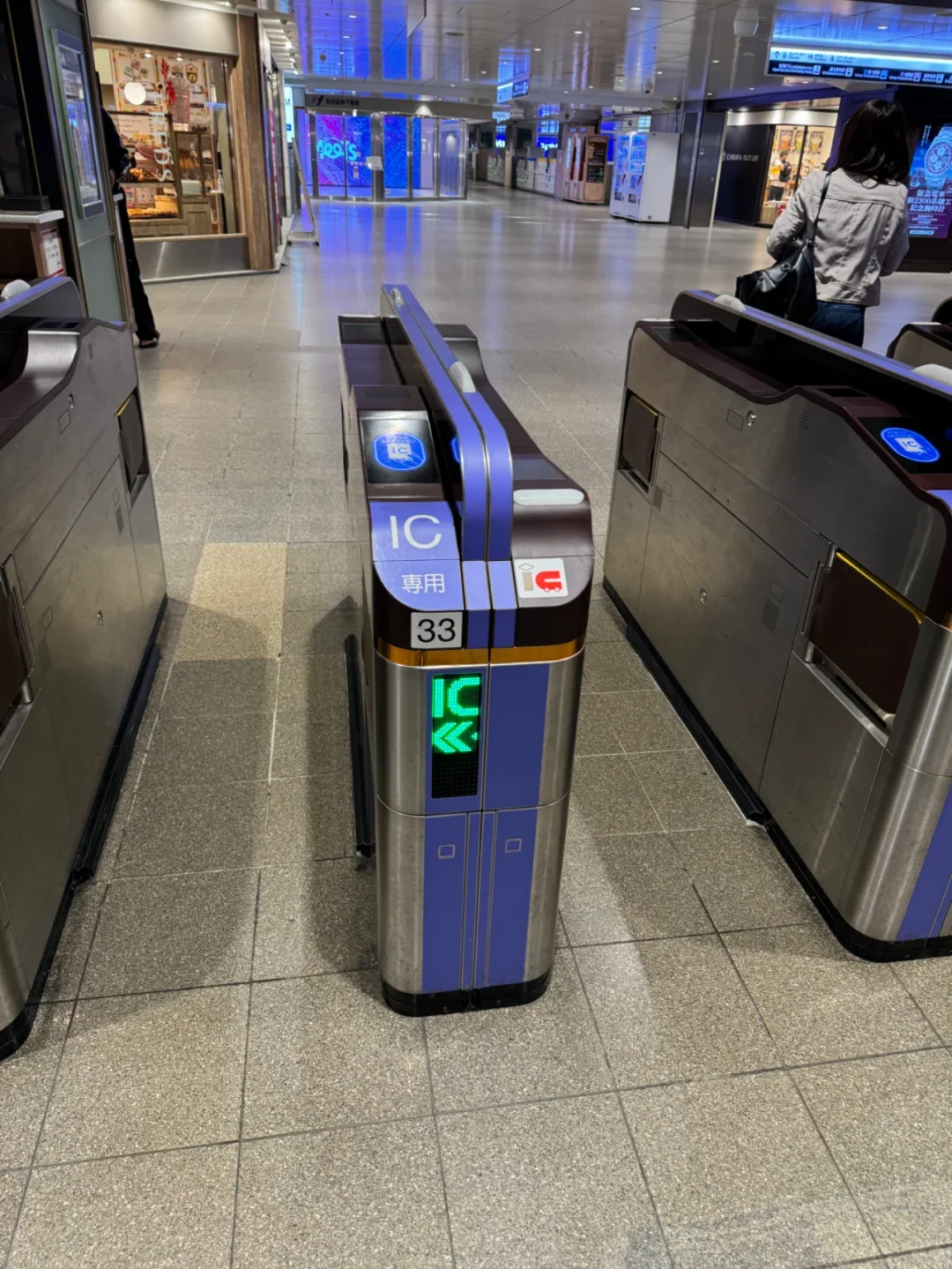
Hankyu stations are small, with gates in the middle of the concourse. Tap in with an ICOCA, Suica or similar card and out at the far end; 410 yen is deducted by distance. Without a card, buy a single at the machine — no date, valid that day.
A card means never working out a fare: the same one works on Hankyu, the subway, JR and buses, and top-up machines take cash and notes to 10,000 yen.
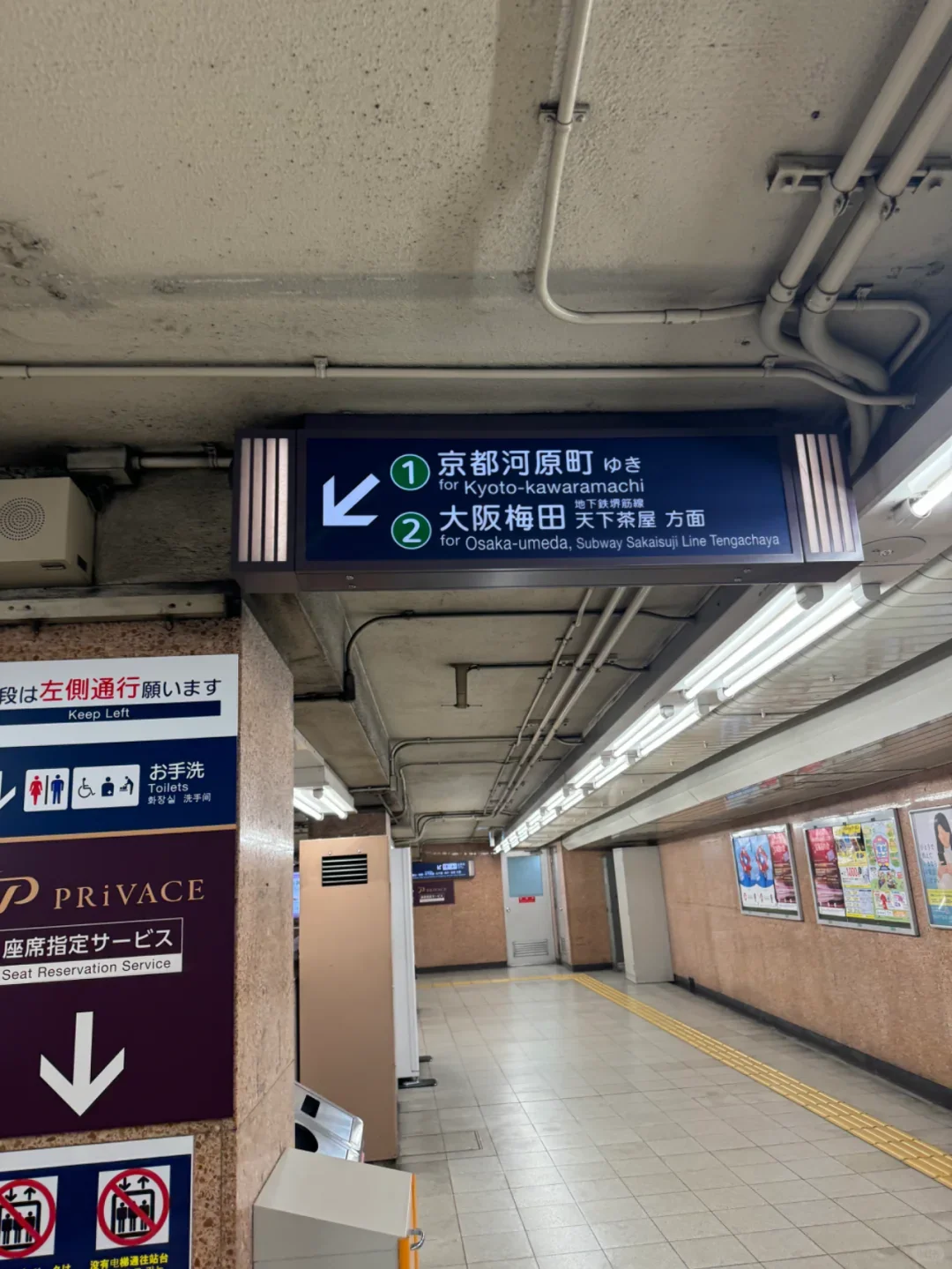
Past the gates, follow the signs for Osaka-Umeda. Hankyu Karasuma has two platforms — 1 for Kyoto-Kawaramachi, 2 for Osaka-Umeda — so the direction is hard to get wrong.
The platform: same track, a different train each time
This is where Hankyu catches people out: on one platform a semi-express may arrive mid-morning, a limited express at midday, a rapid express in the afternoon. The lit display above the platform gives departure time, class and destination, so match the time rather than boarding out of habit.
Read the destination too. Not every Umeda-bound platform train terminates there: some semi-express and local services run through onto the Sakaisuji subway towards Tengachaya. Board only when the front display reads Osaka-Umeda.
Colour helps: limited express red, rapid express and rapid blue or green, semi-express green, local black. If the Japanese defeats you, go by colour.
And the women-only car: commuter expresses and some limited expresses set one car aside during weekday peaks, marked pink on the platform floor and the doors.
About 45 minutes to Umeda, and out of the terminal
Kyoto-Kawaramachi to Osaka-Umeda is about 43 minutes on a limited express; with the walks and a wait, plan on 50 minutes to an hour. The train calls at Takatsuki-shi, Ibaraki-shi and Awaji, where the Senri Line and the subway for Tenjinbashisuji connect.
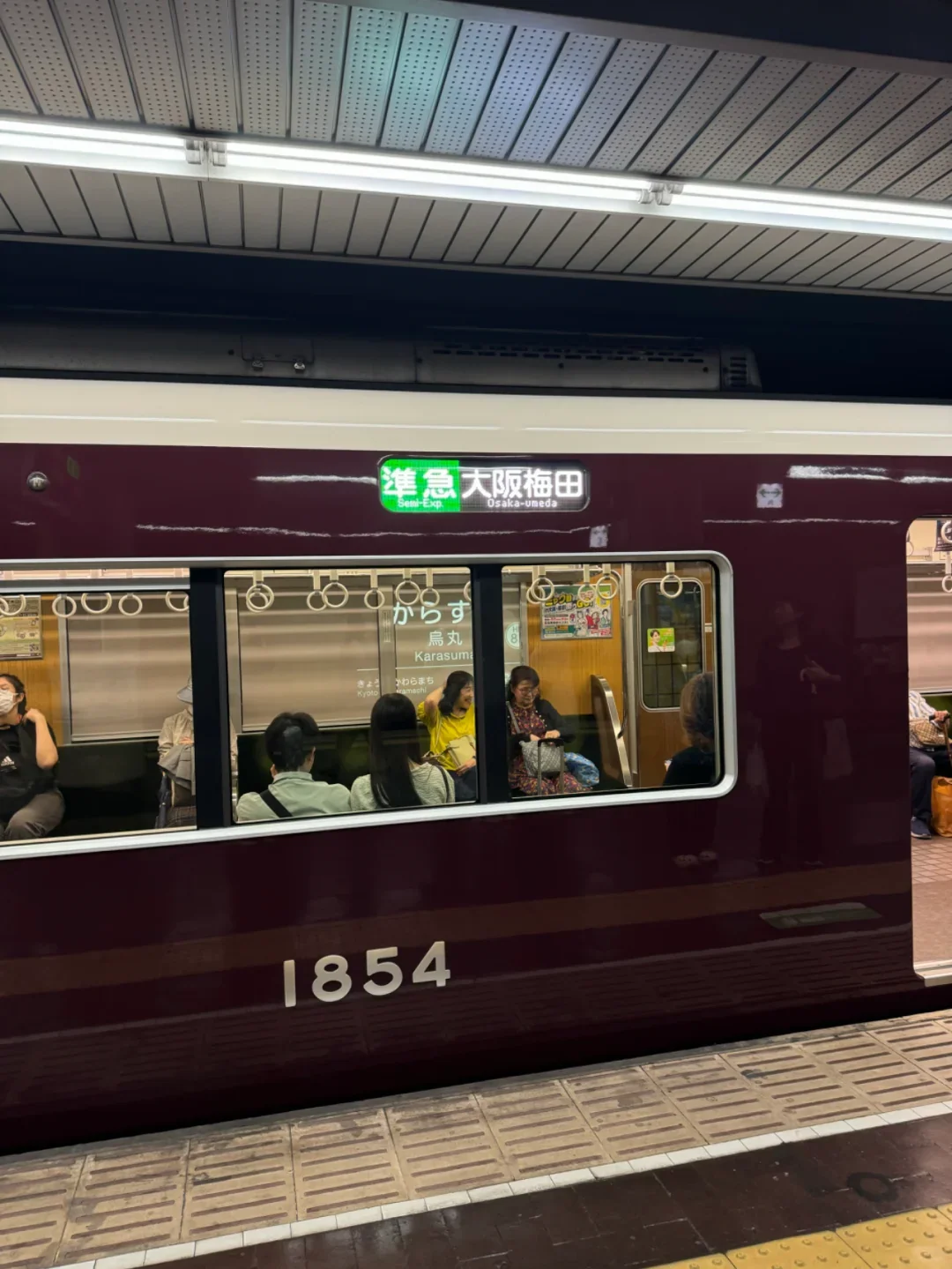
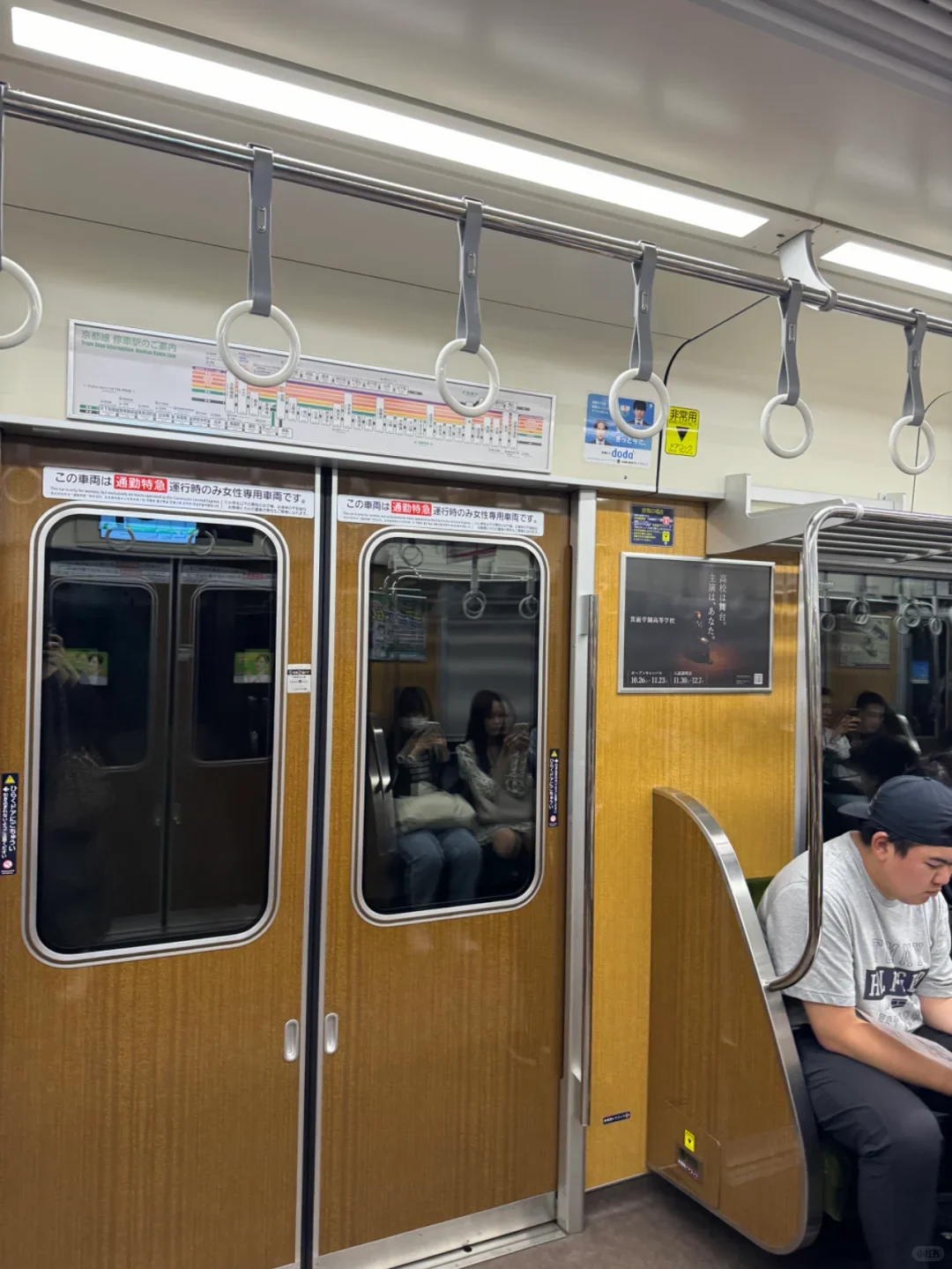
Osaka-Umeda is the terminus and everyone gets off. Exits open into the Hankyu department store basement; five to ten minutes west on the walkways brings you to JR Osaka Station, the Midosuji subway and Hanshin Umeda. Chayamachi or central for JR and Grand Front, the Midosuji side for the subway and Hanshin, straight through for the department store and Hep Five. With luggage, stay underground — lifts, and no rain.
Fares, times and a few practical notes
The fare is charged by section: 410 yen from Kyoto-Kawaramachi to Umeda, half price for children, no supplement on the limited express. Nothing needs reserving except the PRiVACE car.
Trains run from a little after 5 a.m. to around 11 p.m., varying by station and day, so check the timetable before a late trip. Semi-express and local trains are packed at rush hour, so avoid 07:30 to 09:00 with large cases. Eating on board is not done and there is no luggage rack: keep the case at your feet, clear of the doors.
Related links
- On this site: Japan (JP)
- Wikipedia: Hankyu Railway, Kyoto-Kawaramachi Station, Osaka-Umeda Station
- Baidu Baike: Hankyu Railway
Fares and times follow Hankyu's published information; the operator and the station displays are definitive. Image credit: the original travel guide.
More articlesTravel notes
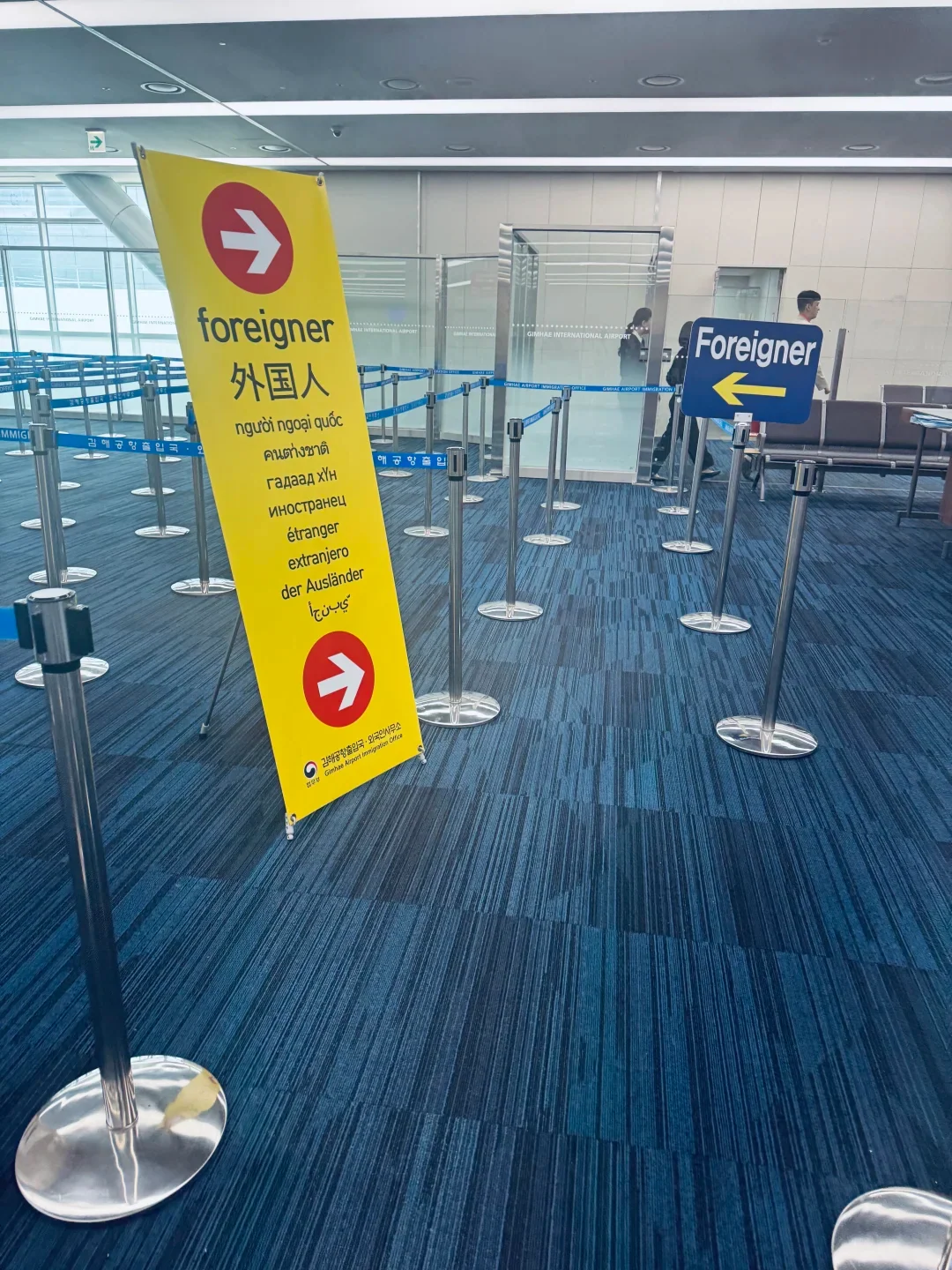
Arriving at Busan Gimhae: e-Arrival Card, Immigration and Customs
A practical walkthrough of arrival at Gimhae International Airport (PUS): filing the Korean e-Arrival Card three days ahead, preparing a Korean address and five-digit postal code, the foreigner lane with fingerprint and face capture, baggage and customs, and how to reach the light rail, bus or taxi after exit.5 min read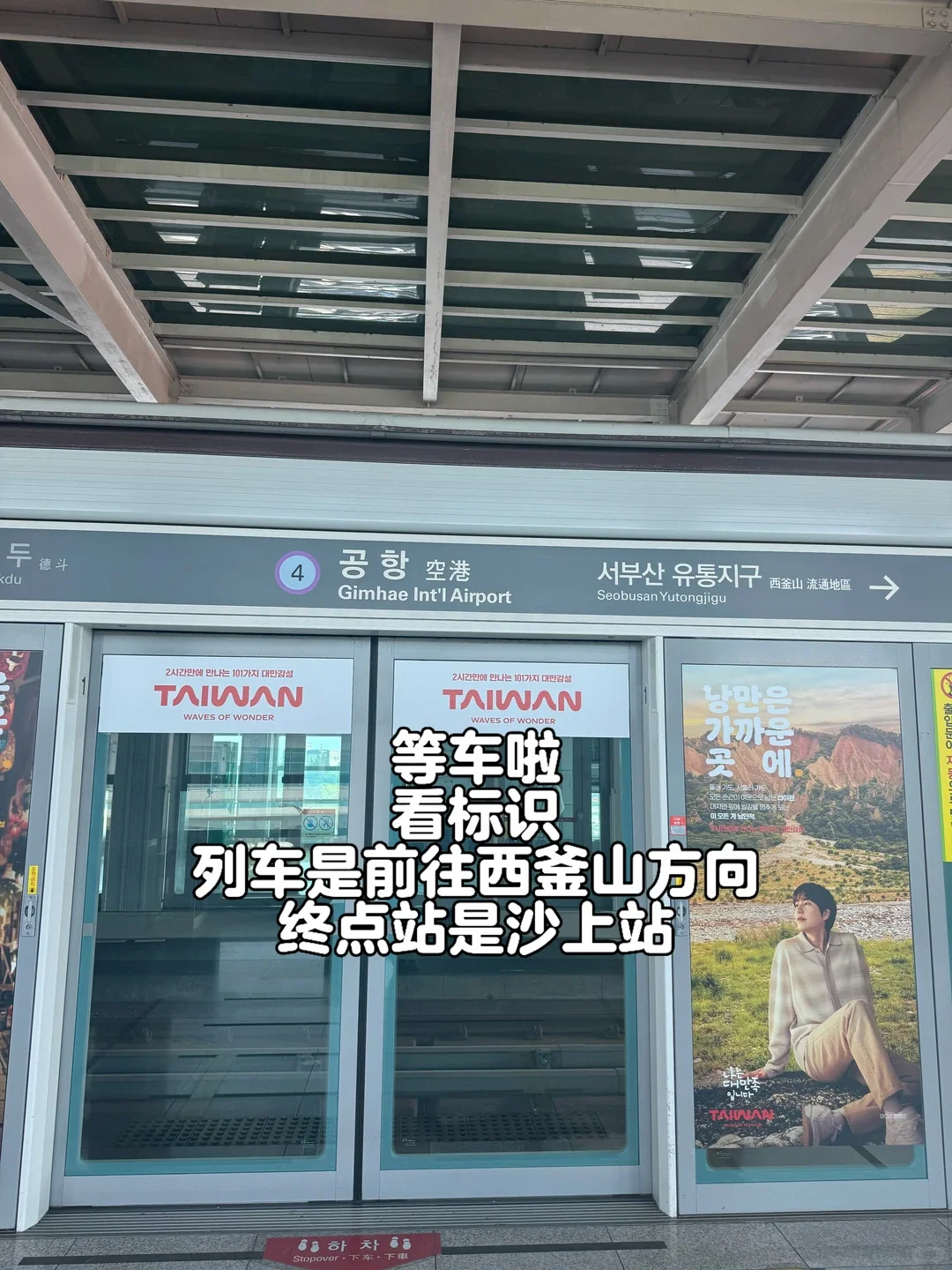
Busan Gimhae Airport by Light Rail: Airport Station to Line 2
A step-by-step guide to the Busan–Gimhae Light Rail Transit from Gimhae International Airport (PUS) into Busan: the walk from international arrivals to Airport Station, T-money and ticket fares, three stops and six minutes to Sasang, the change to the green Line 2, and journey times to Seomyeon and Haeundae.4 min read