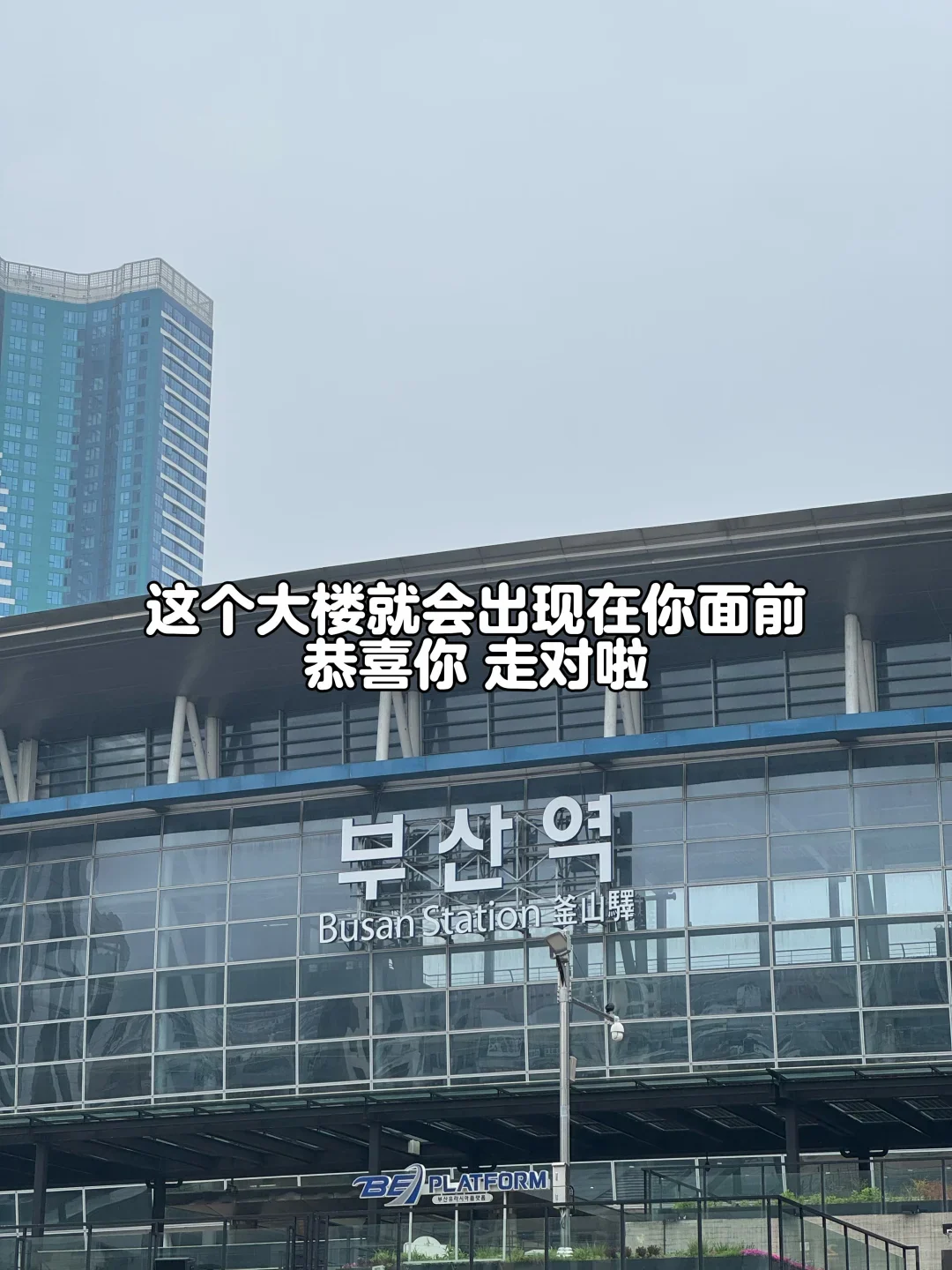
Flying Jeju to Seoul: A Step-by-Step Guide to the Domestic Flight
- Jeju Airport
- Gimpo Airport
- Korean domestic flight
- Jeju visa-free
- Korea visa
Jeju to Seoul is one of Korea's busiest domestic routes, and Gimpo takes the most flights. The hop takes just over an hour, and Korean Air, Asiana and several low-cost carriers share the route, with departures from early morning to late at night. For anyone holding a Korean visa it is an ordinary domestic flight: no immigration, no customs, just collect your bag and leave the terminal.
For Chinese travellers who entered Jeju visa-free, however, there is a catch that is easy to miss. Jeju's visa-free entry applies to Jeju Island only. Flying to the mainland is a domestic sector within Korea, and it requires a valid Korean visa. This guide takes the trip in five steps — visa, check-in, the foreigners-only lane, boarding, and arrival at Gimpo — with fares and cut-off times as references only.
1. Check the visa first: Jeju visa-free does not cover the mainland
Chinese passport holders can enter Jeju without a visa, usually for up to 30 days, but that permission stops at the island. The moment you fly to Seoul, Busan or anywhere else on the mainland, the flight is treated as a domestic sector, and the airline will check your passport for a Korean visa or residence permit at check-in.
Without one, the counter will not issue a boarding pass, and the foreigners-only lane further along will stop you as well. There is no visa desk at the airport, so the only options are to rebook the return or fly to a third country. Travellers with a C-3-9 tourist visa, a student visa or a work and residence permit are unaffected; nor does anyone who entered Jeju visa-free and is flying back out of Jeju need a Korean visa. Do not book "in via Jeju, out via Seoul" as one trip unless you hold the visa. A third-country visa or a K-ETA is not a substitute, and Korean visa policy changes from time to time, so check the Korean embassy's current notice for your passport type before you book.
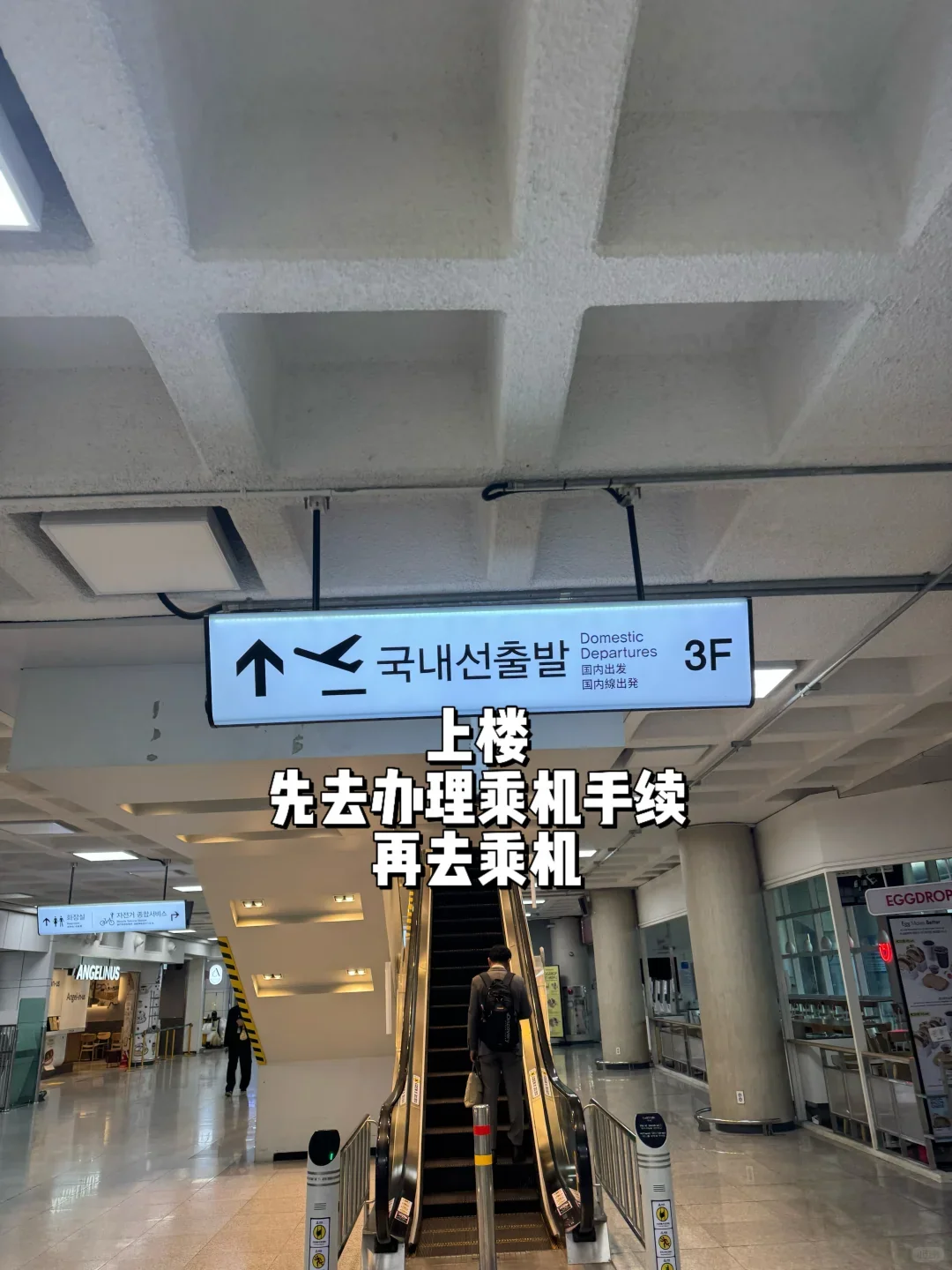
2. Jeju Airport: go straight to domestic departures on level 3
Jeju's domestic and international terminals sit side by side, with separate departure halls. Flights to Gimpo use the domestic terminal, and departures are on level 3. From arrivals, follow the "국내선출발 / Domestic Departures" signs up the escalator; the signage is in Korean, English and Chinese.
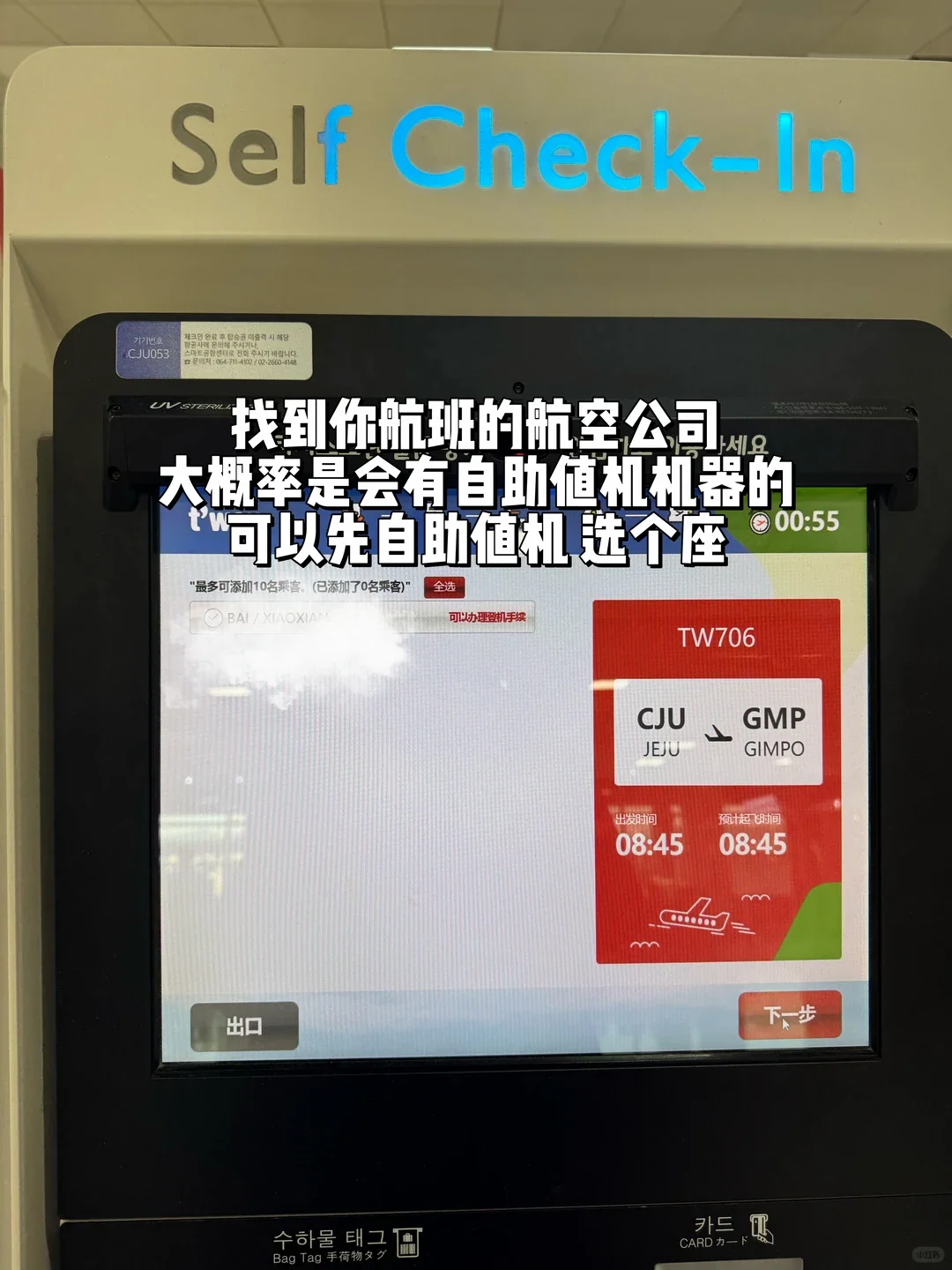
Allow one to one and a half hours. Domestic check-in usually closes 30 minutes before departure, and the bag-drop queue can bend around the hall at peak times. The self-service kiosks switch to Chinese and let you choose a seat with your six-digit booking reference, but a foreign passport usually cannot produce a boarding pass on its own. Pick your seat at the machine, then go to the airline counter so staff can check your passport and visa, print the boarding pass and take your bags. You still have to do this with no checked luggage, so do not head for security with only the kiosk receipt.
3. The foreigners-only lane, near gate 3
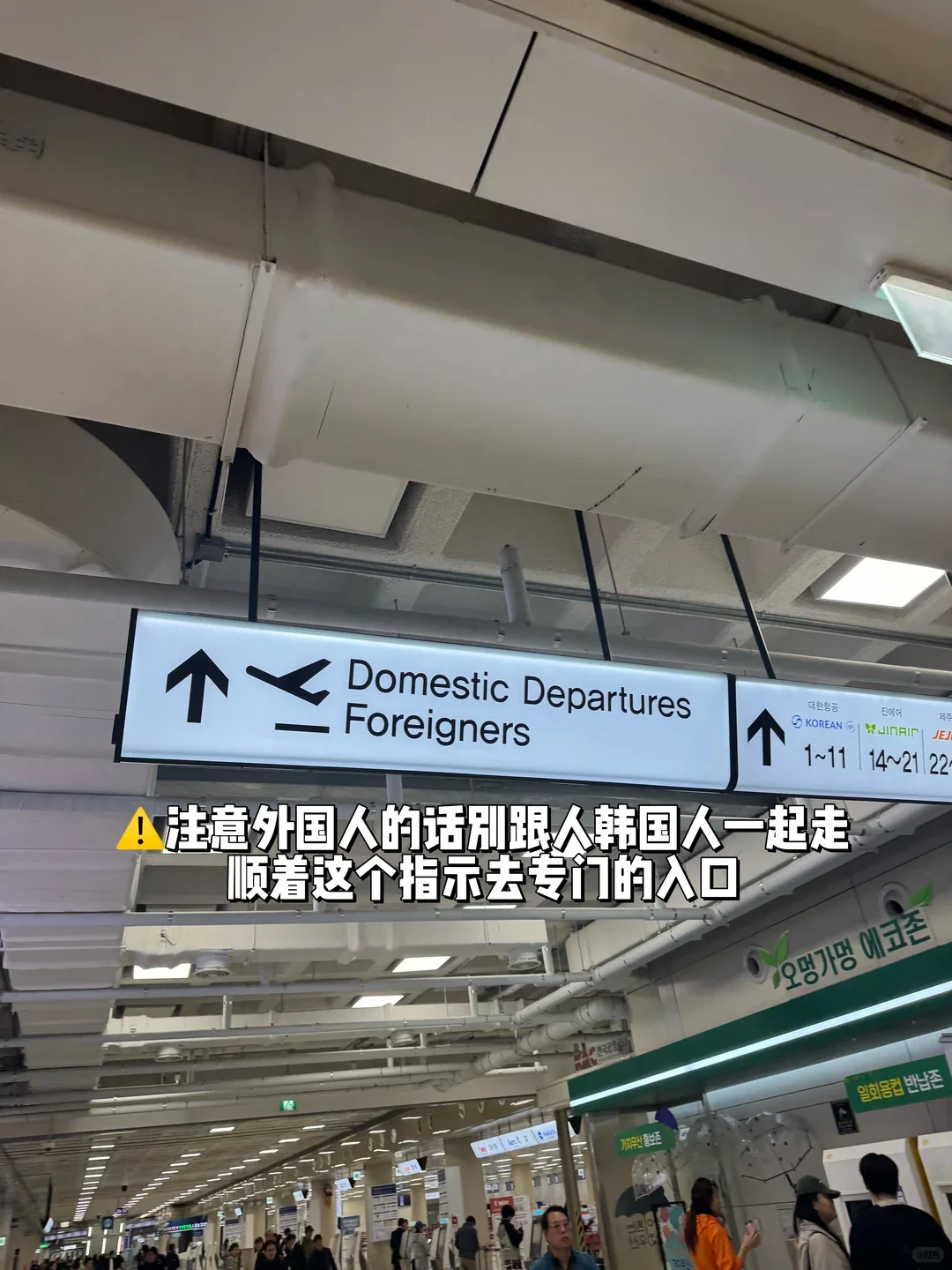
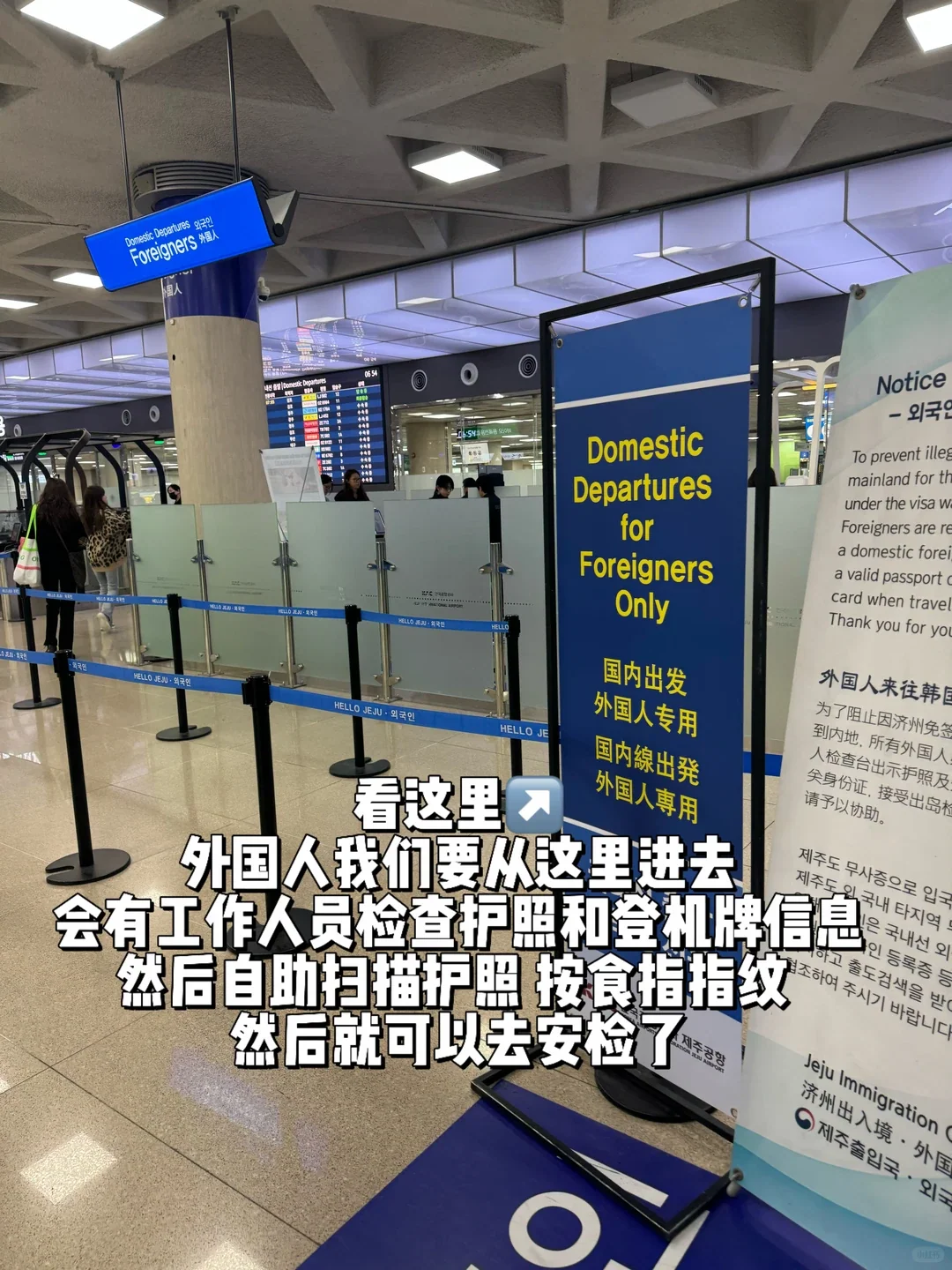
With the boarding pass in hand comes the easiest wrong turn of the trip: do not follow the Korean passengers. Near gate 3 in the domestic departure area there is a foreigners-only lane, marked with a blue "Foreigners / 外国人专用" sign beside the security entrance.
Staff check your passport, boarding pass and visa before letting you through to security, and at some hours you scan your passport and fingerprint yourself at the gate. This is the only part of the airport built specifically for foreign travellers, and it is also where anyone without a visa is turned back. If you are travelling with someone on a Korean passport or residence card, they can use the regular lane and meet you in the departure lounge after security.
4. Security, boarding and the one-hour flight
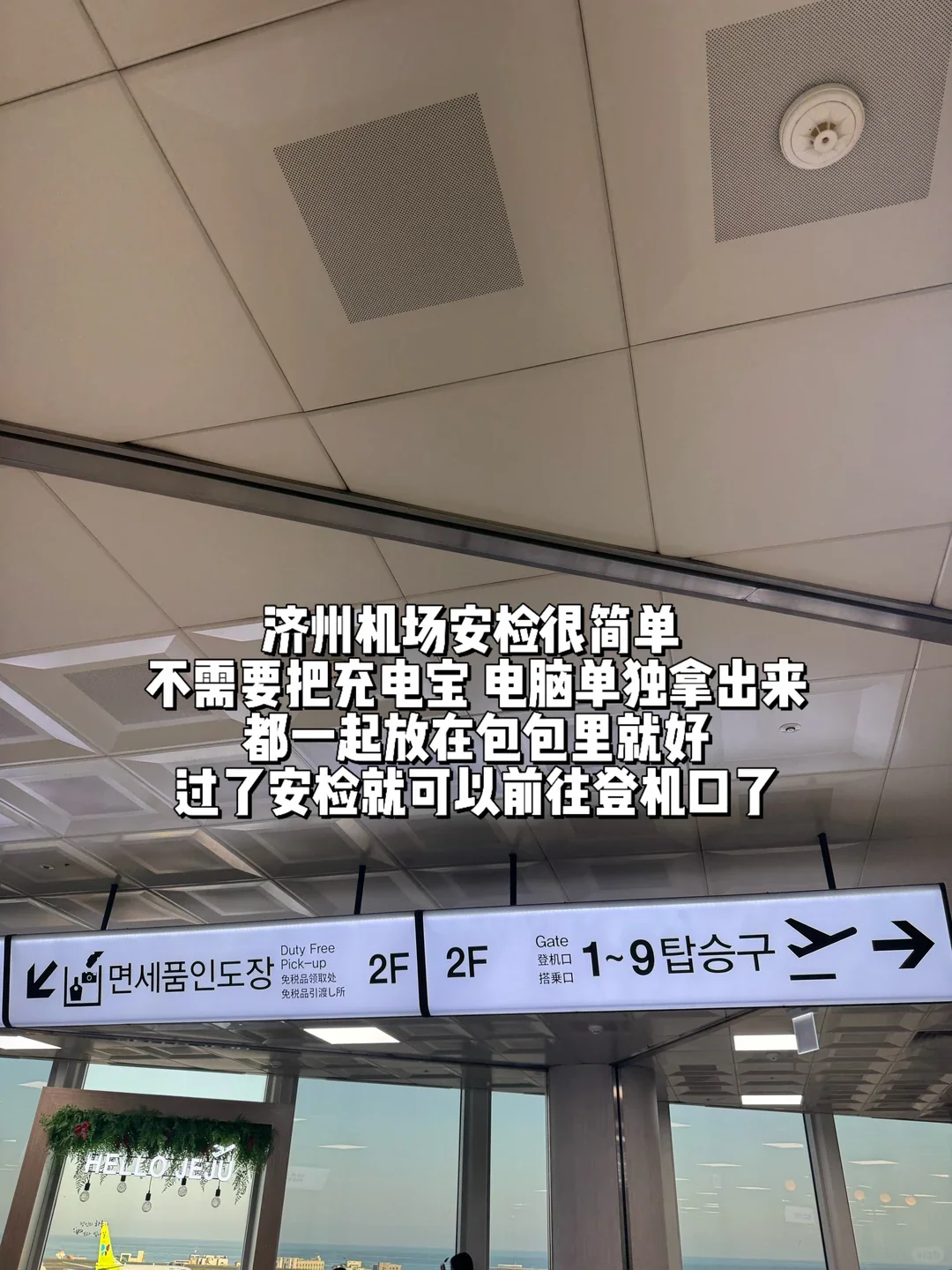
Past the lane, security is routine. Jeju's domestic checkpoint moves quickly, and laptops and power banks usually stay in the bag, but liquids, knives and lighters follow the same rules as anywhere else, and the officer on the day has the final say. Power banks must stay in your hand luggage and cannot go in checked bags.
Find your gate from the boarding pass: gates 1 to 9 are on level 2, and the lounge is small, with convenience stores and coffee shops within a couple of minutes. Boarding usually starts 15 to 20 minutes before departure, with low-cost carriers calling passengers by seat zone.
The flight takes about an hour, with 55 minutes to 1 hour 5 minutes in the air. There is no meal service, and on a low-cost carrier even water costs extra. Winter winds over Jeju can make the approach bumpy, so keep the belt on for take-off and landing. At Gimpo there is no immigration and no customs: follow the domestic arrivals signs and you are out.
5. Arriving at Gimpo: domestic arrivals and the city
Domestic arrivals at Gimpo are on level 1. The baggage carousel is a few minutes' walk from the gate, the screens show which belt serves your flight, and there is no customs form to fill in. Gimpo is only a dozen or so kilometres from the city centre, which is its main advantage over Incheon.
Buy and top up a T-money card at a convenience store — CU and GS25 both work, and the card fee is separate. One card covers the metro, the airport railway, buses and taxis. Gimpo Airport Station is in the basement of the terminal, about a five-minute walk underground.
There are three usual ways into town. The AREX all-stop train reaches Seoul Station in about 22 minutes for roughly 1,750 won on T-money. Metro Line 5 runs towards Yeouido and Gwanghwamun, and Line 9 towards Gangnam, both without a change. A taxi to the city centre takes 20 to 30 minutes and costs around 20,000 to 30,000 won. For Hongdae, the AREX is three stops and about 13 minutes; for Gangnam, Line 9 runs straight there.
On the way back, Gimpo to Jeju is also a domestic departure, but Gimpo is the bigger airport and its security queues are longer, so add 20 minutes. One last point: this flight does not create an entry record and does not extend your stay. A visa-free arrival in Jeju keeps the period granted at entry, and flying to Seoul does not reset it.
Related links
- On this site: South Korea (KR)
- Wikipedia: Jeju International Airport, Gimpo International Airport
- Baidu Baike: Jeju International Airport, Gimpo International Airport
Source: a WeChat travel guide, edited October 2026. Visa rules, check-in cut-off times and fares follow the Korean Ministry of Justice, the airlines and current airport notices.
More articlesTravel notes
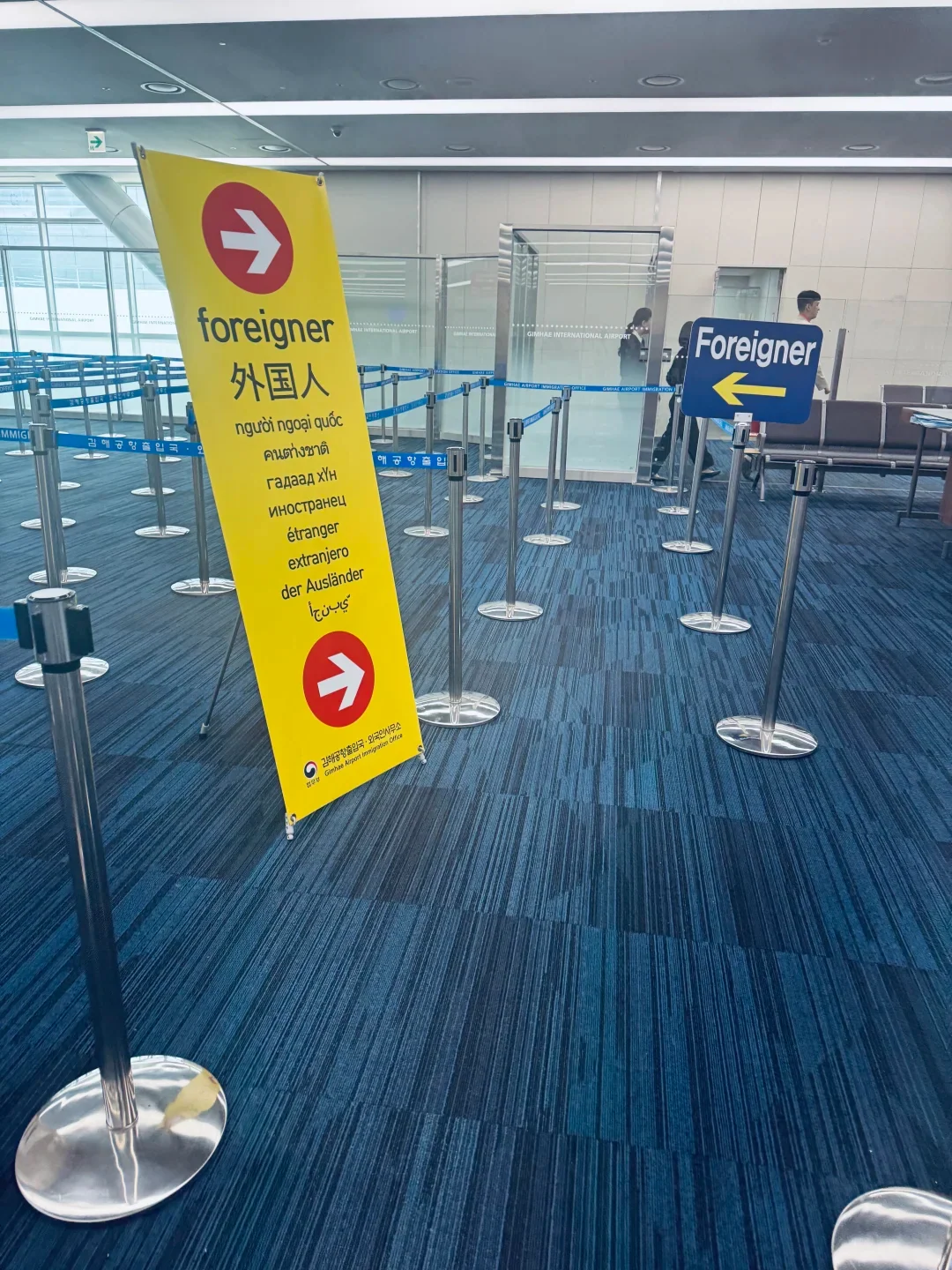
Arriving at Busan Gimhae: e-Arrival Card, Immigration and Customs
A practical walkthrough of arrival at Gimhae International Airport (PUS): filing the Korean e-Arrival Card three days ahead, preparing a Korean address and five-digit postal code, the foreigner lane with fingerprint and face capture, baggage and customs, and how to reach the light rail, bus or taxi after exit.5 min read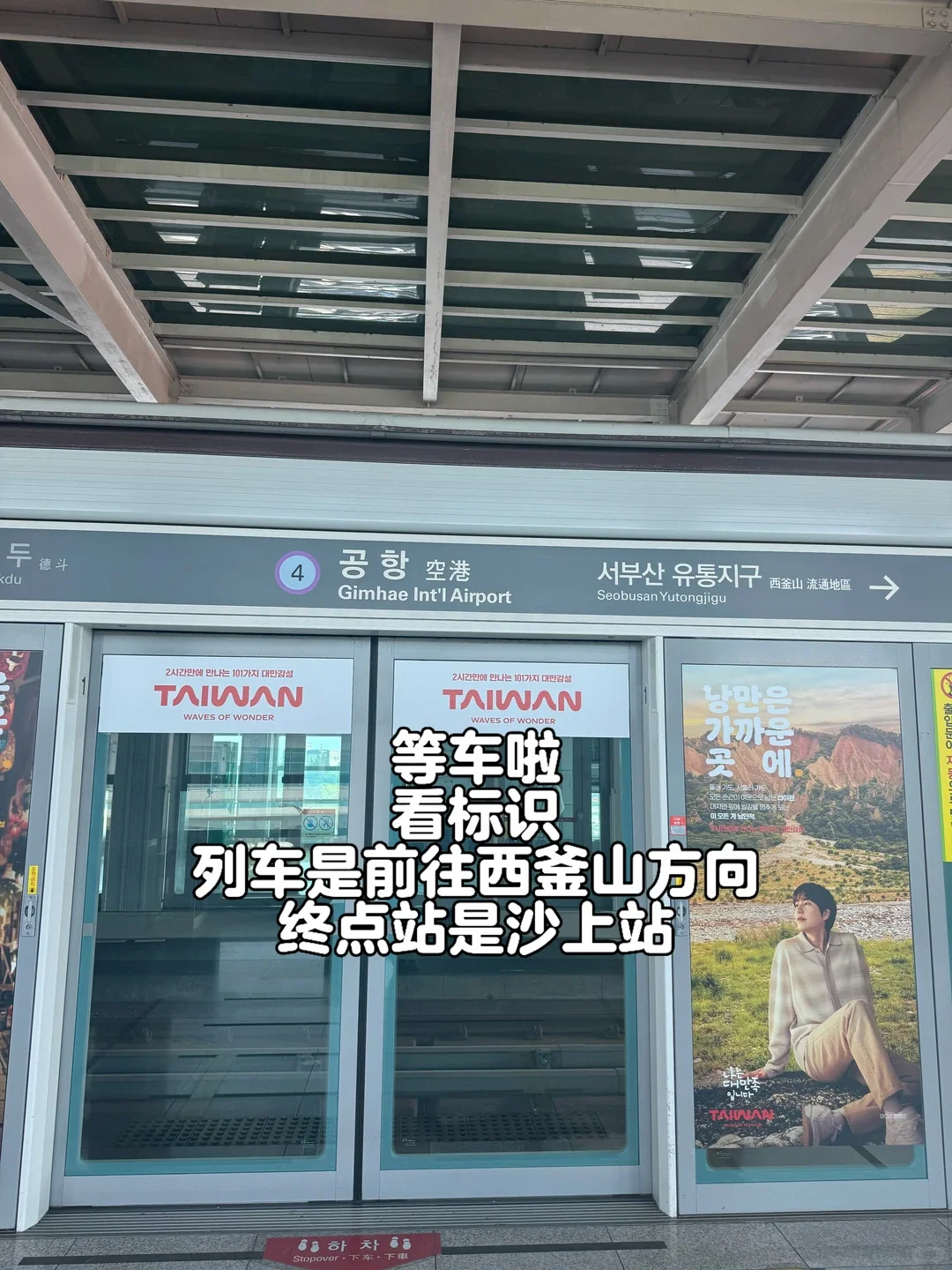
Busan Gimhae Airport by Light Rail: Airport Station to Line 2
A step-by-step guide to the Busan–Gimhae Light Rail Transit from Gimhae International Airport (PUS) into Busan: the walk from international arrivals to Airport Station, T-money and ticket fares, three stops and six minutes to Sasang, the change to the green Line 2, and journey times to Seomyeon and Haeundae.4 min read