
Aeroporto Internacional de Vancouver — mapa do terminal
 Vancouver · Canadá· Vancouver International Airport
O Aeroporto Internacional de Vancouver (IATA: YVR, ICAO CYVR) é um aeroporto grande que atende Vancouver, Canadá, com 2 terminais e 58 portões, a cerca de 12 km do centro de Vancouver.
Vancouver International Airport (YVR) serves Vancouver, Canada. It has 2 terminals with 58 gates in total and handles about 29 million passengers a year. The airport is about 12 km from the city centre. Ground transport into the city: rail, bus and taxi.
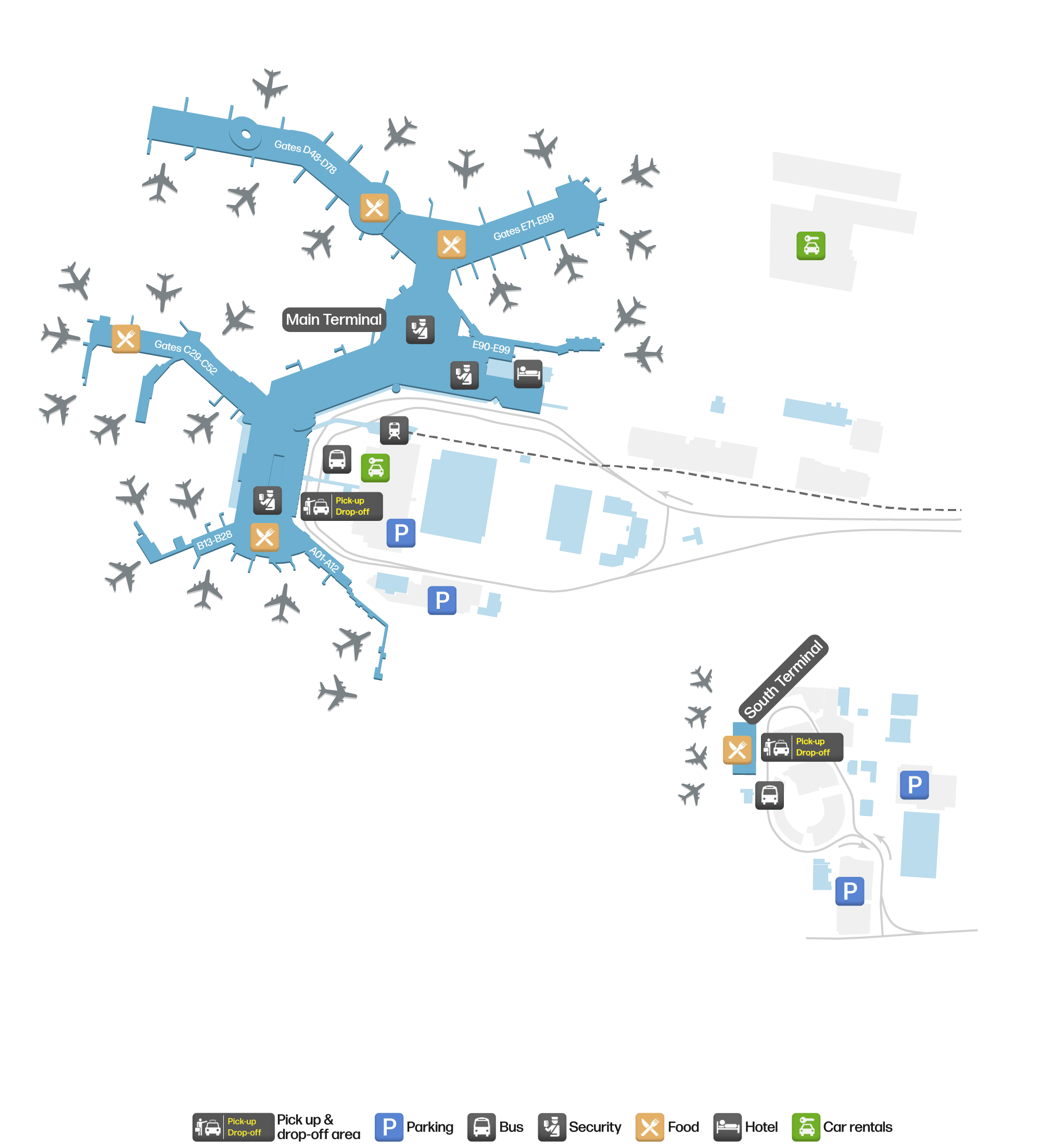
Baixar mapas do aeroportoDownloads
Fotos do aeroportoFotos do aeroporto
Fotos reais deste aeroporto, cada uma creditada à página pública da web onde foi encontrada; os direitos autorais continuam com os fotógrafos originais. Clique em uma foto para ampliar ou em uma linha de crédito para abrir a página de origem.
Na imagem de satélite, os terminais e as pistas do Aeroporto Internacional de Vancouver (YVR) ficam dentro da cidade e da malha viária.
Horário do aeroporto — horário atual em YVRHorário do aeroporto
Horário atual em YVR (America/Vancouver) comparado ao seu horário local.
Aeroporto Internacional de Vancouver: mapa de rotas — destinos diretosMapa de rotas
73 destinos diretos: mapa, companhias aéreas em operação e distâncias.
Aeroporto Internacional de Vancouver: voos — partidas e chegadasPainel de voos
4.219 números de voo de 78 companhias aéreas para 109 destinos, separados por direção. Números de codeshare estão incluídos.
| Voo | Companhia aérea | Destino | País/região |
|---|---|---|---|
| 3U3860 | Sichuan Airlines | Chengdu Tianfu International Airport | China |
| 4N508 | Air North | Whitehorse (YXY) Whitehorse / Erik Nielsen International Airport | Canadá |
| 4N509 | Air North | Kelowna (YLW) Kelowna International Airport | Canadá |
| 4N521 | Air North | Victoria (YYJ) Victoria International Airport | Canadá |
| 4N524 | Air North | Whitehorse (YXY) Whitehorse / Erik Nielsen International Airport | Canadá |
| 4N527 | Air North | Victoria (YYJ) Victoria International Airport | Canadá |
| 4N531 | Air North | Victoria (YYJ) Victoria International Airport | Canadá |
| 4N534 | Air North | Whitehorse (YXY) Whitehorse / Erik Nielsen International Airport | Canadá |
| 4N540 | Air North | Whitehorse (YXY) Whitehorse / Erik Nielsen International Airport | Canadá |
| 4N541 | Air North | Victoria (YYJ) Victoria International Airport | Canadá |
| 4N542 | Air North | Whitehorse (YXY) Whitehorse / Erik Nielsen International Airport | Canadá |
| 4N544 | Air North | Whitehorse (YXY) Whitehorse / Erik Nielsen International Airport | Canadá |
| 4N547 | Air North | Victoria (YYJ) Victoria International Airport | Canadá |
| 4N549 | Air North | Kelowna (YLW) Kelowna International Airport | Canadá |
| 4N551 | Air North | Victoria (YYJ) Victoria International Airport | Canadá |
| 4N552 | Air North | Whitehorse (YXY) Whitehorse / Erik Nielsen International Airport | Canadá |
| 4N554 | Air North | Whitehorse (YXY) Whitehorse / Erik Nielsen International Airport | Canadá |
| 4N557 | Air North | Victoria (YYJ) Victoria International Airport | Canadá |
| 4N564 | Air North | Whitehorse (YXY) Whitehorse / Erik Nielsen International Airport | Canadá |
| 4N568 | Air North | Whitehorse (YXY) Whitehorse / Erik Nielsen International Airport | Canadá |
Números de voo e rotas do índice de voos da aviability.com (instantâneo de 26 de outubro de 2026); números de codeshare estão incluídos e nenhum horário de partida é exibido. Fonte: aviability.com ↗
Informações e detalhes do aeroportoDetalhes do aeroporto
Mapa interativo — localização do Aeroporto Internacional de VancouverMapa interativo
Veja este aeroporto em outros serviços de mapas:
Vancouver International Airport terminal guideGuia do aeroporto
Vancouver Airport sits about 12 km from the city centre and handles around 27 million passengers a year, making it Canada's second-busiest airport. Its main terminal is a clever piece of design: domestic and international flights share a single building, divided by stacked levels, so passengers can connect on foot; a separate South Terminal is dedicated to regional routes and seaplanes.
Satellite view
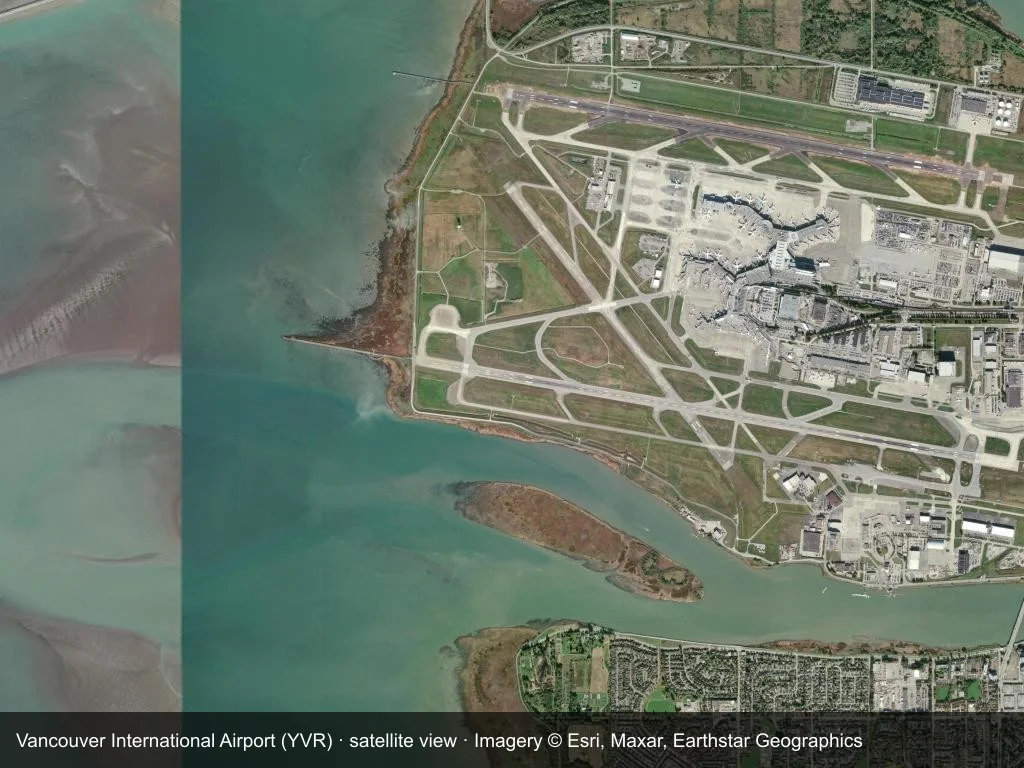
Seen from above, the terminals and runways at Vancouver International Airport (YVR) sit inside the city and road network.
The satellite image comes from Esri World Imagery (© Esri, Maxar, Earthstar Geographics); the field and attribution are labelled in the image. This is a satellite view, not a ground-level photograph.
The main terminal and the South Terminal
| Area | Notes |
|---|---|
| Main Terminal · Domestic | Flights within Canada |
| Main Terminal · International | International flights, including the dedicated US-bound channel |
| South Terminal | Regional routes and seaplanes; separate from the main building |
Working out where you are going:
- The overwhelming majority of flights use the Main Terminal; the domestic and international zones are linked by indoor walkways, so you never leave the building to connect.
- US-bound flights have a channel of their own: you clear US immigration (pre-clearance) at Vancouver, and on landing in the US you exit as a domestic arrival.
- The South Terminal is separate from the main building, so passengers on regional flights or seaplanes should check their ground transport separately.
Our diagram draws domestic and international as different zones of one building precisely to make the point: here you change zone within a building rather than trek between buildings.
Transfers and connections
- A domestic-to-international connection is made inside the same building — walking plus a security check usually connects within the hour.
- Allow pre-clearance time on US-bound flights — 30–60 minutes earlier than for an ordinary international flight is the sensible margin.
- Vancouver is the hub for Asia and western Canada, and Air Canada group itineraries connect smoothly.
Routes and flights
| Aspect | Detail |
|---|---|
| Routes | A record around 27 million passengers in 2025 (+2.7%); around 125 destinations, a key Pacific gateway to Asia — long-haul points include Tokyo, Seoul, Beijing, Shanghai, Hong Kong, Delhi and Sydney. Asia-Pacific traffic grew 15.6% year on year. |
| Flights | Aircraft movements rose about 3% in 2025; daily traffic averaged roughly 74,000 passengers and topped 140,000 on the busiest days. Cargo hit a record around 365,000 tonnes. |
| Aircraft | The main base is Air Canada (Star Alliance; about 240 aircraft group-wide — 787 / 777 / A330 widebodies internationally, A320 family and 737 MAX domestically), followed by WestJet and Pacific Coastal on regional routes. |
Getting into Vancouver
- Canada Line — about 25 minutes direct to the city centre, with frequent service, and the most recommended option.
- Airport bus — covers the downtown hotel district and towards the cruise terminal.
- Taxi / ride-hailing — about 12 km, 20–30 minutes into the city, with fares charged at a fixed rate by zone.
- Seaplane — departs from the South Terminal side direct to the downtown harbour; a distinctive option when time is tight.
Practical tips
- The biggest win for US-bound travellers is pre-clearance: finish the immigration formalities in Vancouver and you do not queue again on landing in the US.
- Vancouver is the main home port for Alaska cruises, and the airport gets busy in cruise season — cruise passengers should set aside their port transfer time separately.
- For Whistler and other mountain destinations the airport bus runs direct services; in winter, allow extra for snowy road conditions.
References
YVR: guias do aeroportoDo blog
1 artigos deste site cobrem YVR: chegadas, transporte terrestre, bagagem e conexões.
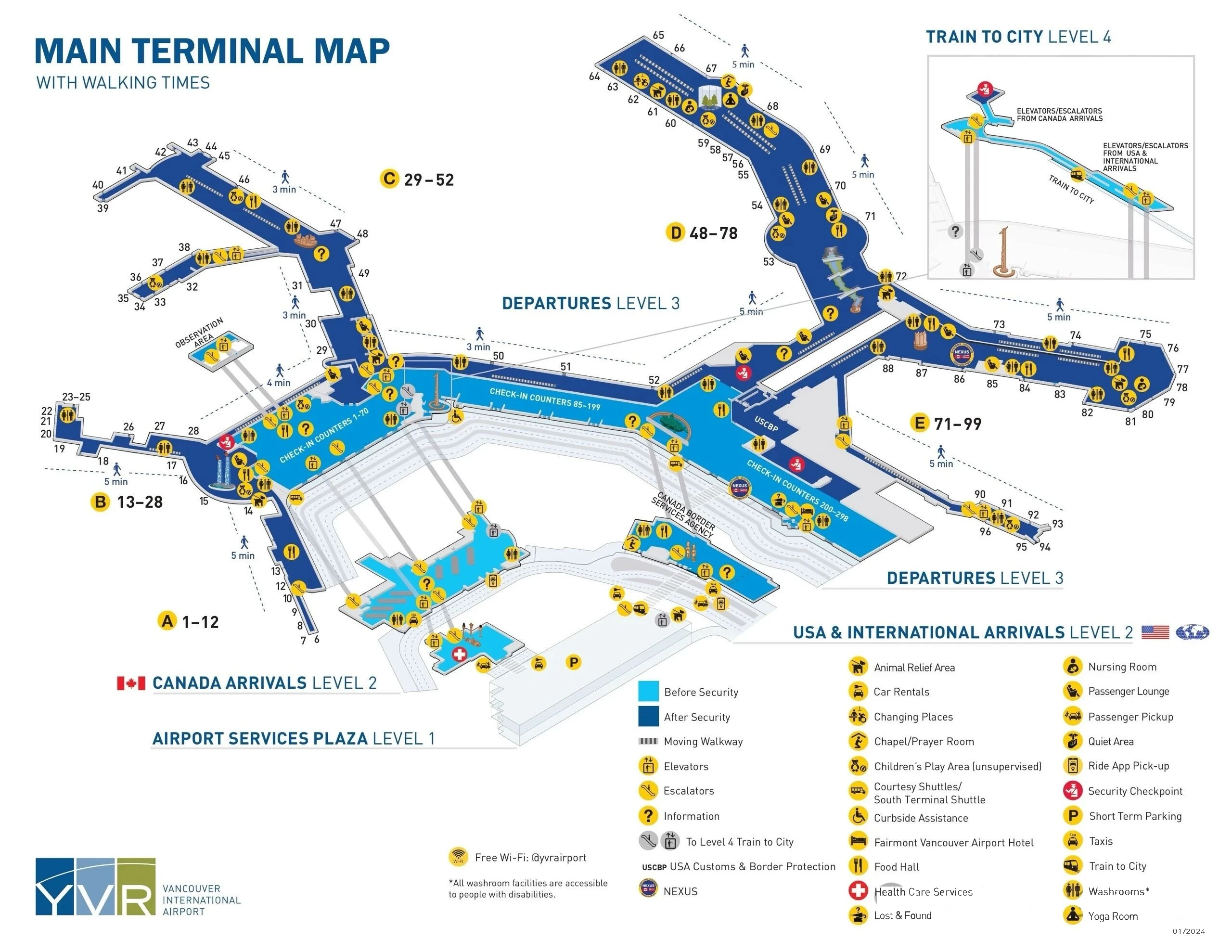
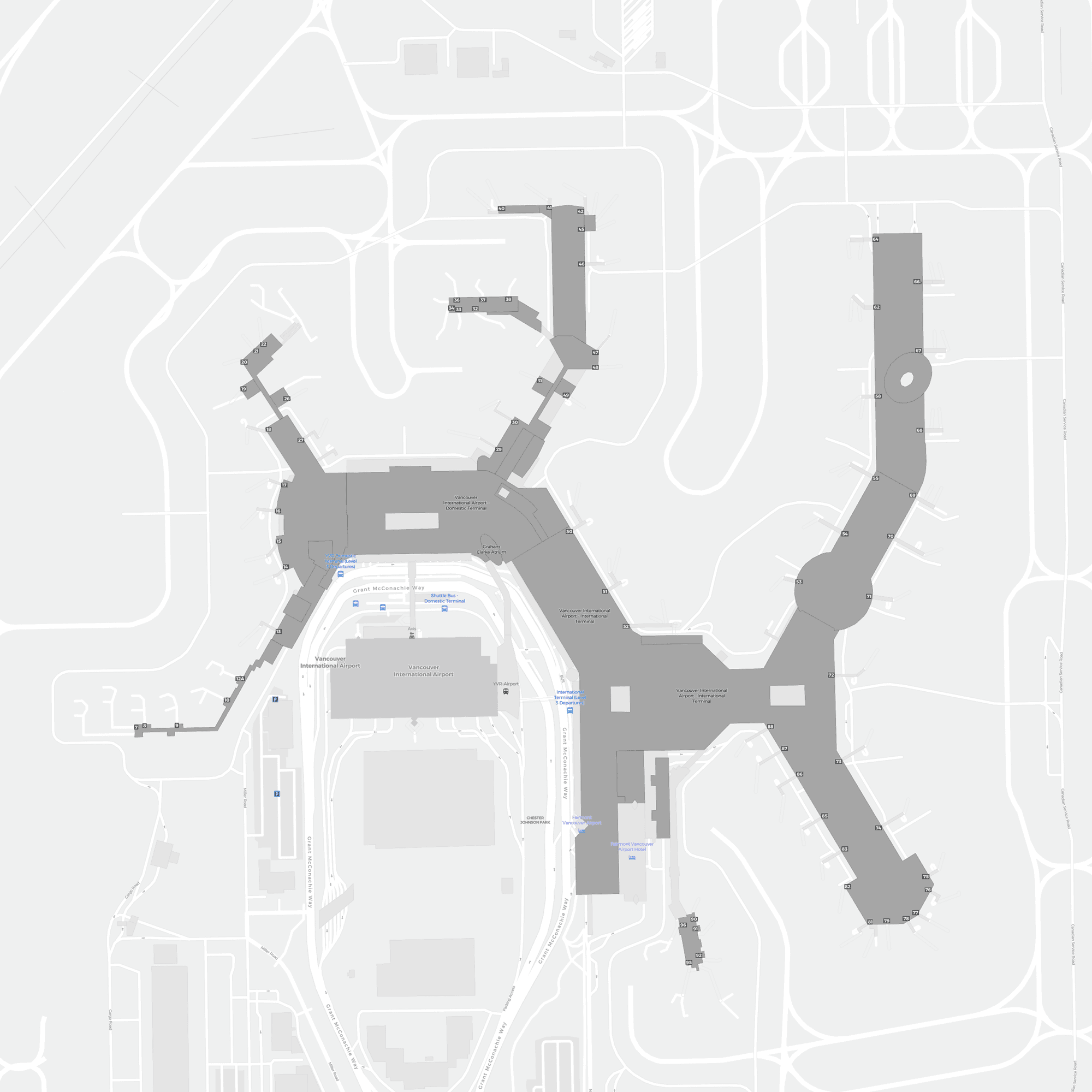
Guia dos terminaisGuia dos terminais
Faixas de portões, principais companhias aéreas e instalações de cada terminal do Aeroporto Internacional de Vancouver.
Comentários dos leitoresDiscussão
Perguntas, relatos de viagem e correções são bem-vindos. Os comentários são públicos.
Carregando…
Carregando comentários…