Nine Steps Through Paris CDG: From the Aircraft to the City in 30 Minutes
- Paris CDG
- Paris arrival
- French customs
- EES
- airport transport
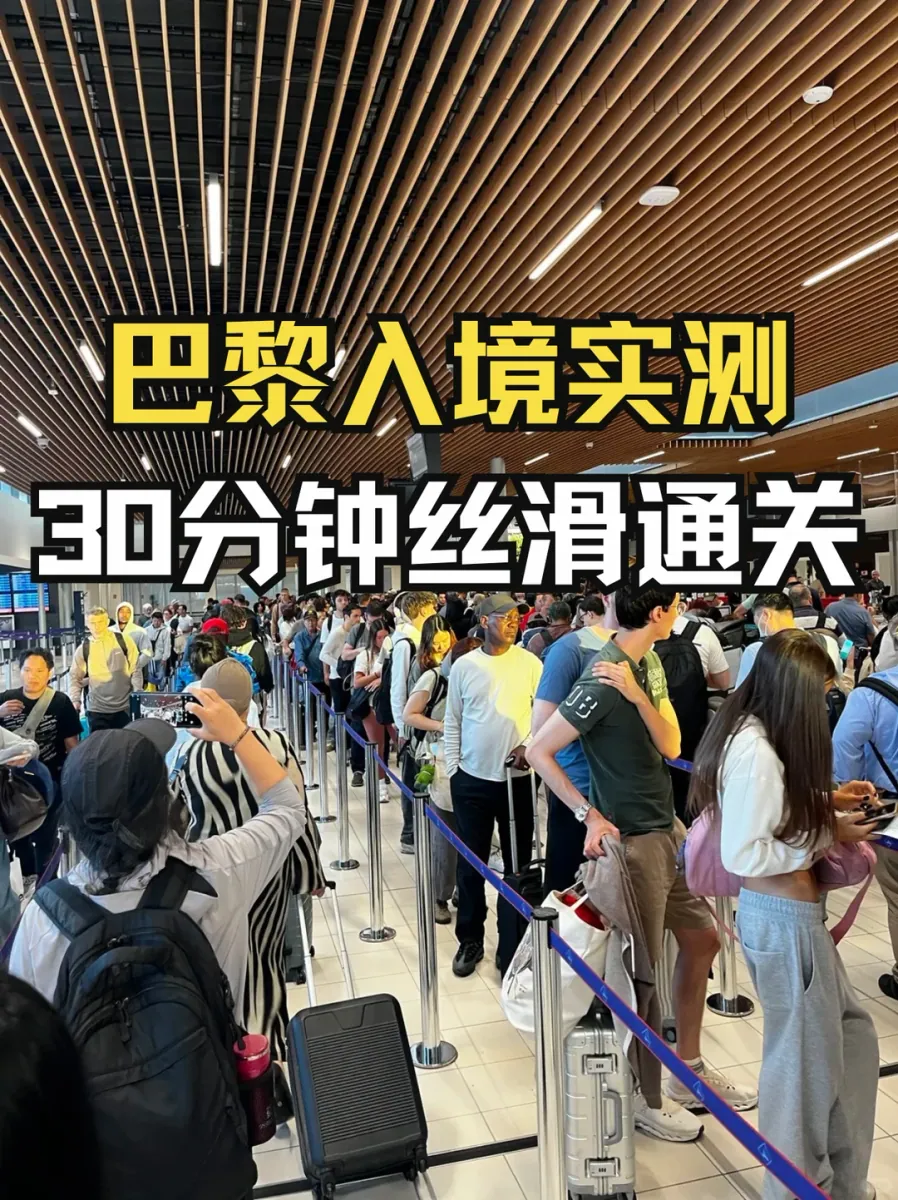
Arrivals at CDG run one way: off the aircraft, along the corridor, through the border, past the baggage hall and out. Nothing sends you back. What makes people hesitate is the French on the signs — Correspondances, Sortie, Baggages, Contrôle des passeports. Every word looks familiar; under the sign itself it still takes two seconds. Two seconds is harmless, except in a moving crowd, where stopping to think is how you get pushed the wrong way.
This breaks the arrival into nine steps: the three signs, the border and EES, bags and trolleys, food and cash, the exit and the city — in the order they happen, with what to do and how to recover from a mistake.
One time reference: in August 2026 a traveller measured about 30 minutes from the aircraft door to the exit, though queues vary with the flight bank. The nine steps are not a promise of 30 minutes; they remove one hesitation from every stage.
1. Three signs after the aircraft
Step 1: follow the crowd and the yellow signs. Yellow is CDG's wayfinding colour for arrivals: dark suspended panels with yellow or white arrows and keywords, visible from a distance. Do not hunt for a metro or taxi sign; follow the flow to the first split. If you have another flight, confirm whether your bags are through-checked: on one ticket they usually are, on separate tickets you must clear the border, collect them and check in again.
Step 2: learn the three words. The split repeats them, and knowing them is worth more than any map:
| French | English | When to follow it |
|---|---|---|
| Correspondances | Transfers | You have another flight and your bags are checked through |
| Sortie / Baggages | Exit / Baggage | You are entering France, collecting bags and leaving |
| Contrôle des passeports | Border control | You are queueing to enter |
Terminal 1 is the circular building, Terminal 2 splits into A to G, and Terminal 3 sits to the north; to change terminals take the free CDGVAL and allow 30 minutes or more.
The Chinese is Simplified, beside French and English. Where a temporary route has only the two European languages, read the pictograms: two figures walking apart mean transfers, a suitcase means baggage, a figure in a doorway means the exit.
2. Border control and EES
Step 3: join the queue. Chinese passport holders follow the non-EU lane marked on site. Staff usually direct the queue at its head, so follow the hand rather than picking whichever line looks shorter. At the window, hand over the passport and valid Schengen visa with the visa page open.
Short-stay visitors go through EES registration: passport data, a facial image and fingerprints. EES is the EU Entry/Exit System, phased in from October 2025, replacing repeated stamps with biometric registration; the first entry creates the record, later entries read it, and nothing is captured twice. The reader sits beside the counter, with diagrams — fingers on the glass, look at the camera, wait for confirmation.
Join the wrong queue and staff will send you back to the entrance; that is not a refusal, just a second queue. Families can usually use a family lane, and under-12s skip fingerprints but are still photographed.
Step 4: have answers and documents ready. The questions are plain: what you are doing in France, how long you are staying, which other countries you visit, where you are staying, when you leave, how much cash you carry. Answers must match the ticket, hotel booking and itinerary — five days claimed against a return flight three weeks out, or no address, invites follow-up questions.
Keep documents in the carry-on, not a checked bag: return ticket, accommodation booking, itinerary, insurance and proof of funds, with copies on the phone. Producing everything from one compartment beats emptying a suitcase at the window. If a question is unclear, ask again or show the booking.
3. Bags and trolleys
Step 5: collect your bags in the Baggages hall. The screens list belts by flight number; find yours and wait at the right carousel. Belts are occasionally reassigned, so do not trust only the first screen. If nothing appears, check the board again or the neighbouring belt.
Step 6: take a trolley where signed. In CDG's baggage halls the trolleys stand in rows along the walkway, released as the signs indicate; some areas need a coin, so a euro or two is worth having. A trolley saves the one-hand-on-the-case shuffle, especially before a train. If a bag is missing, do not leave the hall: register it at the airline's baggage desk, and keep the baggage tag — you will need it for the claim.
4. Food, cash and declarations
Step 7: know what is in your bag. This is the step most often got wrong, because "sealed" is mistaken for "allowed". What matters is the ingredient and the processing, not the packaging:
| Item | Allowed? | Note |
|---|---|---|
| Beef jerky | No | A meat product; the EU strictly limits meat brought in by non-EU travellers |
| Dried fish, dried shrimp and similar seafood | Restricted | Some processed seafood must be declared and may be seized |
| Preserved fruit | Usually yes | Properly sealed, fully processed, with no meat or dairy |
| Cash of US$10,000 or equivalent | Must declare | File a declaration at the threshold |
Beef jerky counts as meat, not a snack. Dried fish, dried shrimp and some processed seafood are animal products and fall inside the restrictions; whether a packet is allowed depends on processing and on the officer, so walk the red channel and ask. Preserved fruit is normally fine if sealed, fully processed and free of meat and dairy.
Cash needs the same arithmetic: US$10,000 or the equivalent is the declaration threshold. A declaration is not a fine — walk the red channel, say what you carry, fill in the form, and it takes minutes. The expensive mistake is failing to declare.
One rule sits underneath all of this: the EU's first point of entry is where immigration and customs happen. If you connect through another Schengen country before France, deal with food and declarations there; by the time you reach CDG that leg is a domestic Schengen flight and there is no second customs.
5. Exit, pick-up and the city
Step 8: meet your pick-up at the exit. CDG's exits are grouped by terminal and arrival level, and the doors are numbered. "Pick me up at CDG" is not enough; send the terminal, hall and exit number so the driver can stop in the right place. Ride-hailing pick-up points are arranged by terminal too.
Step 9: choose your transport into Paris. Three options, three jobs:
| Option | Best for | Watch out for |
|---|---|---|
| Taxi | Groups, heavy luggage, addresses outside the centre | Use the official rank; ignore drivers who approach you |
| RER B | One or two people heading into the city | Check the day's service notices for works and cancellations |
| CDGVAL | Changing terminals or reaching car parks | Free, but it does not go into Paris |
Taxis are the easiest and the easiest to be taken for a ride in. Use the signposted official rank, confirm how the fare is calculated, and ignore anyone inside the terminal offering a car.
The RER B runs from the station under T2 to Gare du Nord and Châtelet in about 25–30 minutes. Check the day's service notices first — works, strikes and temporary changes affect frequency. With heavy bags, avoid the morning peak.
Tickets come from the machines or the staffed counter, and the airport fare is not a city single — an ordinary city ticket will not do. Keep the ticket in hand at both barriers.
CDGVAL runs only inside the airport, linking T1, T2, T3 and the car parks free of charge; it will not take you into the city. Late at night, when the shuttle train stops, buses replace it — follow the Navette signs.
In practice: one person with one case in daylight, RER B; three or four with large cases, the official taxi rank; landing at night with children, a pre-booked transfer.
The nine steps come down to two difficulties: recognising the three French words at the split, and knowing what is in your bag before customs. The first is solved by the Chinese text and pictograms, the second by a check while packing. In August 2026 a traveller went through in this order in about 30 minutes; flights, queues and spot checks vary, so confirm procedure, declaration rules and transport with official information on the day.
Related links
- On this site: Paris Charles de Gaulle Airport (CDG), France (FR)
- Wikipedia: Paris Charles de Gaulle Airport
- Baidu Baike: Paris Charles de Gaulle Airport
More articlesTravel notes
Frankfurt Airport Terminal 2 to Frankfurt Hauptbahnhof: SkyLine, then the S8 or S9
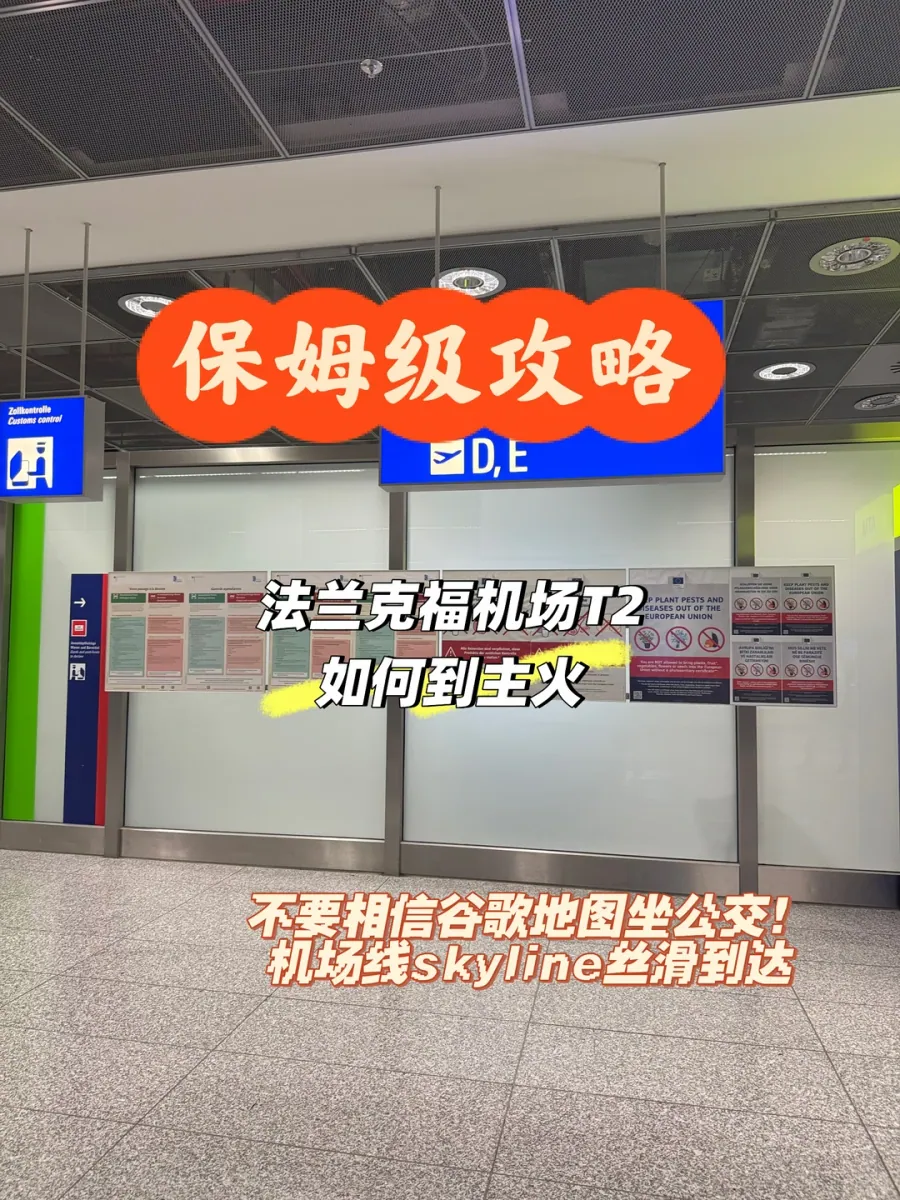
How to get from Frankfurt Airport Terminal 2 to Frankfurt Hauptbahnhof without stepping outside: the free SkyLine people mover to Terminal 1, the Bahnhof signs down to the regional station, and about fifteen minutes on the S8 or S9, plus tickets, frequencies and the five wrong turns.10 min read
Frankfurt Airport Terminal 3 to the Fernbahnhof: SkyLine, a long corridor, and 1 hour 40 minutes
A step-by-step account of reaching Frankfurt Airport long-distance station from Terminal 3: the free SkyLine to Terminal 1, the blue Fernbahnhof signs and the corridor to The Squaire, waiting for a platform number on the Abfahrt board, and how much time to allow.10 min read