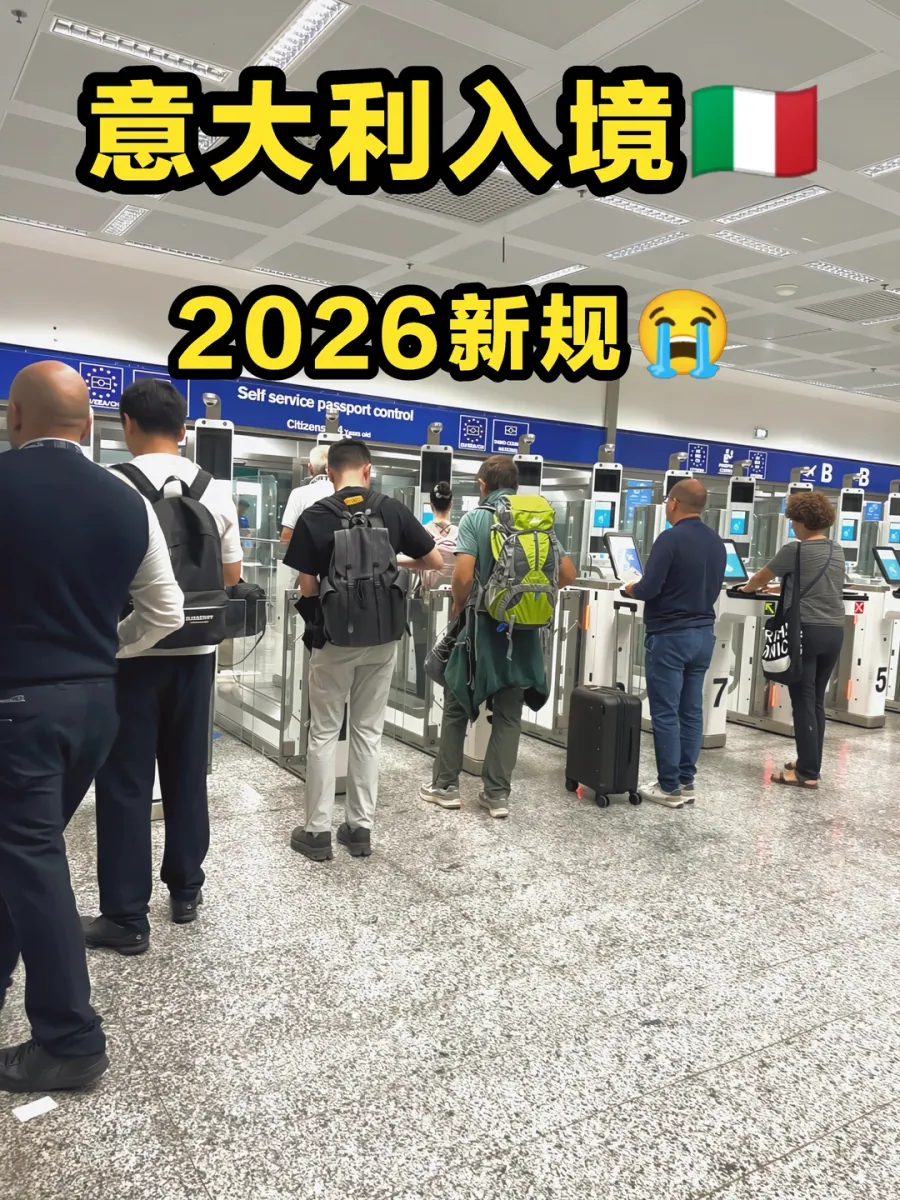
Frankfurt Airport Terminal 3 to the Fernbahnhof: SkyLine, a long corridor, and 1 hour 40 minutes
- Frankfurt Airport
- FRA
- Terminal 3
- Fernbahnhof
- Deutsche Bahn
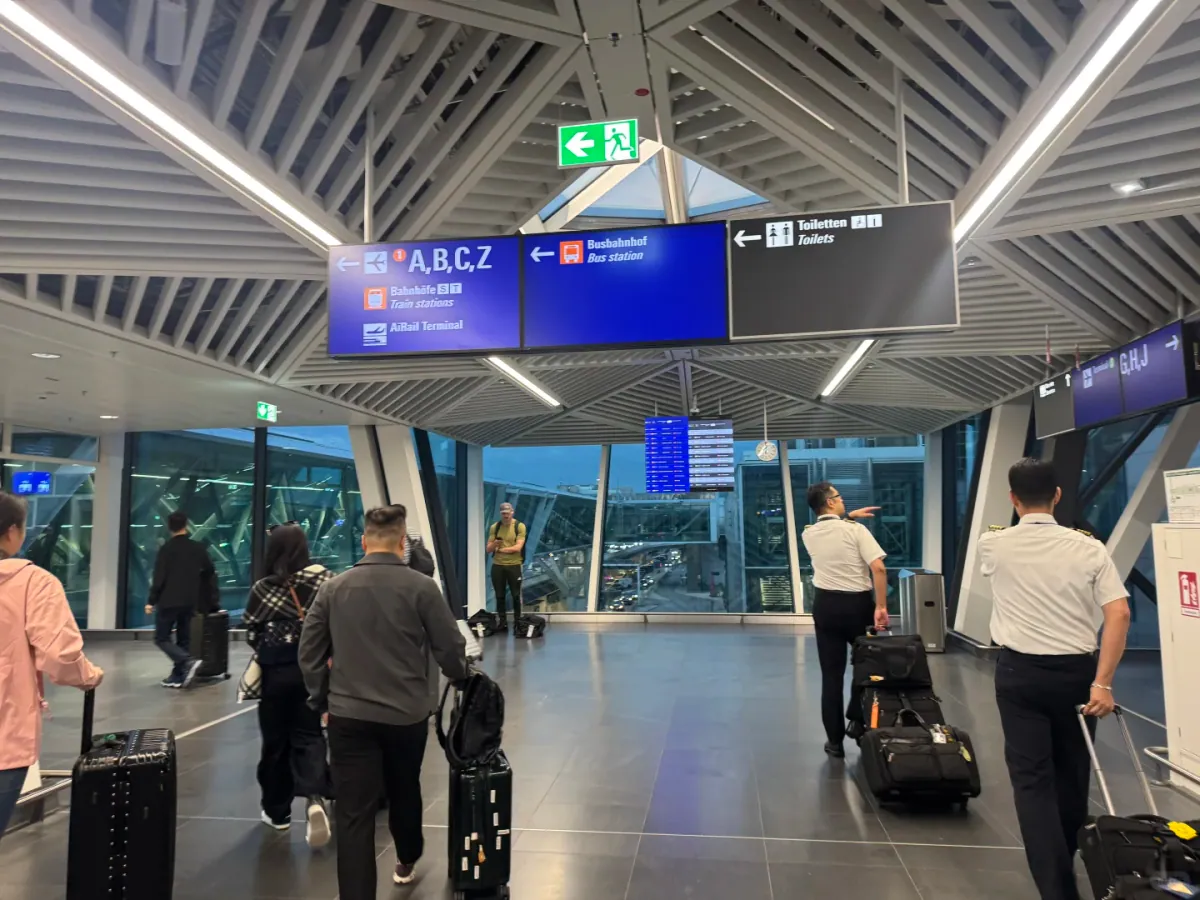
Terminal 3 is Frankfurt Airport's newest building, built on the southern side of the airfield with the runways between it and Terminals 1 and 2. The hall is spacious and the signage is complete, yet getting from the aircraft to a train involves more steps than most people expect: passport control, baggage, a fairly long ride on the people mover, and then a very long corridor.
The root of the problem is where the station is. Every long-distance train at Frankfurt — ICE and IC alike — leaves from the Fernbahnhof on the Terminal 1 side. Terminal 3 has no long-distance platforms of its own, so passengers starting there must first return to Terminal 1 and then cross The Squaire, the long building that houses the station hall, before reaching a train.
In October 2026 a traveller timed the whole thing. The flight landed at Terminal 3 at 06:00. After passport control, baggage and wayfinding, the arrival at the Fernbahnhof hall was around 07:50 — 1 hour 40 minutes in total, with no running, just a normal walking pace with a suitcase. This guide breaks that journey down step by step and points out where time can be saved and where it cannot.
1. Terminal 3 and the distance problem
Terminal 3 exists to give Frankfurt room to grow. Terminals 1 and 2 had been running close to capacity for years, and the only space left was on the far side of the runways, which is why the new building sits apart from the original pair. To make that work the airport extended the SkyLine people mover to Terminal 3, so passengers no longer need a shuttle bus between buildings. The trade-off is a longer ride: two minutes from Terminal 2 to Terminal 1, but eight to ten minutes from Terminal 3.
That ride is long enough to make you wonder whether you have missed your stop. The train loops around the apron on its elevated track, and outside the window there are taxiways, aircraft stands and rows of tail fins rather than anything that looks like a terminal. It really is going the long way round. The author of the original note makes the same point: Terminal 3 is new, the signs exist, but the distances are long, and a good part of the time goes on the people mover alone.
What is more easily underestimated is everything that happens before the ride. Six in the morning is when long-haul arrivals bunch up, so passport queues and baggage belts can both be slow; if the aircraft parks on a remote stand, there is a bus ride first. None of that appears in a route description, yet it accounted for most of the 1 hour 40 minutes. So when you read that Terminal 3 to the station takes over an hour, the route is not the problem — the time goes on the terminal, not the track.
This also explains why anyone landing at Terminal 3 should build in more slack when booking a train. From Terminal 2, forty minutes from landing to sitting on the S-Bahn is common. Terminal 3 adds a people mover and a long corridor, so the same comfortable margin becomes an hour or more. Book an ICE for at least two hours after landing and you will not be rushed; with only an hour in hand, change to a later train instead of betting on a fast baggage belt.
2. The SkyLine to Terminal 1
Leaving arrivals, look for the blue overhead signs. Terminal 3 uses the same design language as the other two: on the left a plane icon with a 1, followed by A,B,C,Z, meaning Terminal 1's four check-in halls. The next line reads Bahnhöfe / Train stations and AiRail Terminal, and further right are the Busbahnhof (bus station) and Toiletten. For the railway, the Terminal 1 line is the one to follow.
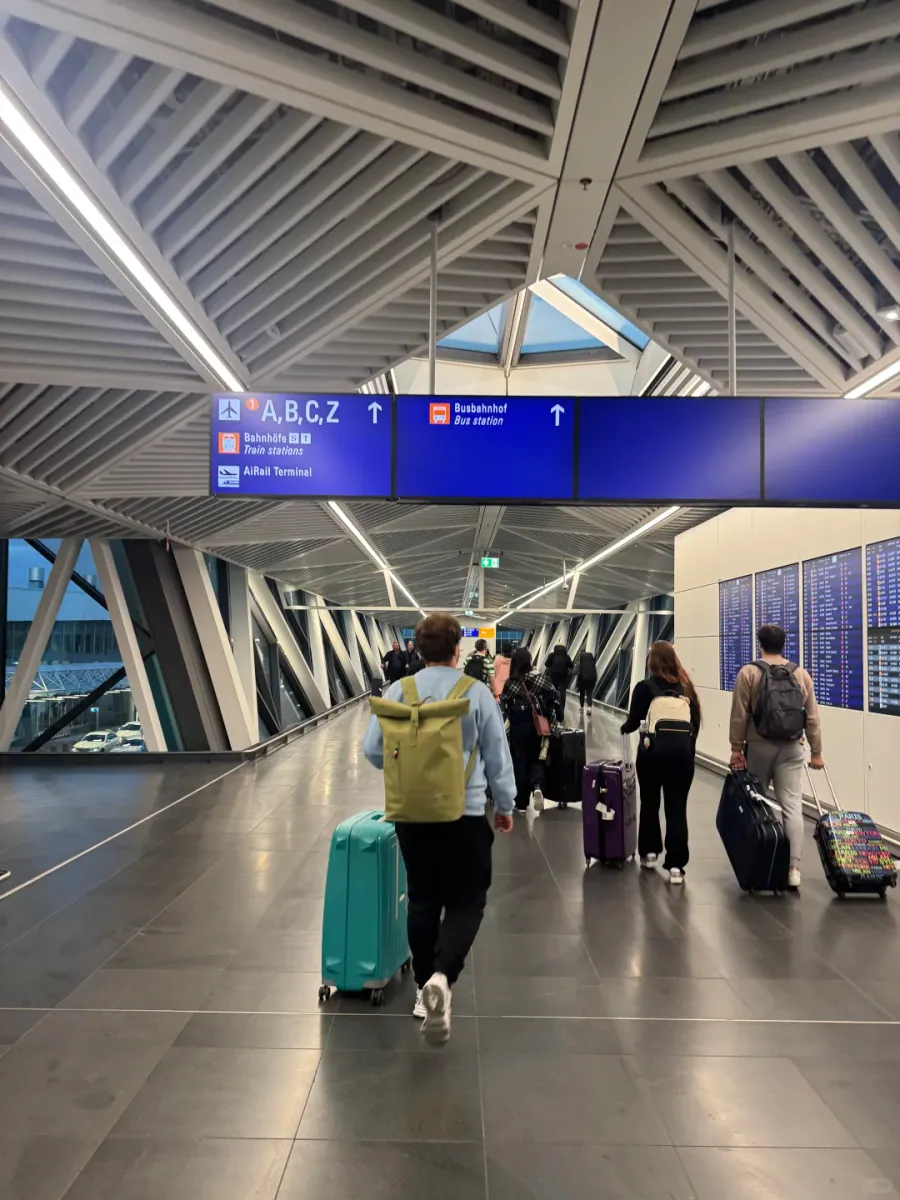
The corridor is wide, floored in dark stone, roofed with angled steel and skylights. Follow the flow for three to five minutes and you reach the escalators and the SkyLine platform. The shuttle is free, has no gates and needs no ticket, and the service is frequent enough that waiting usually takes less time than the ride.
Once on board, find a spot and keep your case close. The carriages are small, and early arrivals often bring two or three large cases each, so the aisle fills up; if you cannot get on, the next train is the easier option. Eight to ten minutes later you arrive at Terminal 1, and the keyword changes from Terminal to Bahnhof.
3. Fernbahnhof or Regionalbahnhof
Inside Terminal 1 the railway splits into two directions, and this is the most important decision on the whole route. The airport station has two halves: the Regionalbahnhof, directly below Terminal 1 with tracks 1–3 for the S-Bahn and regional trains, and the Fernbahnhof, on the north-west side beneath The Squaire with tracks 4–7 for ICE and IC services. The names differ by a single word and the directions are opposites.
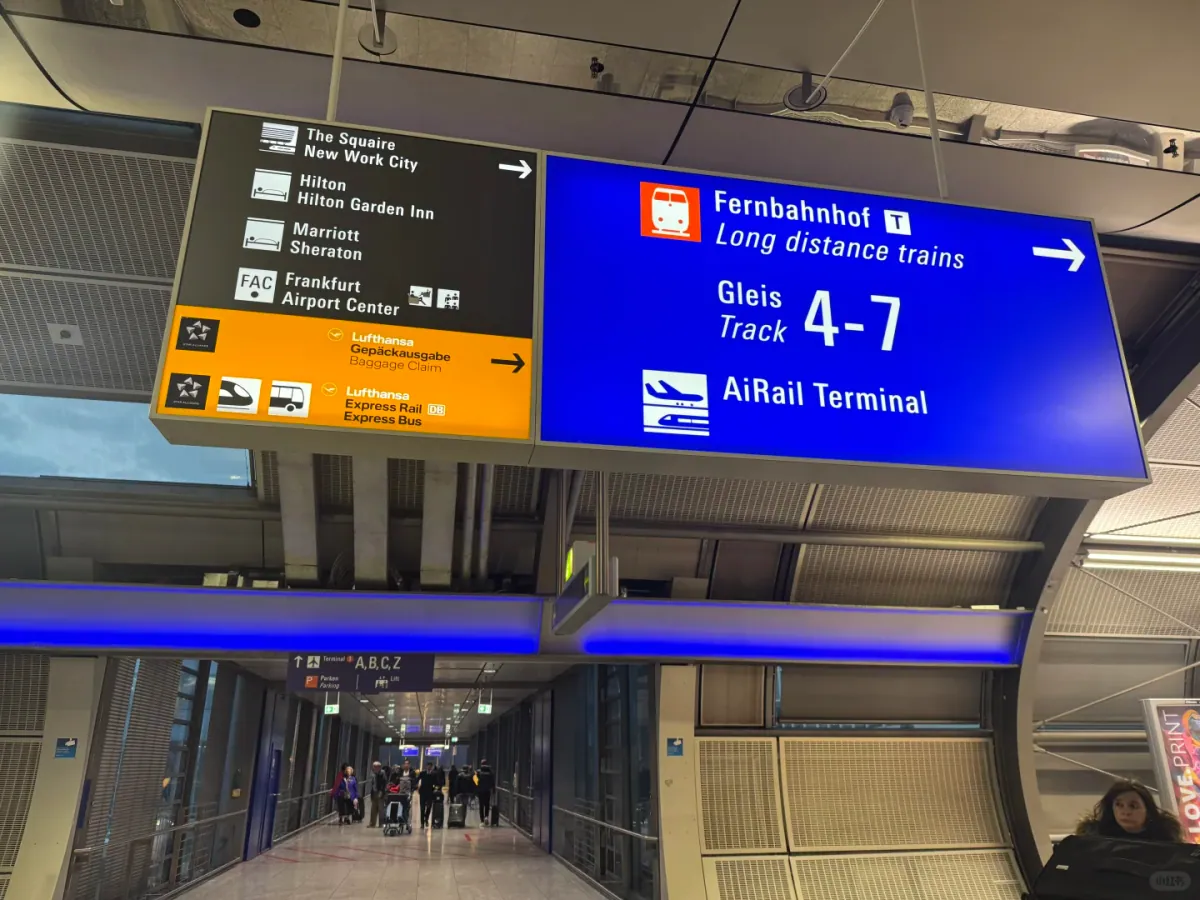
Follow the blue Fernbahnhof / Long-distance trains sign, which also carries Gleis 4–7 and AiRail Terminal. The black sign beside it lists a different set of destinations — The Squaire, Hilton, Hilton Garden Inn, Marriott, Sheraton and Frankfurt Airport Center — all in the same complex and therefore the same direction. The yellow panel is Lufthansa's baggage tracing desk; seeing it means you are going the right way.
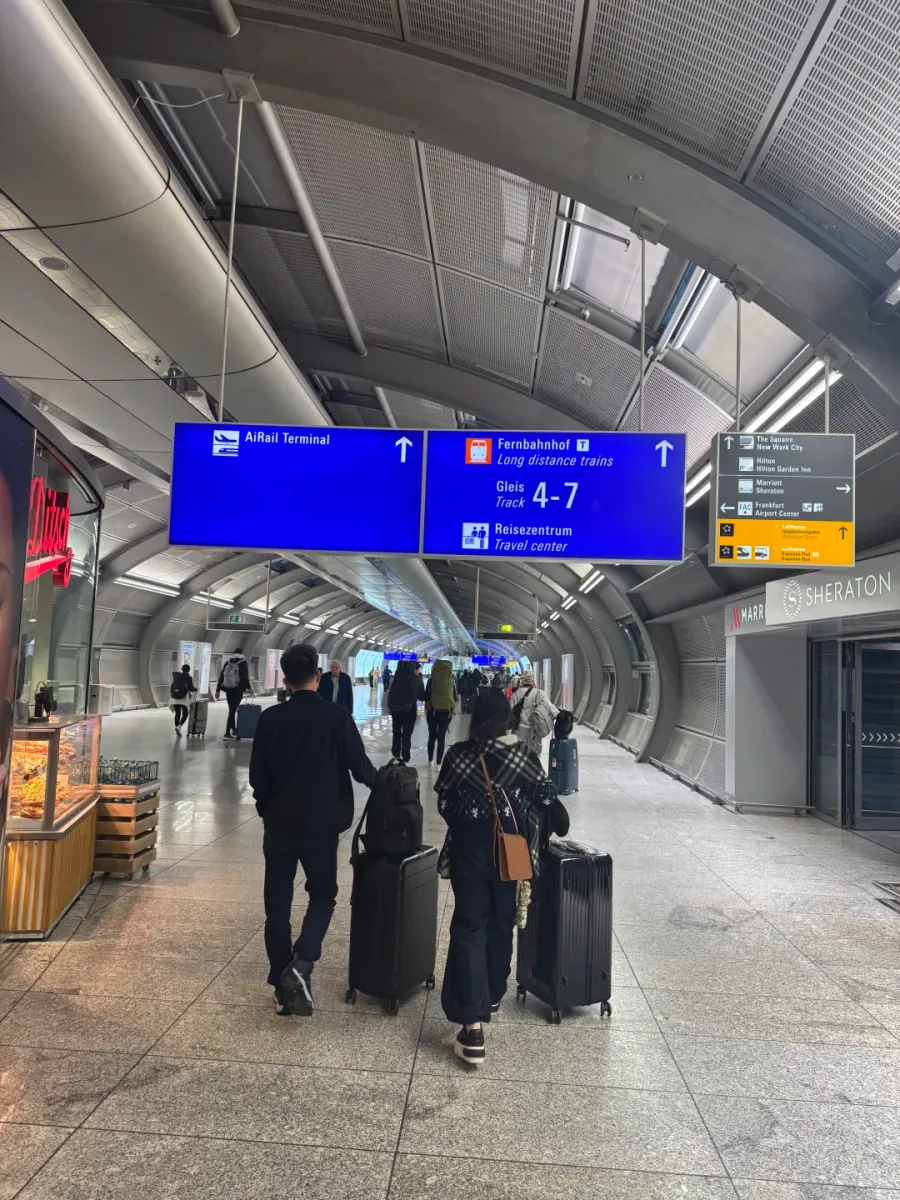
Then comes the longest walk of the route: a straight corridor with glass on both sides, looking out on the roadway and the bulk of The Squaire. It takes five to seven minutes, and the station hall is at the far end. There are moving walkways and lifts along the way if the bags are heavy. There are no branches to take; the only real risk is going the wrong way — if you see a sign for the Regionalbahnhof, you are heading for the S-Bahn, so turn around.
| Station | Where it is | Trains | Best for |
|---|---|---|---|
| Fernbahnhof | North-west of Terminal 1, beneath The Squaire, 5–7 minutes along the corridor | ICE and IC long-distance trains, tracks 4–7 | Heidelberg, Munich, Berlin, Cologne and beyond |
| Regionalbahnhof | Directly below Terminal 1, tracks 1–3 | S-Bahn S8/S9 and regional trains | Frankfurt city centre, Mainz, Wiesbaden |
Getting it wrong is not catastrophic. The Regionalbahnhof has S-Bahn trains into the city, and you can change to a long-distance train at Hauptbahnhof, at the cost of one extra change and perhaps half an hour. The genuinely awkward mistake is the reverse: standing on a Fernbahnhof platform with an S-Bahn ticket, waiting for a train that will never come.
The Squaire deserves a word of its own. It is the airport's most recognisable building: a 660-metre "lying tower" straddling the motorway, holding hotels, offices and restaurants, with the station hall at its base. Walking along the corridor you first see the building side-on and then arrive underneath it, so a growing facade is a good sign. Inside is Lufthansa's AiRail Terminal: if you are booked on Lufthansa Express Rail, you can check in and drop your bags here, tag them through to your destination and take the train into town empty-handed.
4. Tickets, platforms and delays
The Fernbahnhof hall has a glass roof and a large Abfahrt / Departure / Départ board hanging in the middle. Trains are listed by time with the via stations (Über via), the destination (Ziel) and the platform (Gleis). First-timers often stare at the board looking for their platform and find the column blank. That is normal for Deutsche Bahn: the platform is often published only shortly before departure, sometimes no more than ten or fifteen minutes ahead.
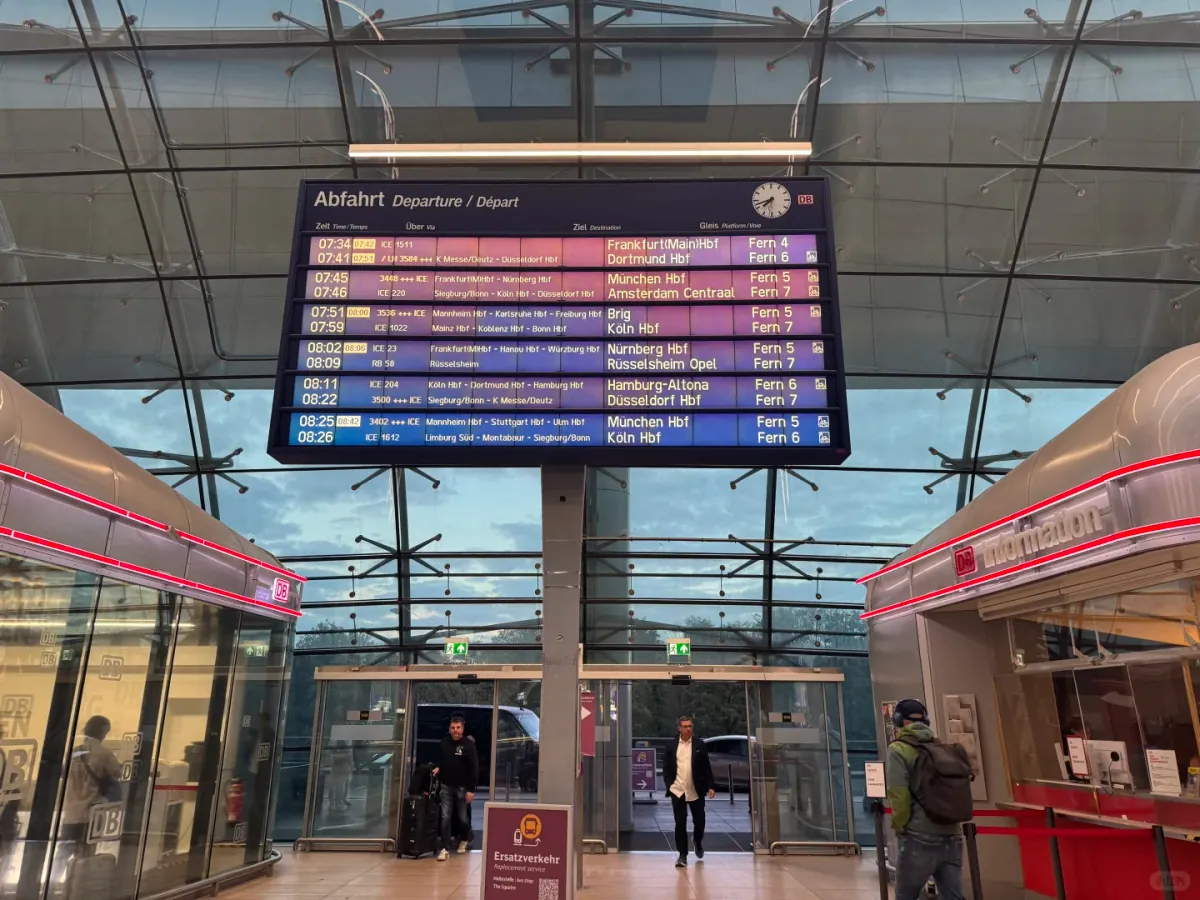
So do not rush down to the platform on arrival. In the hall, confirm two things: your train number, and when the platform appears. The DB Navigator app shows the same information and often updates faster; without mobile data, stand in front of the board or ask at the DB Information desk on the right.
German stations have no ticket gates. The platforms are open to anyone, payment works on trust, and inspection happens on the train: the conductor walks the aisle and scans the QR code on your e-ticket. Make sure the ticket is bought and valid before boarding; paper tickets must be stamped, e-tickets simply live on your phone.
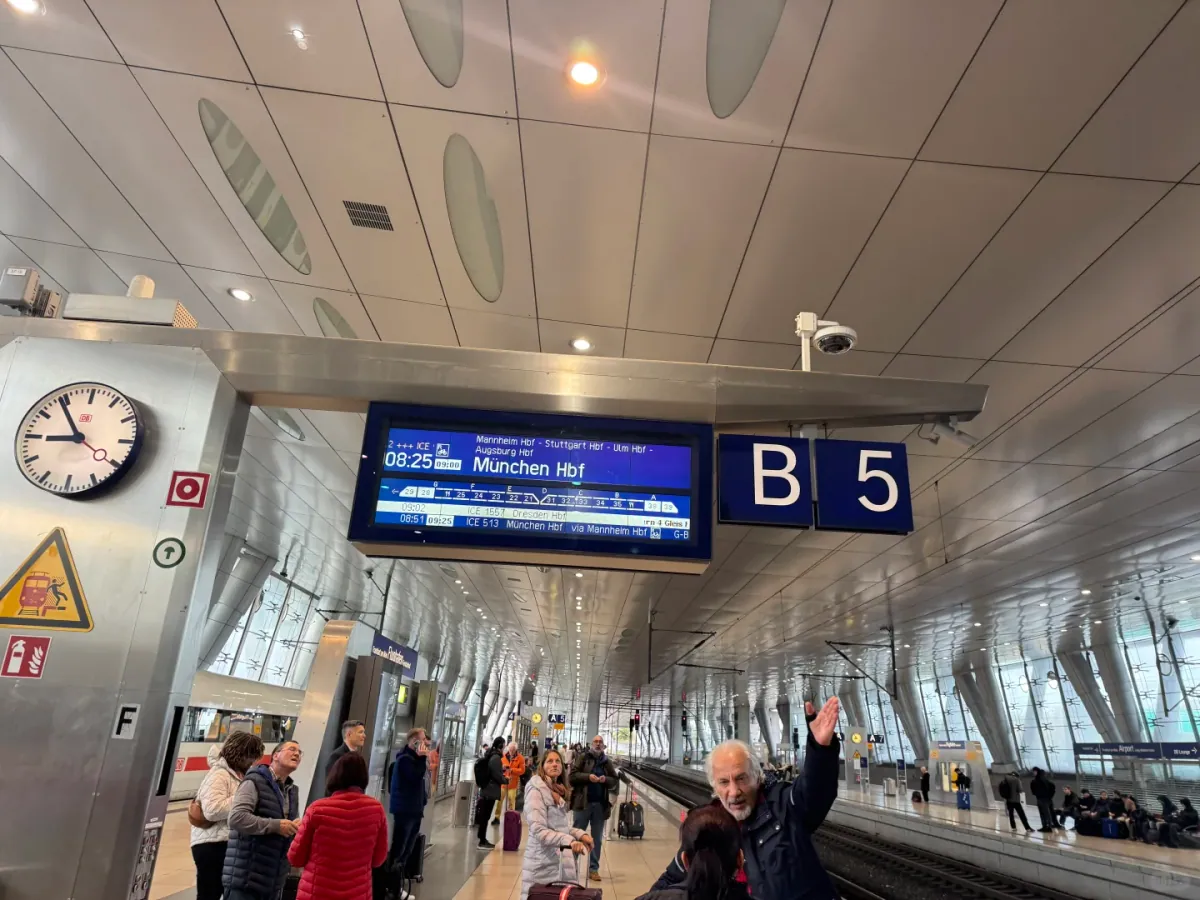
Platform signs hang overhead, with a smaller line beneath giving the carriage zones. German long-distance trains stop in sections marked A, B and C, so if your ticket says "Wagen 31, Sektor B", stand in zone B and you will have far less to carry. Second class has no assigned seats — take any free one; first class is at the front or rear of the set and marked with a large "1" on the door. Put large cases in the racks by the door rather than dragging them into the seating area, which is the most useful tip in the original note.
Delays are routine in Germany; ten or twenty minutes is not remarkable. With a flexible ticket (Flexpreis) you simply take the next train. With a saver ticket (Sparpreis) the ticket is tied to a specific service and cannot normally be swapped, but when a DB delay makes you miss a connection, staff will usually let you onto the next train in the same direction. If that happens, explain the situation at the DB Information desk rather than buying a second ticket. The original note's experience — that a missed connection can be taken on the next train without repurchasing — generally holds, though it depends on the fare and the day's rules.
Buying a ticket is straightforward. The blue machines in the hall switch to English and take cards and coins; DB Navigator is the most convenient option and lets you reserve a seat; if you buy before leaving home, platforms such as Trainline or Omio issue e-tickets as well. Book long-distance trains in advance: saver fares are considerably cheaper than flexible ones but are limited and sell out. If your plans might change, pay the extra for flexibility. You can board second class without a reservation, but popular weekend services fill up, and a seat reservation usually costs only a few euros — worth it on a three- or four-hour run.
5. The time budget from landing to departure
Breaking the recorded journey down, the 1 hour 40 minutes went roughly like this: almost half was spent between landing and leaving the arrivals area, including passport control, baggage and finding the signs; the SkyLine wait plus ride took about a quarter of an hour; the Terminal 1 corridor five to seven minutes; the rest went on reading the board, walking down to the platform and finding the right carriage.
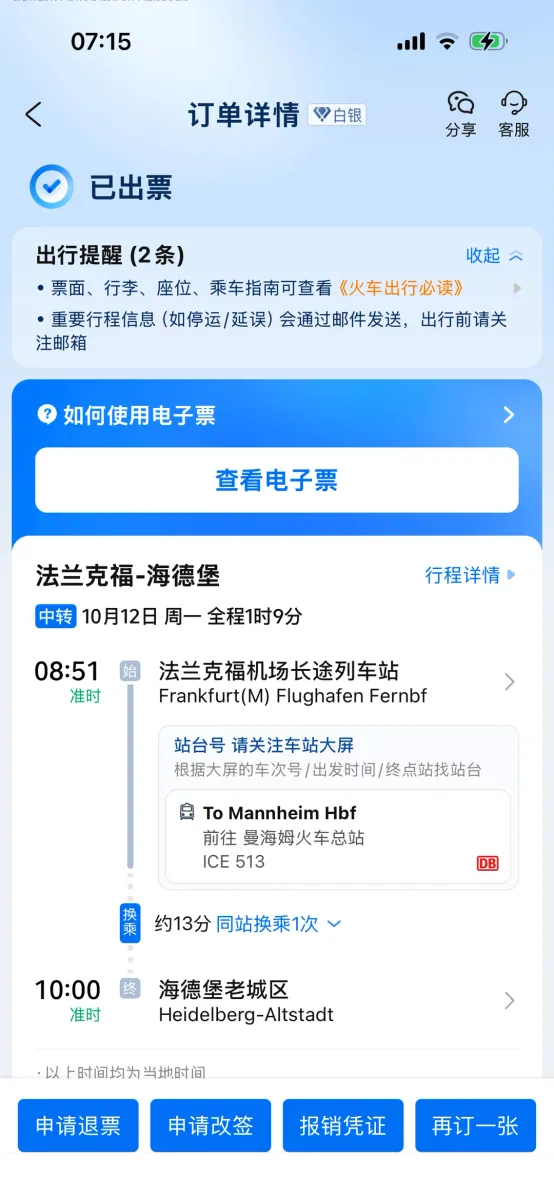
The order page says it plainly: 08:51 from Frankfurt (M) Flughafen Fernbf, ICE 513, change at Mannheim Hauptbahnhof, arrive Heidelberg-Altstadt at 10:00. The platform field says only "watch the station board" — exactly the point above, that the platform is published close to departure. From entering the station at 07:50 to leaving at 08:51 there was an hour, which looks generous and in practice was just right for a coffee, a washroom stop and an unhurried walk down.
If you arrive earlier than expected, the hall has cafés and a bakery, and sitting for a while beats waiting on a cold platform. Listen for the announcement and watch the screens: the station is announced as "Frankfurt Flughafen Fernbahnhof", one word away from the Regionalbahnhof. Some platform entrances show the carriage order for the next train, so a glance tells you which end of the platform to walk to and saves dragging the case the length of the train.
A few suggestions for a first attempt:
- Allow 1.5–2 hours from landing to departure. The 1 hour 40 minutes is a normal pace, not a generous one; with a late flight or slow baggage, two hours is safer.
- Do not leave the building at Terminal 1. From the SkyLine onwards the whole route is indoors; step outside and you have to find your way back in.
- Follow Fernbahnhof, not Regionalbahnhof. The signs often appear side by side; the blue one reading Gleis 4–7 is the long-distance station.
- Keep the e-ticket saved and screenshotted. Mobile signal is patchy on platforms and in carriages, and fumbling for an order page at inspection is unpleasant.
- Use the luggage racks by the door. They keep the aisle clear and make getting off much easier.
This walk-through comes from a traveller's account in October 2026; SkyLine frequencies and DB trains and platforms are subject to the day's information on site and on the operator's website. Terminal 3 is still new and its signage will keep changing, so looking up at the signs as you go is more reliable than memorising the route.
Related links
- On this site: Frankfurt Airport (FRA), Germany (DE)
- Wikipedia: Frankfurt Airport
- Baidu Baike: Frankfurt Airport
More articlesTravel notes
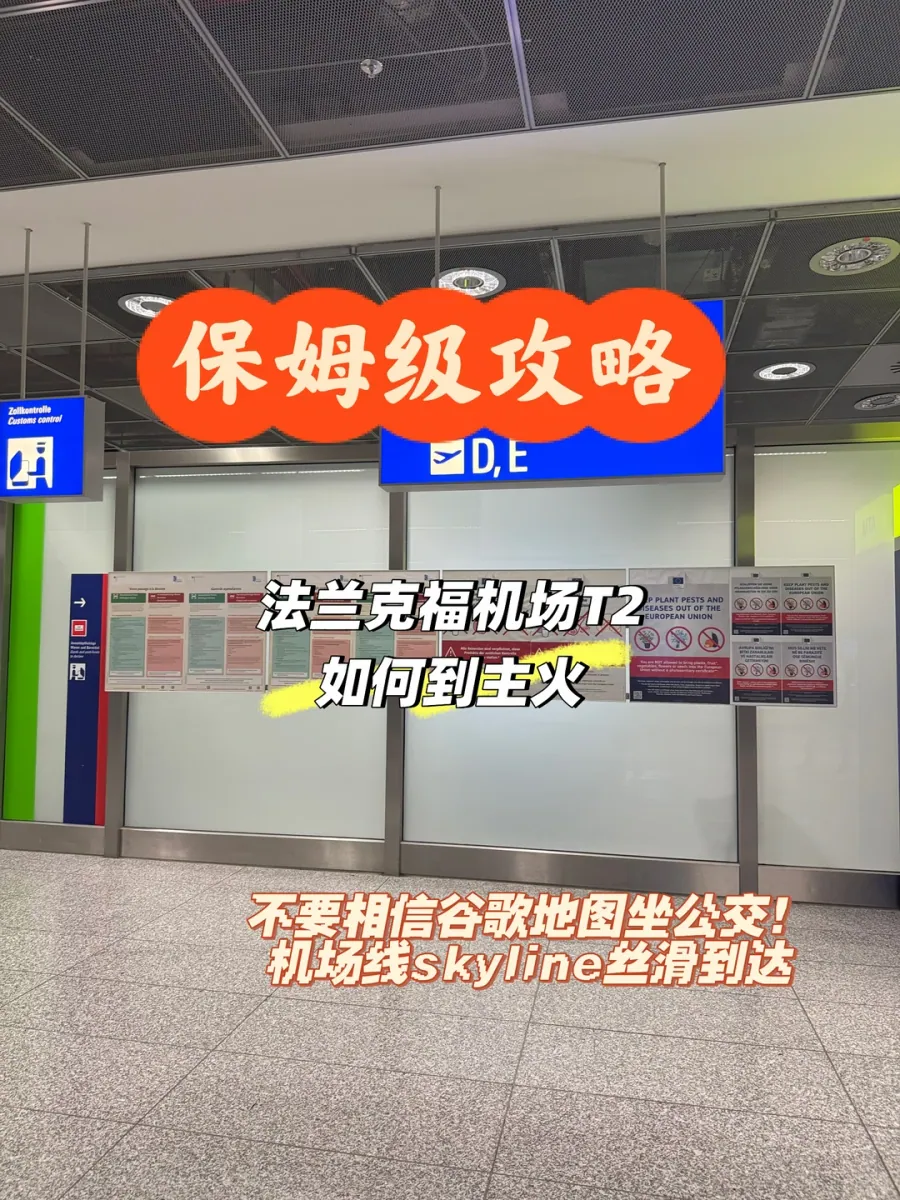
Frankfurt Airport Terminal 2 to Frankfurt Hauptbahnhof: SkyLine, then the S8 or S9
How to get from Frankfurt Airport Terminal 2 to Frankfurt Hauptbahnhof without stepping outside: the free SkyLine people mover to Terminal 1, the Bahnhof signs down to the regional station, and about fifteen minutes on the S8 or S9, plus tickets, frequencies and the five wrong turns.10 min read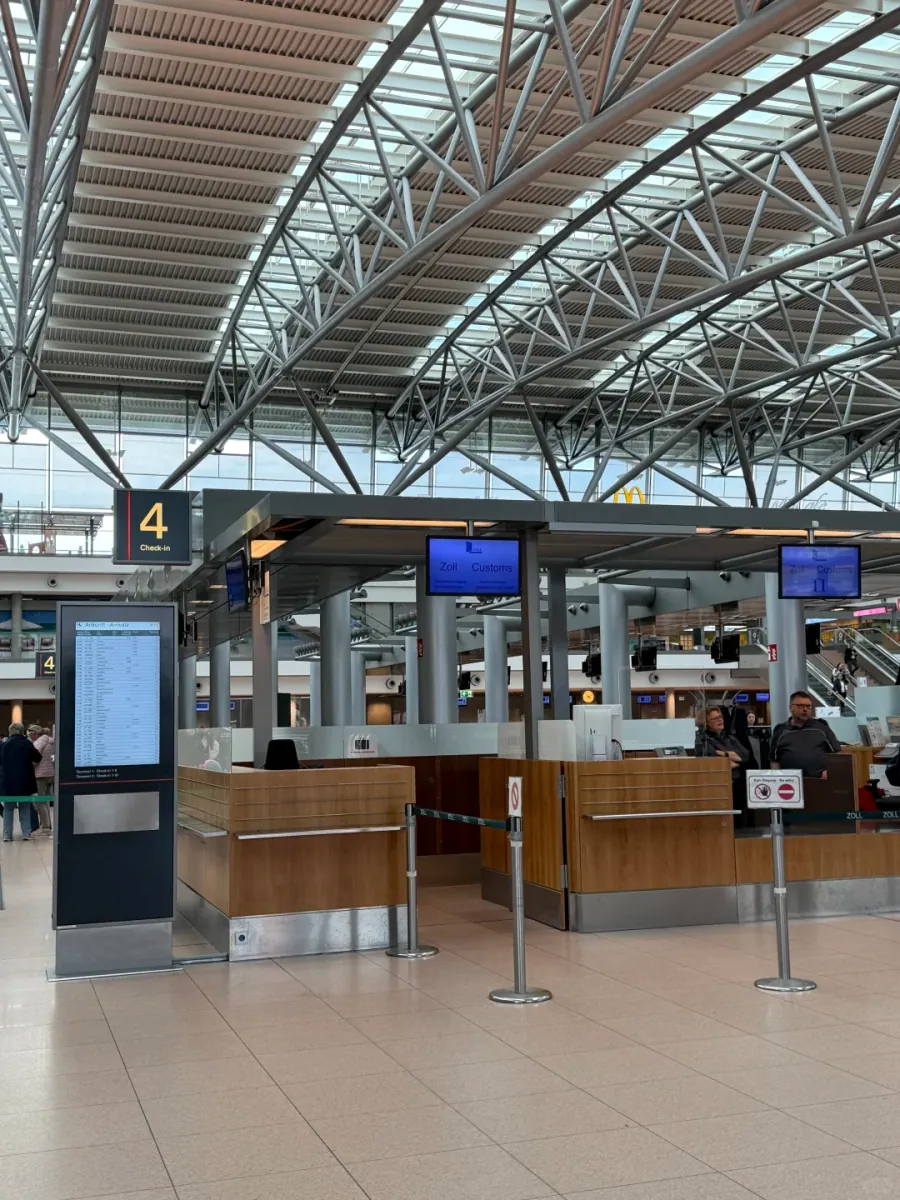
Global Blue Refunds at Hamburg Airport: Stamp at Check-in, Drop the Bag There, Get Paid by Alipay
How a VAT refund works at Hamburg Airport (HAM) when the goods are in checked baggage: check in but keep the suitcase, get the form stamped at the information counter by check-in 4, drop the bag there, choose the payout at the Global Blue counter (cash comes only in US dollars, so Alipay is better), and post the form in the box beside the counter.6 min read