Connecting at Munich Airport: Through-Checked Bags, EES Pre-Registration and a 20-Minute Walk
- Munich Airport
- MUC
- connections
- EES
- Schengen entry
Munich Airport (MUC) sits on the Erdinger Moos about 28 km northeast of the city. It is Germany's second-largest airport and one of Lufthansa and Star Alliance's main European hubs. Terminal 1 handles gates A–E and F for most airlines outside the Lufthansa group; Terminal 2 handles gates G, H, J, K and L for Lufthansa and its partners, with part of that gate area in the satellite building, reached by a short driverless train.
For anyone arriving from China with a Schengen connection, the airport is easy in one sense and awkward in another. Distances are short and signage is clear, but a connection here is not just a matter of following the crowd out of the building. On the same stretch of corridor you clear security, register your data in the EU's Entry/Exit System and are admitted into Schengen — and the order is the reverse of what many travellers expect.
The walkthrough below comes from an early-morning connection in September 2026: roughly 20 minutes from the aircraft door to clearing passport control. It applies to one case only — landing from outside Schengen and connecting to a Schengen destination, which means being admitted in Munich. If your onward flight leaves the Schengen area, the admission step disappears, but security and the walk to the gate are identical.
1. The one precondition: through-checked bags
Whether a connection goes smoothly is largely decided when you buy the ticket. On a through ticket your bags are tagged to the final destination and you only carry your cabin bag through the transfer route. On separate tickets you have to be admitted, collect the suitcase and check it in again. The 20-minute walkthrough only exists if your bags are through-checked.
Look at the bag tag behind your boarding pass: the destination field should show the three-letter code of your final city, not MUC. Ask at check-in — "is this checked through to X?" — and the agent will tell you. Separate tickets usually mean a new boarding pass from a transfer desk, which has to be counted in the connection time.
Through-checked bags are the precondition for this whole route. Without them, follow Baggage Claim instead: be admitted, pick up the suitcase, go back up to departures and check in again. That detour costs a lot of time, so allow three hours or more.
2. Follow the "Connecting flights" signs
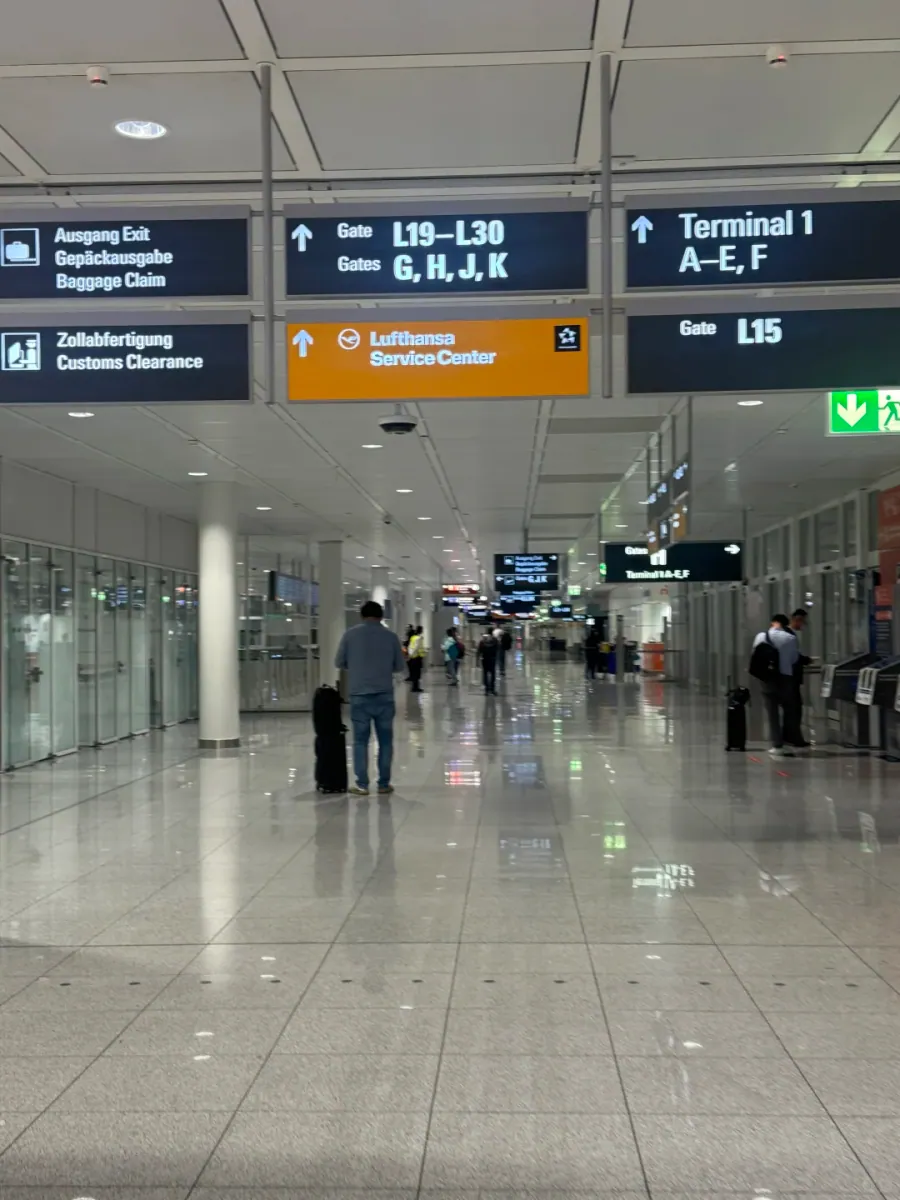
When the jet bridge door opens, the first job is not finding your gate but picking the right direction. Follow the flow upstairs, where the dark blue overhead signs split the traffic: Ausgang/Exit and Gepäckausgabe/Baggage Claim on one side, Terminal 1 gates A–E and F plus Terminal 2 gates G, H, J and K on the other. The grey Connecting flights signs hang just beyond that fork.
The classic mistake is to see Exit and go with it. Once through that door you are in the public hall, and getting back airside means security again — the connection is effectively over. With bags checked through, a connection means no baggage claim and no exit; follow Connecting flights and you are fine.
If your onward flight is to another EU city, the gate usually sits in G or K. Those letters are signposted separately from Terminal 1's A–E and F, so read the letter before you walk; where the route needs the train, the signs add an arrow and a lift symbol.
3. EES pre-registration and security
Munich puts security before immigration, the opposite of many airports: security first, then the escalator down to passport control. In front of the lanes stand several orange kiosks labelled Non-EU Passports Pre-Registration — the self-service terminals for the EU's Entry/Exit System, which has been rolling out in stages since October 2025. On first entry it records a facial image and four fingerprints; on later visits within three years it can match them instead.
When queues are long, register first and join the line afterwards. Put your passport on the reader on the left and the interface switches to Chinese by itself; take a facial photo as prompted, removing hat, mask and glasses; then press the four fingers of your right hand, thumb excluded, onto the scanner. The screen then tells you to use the manual lane (pre-registration). Registering only stores data in advance; it is not admission.
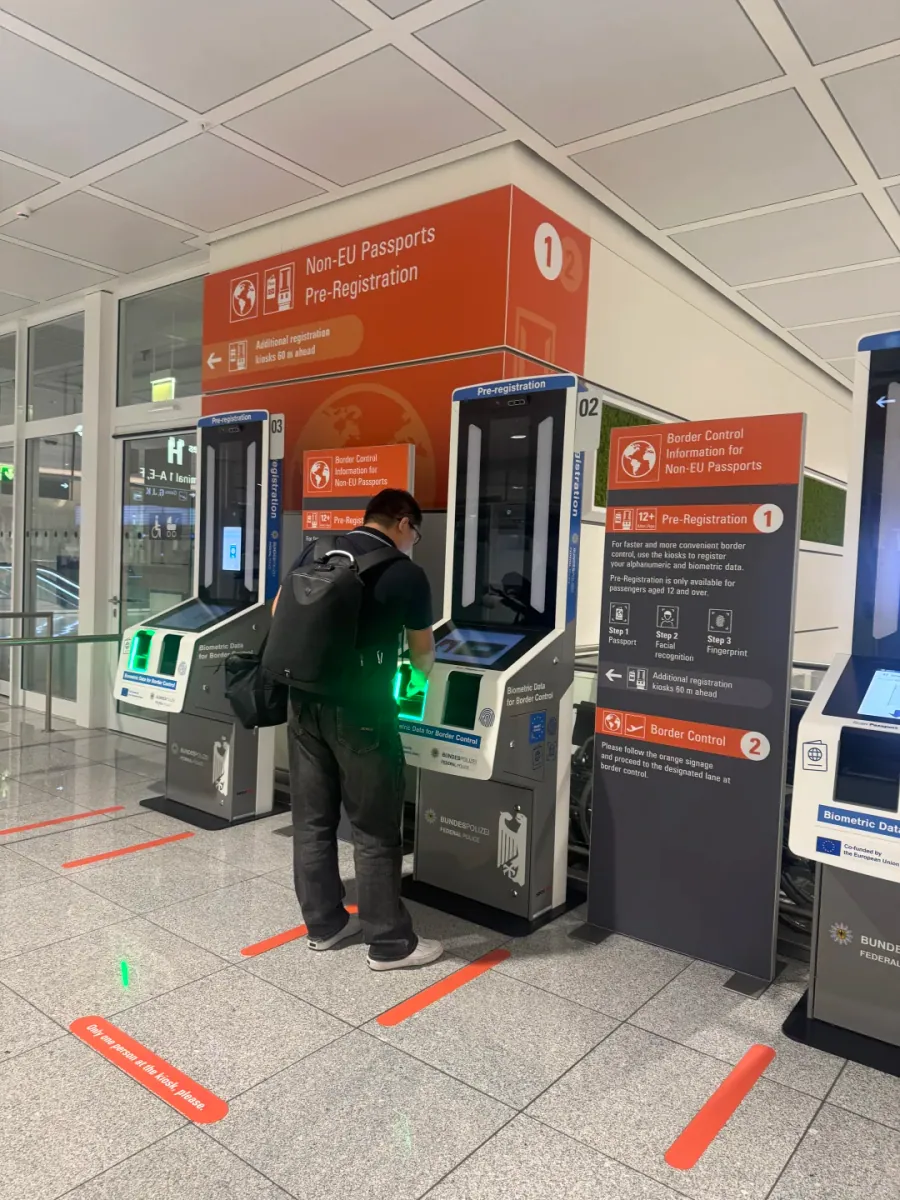
The notice board beside the machines adds details worth knowing: pre-registration is only for passengers aged 12 and over; if this row is busy there is another set of kiosks 60 m ahead; red tape on the floor marks the 1.5-metre spacing.
On the author's early flight security was quiet and the manual lane was closed, so joining the security queue directly was faster. Check which line is shortest on the day. Security works much as it does at home, with two things people forget: empty keys, coins and phone into a tray, and take anything bought at a duty-free shop out of your bag — liquids go in the clear pouch, not at the bottom of the case.
4. Three questions at passport control
Past security, the down escalator puts you in the passport hall. Lanes are divided by passport: EU, EEA and Swiss on one side, everything else on the other. Plenty of counters were open that morning and each queue held two or three people, so take the shortest line — queue length matters more than lane type.
The officer asked three questions: where are you going, how long are you staying, and what do you do. All three point at the same thing — whether the trip makes sense. Which zone your onward gate is in, how many nights you plan, and in what capacity you are entering; if the answers match the paperwork, it is over in under a minute.
The author was holding a folder of documents, but the itinerary, return ticket, hotel booking and insurance policy were never requested — the officer did not even glance at them. That does not mean leave them at home: border officers can ask for a return ticket and proof of accommodation, so keep them in the cabin bag. Answers should be short and consistent with the dates on paper.
From aircraft door to cleared passport control took about 20 minutes. That figure holds for an early flight only; the same airport at midday is a different story. Allow more than the airline's minimum connection time rather than treating 20 minutes as a rule.
5. The gate, and the people mover
Do not sprint for the gate the moment you are through. The most overlooked stop is the toilet, which sits one level down or at the far end of the gate area.
One level further down is the train platform. Munich's driverless passenger transport system links both terminals with the satellite building; the platform has glass screen doors with bright yellow frames. The display above the doors shows where the next train goes: Terminal 2 gates G and H, Terminal 1 gates A–E and F, and Gepäckausgabe for baggage claim, with a countdown reading Abfahrt in 2 min.
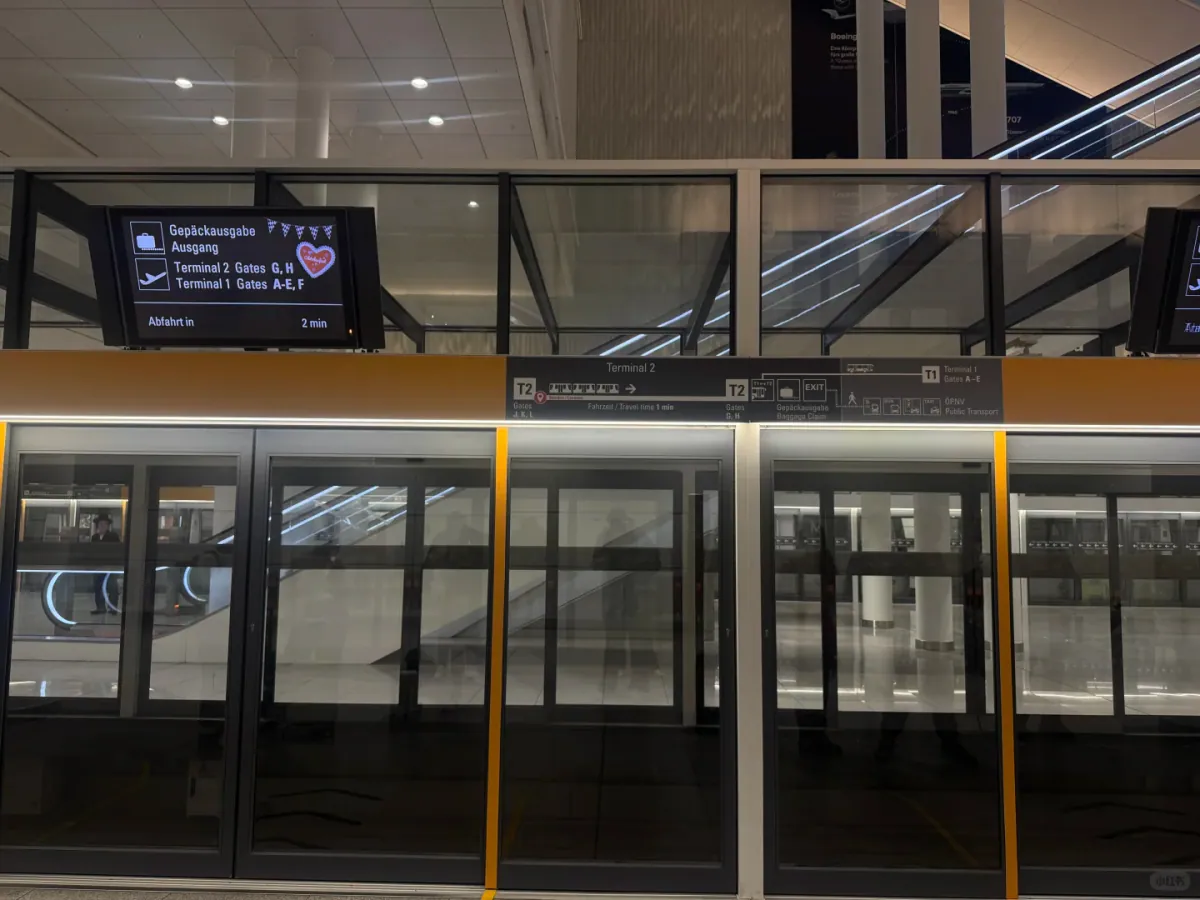
The ride is short, and the doors open straight into the G and K gate area. The waiting area is one long concourse with the apron behind floor-to-ceiling windows; yellow screens hang above the boarding gates, and the floor was almost empty.
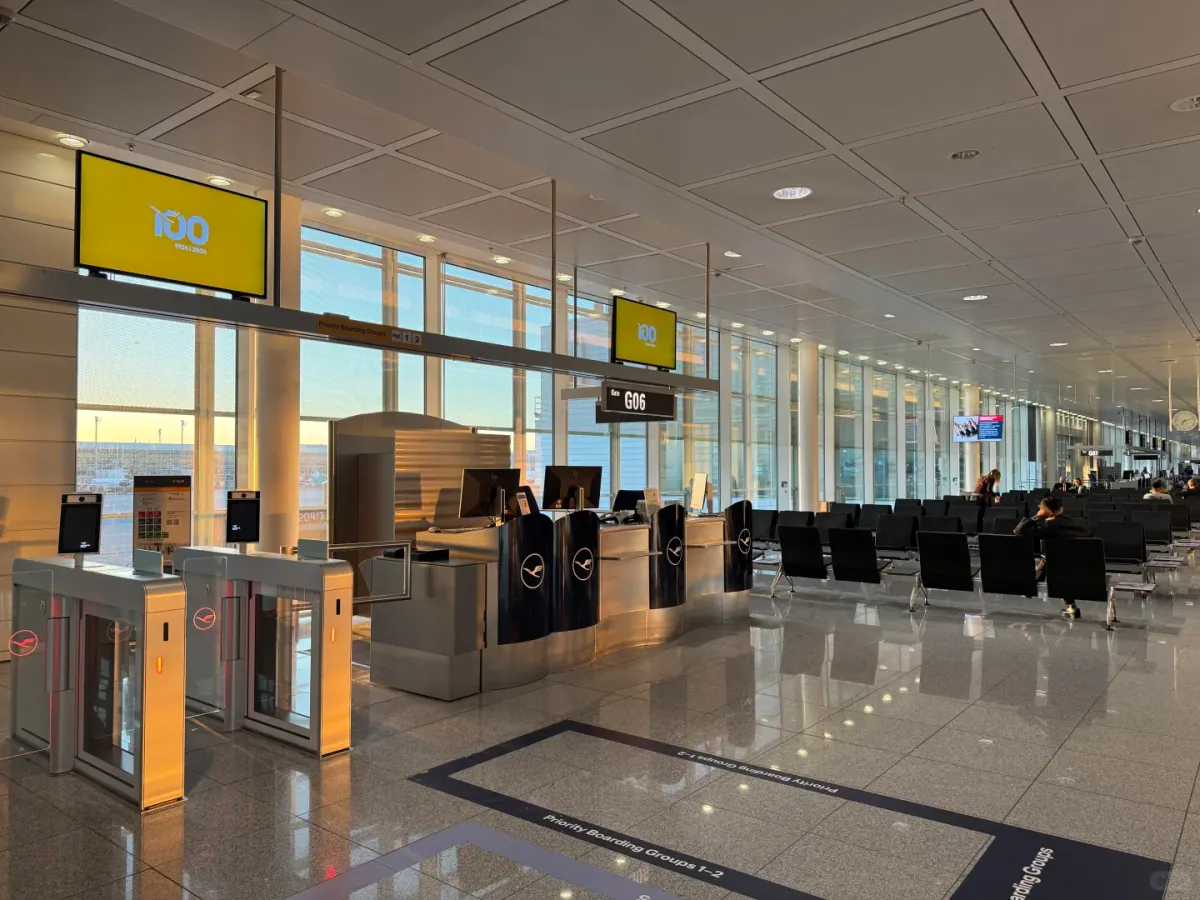
There is one last thing to do: check your gate again. The author's gate changed from G23 to G12, a fair walk apart, and without a second look at the screens it would have been easy to wait in the wrong place until the final call. Check on landing, again after passport control, and once more before you sit down; the airport app and the flight information screens are in sync, and either beats the gate printed on your ticket.
If time is short, confirm the new gate before you shop: the shops cluster around G and H, and it is easy to lose track of time.
End to end, an early-morning connection in Munich is really a change of transport: security, registration, admission, train, gate. What goes wrong is treating it as leaving the airport — following Exit out of habit, or waiting at a belt for a suitcase that was never coming. Routes and lane opening hours change with traffic, so check the Munich Airport website and the signs on the day.
Related links
- On this site: Munich Airport (MUC), Germany (DE)
- Wikipedia: Munich Airport
- Baidu Baike: Munich Airport
More articlesTravel notes
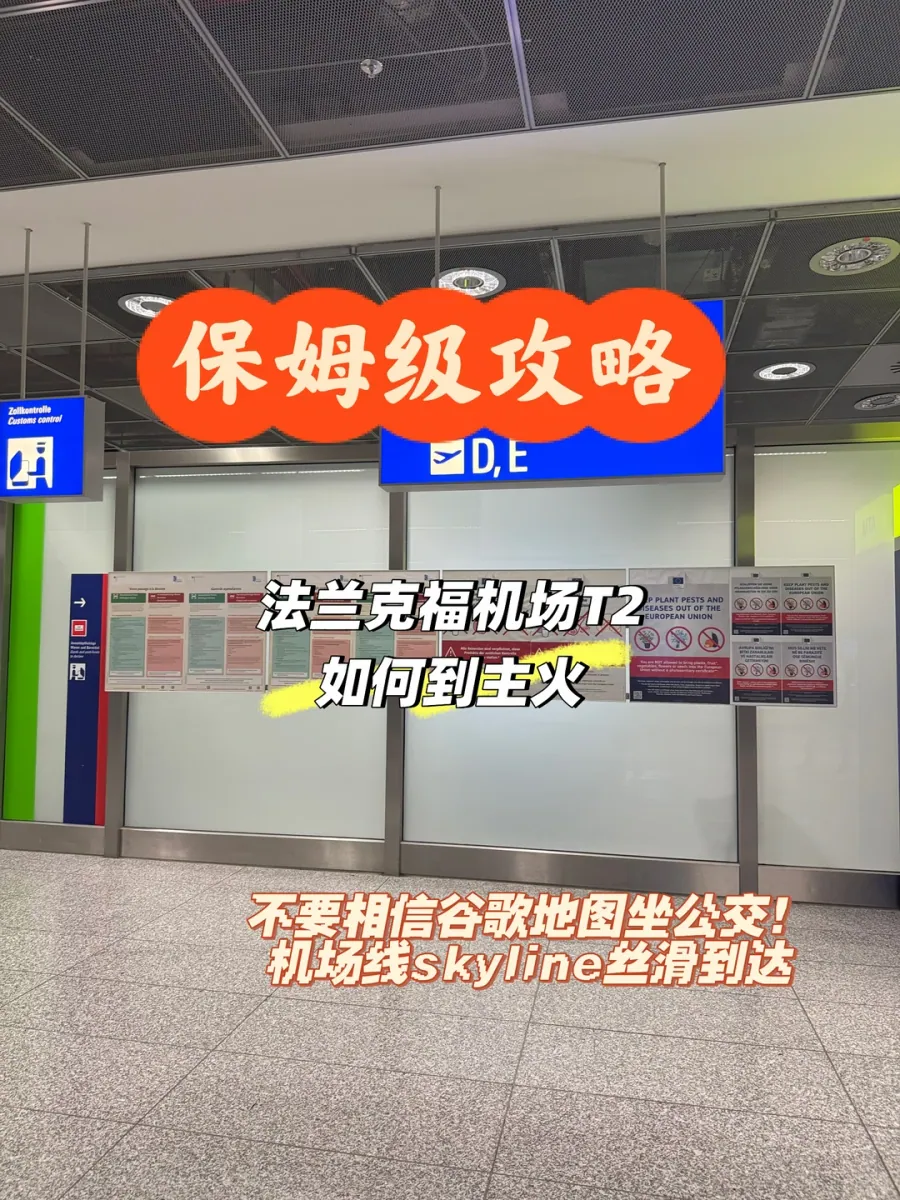
Frankfurt Airport Terminal 2 to Frankfurt Hauptbahnhof: SkyLine, then the S8 or S9
How to get from Frankfurt Airport Terminal 2 to Frankfurt Hauptbahnhof without stepping outside: the free SkyLine people mover to Terminal 1, the Bahnhof signs down to the regional station, and about fifteen minutes on the S8 or S9, plus tickets, frequencies and the five wrong turns.10 min read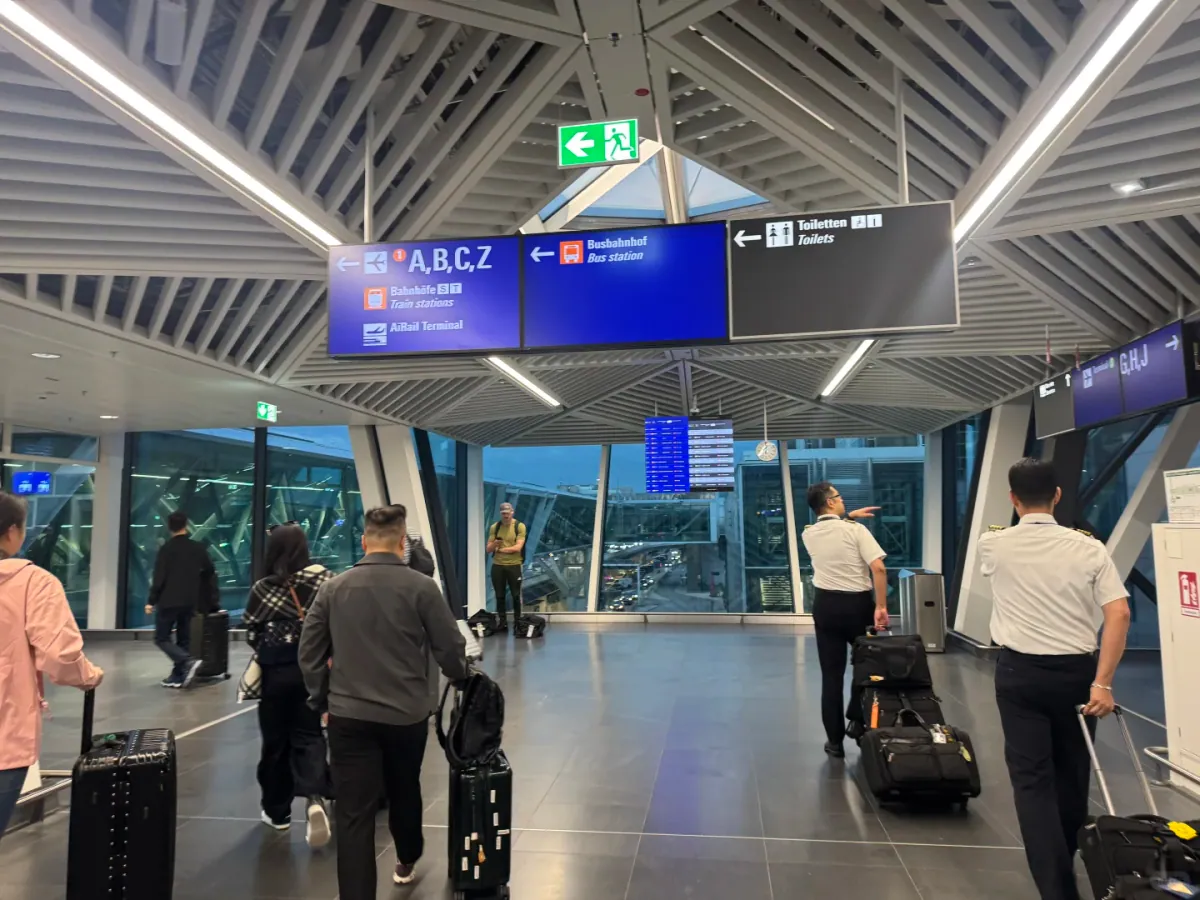
Frankfurt Airport Terminal 3 to the Fernbahnhof: SkyLine, a long corridor, and 1 hour 40 minutes
A step-by-step account of reaching Frankfurt Airport long-distance station from Terminal 3: the free SkyLine to Terminal 1, the blue Fernbahnhof signs and the corridor to The Squaire, waiting for a platform number on the Abfahrt board, and how much time to allow.10 min read