Milan Malpensa Arrival Guide: 65 Minutes from USCITA to the Baggage Belt
- Milan Malpensa
- MXP
- Italy entry
- airport queues
- baggage claim
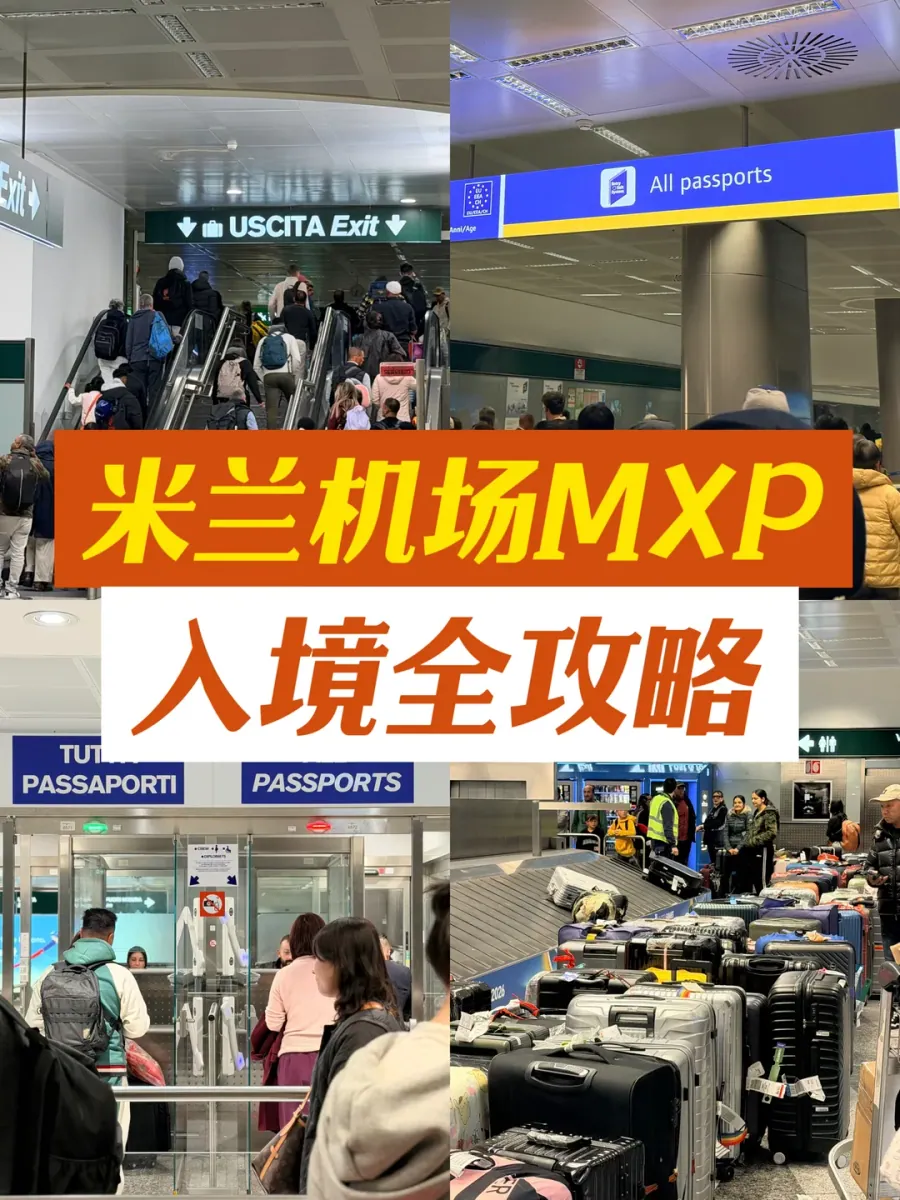
Milan Malpensa (MXP) is northern Italy's international gateway and the airport Chinese non-stop flights to Milan land at. For a first arrival the anxiety is rarely the language — it is the queue, and the figure that circulates online is three or four hours to get through.
One arrival in February 2026 suggests otherwise. Air China CA949 landed about 20 minutes early, at 06:10, and the walk from the aircraft door to a suitcase in hand took 65 minutes. Some of that was luck; not all of it. Sitting forward, leaving the aircraft briskly and knowing which lane is yours are choices made in advance.
1. How the queue at MXP actually works
Malpensa's immigration hall is not large, and the counters open and close with the arrivals timetable. 07:00 to 09:00 is the peak, when wide-body aircraft from Asia and across Europe land in the same window and non-EU passengers fill the snake barriers within minutes.
Long-haul flights arrive in waves. Aircraft landing between 06:00 and 07:00 send their passengers through jet bridge, shuttle bus and escalator, so most reach the hall between 06:30 and 07:30. Catch the front of that wave and there is barely a queue; half an hour later you are behind your own flight plus two more wide-bodies — which is why passengers from one aircraft can clear twenty minutes apart.
This landing was lucky with its timing: doors opened at 06:10, ahead of the peak. Four counters were open, the line kept moving, and the entry stamp came after about 30 minutes. An hour later, with the same four counters and several times the people, the same wait would have looked very different.
One more variable is easy to miss: February 2026 fell during the Milan–Cortina Winter Olympics, and the airport had clearly added staff, guiding passengers from the gate to the hall. The traveller had feared the three- and four-hour queues described online; reality was nowhere near them.
Those reports are not invented either — they come from peak season, when several flights land at once. Neither figure is a rule: the same airport can feel several times slower depending on the hour, so judge your timings from your own landing time.
2. From the aircraft door to border control
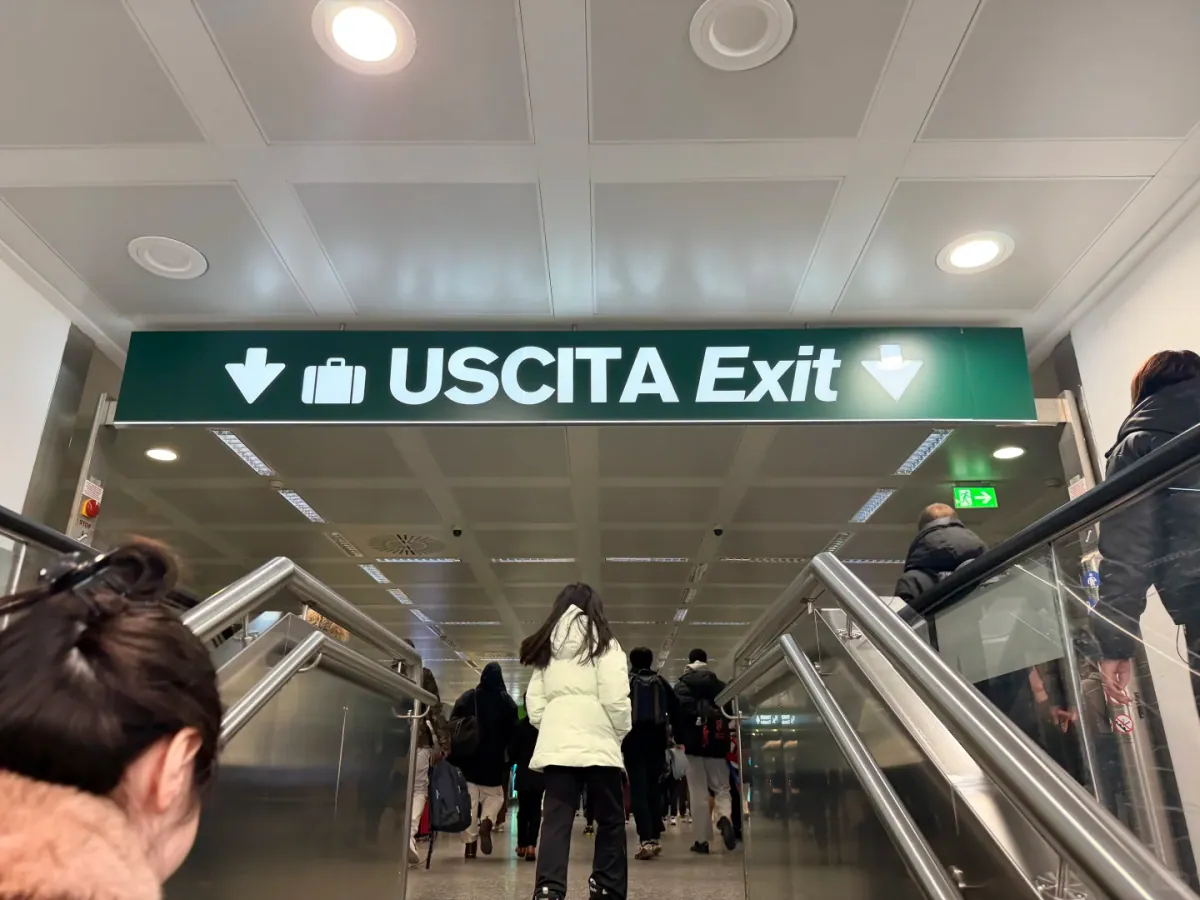
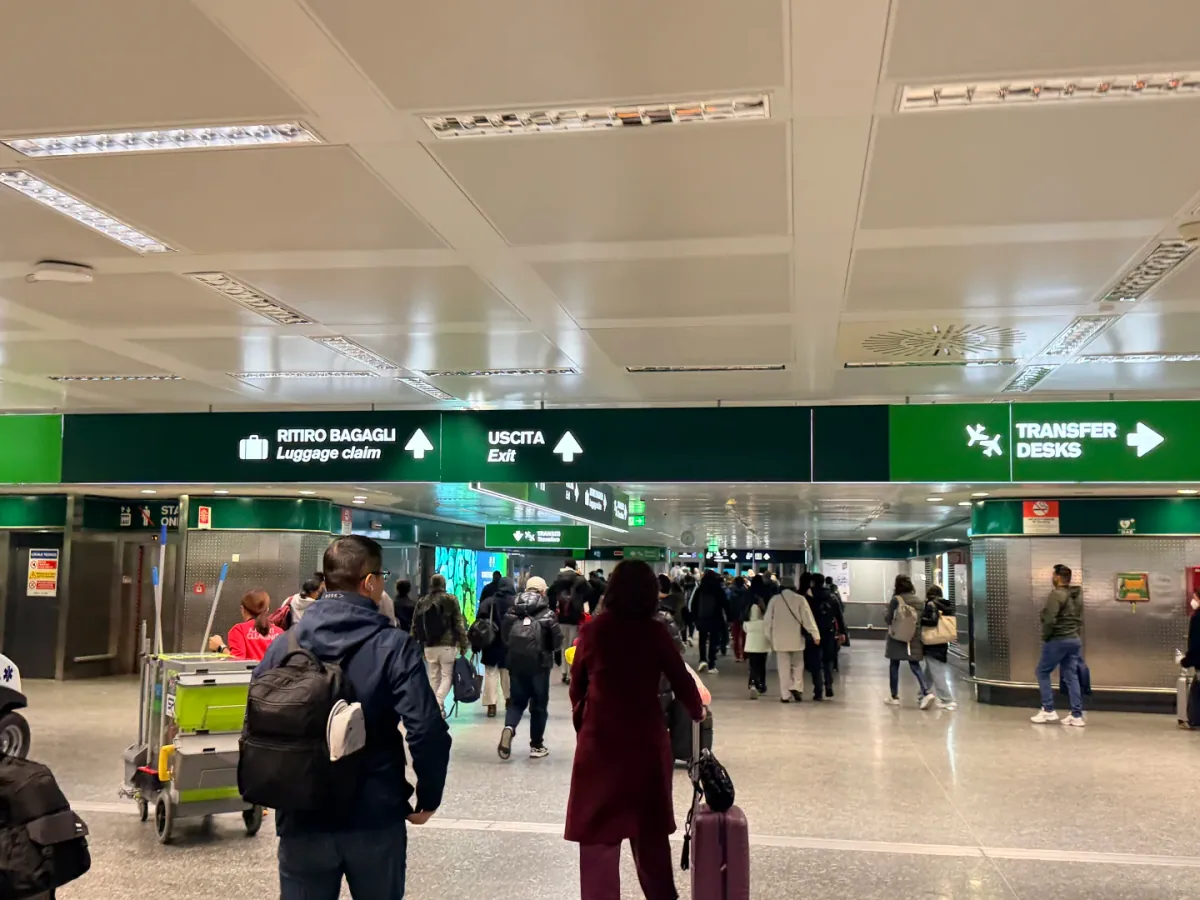
There is essentially one route: follow the green USCITA EXIT signs and take the escalator up to the immigration hall. Do not drift after the Transfer arrows — those are for connecting passengers — and do not stop to look for Wi-Fi. Every minute spent there costs a few places in the queue.
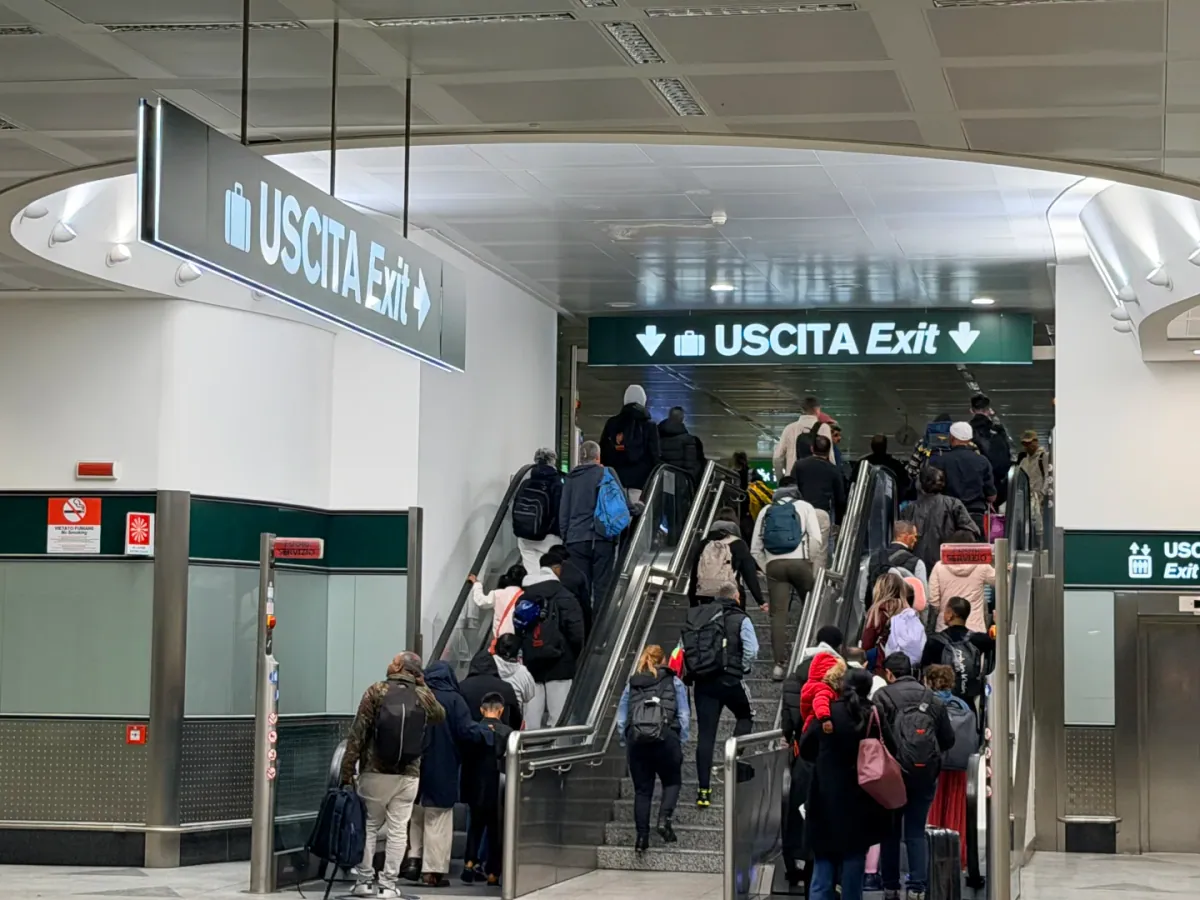
How much you save depends on where you sit. Leaving a wide-body is itself a queue: the front cabin goes first and the back waits, often fifteen or twenty minutes in all. A forward seat halves that wait; failing that, walk briskly instead of stopping at the jet bridge. This flight parked on a remote stand and needed a shuttle bus, so passengers only stepped off at 06:30 — and the first of them were already in line when the rest arrived.
Two details: the immigration hall is one level up and the escalator runs one way, so follow USCITA EXIT upwards; and do not stop for the toilet or water, because once the flow has passed you cannot get back to your place.
3. The All Passports lane
In the hall, read the signs before joining anything. Two systems run side by side: Self service passport control gates for EU travellers, and manual counters marked All passports, or TUTTI I PASSAPORTI in Italian. A Chinese passport belongs in the second.
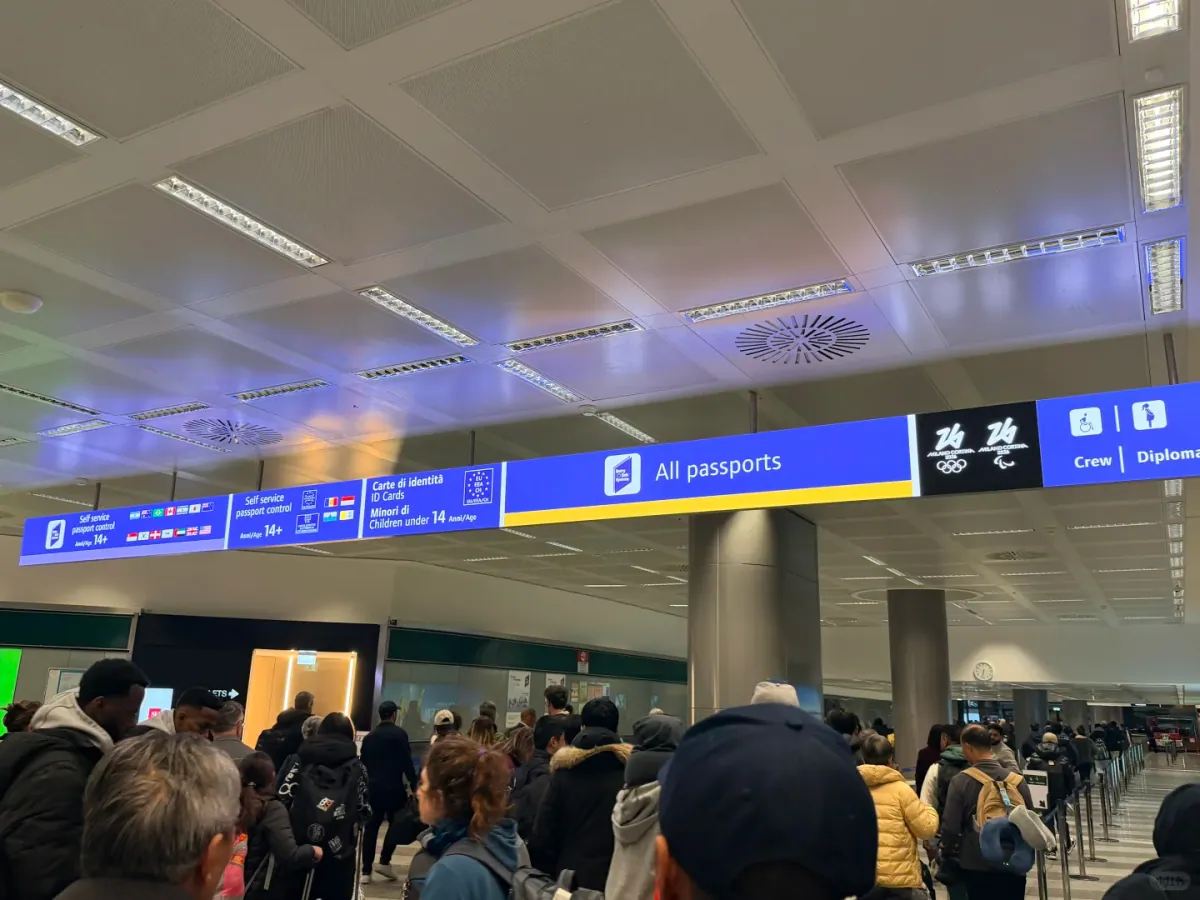
The signs carry a lot of information. On the same blue panel, the left section reads "Self service passport control" with EU flags and small print about ID cards and children under 14; the right section is "All passports", and beyond it crew and diplomatic lanes.
Families should note that the "Minori di 14 anni / Children under 14" lane is for the children of EU travellers and does not apply to Chinese passports. Joining it means walking back to the end of the line — at peak hour, another half hour gone.
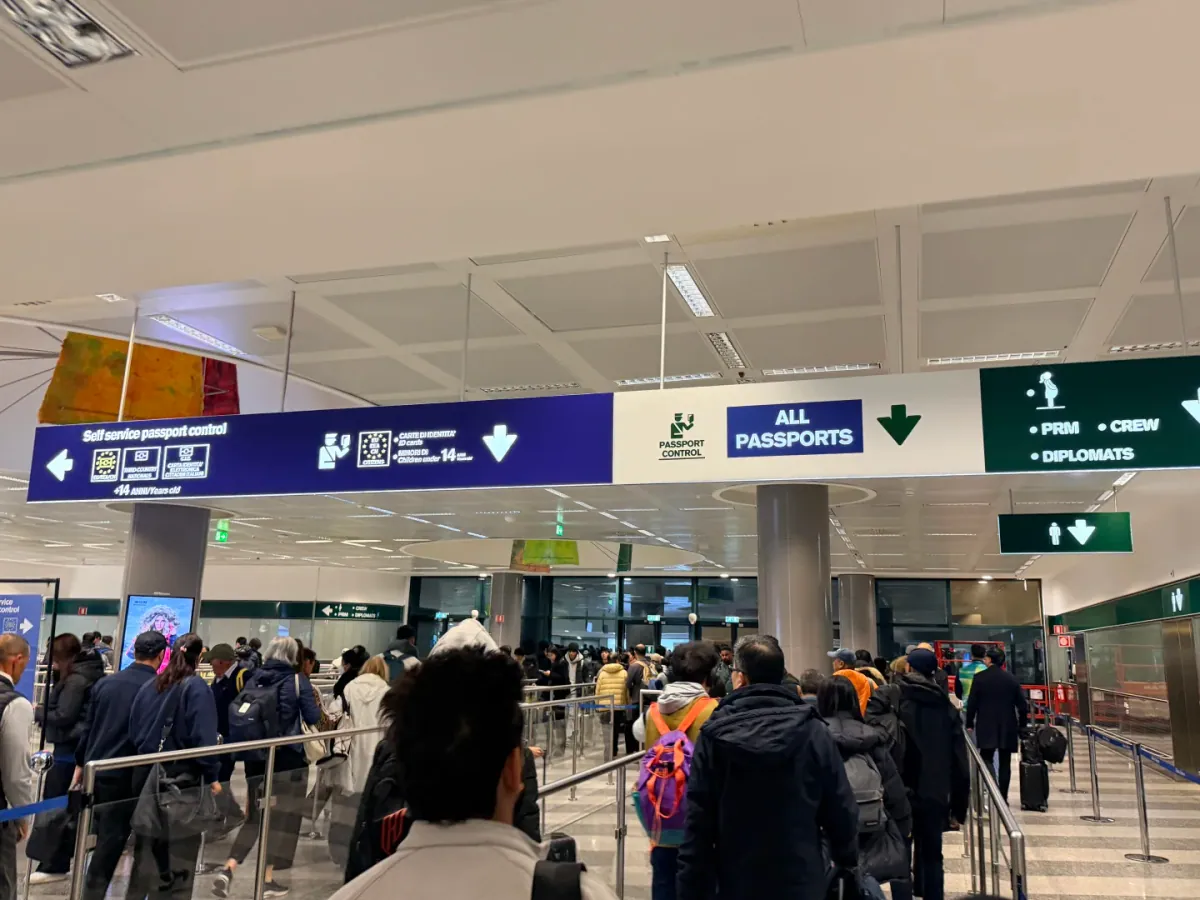
One claim needs correcting. Guides from a few years ago said Chinese passports could use the self-service gates and clear in 15 minutes. On this morning, staff directed every non-EU passenger to the manual lanes and the gates stood almost empty. Whether a machine accepts a given passport, and whether it is switched on that day, are separate questions from where the staff send you — at the junction, follow the uniform, not the old blog post.
If you do end up in the wrong lane, stay calm: before you join the snake barrier you can step across, but once inside it, the only way out is the back of the queue.
4. A 65-minute timeline, measured
The time stamps show where the 65 minutes went. Border control accounted for 35 of them; the rest was the shuttle bus, walking and waiting for a bag.
| Time | What happened |
|---|---|
| 06:10 | Aircraft landed, about 20 minutes early |
| 06:30 | Off the shuttle bus, into the terminal |
| 06:35 | Joined the All Passports queue |
| 07:10 | Passport stamped, border control cleared |
| 07:15 | Bag collected from the belt |
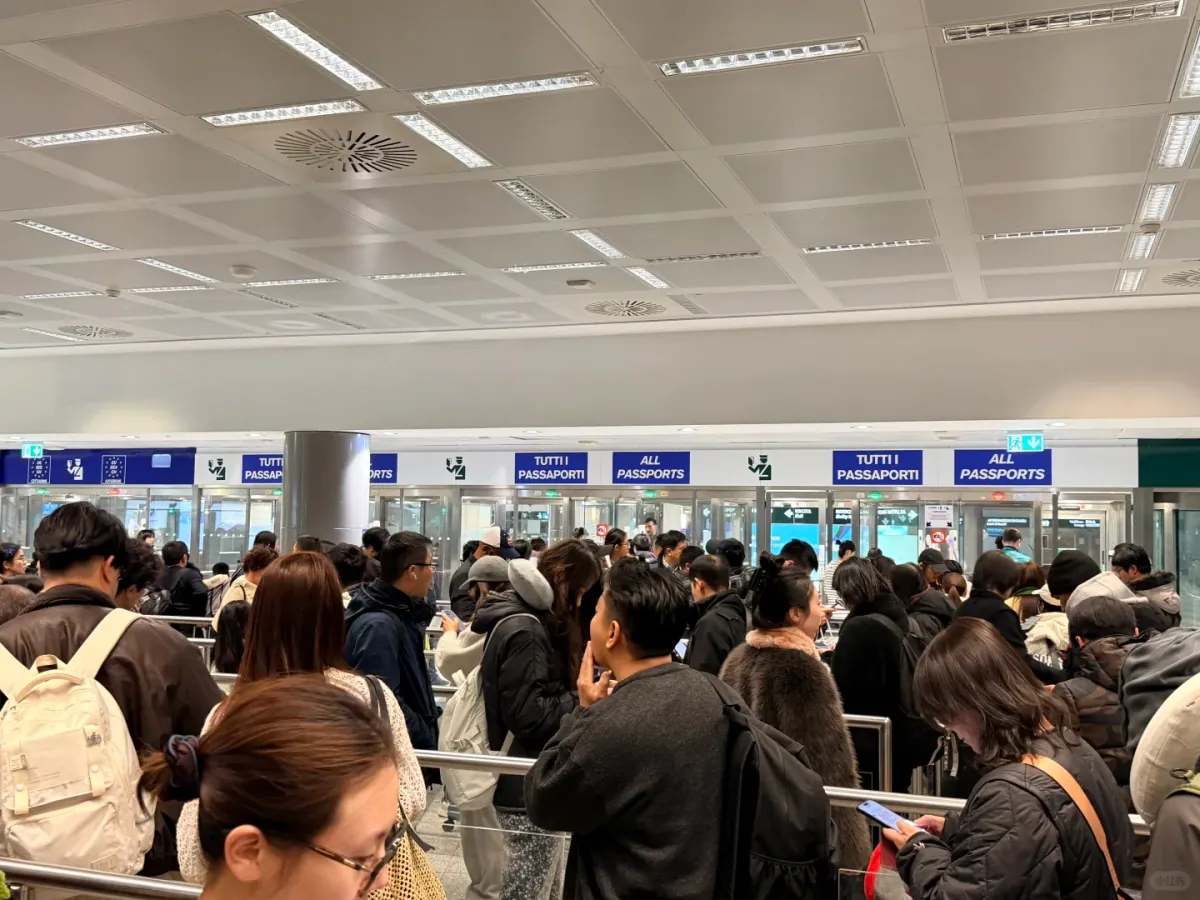
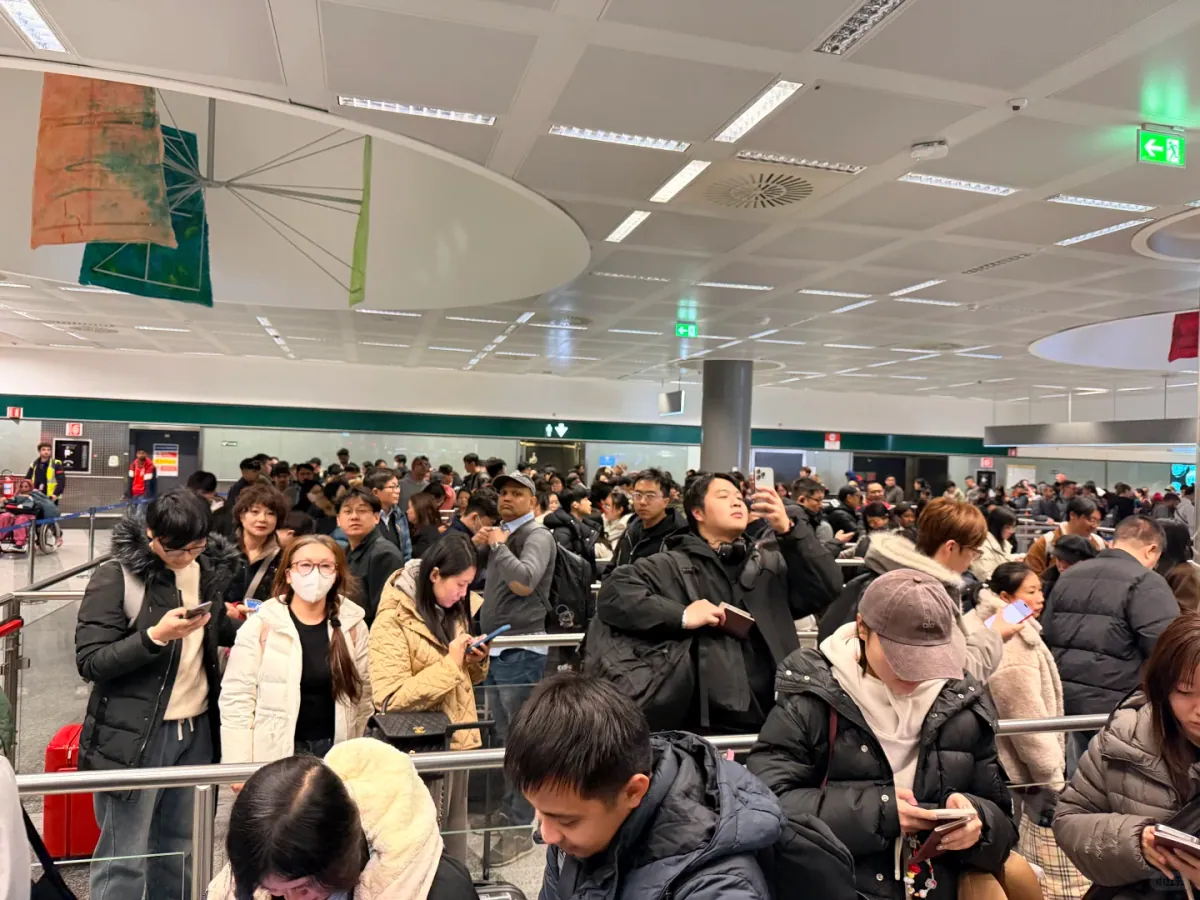
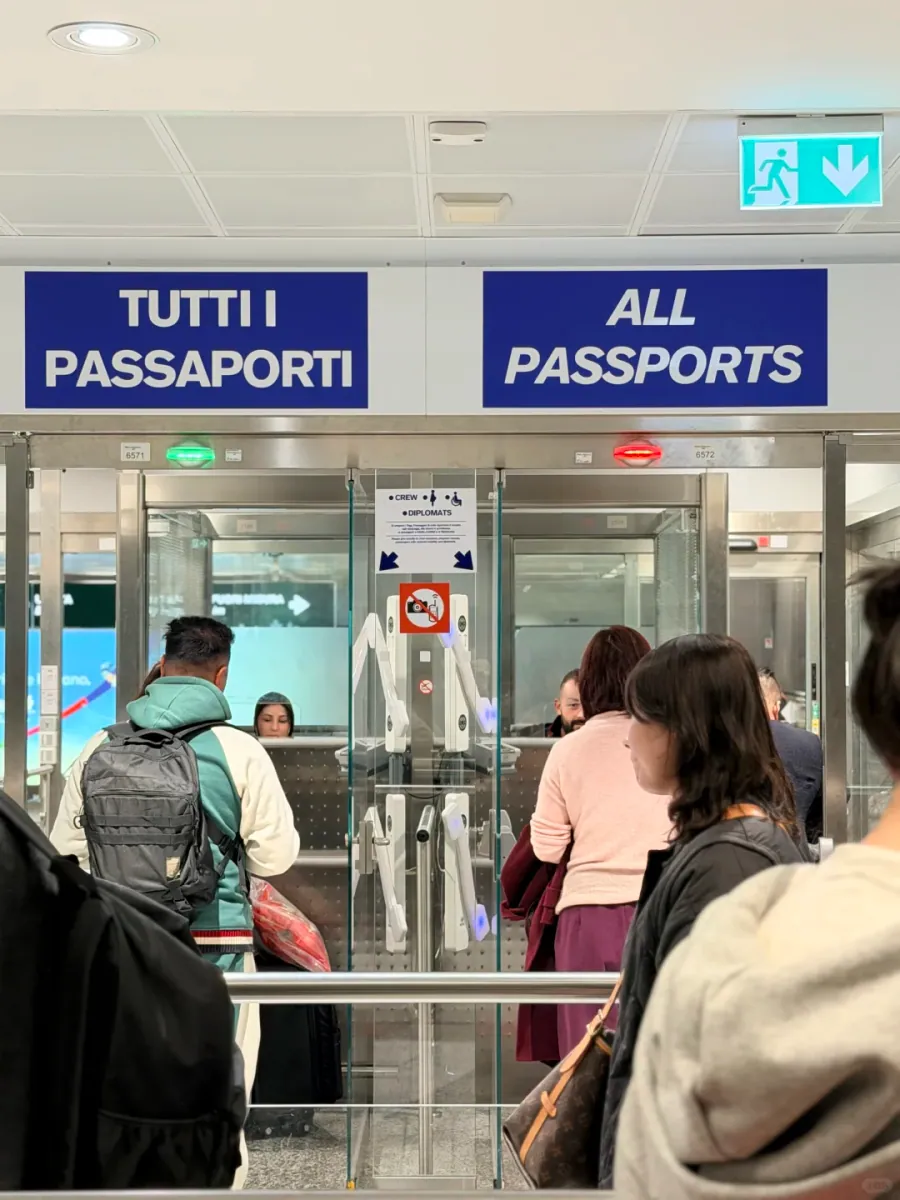
There is little to do in the queue, but one thing pays: open your passport to the photo page and hold it ready, so the turn is a handover, a glance and a stamp. The check itself was simpler than expected. Only the passport was presented; no itinerary, booking or insurance was requested, no questions were asked and no fingerprints were taken.
Fingerprints deserve a note. The EU's Entry/Exit System (EES) is fully in operation in 2026, and non-EU visitors normally register fingerprints and a facial image at a kiosk on first entry. This arrival did not involve one, which is likelier a matter of timing and local arrangements than a change in the rules, so first-timers should still expect the extra step.
The paperwork worth carrying is unchanged: return itinerary, hotel booking, travel insurance. Not being asked this time does not mean you will not be asked next time.
Why does a queue look frozen and still keep moving? The bottleneck is usually not the booth but the people in front of it — someone starts searching a bag at the desk, a family steps up together, another hesitates at the junction.
5. Baggage claim and leaving
Past border control is the baggage hall. Find your flight on the screens and its belt, then walk over. Here the staff said the bags had already been offloaded to the opposite side, which saved waiting for the belt to start; with a lot of luggage, identify your cases before hunting for a trolley.
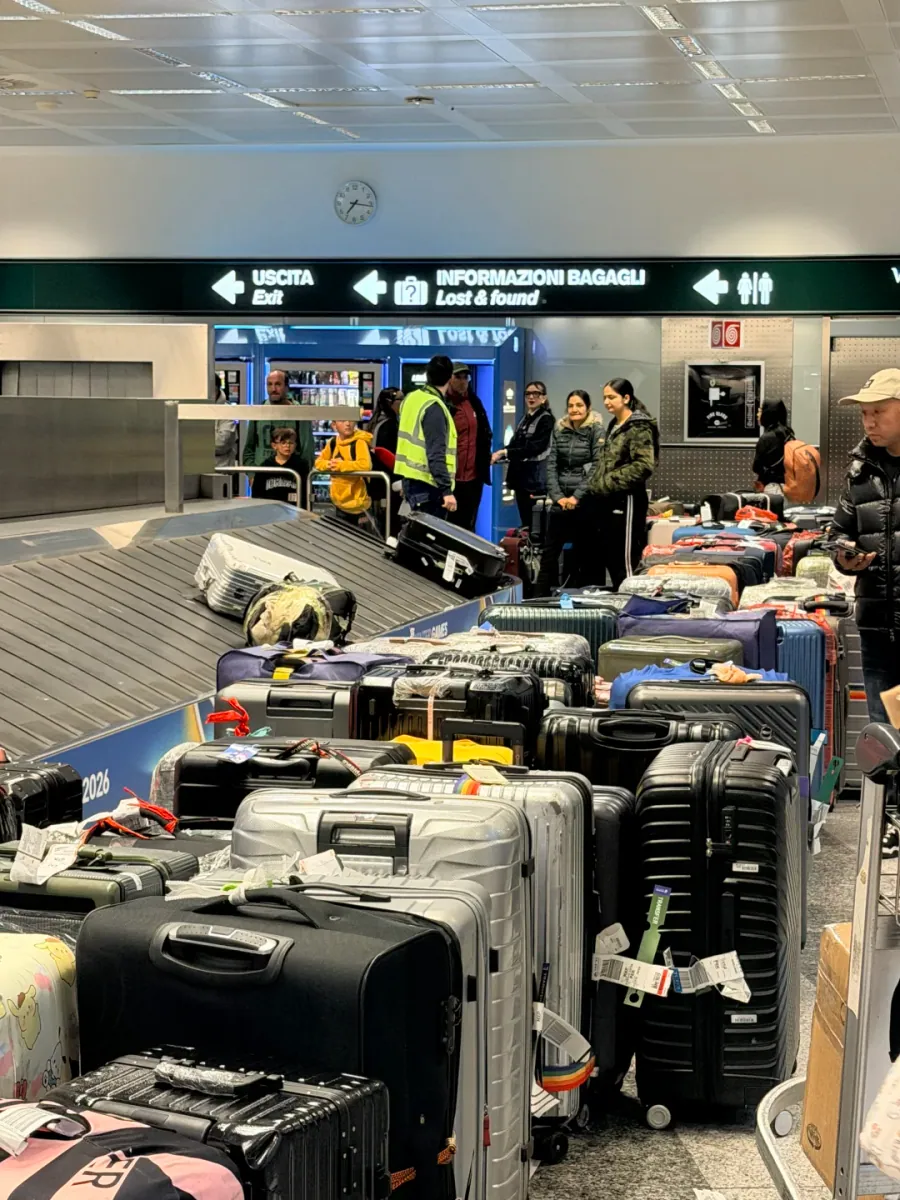
If a bag does not appear, do not stand at the belt: go to the baggage enquiry desk (signed INFORMAZIONI BAGAGLI / Lost & found), register it and take the reference before contacting the airline.
After the bags comes the last checkpoint: the green channel if you have nothing to declare, the red channel if you are over the cash allowance or carrying anything declarable. Outside arrivals, the Malpensa Express leaves from the station under Terminal 1 for Milan's Cadorna and Centrale stations, and buses and taxis pick up just outside, all signposted; late at night, a taxi or pre-booked transfer is simpler.
Looking back, three things did the work: landing before the 07:00 peak, sitting forward to get off first, and taking the All Passports lane. None costs extra; they only need the right choice when booking and when the doors open.
Budget time the same way. Landing early with a short queue, allow 30 to 40 minutes from door to belt; landing after 07:00, allow an hour and a half. If a train or connection follows, leave two hours or more of buffer — you cannot control how long immigration takes, but you can control the slack around it.
One caveat: counter numbers, waiting times and EES registration vary with the day's schedule and staffing. The timeline here comes from a single measured arrival; check the airport and Italian border police for the day you travel.
Related links
- On this site: Milan Malpensa Airport (MXP), Italy (IT)
- Wikipedia: Milan Malpensa Airport
- Baidu Baike: Milan Malpensa Airport
More articlesTravel notes
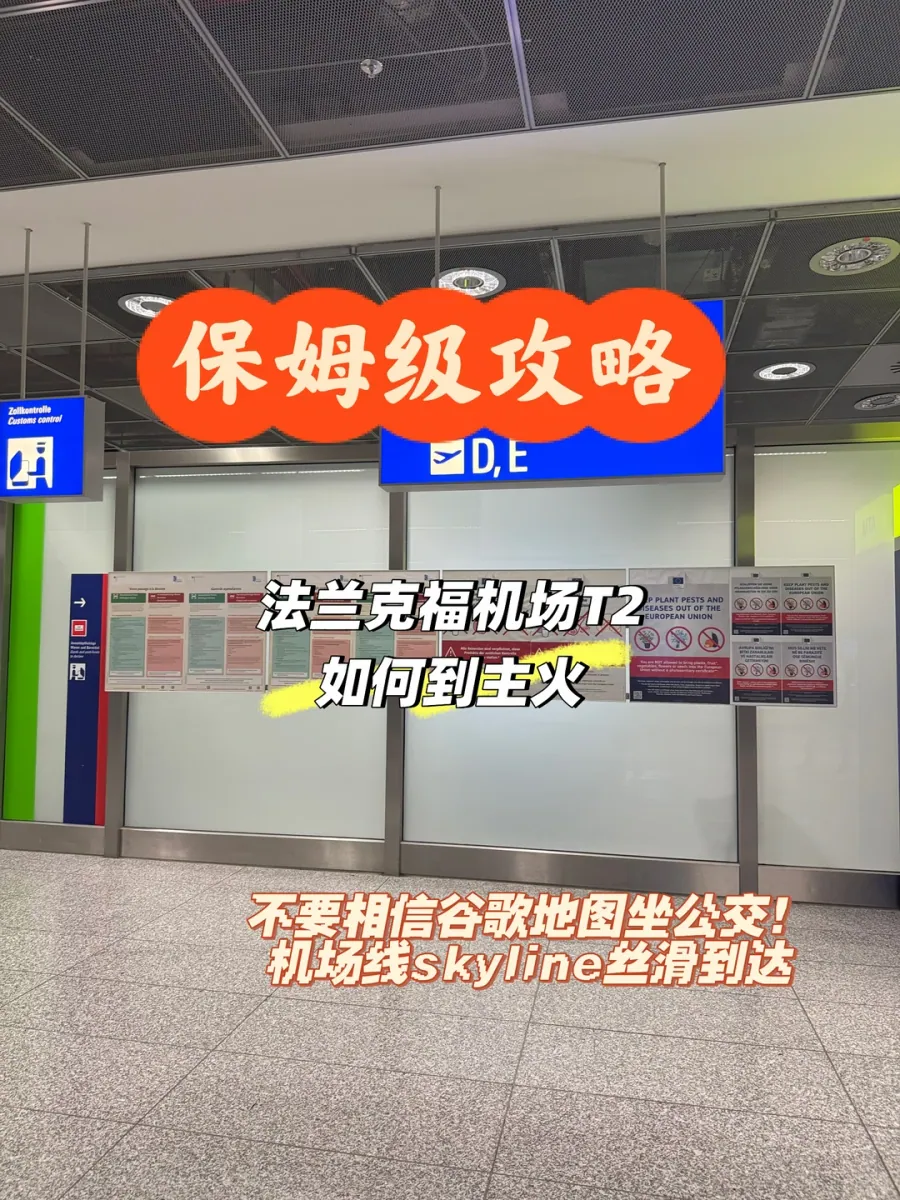
Frankfurt Airport Terminal 2 to Frankfurt Hauptbahnhof: SkyLine, then the S8 or S9
How to get from Frankfurt Airport Terminal 2 to Frankfurt Hauptbahnhof without stepping outside: the free SkyLine people mover to Terminal 1, the Bahnhof signs down to the regional station, and about fifteen minutes on the S8 or S9, plus tickets, frequencies and the five wrong turns.10 min read
Frankfurt Airport Terminal 3 to the Fernbahnhof: SkyLine, a long corridor, and 1 hour 40 minutes
A step-by-step account of reaching Frankfurt Airport long-distance station from Terminal 3: the free SkyLine to Terminal 1, the blue Fernbahnhof signs and the corridor to The Squaire, waiting for a platform number on the Abfahrt board, and how much time to allow.10 min read