Your First Hour at Kansai Airport: Immigration, SIM Cards, T1 and T2, and ICOCA
- Kansai International Airport
- KIX
- Japan arrival
- SIM cards
- ICOCA
- airport transport
For most first trips to Japan, Kansai International Airport (KIX) is where the country begins, and the hour after the aircraft stops sets the pace: whether the declaration is filed, whether your phone has data, which queue you join and which train you end up on.
This guide works through that hour in order — preparation, SIM cards, clearing arrivals, moving between terminals, the city and ICOCA — as a checklist, not another terminal description. Fares and timetables change, so check the operators' own sites.
1. Before you fly: Visit Japan Web and the arrival card
Immigration can be handled ahead of time or on the ground; the difference is how long you queue.
- File in advance. Fill in your arrival details on the official Visit Japan Web site before you board and the system issues a QR code; scan it at customs to skip a chunk of the queue.
- Fill it in on the plane. Without an advance filing, ask the cabin crew for an arrival card and fill in your name, passport number and flight number. The arrival card is one per person; the customs declaration is one per group.
- Scan and file on arrival. If you land late, you can fill everything in on your phone while queueing, but you need a Japanese SIM already inserted to get online.
Of the three, filing ahead is easiest, especially when several flights land at once. The filing covers two separate things — immigration and customs — so do not close the page halfway. Save or screenshot the QR codes: airport Wi-Fi comes and goes.
2. Choosing a SIM card
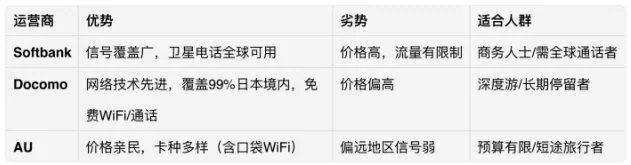
The three big operators differ mainly in coverage, price and whether you need calls.
| Operator | Strengths | Weaknesses | Best for |
|---|---|---|---|
| Softbank | Wide coverage; satellite phones work worldwide | Expensive; limited data | Business travellers who need global calls |
| Docomo | Advanced network, covers about 99% of Japan, free Wi-Fi and calls included | On the expensive side | Long stays and deeper travel |
| AU | Cheaper, wide range of plans including pocket Wi-Fi | Weak signal in remote areas | Short trips on a budget |
The logic is simple: a short city trip can take the cheap option, while the countryside or phone bookings put coverage ahead of price. Plans change often, so check each operator's site.
Kansai's arrivals level has Wi-Fi rental and SIM card counters, so buying on landing is possible; if you rely on maps, though, a card bought in advance is calmer — queueing at immigration is the time to insert it and test the connection.
3. Clearing arrivals: T1 versus T2
Kansai has two terminals that differ enough in facilities and transport that you should know which one your flight uses.
Terminal 1 (full-service airlines)
- Airlines: All Nippon Airways (ANA), Japan Airlines (JAL), Cathay Pacific and others.
- Facilities: duty-free shops and restaurants, but long security queues at peak times — arrive about 2.5 hours before departure.
- Arrivals process: on some flights you first take a 2-minute shuttle to the terminal; then fingerprinting and the arrival card (one per person) → passport and customs declaration (one per group) → baggage → the nothing-to-declare channel.
- Baggage: if you park at a remote stand, the bus ride means allowing a 20-minute buffer.
Terminal 2 (low-cost carriers)
- Airlines: Peach, Spring Airlines and others.
- Facilities: fewer duty-free shops and limited food, but arrivals are quick — done within 15 minutes.
- Baggage: straight to the carousel, with no shuttle bus.
A rough rule: in a hurry with little luggage, T2 really is faster, but it has fewer transport options — getting into the city means a bus or a return to T1. T1 is slower to clear, yet the trains are in the building. T2's international operation is small, so the carousel is close too, which matters when travelling with children.
4. From T2 to T1: the free shuttle bus
Landing at T2 and planning to take the train, your first job is the free shuttle bus.
- Frequency: every 5–10 minutes, with a ride of about 5 minutes that passes a lake on the way.
- After you get off: at T1 go up to level 2, into the central hall (there is a Lawson), and cross the walkway to the railway ticket area.
Two things go wrong here. Do not cut the shuttle too fine: a 5-minute ride plus waiting and loading bags needs 15–20 minutes. And do not look for the station on the ground floor at T1 — the ticket area is on level 2.
5. Into the city: trains, buses and taxis
Decide where you are sleeping first: Namba and Shinsaibashi mean the Nankai line, Kyoto and Shin-Osaka mean JR, and Nara, Kobe or Universal Studios mean the bus.
Nankai Rapi:t limited express
- Route: Kansai Airport → Namba, about 38 minutes; Shinsaibashi and Kuromon Market are both around Namba.
- Fare: about ¥1,450 one way, or about ¥1,100 bought in advance on the operator's site.
- Why: the fastest option, and the obvious one if you are here to shop.
JR HARUKA limited express
- Route: Kansai Airport → Tennoji in about 26 minutes, continuing to Shin-Osaka and Kyoto.
- Fare: as published by JR West on its own site; foreign visitors can buy a discount ticket.
- Why: comfortable seating, and a good fit with heavy luggage if you would rather not change trains repeatedly.
One point to get right, because it is widely muddled: the HARUKA does not serve Umeda or Osaka Station. It runs to Tennoji, Shin-Osaka and Kyoto; for Umeda and Osaka Station you change at Shin-Osaka or Tennoji, and the change and the wait belong in your timing.
Airport buses
- Limousine bus: T1 and T2 → Namba OCAT, about 45 minutes, about ¥1,300 one way, calling at Shinsaibashi and Umeda on the way.
- Nankai bus: T1 and T2 → Tengachaya Station, about 40 minutes, about ¥980 one way.
Taxis
- Cost: about ¥12,000 to Namba, about ¥15,000 to Umeda.
- When: only for late arrivals or an unreasonable amount of luggage.
6. ICOCA and a few things learned on the ground
ICOCA is the transport card that works across Kansai — metro, JR and buses — and removes the business of buying a ticket each time. A contactless Visa card also opens the gates at a small discount, but a card is the better souvenir: the Astro Boy and Hello Kitty editions have collectors.
Buying one
- At a staffed counter: the JR ticket office on level 2, or the Nankai ticket counter, both with Chinese-speaking staff. The cost is a ¥500 deposit plus the amount you load, for example ¥2,000.
- At a ticket machine: choose the card type → choose the amount to load → pay by cash or credit card → take the card.
Refunds: the deposit and refund rules are as published by JR West at the time of purchase, and they have changed in recent years; confirm the balance and any fee at the counter first. Refunds are generally handled within Kansai. If the balance runs short the gate stops you, so top up at a fare machine or convenience store rather than buying a new ticket.
A few notes:
- Language: airports, stations and tourist areas have Chinese signage, and Google Translate is a useful backup.
- Late arrivals: the last train is around 23:43; miss it and you are choosing between the airport bus and a taxi.
- Luggage: T2 clears faster, which suits a tight schedule; T1 is better connected for transport.
Related links
- On this site: Kansai International Airport (KIX), Japan (JP)
- Wikipedia: Kansai International Airport, ICOCA
- Baidu Baike: Kansai International Airport
- Official site: Visit Japan Web
Image source: compiled from public material. Entry rules, fares, timetables and transport-card terms are as published by the airport and the operators; check their websites on the day you travel.
More articlesTravel notes
Duty-Free at Haneda Airport: T2 and T3 Shops, Brands and Transit Rules
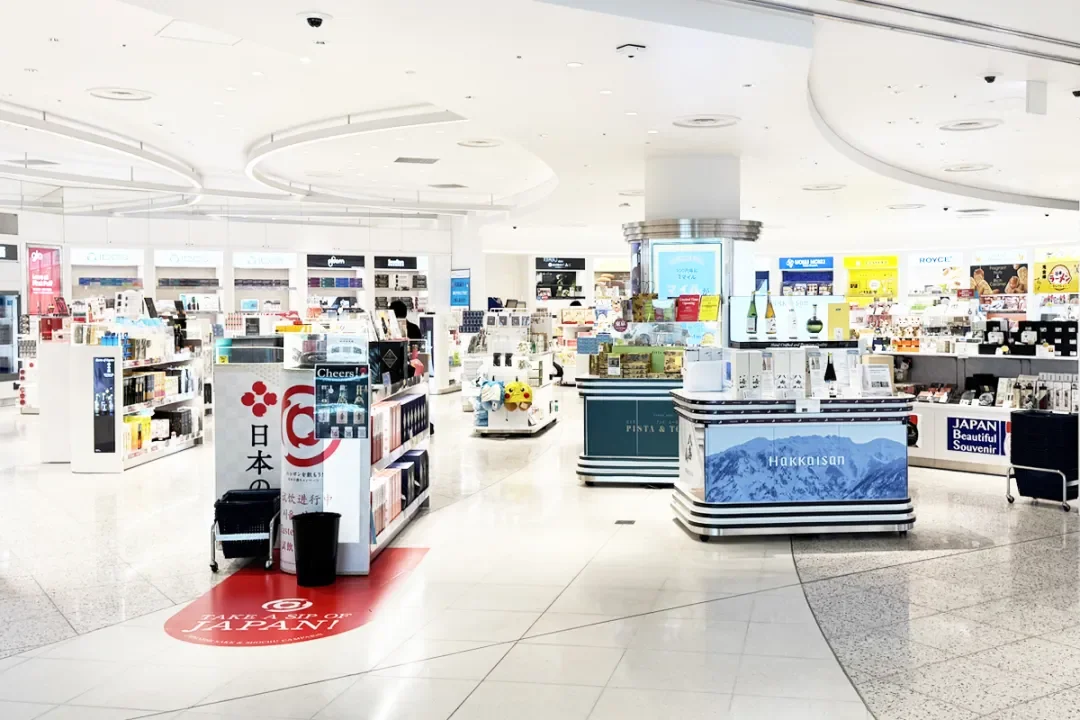
A practical guide to duty-free shopping at Haneda Airport (HND): the T2 TIAT DUTY FREE SOUVENIR, the two T3 shops by gate 109, their hours and brands, ANA vouchers and online pre-order, plus duty-free versus tax-free, liquids on connections and what is worth buying at the airport rather than in town.5 min read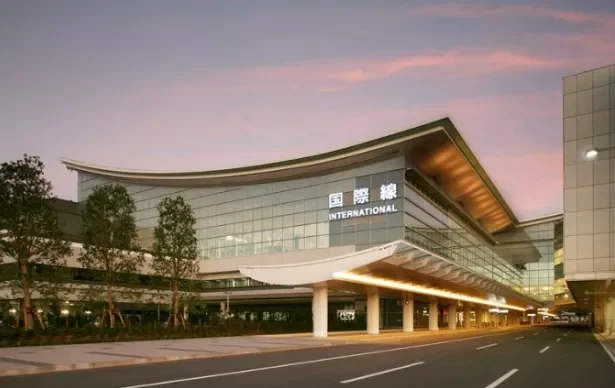
Getting from Haneda Airport into Tokyo: Monorail, Keikyu or Bus?
A practical guide to the Haneda Airport (HND) run into Tokyo: the Tokyo Monorail to Hamamatsucho, Keikyu trains to Shinagawa and through to Asakusa, airport buses to hotels and the wider Kanto region, taxis and late arrivals, with fares, transfer stations and a which-line-for-which-area table.6 min read