Dubai Approves a $35 Billion Terminal at Al Maktoum International
- Al Maktoum International Airport
- DWC
- Dubai International Airport
- Emirates
- airport expansion
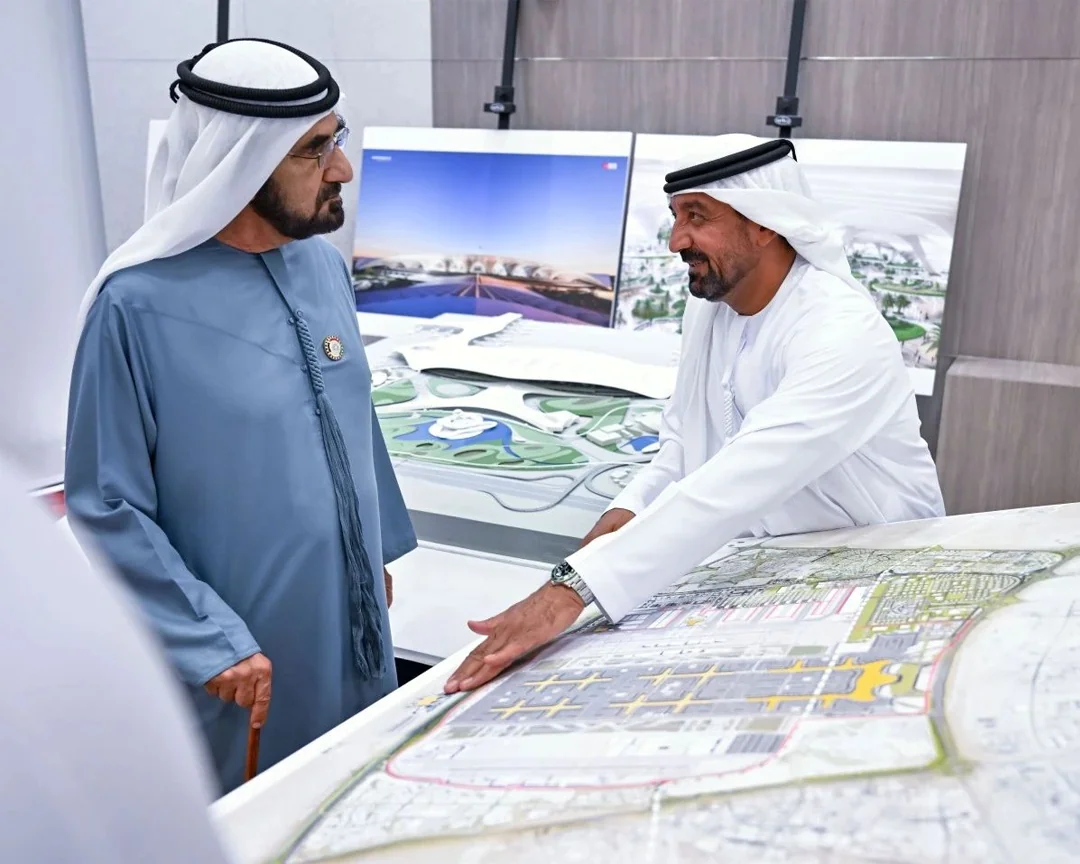
On 28 April 2024, Sheikh Mohammed bin Rashid Al Maktoum, the ruler of Dubai, announced his approval of plans for a new terminal at Al Maktoum International Airport (DWC). As planned, it will cost about $35 billion, occupy a 70 square kilometre site, have 400 gates and five parallel runways, and be built in phases over the next decade. Once complete it will be able to handle 260 million passengers and 12 million tonnes of cargo a year, and all of Dubai International's operations will move there.
This is less a construction permit than a statement about what Dubai intends to be. "We are building a new project for future generations, ensuring continuous and stable development for our children and their children," Sheikh Mohammed said. "Dubai will be the world's airport, port, urban hub and new global centre." Putting the airport, the port and the city in one sentence is how Dubai has worked for two decades: build the infrastructure first, then let passengers and freight fill it in. What follows looks at the numbers, the timing, the site and the risk.
1. The numbers: 70 square kilometres, 400 gates
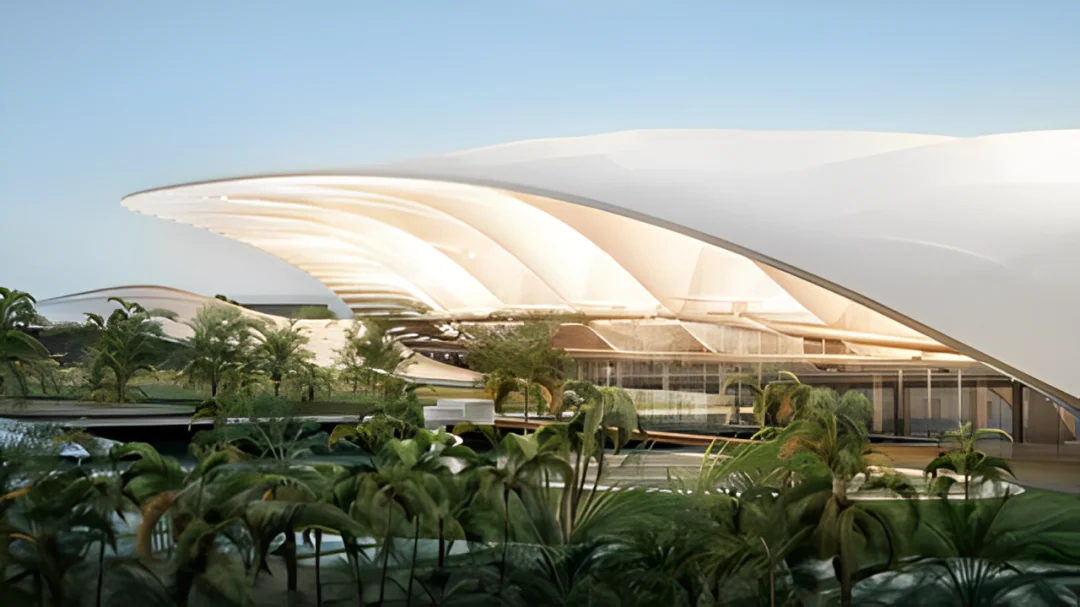
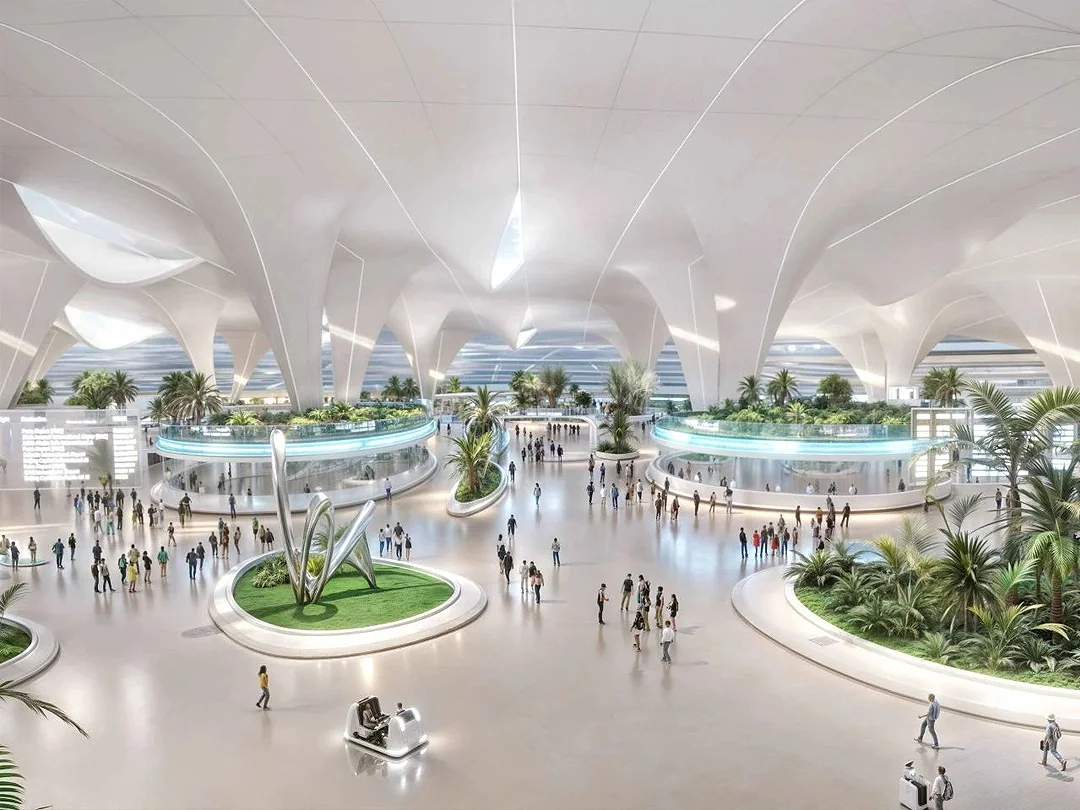
The official documents are specific: about $35 billion of investment, 70 square kilometres of land, five parallel runways, 400 gates, five passenger terminals, and a first phase delivered within ten years. In the renderings the terminal is a run of white, undulating roofs that recall the traditional Bedouin tent of the Arabian Peninsula — "Bedouin" meaning the nomads of the desert who moved with water and grazing. Using the tent as the motif draws the idea of a stopping place in the desert directly into the building.
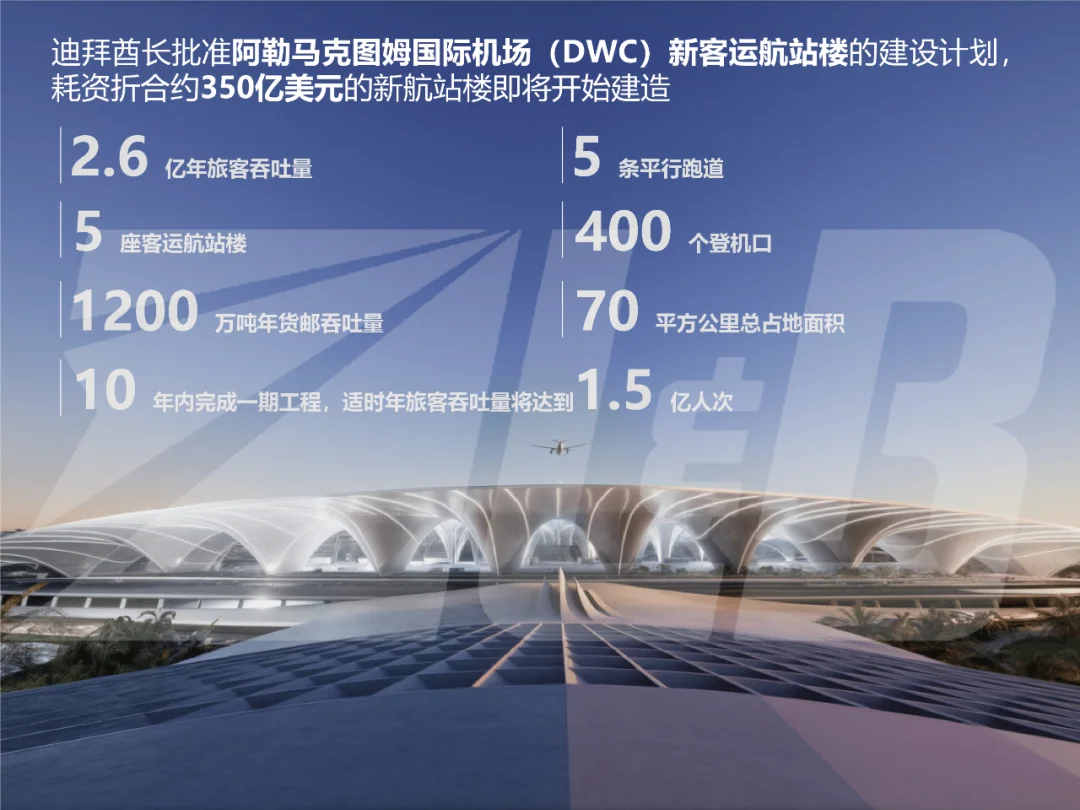
| Item | Published figure |
|---|---|
| Investment | About $35 billion |
| Site | 70 square kilometres |
| Runways | 5 parallel runways |
| Gates | 400 |
| Passenger terminals | 5 |
| Ultimate passenger capacity | 260 million a year |
| Cargo capacity | 12 million tonnes a year |
| First phase | Within the next 10 years |
| First-phase passenger capacity | 150 million a year |
It is worth separating "ultimate" from "first phase". The 260 million figure is the capacity of the finished airport; the official infographic states that when the first phase is completed within a decade, annual capacity will reach 150 million. That is already more than seventy per cent above Dubai International's traffic today — in other words, even phase one would be a hub on a different scale from the one Dubai has now.
2. Why now: DXB's ceiling
Dubai International (DXB) is among the busiest international airports in the world, with close to 87 million passengers in 2023. Its constraint is not the terminal buildings but the runways and the land: two parallel runways set the peak-hour limit, and the city has closed in around the site, leaving almost no room to expand. Demand keeps growing; the hardware is close to full.
Two engines drive that demand. The first is Emirates. Based in Dubai, the airline has long been a leading operator on long-haul routes, with a fleet built around the A380 and the 777; its financial results are read as a barometer of the city-state's wider economy — when the airline makes money, passengers and business activity are there. The second is tourism: in the first half of 2023, Dubai's international visitor numbers passed their pre-pandemic level, the best half-year the emirate's tourism industry has recorded. That surge in traffic is the direct reason the "world's largest airport" project was accelerated.
The logic follows. Dubai is not building a relief airport; it is giving a hub that is already full a much larger container. Moving all of DXB's operations means resetting the operating environment of a mature route network in one go — a choice only a city of this scale can seriously consider.
3. Why the south: a corridor taking shape
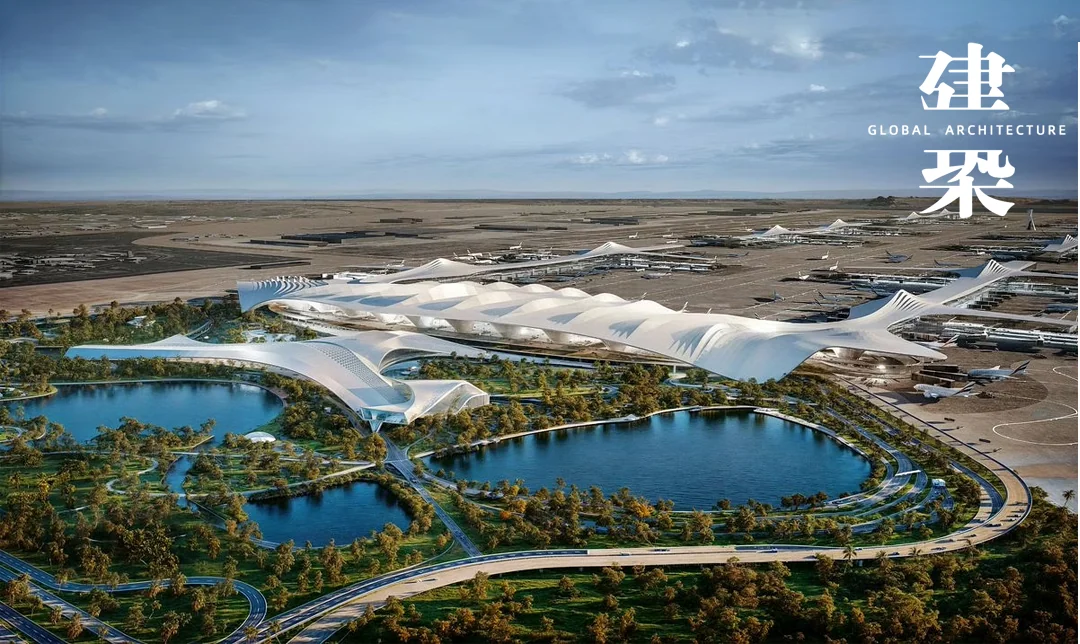
DWC sits in Dubai South, in the south-west of the emirate, next to Jebel Ali port and next to the site of Expo 2020, whose campus reopened as Expo City Dubai after the exhibition closed. Putting the airport there places air freight, sea freight, exhibitions and housing on the same piece of land: Jebel Ali handles the containers, the airport handles high-value air cargo, and Expo City and the surrounding districts supply the activity.
It is also a familiar Dubai method: rather than wait for the city to grow out to the airport, use the airport to pull the city in that direction. DXB was built on the edge of the city too, and the city eventually surrounded it; this time the planners have placed the new airport further out, and the 70 square kilometres are both an airport site and the frame for future urban growth.
4. The risk: one move, ten years
The biggest risk is not money but the move. Shifting all of Dubai International's operations to DWC means rebuilding Emirates' base, the connecting waves, the cargo facilities and the ground transport network. Airlines do not relocate because a terminal looks good; they move for minimum connection times, baggage-system reliability and dense banks of flights. If any one of those slips, traffic will drift to Doha, Abu Dhabi or Istanbul.
The second risk is phasing. Ten years is a long window, and a first phase of 150 million passengers only makes sense if airlines and destinations grow with it. The third is cargo: DWC is already strong in freight, and a 12 million tonne target means scaling the existing business rather than simply relocating it. The fourth is demand itself. The 260 million figure describes the fully built airport, not a target for the next decade; if global aviation growth slows, runways and gates sit idle.
5. What it means for travellers
Nothing needs to change yet. DWC currently handles mainly cargo along with a small number of passenger flights; DXB remains Dubai's main passenger gateway. The new terminal will be built in phases and the transfer of operations will also come in stages, so for the near future the airport you use in Dubai will almost certainly still be DXB.
What matters is the timetable, not the renderings. Once the operator publishes the batches in which flights move, connections through Dubai may need to be recalculated: the two airports are tens of kilometres apart, and turning up at the wrong one costs far more than an extra hour of buffer. Check the airline's and the airport operator's latest notices before you travel — that is the only reliable approach.
6. The 2026 update: from drawings to tenders
The 2024 approval was only the starting point. In August 2026 Dubai said it would award about AED 55 billion of contracts by the end of the year for the Al Maktoum expansion (The National); the head of Dubai Airports told Khaleej Times that the regional conflict had not slowed construction. For travellers, the opening timetable remains a medium-term variable: DXB keeps carrying the main passenger load while DWC grows its cargo and some passenger traffic before the full transfer.
That is why the "world's largest airport" story resurfaces every few months. The milestones that matter are not renderings but contracts, runways and terminal handovers. As long as DXB is operating normally, each DWC tender is preparation for the next decade rather than a change to your next trip.
Related links
- On this site: Dubai International Airport (DXB), United Arab Emirates (AE)
- Wikipedia: Al Maktoum International Airport, Dubai International Airport
- Baidu Baike: Al Maktoum International Airport
Image source: GA Global Architecture and the Dubai Government Media Office. Project figures and timetables are as published by Dubai Airports and the operator; check the operator's site before you travel.
More articlesTravel notes
Adelaide Airport Wins Two Skytrax Awards for Staff and Regional Service
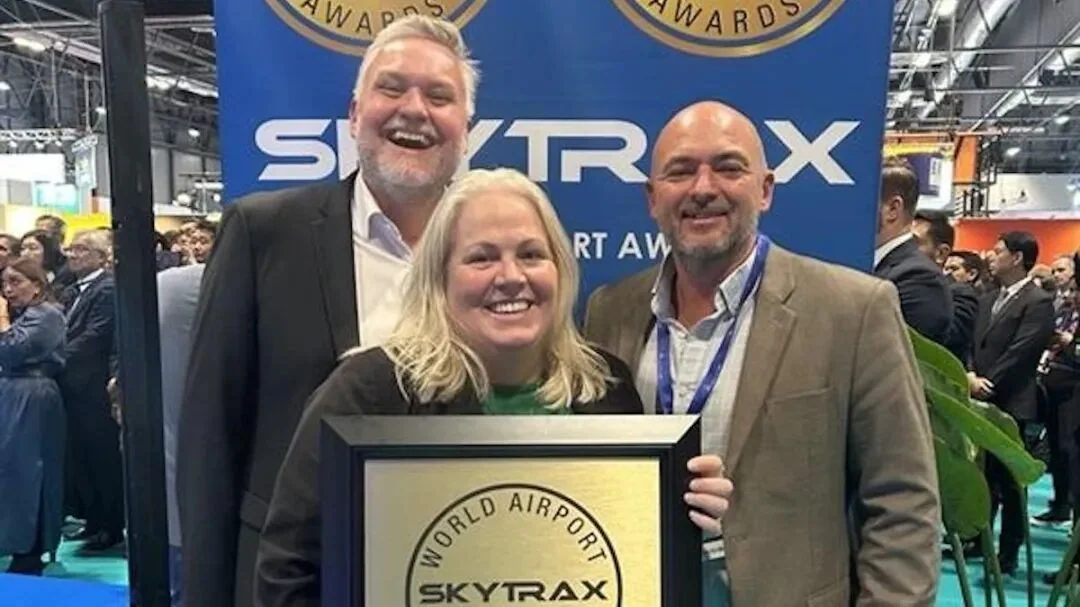
Adelaide Airport has been named Best Airport Staff in Australia/Pacific for the first time and Best Regional Airport in Australia/Pacific for the fourth time in five years at the Skytrax World Airport Awards in London. Passenger numbers passed nine million in 2025, international traffic grew more than 20%, and a A$600 million expansion called Project Flight is under way.4 min read
Buying Whisky at Airport Duty-Free: A Global Shelf Guide by Flight Time
From Taoyuan and Changi to Heathrow and Sydney, airport duty-free is where whisky's travel-retail exclusives live: single casks, cask strength and no local duty. A region-by-region survey of what stood on the shelves around Chinese New Year 2020, plus how to choose by age, cask, bottle size and the liquid rules on connections.7 min read