
Melbourne Airport
 Melbourne · Australia· Melbourne Airport
Melbourne Airport (IATA: MEL) is a airport serving Melbourne, Australia.
Melbourne Airport (MEL) is a large international airport serving Melbourne, Australia. This page gathers the airport codes, location map and travel information.
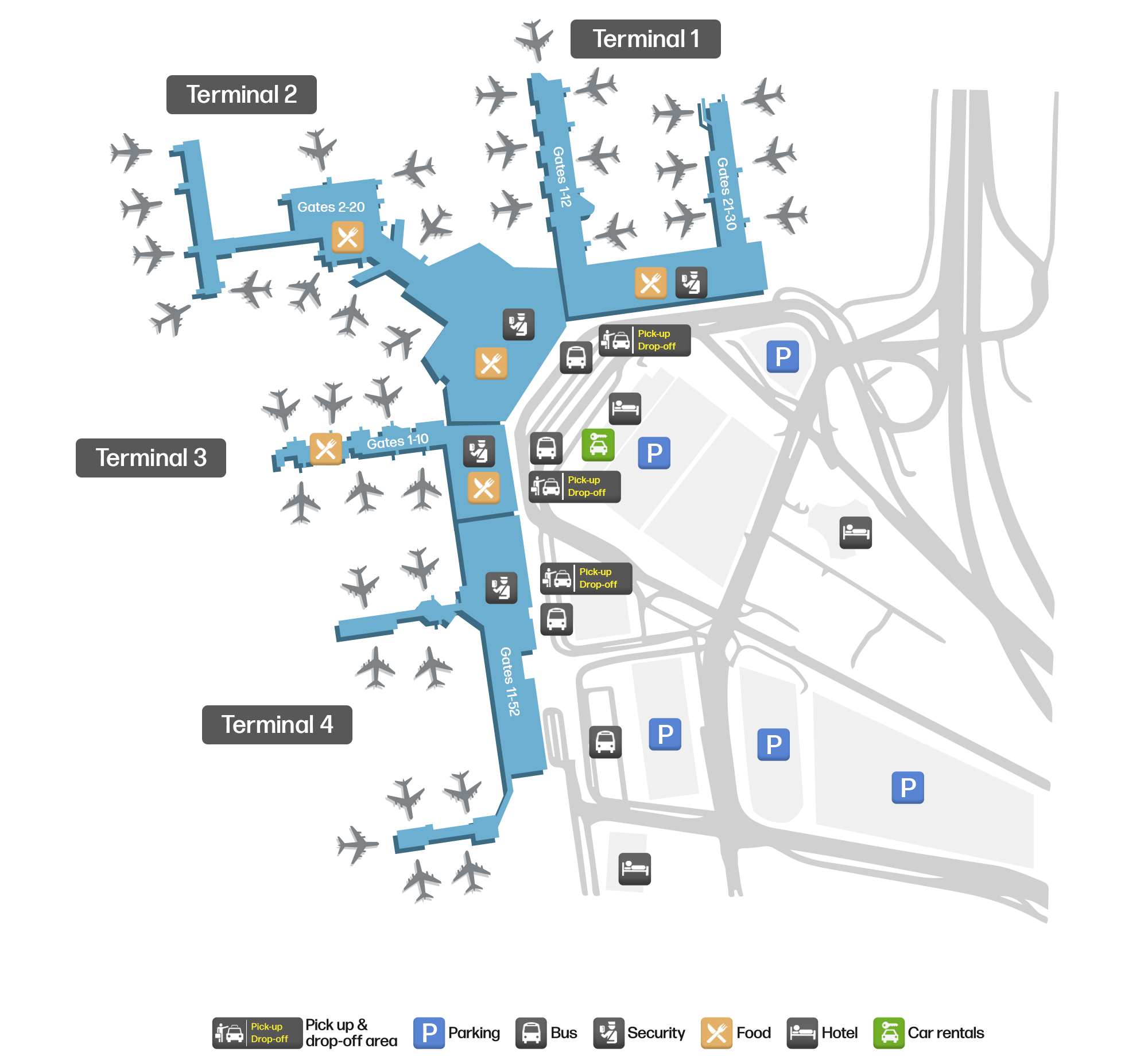
Download Airport MapsDownloads
Airport photosAirport Photos
Real photos of this airport, each credited to the public web page it was found on; copyright stays with the original photographers. Click a photo to zoom in, or a credit line to open its source page.
Satellite view: Melbourne Airport (MEL), with its runways, terminal complex and the Tullamarine industrial area.
Melbourne Airport route map — direct destinationsRoute Map
55 direct destinations: map, operating airlines and distances.
Airport information & detailsAirport Details
Melbourne Airport terminal guideAirport Guide
Melbourne Airport lies about 23 km from the city centre and handles around 36 million passengers a year (2024–25 financial year), making it Australia's second-busiest airport. Its terminal layout has a direct effect on how you travel: T1, T2 and T3 stand in a row, with T4 off on its own to the south — and because Qantas and Jetstar each use two of them, "find the terminal by airline" does not work here; you have to look at whether the flight is domestic or international.
The four terminals
| Code | Name | Flight type | Main carriers |
|---|---|---|---|
| T1 | Terminal 1 | Domestic | Qantas and QantasLink |
| T2 | Terminal 2 | International | All international carriers |
| T3 | Terminal 3 | Domestic | Virgin Australia and others |
| T4 | Terminal 4 | Domestic | Jetstar and other low-cost and regional carriers |
How to tell where you are: international flights are always in T2; domestic flights split by airline — Qantas in T1, Virgin in T3, Jetstar and others in T4.
- Note in particular that both Qantas and Jetstar use two buildings at once — the same airline's domestic and international legs are not in the same building, so once you have booked, confirm the terminal for each leg.
- T1–T3 are directly connected on foot; T4 is some distance from T1–T3, linked by a walkway or a shuttle.
Our diagram draws T1–T3 as one continuous row and T4 as a separate block precisely to show that "three together, one apart" arrangement.
Transfers and connections
- Locate your terminal by domestic or international first, and only then by airline.
- An international-to-domestic connection means clearing immigration, collecting your bags and checking in again, and may involve a move between T2 and T1/T3/T4 — allow 3 hours.
- When connecting between T4 and T1–T3, count the walkway or shuttle time into your buffer as well.
Routes and flights
- Routes — around 30 airlines flying to about 70 non-stop destinations; long-haul points include Singapore, Bangkok, Hong Kong, Tokyo, Shanghai, Los Angeles, San Francisco, Dubai and Johannesburg.
- Flights — about 36 million passengers in the 2024–25 financial year, of which about 11.95 million were international; December 2025 set a single-month record of 3.42 million passengers.
- Aircraft — main bases are Qantas (T1 domestic / T2 international), Virgin Australia (T3) and Jetstar (T4); domestic workhorses are the 737 and A320 families, with A330 and 787 on international long-haul.
Getting into Melbourne
- SkyBus — about 30 minutes direct to Southern Cross Station in the city centre, running frequently and 24 hours a day; the choice most travellers make.
- Taxi / rideshare — about 23 km, and 30 minutes when traffic is clear.
- Car hire — counters in every terminal, popular with travellers driving out towards the Great Ocean Road.
- Hotel shuttles — some city hotels run a pick-up service.
Practical tips
- SkyBus is the least fuss into town: Southern Cross connects to trams, trains and intercity coaches, and covers most of the city's accommodation areas.
- Melbourne's terminal numbers are historical, so do not puzzle over why Terminal 2 sits in the middle — finding your building by flight type is quicker.
- Domestic security and boarding in Australia are relatively simple, but low-cost baggage rules are strict, so check the baggage policy of the T4 carriers before you travel.
Satellite view
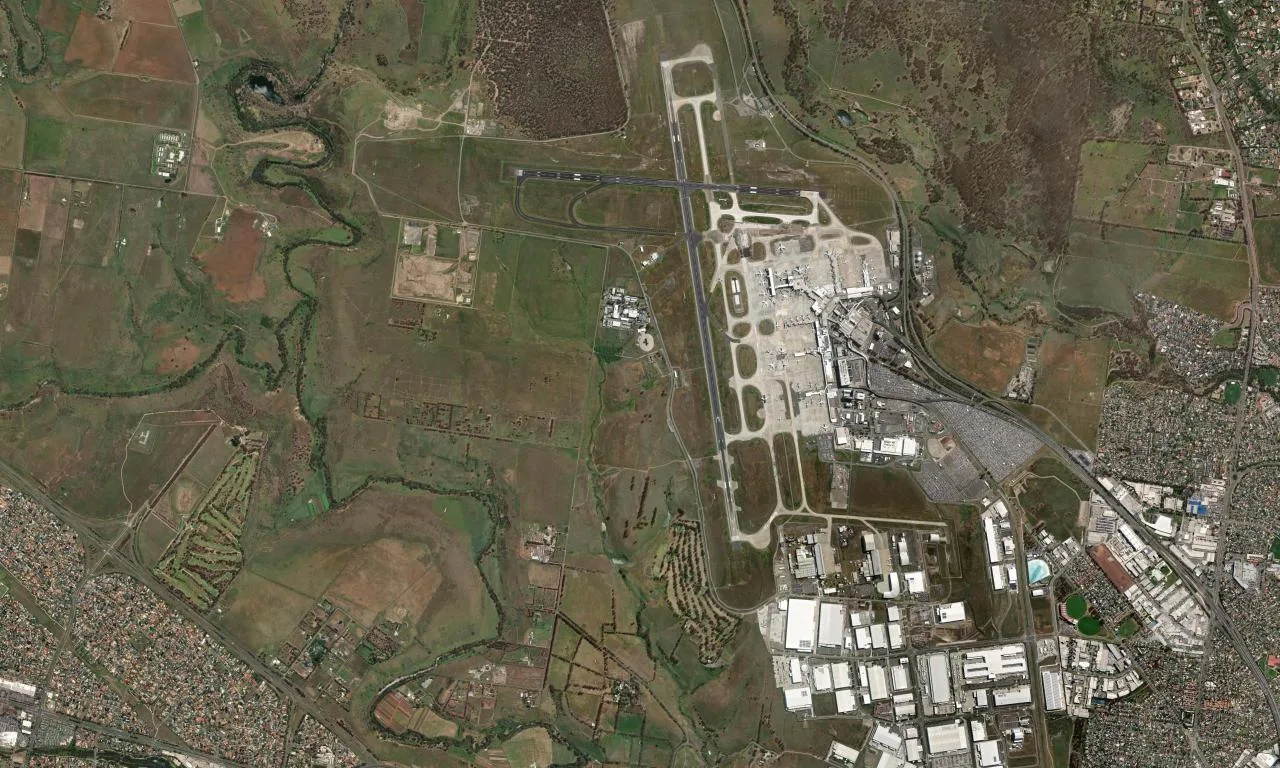
Satellite view: Melbourne Airport (MEL), with its runways, terminal complex and the Tullamarine industrial area.
Satellite imagery © Esri World Imagery, used here for location reference only.