Nice Airport T1 Tax Refund Guide: DETAXE Kiosks, Green Lights and Card or Cash
- Nice Airport
- NCE
- tax refund
- France
- French Riviera
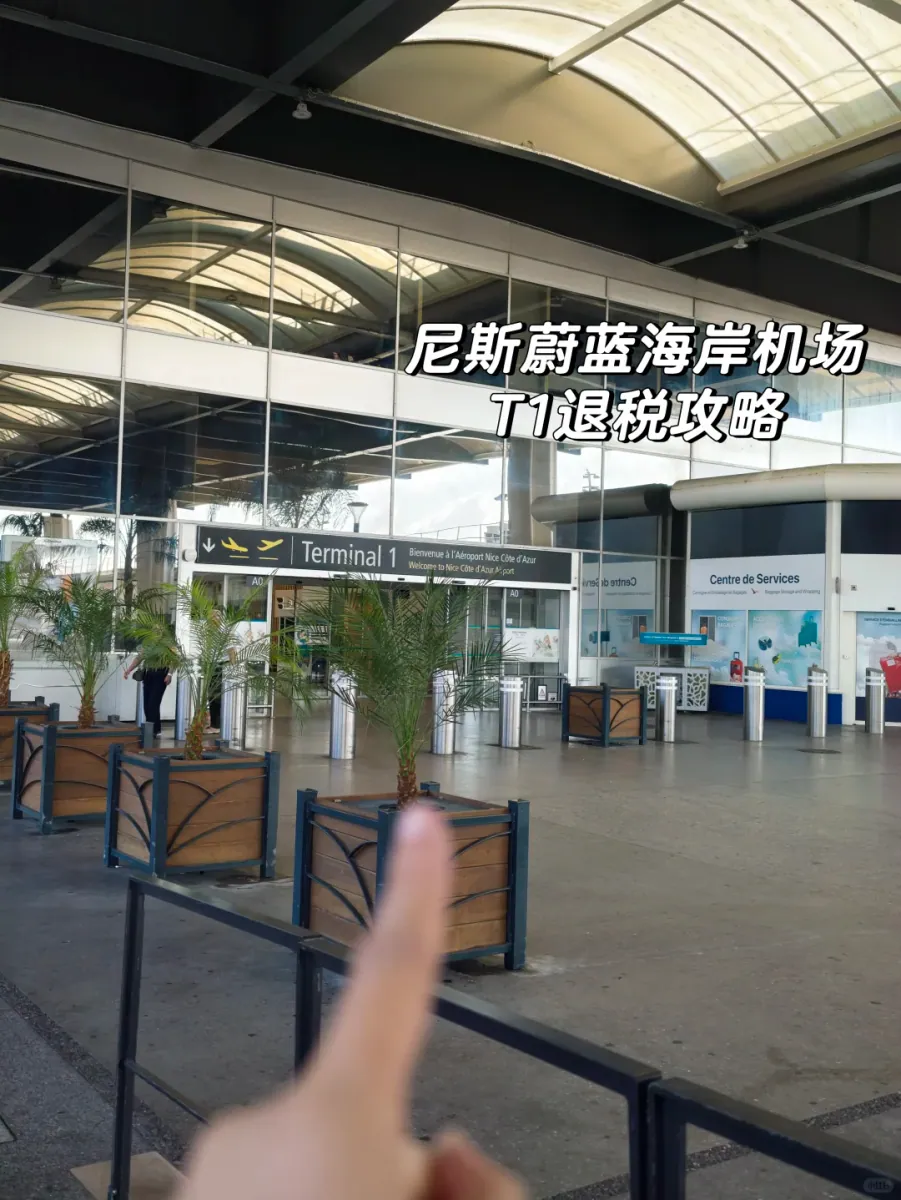
Nice Côte d’Azur Airport (NCE) is the main gateway to the French Riviera, and Terminal 1 handles a good share of its flights. Most travellers spend the last days of the trip shopping in Nice old town, Èze or Monaco, and only think about the VAT refund on the way back to the airport. The refund is the one part of the journey where order matters more than anything else: validate first, check your bags second. Get the order wrong and the money is gone.
French tax refunds — détaxe — are usually imagined as a desk at the airport that hands out cash. In practice it is two separate steps: customs confirms that the goods really left the EU with you, and then a refund operator pays out on the strength of that confirmation. The customs step is now mostly done by a self-service machine marked DETAXE, and at Nice that machine stands in the arrivals hall of Terminal 1, beside the French customs office. Plenty of people drag their suitcases around the departures floor looking for it, and only spot the notice telling them to see customs on the way to the gate, by which point turning back is no longer an option.
This guide covers five things: what to have ready, how to find the kiosks in T1, what green and red results mean, whether to take a card or cash refund, and how much time to leave.
1. What to have ready before you go
France sets a few hard conditions, and missing any one of them lets customs refuse to validate the form. You must live outside the EU, be at least 16 years old, and spend more than €100 including VAT in a single shop on a single day. That threshold has applied since 1 January 2021, and scattered small purchases rarely reach it, so group the things you want refunded into one transaction — two branches of the same brand count as two different shops.
The deadline is the condition people forget. The form has to be validated before the end of the third month after the month of purchase: something bought in October must leave the EU and be validated by the end of January. After that it is void, and there is no appeals process. The other rule is that the goods travel with you. Customs may ask to see them, so nothing that is being refunded should go into a checked bag before validation, and you certainly cannot check the bag and come back for the stamp later. No goods, no validation.
The list itself is short, but any missing item can cost you a place in the queue:
- Passport — the name must match the one on the refund form;
- The refund form (bordereau) — issued by the shop through the PABLO system, carrying the PABLO logo and a barcode, signed by the shop and by you;
- Receipts — they go with the forms, and the amounts and dates have to line up;
- The goods themselves — in a cabin bag or an unchecked suitcase, ready to be opened;
- Boarding pass or itinerary — occasionally asked for.
One detail is worth settling in the shop rather than at the airport: the refund method. If you choose a card, the number, expiry date and cardholder name must all be correct — a wrong card number is the single most common reason a refund fails. If you choose cash, check that the form is actually ticked for cash. Discovering a typo at the kiosk is too late; the airport cannot fix it, and you will be writing to the shop or the refund operator instead.
2. Finding DETAXE and PABLO in Terminal 1
The validation point is not in the departures check-in hall. It is in the arrivals hall next to the French customs office (Douanes françaises): in Terminal 1, opposite the information desk; in Terminal 2, opposite gate A3. First-time visitors tend to circle the departures floor. Look instead for the blue sign reading “Douanes françaises / French Customs” — the kiosks stand at its door.
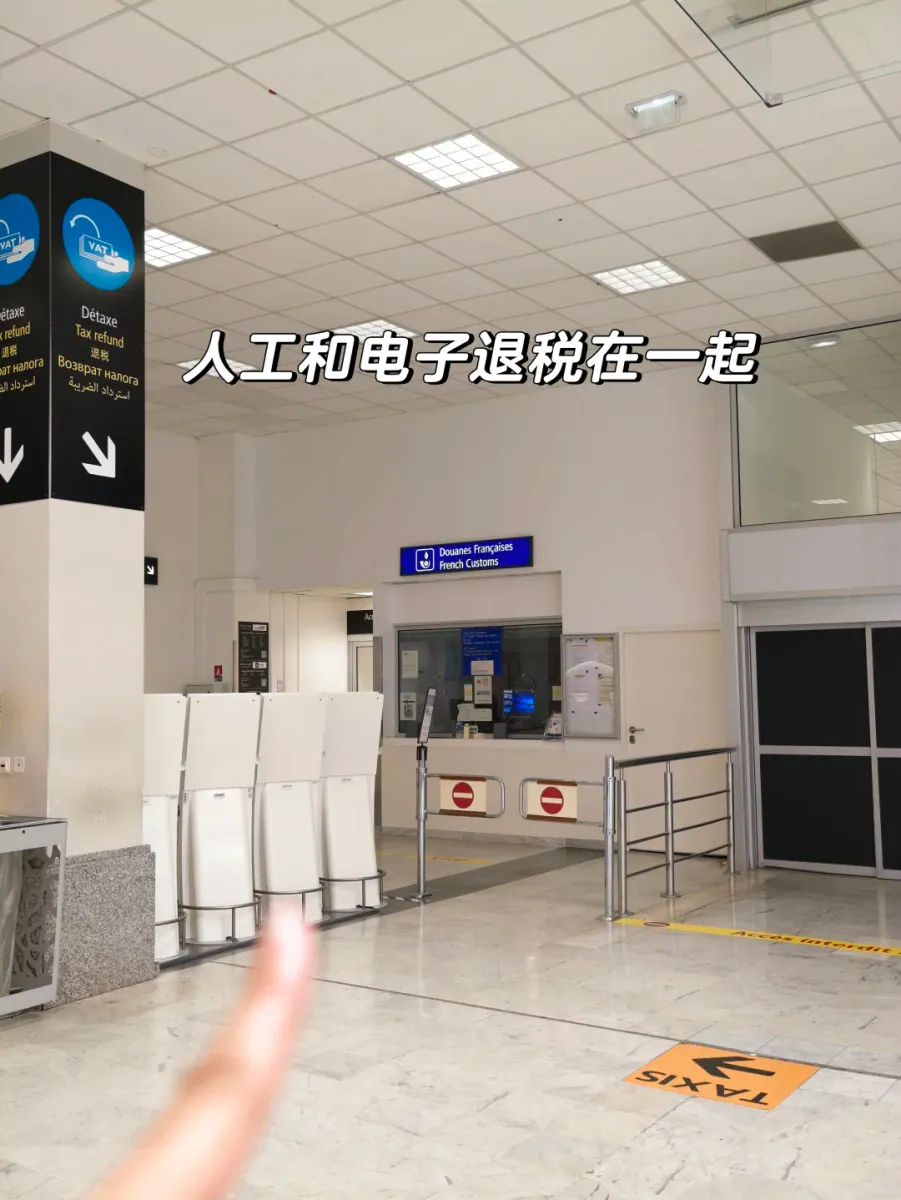
The pillar sign is in French, English, Chinese, Russian and Arabic, with arrows pointing at the customs window. The row of white cabinets underneath is the self-service equipment: DETAXE across the top, TAX REFUND on the front, a touchscreen in the middle, a dark blue scanner hood below it with a red reading slot inside, and a unit number on the body (86 on the machine in the photo). The kiosks sit right next to the staffed counter, so the electronic route and the manual route split at the same spot: clear the machine and walk on, fail it and turn around to the window.
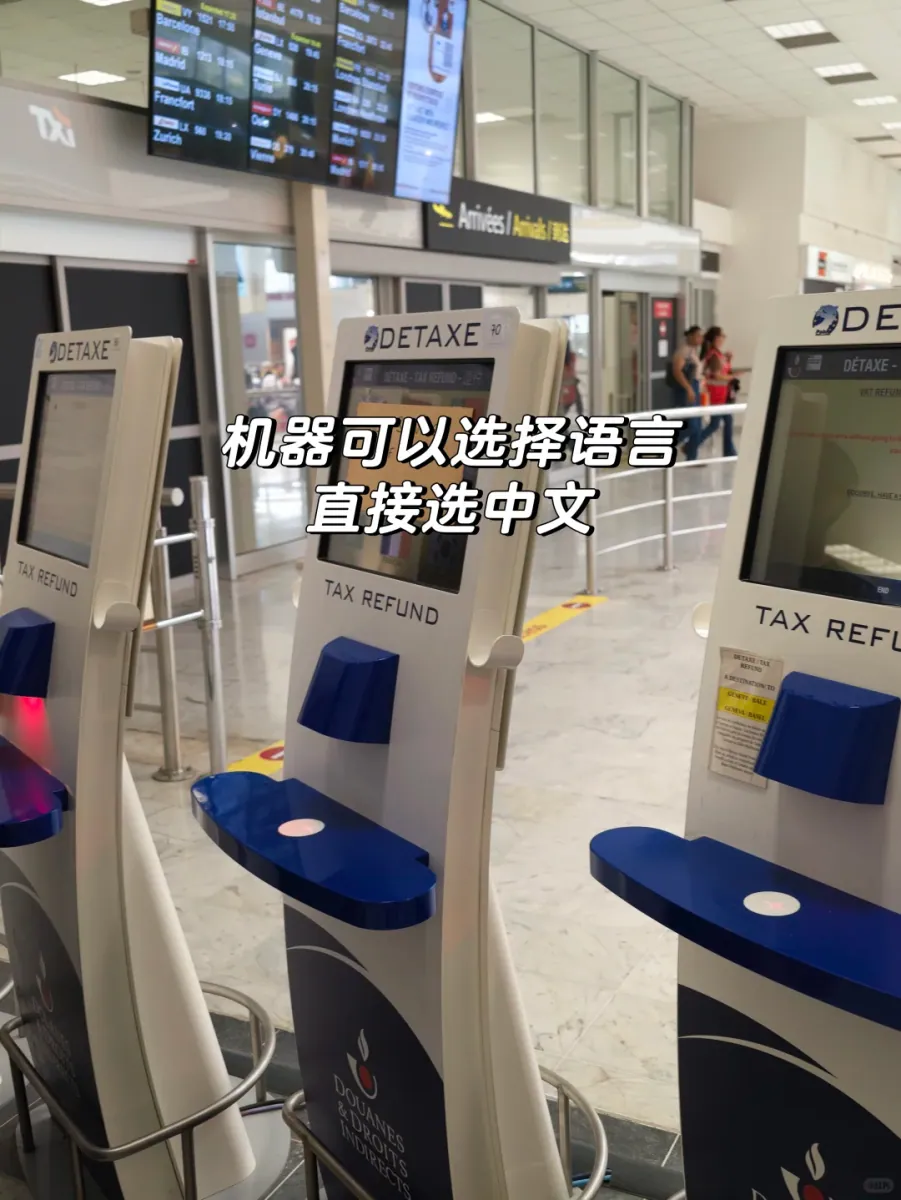
The machine is straightforward. The first screen asks for a language, and the flag icons switch it to Chinese, after which every prompt — including the very specific “scan your refund forms one at a time” — appears in Chinese. For anyone who does not read French, that matters most when something goes wrong: a red result will tell you, in Chinese, where to go next.
Remember where this is: in the public area, before security. Nice airport requires the forms to be validated before you go through the security checkpoint, and once you are airside you cannot come back. The exchange desks inside the restricted area will not pay out on an unvalidated form either. The correct order is: arrive, find the DETAXE kiosks, validate, then check in and drop bags.
3. Green light and red light: the two outcomes
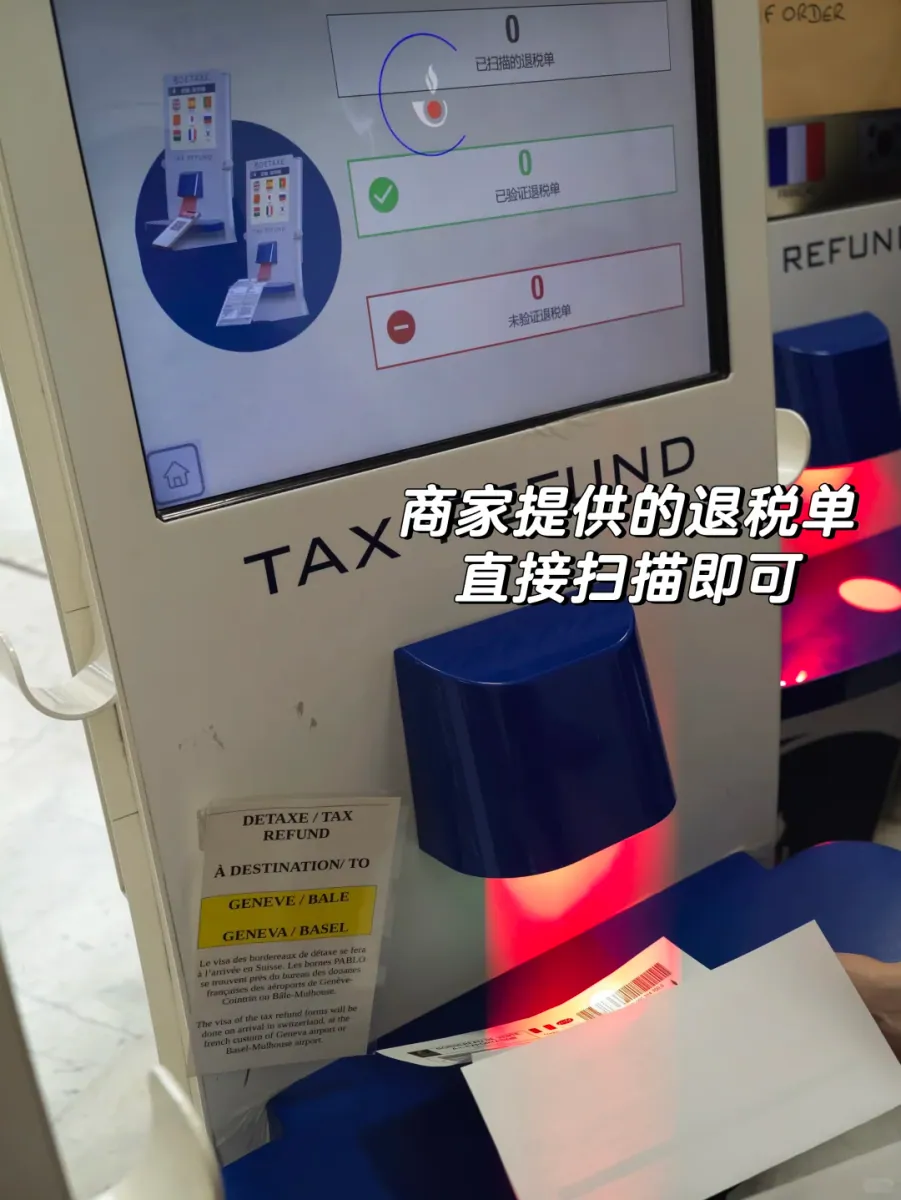
Scanning takes one movement: turn the form so the barcode faces into the red slot and push it in. The machine beeps when it reads the code, and the screen starts counting in three columns — forms scanned, forms validated (green tick) and forms not validated (red minus). The layout is useful: you can see at a glance whether the forms you just fed through actually passed, instead of trying to remember them one by one.
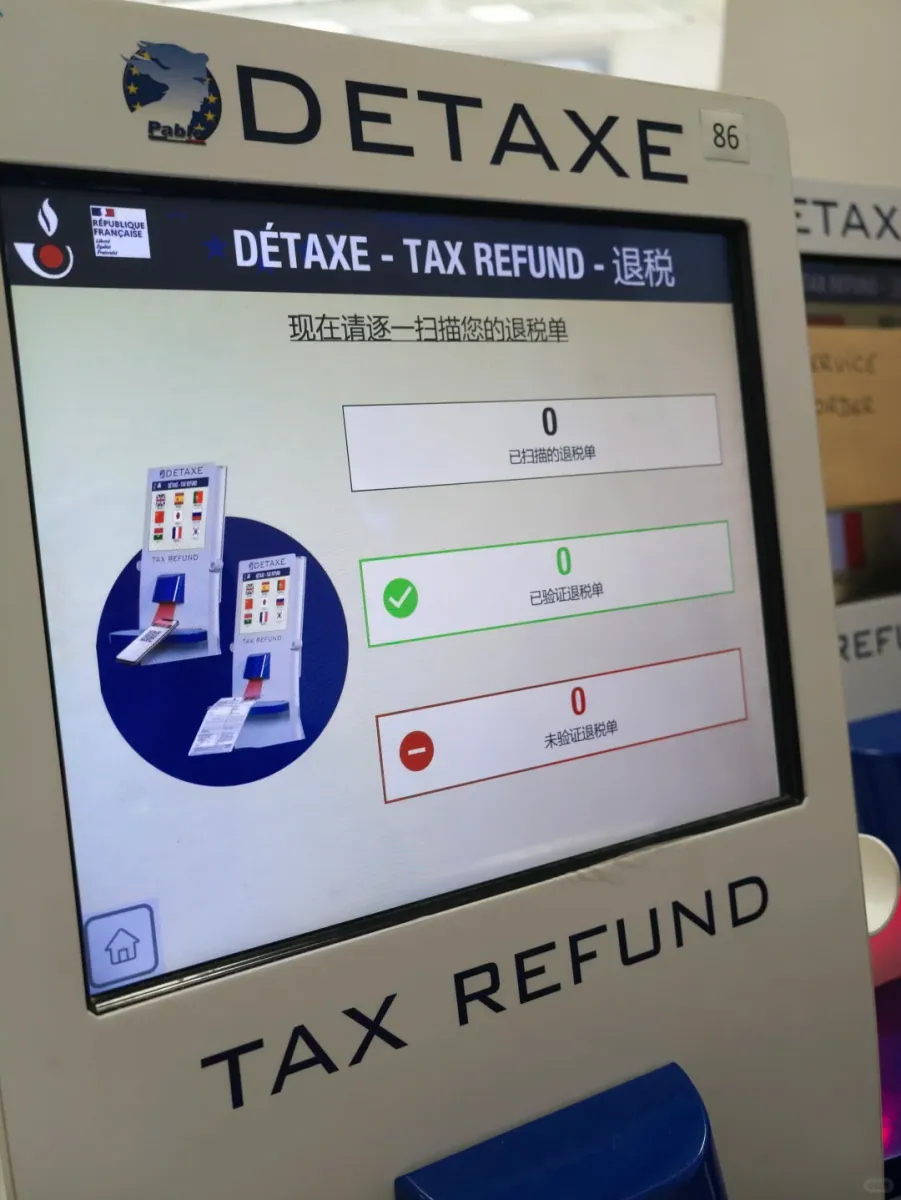
When you insert a form, the barcode has to face the red light strip and the paper has to lie flat rather than folded. The scanned counter ticks up first, then either the green or the red column follows. A small notice stuck to the side of the machine adds a caveat worth knowing: forms marked for Geneva or Basel are validated on arrival in Switzerland. If your route home is Nice to Zurich and onwards, those forms will not clear at this kiosk — they have to wait until you land in Switzerland.
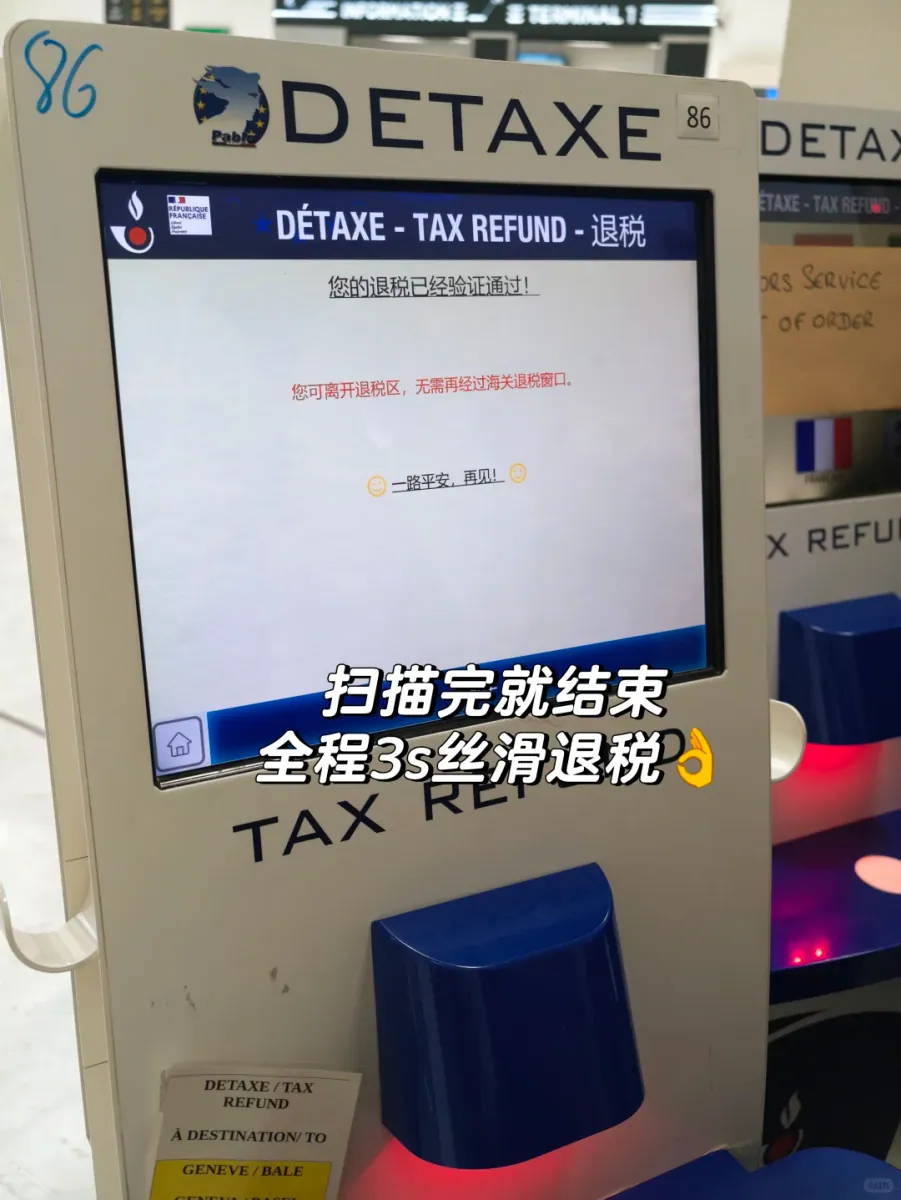
Green means done. The screen announces that the refund has been validated, and a line underneath says you may leave the refund area and do not need to visit the customs refund window. Under French customs rules, the electronic message from a PABLO terminal carries the same weight as a physical stamp, and the result is passed to the refund operator the same day; there is nothing to post back to the shop. It takes seconds per form, and the screen finishes with a cheerful sign-off.
Red means a person. The screen sends you to the customs office next door, where an officer checks the paperwork and stamps or signs it. The usual reasons are mundane: the form was not properly issued through PABLO (bought in another EU country, or an old handwritten slip), the barcode is creased or dirty and cannot be read, the name does not match the passport, the three-month window has passed, or a spot check wants to see the goods. The first three mean the manual route regardless; an expired form cannot be rescued at all; and a spot check simply depends on whether the goods are still with you.
One message is different from a plain red light: the screen may say the form cannot be validated by French customs because it was not properly issued by your refund operator. That is not an invitation to queue for a stamp — the form itself is faulty, and customs cannot repair it. Contact the operator whose details are printed on the form.
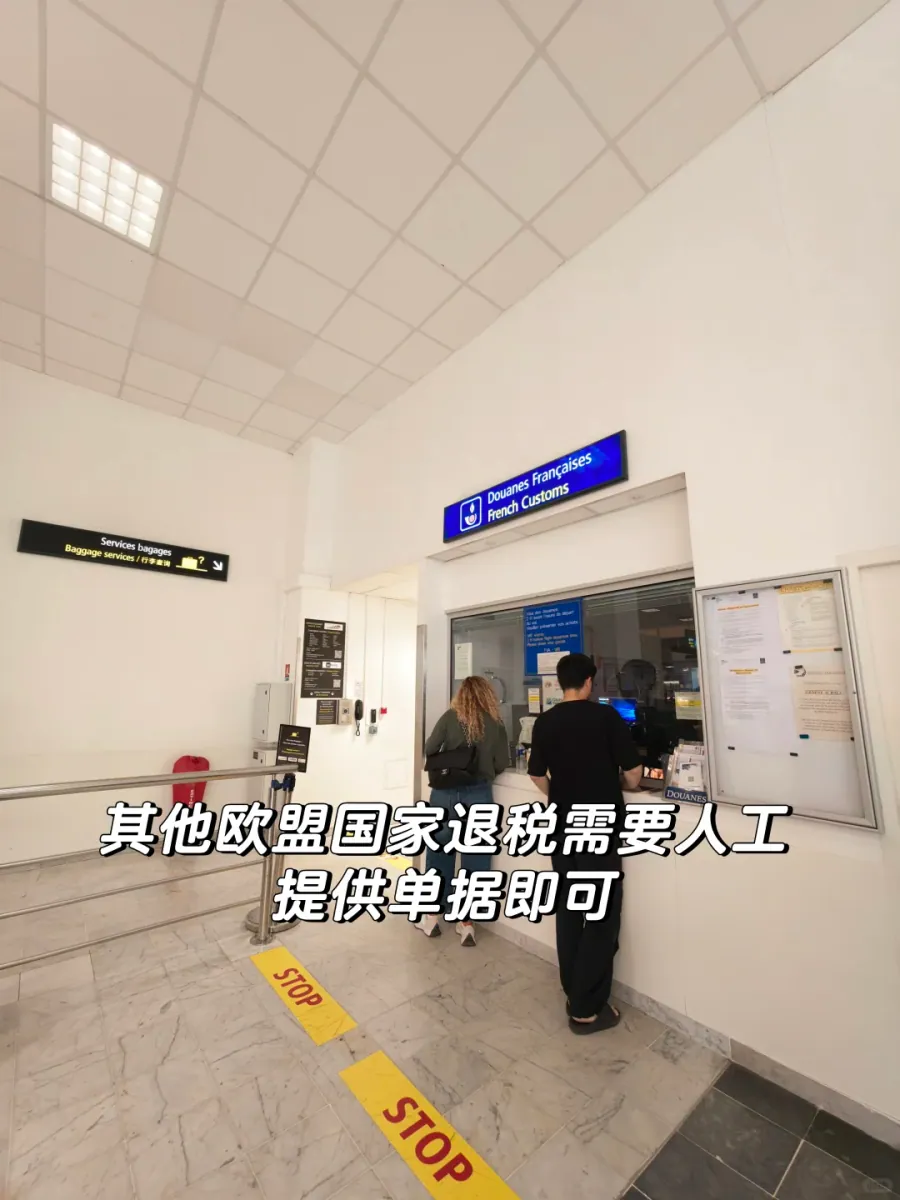
There is usually a queue formed by barrier tape in front of the window, reaching the middle of the hall in high season. When it is your turn you hand over passport, forms and goods together; the officer may barely glance at them, or may ask you to open a case and show one particular item. The stamp completes the paperwork — only then does the question of payment arise.
4. Card or cash
Many people assume the money arrives automatically after a green light. Validation only means the operator is now allowed to pay; where and when it pays depends on what you chose in the shop. At Nice, cash refunds are handled by currency exchange desks such as Global Exchange — one in the public area beside customs, one airside — while card refunds are processed by the operators (Global Blue, Planet and others) once they receive the customs data.
A card refund is the most reliable option. You are not carrying a wad of euros, the amount is converted at the card scheme rate, and if the paperwork goes missing or the sum is disputed you have a card number to argue with. The cost is time: weeks to months is normal, and longer across peak season. It suits larger refunds where you are not in a hurry. Do check the number and the expiry date, because a refund sent to a dead card is painful to recover.
Cash pays immediately. Hand the validated form across the exchange counter, take the euros, and spend them outside the terminal. The cost is the rate: the counter buys currency well below the market rate, so you are trading part of the refund for instant money and no follow-up. For small amounts, tight schedules or anyone who does not want to chase a payment for months, cash is the calmer choice.
A practical way to decide is by size and by what happens next. A large single refund is worth putting on a card, where the exchange loss is proportionally small and waiting is acceptable. A handful of forms worth a few tens of euros are better settled in cash — the effort saved is worth more than the rate difference. And if you are already airside, remember that only validated forms can be paid at the exchange desk inside; that is exactly why the sequence of validation before security cannot be reversed.
5. Timing and a checklist
The Riviera season is long, and in July and August holidaymakers, cruise passengers and weekend visitors overlap, so both the refund queue and the security queue at T1 grow. Allow at least 3 hours at the airport — the advice of travellers who use this route regularly. The machine itself handles a form in a few seconds, but queueing, digging out paperwork, having a case opened for inspection and walking from arrivals back up to check-in all take time. At midday in peak season the line at the customs window can stretch into the middle of the hall, and it moves slowly even when it looks short.
A grey notice board stands in the corridor towards the boarding area: a yellow warning triangle, the words TAX REFUND, and a paragraph in French and English reminding travellers to have their refund forms checked at the customs office before entering the boarding area. Its position says everything — it appears once you are close to security. Spotting it as a reminder usually means turning back, and at Nice turning back is not always permitted.
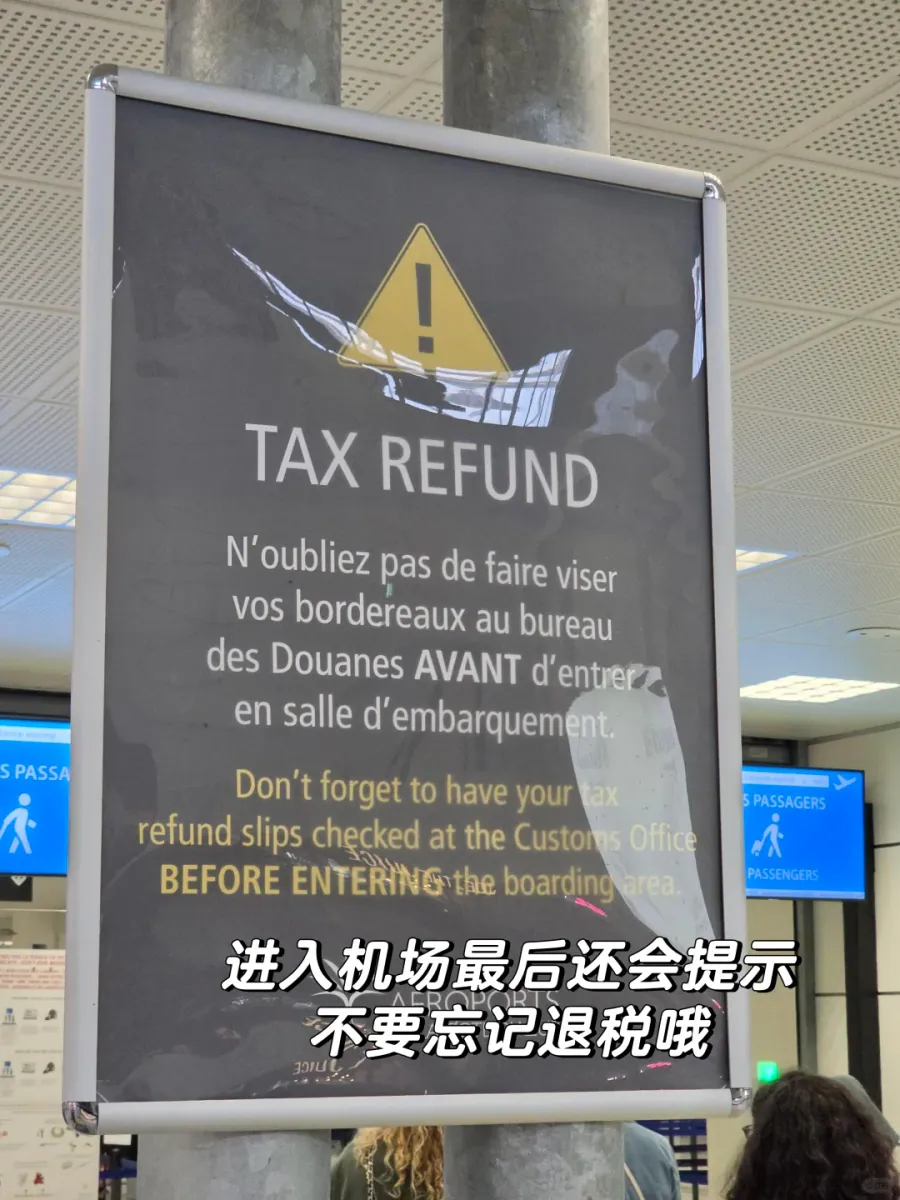
The whole process, as a checklist for departure day:
- Arrive 3 hours ahead, and a little earlier in peak season.
- Refund first, bags second — nothing being refunded goes into a checked bag before validation.
- Repack after validation, not in front of the customs window.
- Scan one form at a time and watch the validated counter go up by one each time.
- Do not re-scan a red form — go to the customs window instead; repeated attempts only hold up the queue.
- Keep every receipt and form until the money arrives, especially for card refunds, where they are your only evidence if the payment fails.
- Photograph the stamped form, or the validated screen, for later reconciliation.
- Check the card number twice — number, expiry and cardholder name.
One last note: thresholds, kiosk positions and counter opening hours can all change. This reflects the situation in October 2026; check the Nice airport and French customs websites on the day, and ask staff on site if anything is unclear.
Related links
- On this site: France (FR)
- Wikipedia: Nice Côte d'Azur Airport
- Baidu Baike: Nice Côte d'Azur Airport
More articlesTravel notes
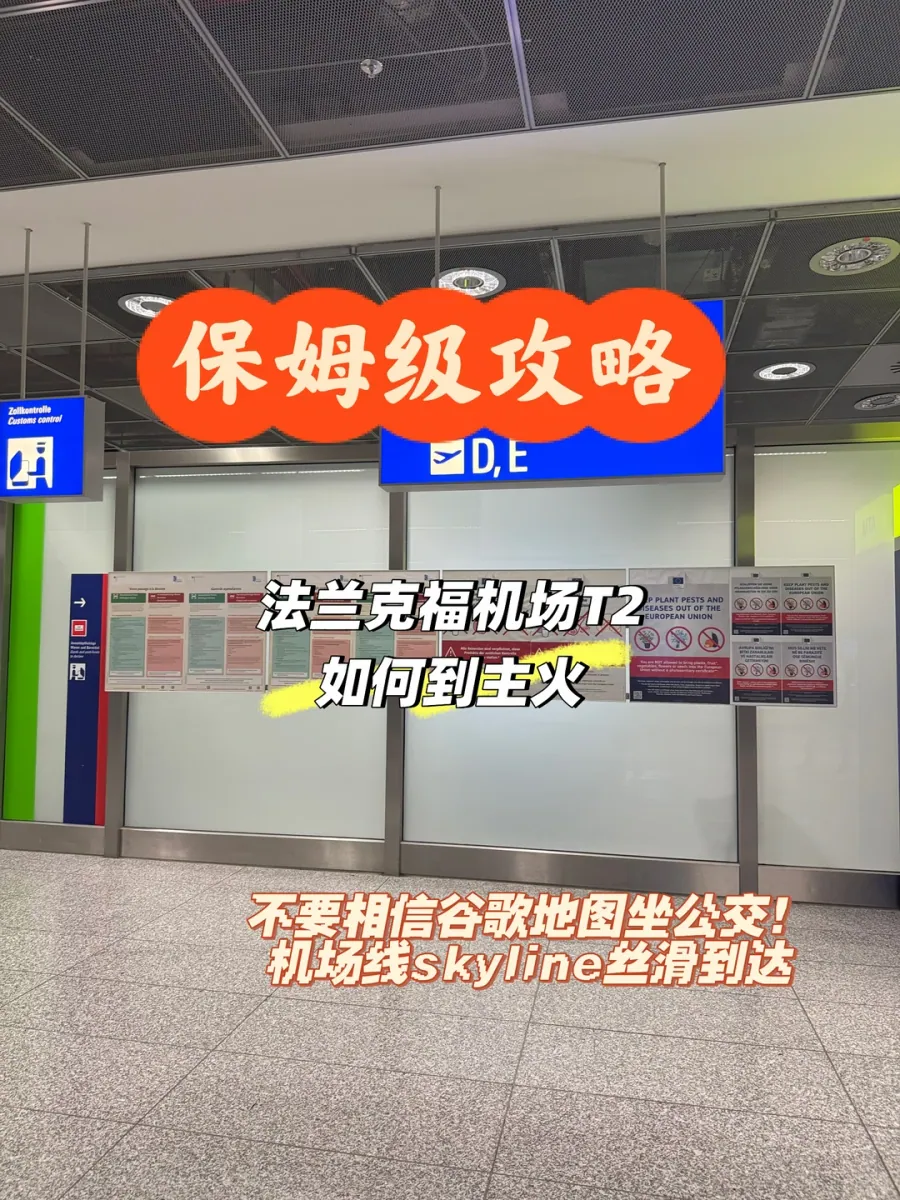
Frankfurt Airport Terminal 2 to Frankfurt Hauptbahnhof: SkyLine, then the S8 or S9
How to get from Frankfurt Airport Terminal 2 to Frankfurt Hauptbahnhof without stepping outside: the free SkyLine people mover to Terminal 1, the Bahnhof signs down to the regional station, and about fifteen minutes on the S8 or S9, plus tickets, frequencies and the five wrong turns.10 min read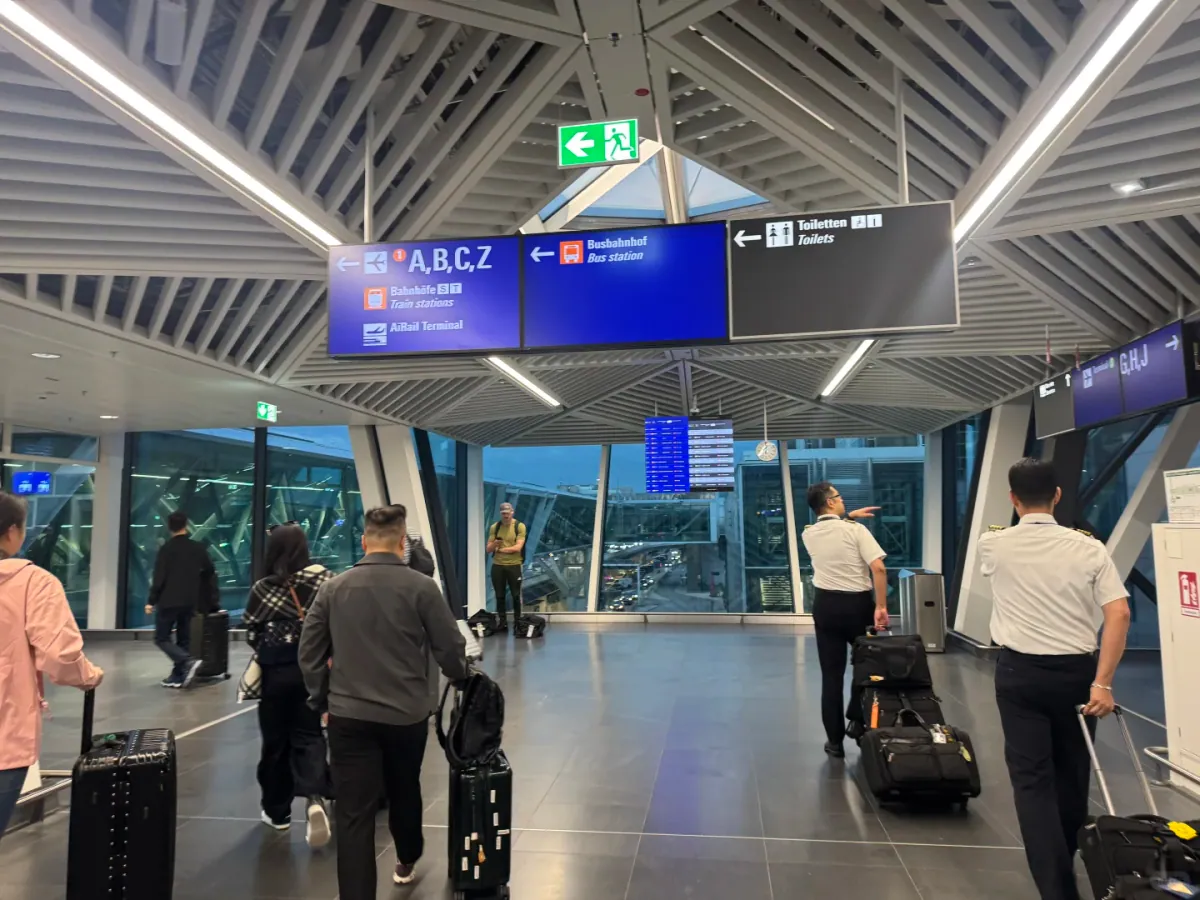
Frankfurt Airport Terminal 3 to the Fernbahnhof: SkyLine, a long corridor, and 1 hour 40 minutes
A step-by-step account of reaching Frankfurt Airport long-distance station from Terminal 3: the free SkyLine to Terminal 1, the blue Fernbahnhof signs and the corridor to The Squaire, waiting for a platform number on the Abfahrt board, and how much time to allow.10 min read