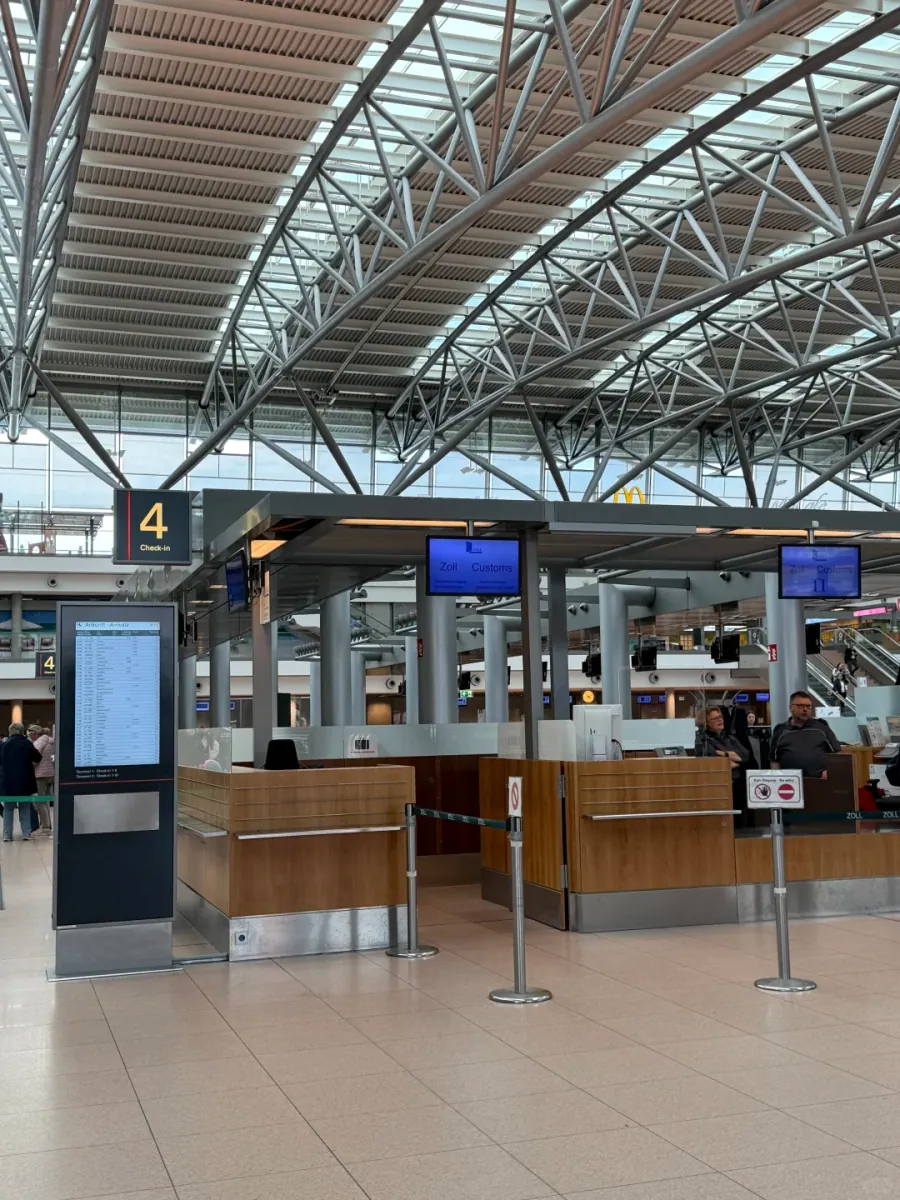
Marseille Airport Tax Refunds and Transport: PABLO Kiosks, Bus 40 and Bus 91
- Marseille Airport
- MRS
- tax refund
- Provence
- France
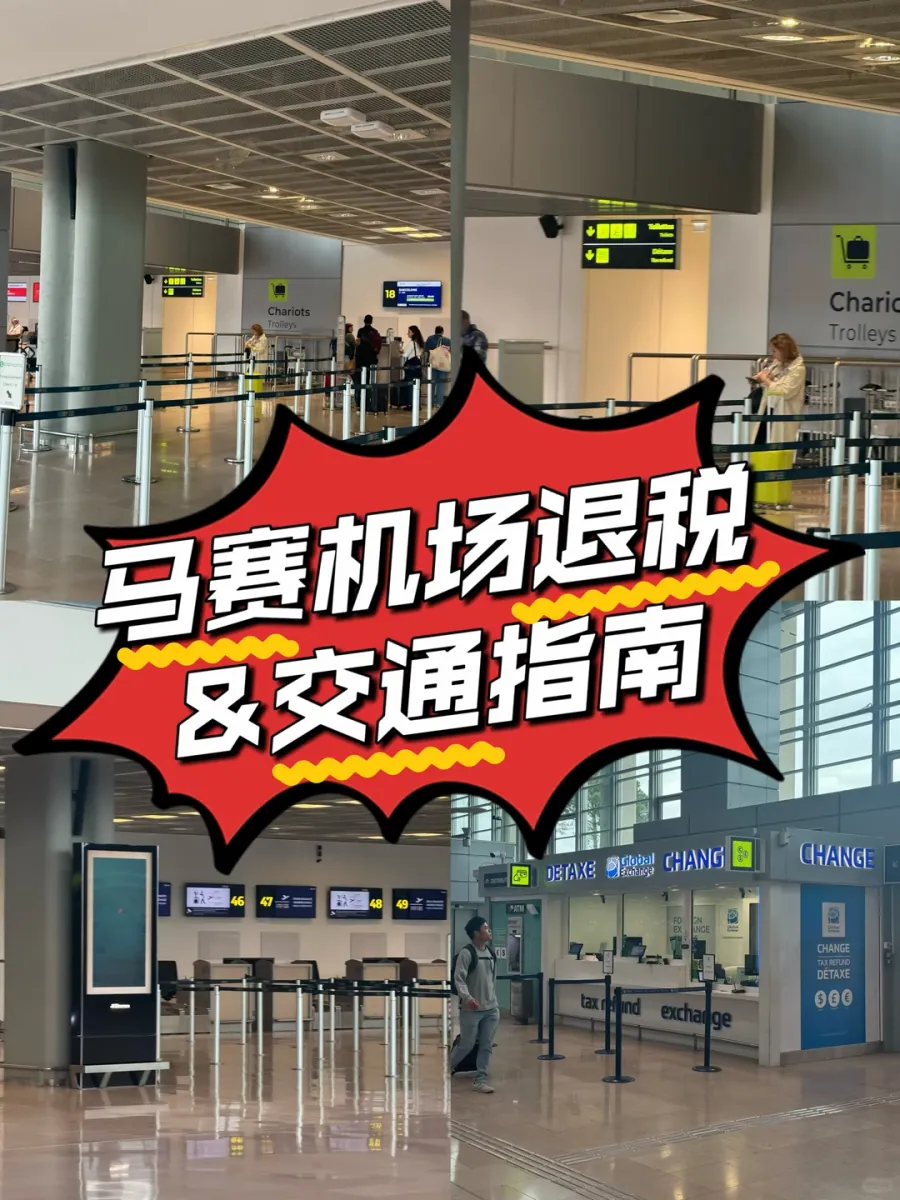
Marseille Provence Airport (MRS) sits at Marignane, between Provence and the Riviera, and it is the most practical way into southern France for anyone staying in Aix, Avignon or Marseille itself. The Marseille–Shanghai route that opened recently means travellers from China no longer have to change planes in Paris to reach the region.
The place feels nothing like Charles de Gaulle or Orly. It is quiet and uncrowded, check-in, security and refunds are quick, and the first reaction of many arriving passengers is that it is not what they expected. But a quiet airport also gives you less prompting: there is no long queue to tell you what to do next, so you have to know in advance where the refund kiosk is, which level bus 40 leaves from, and where bus 91 stops.
This guide covers the terminal itself, the PABLO refund process step by step, bus 40 from the Provence TGV station, bus 91 and Uber from Marseille, and finally fares, timing and how to plan the day.
1. What Marseille airport is like
The airport is essentially one compact terminal, with departures and arrivals in the same building. Check-in desks line the hall and the numbers run into the forties. On one side sits the currency exchange and tax refund desk, with DÉTAXE, Global Exchange and CHANGE signs above the counter and the baggage trolley (Chariots / Trolleys) sign nearby. Find that corner and you can settle both the refund and any leftover currency in one stop.
The upside of the quiet is speed. There is no queue at check-in, security takes a few minutes, and the refund kiosk often has nobody in front of it at all. Travellers in May 2025 noted that check-in and security were queue-free and that the refund and check-in process ran smoothly. The quieter downside is that fewer desks are staffed and staff are not always in sight, so if your paperwork is incomplete you will be the one making a second trip. Bring everything the first time.
Structurally, Marseille is not a hub. Flights are mostly point-to-point, transfer passengers are rare, and the hall never has the pushed-along feeling of a big connecting airport. Airside is small and the shops are limited: if you like to arrive hours early and browse, this is not the place; if you would rather cut it fine, that works too, as long as the refund, the bag drop and security come first and the wandering comes last.
For travellers from China, the big change is the direct route: no Paris connection, and you land in the south. That also means doing the refund and transport homework here rather than in Paris, because Chinese signage is far less common at MRS.
2. PABLO refunds: green light, red light
There is one rule of order: claim the refund before you check your bags. Customs has to be able to see the goods, and once a bag is on the belt you have effectively sent them away. At Marseille the self-service kiosk is between check-in rows 17 and 18, set back from the aisle, with DETAXE / TAX REFUND on the screen, the same equipment used across French airports.
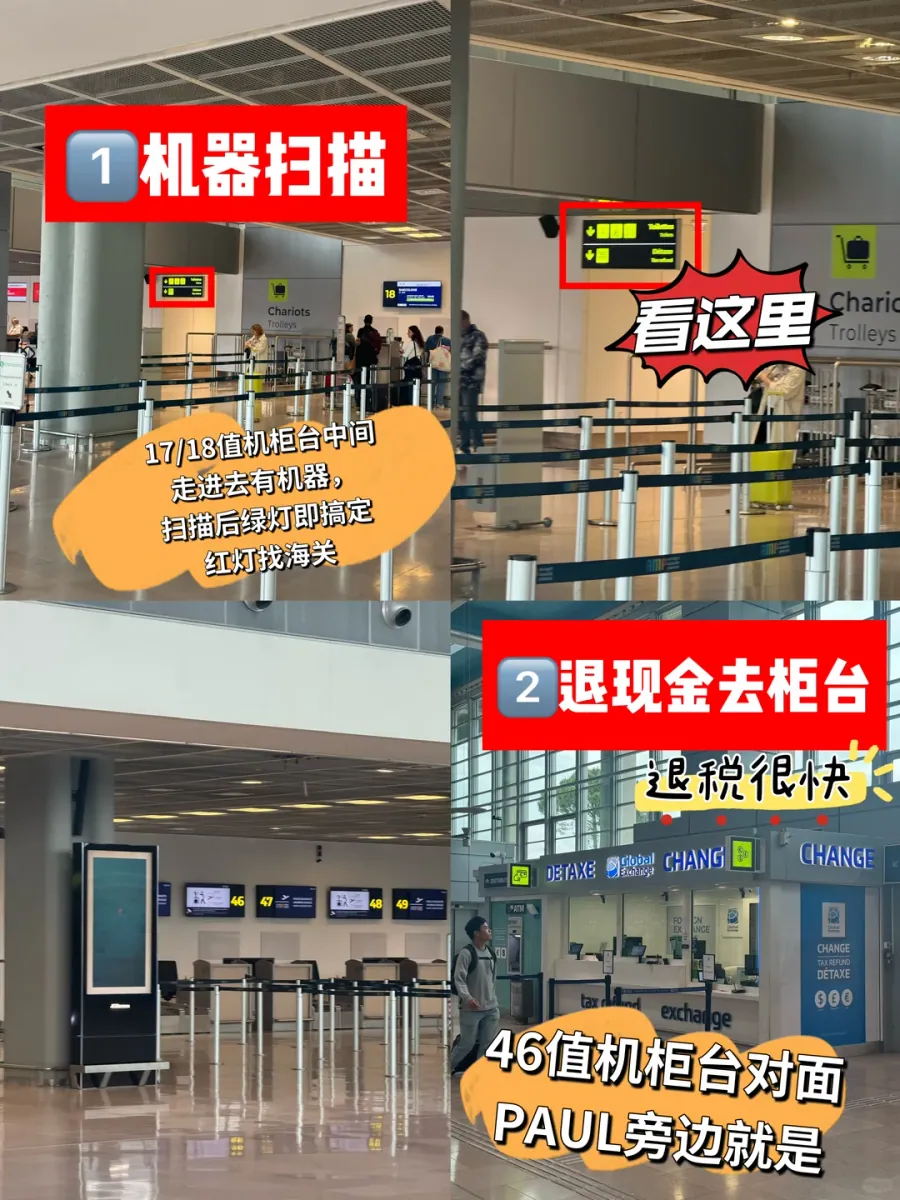
Scanning works as it does in Nice or Paris: hold the barcode on the refund form against the red reader and the screen returns a verdict. A green light means the form is validated — the electronic message is equivalent to a customs stamp, so you can go straight to check-in. A red light means a person has to look at it: take your passport, the form and the goods to the customs desk and have it stamped. The usual reasons are a form not issued through PABLO, a barcode that will not read, a name that does not match the passport, or a spot check that wants to see the purchase.
If you are taking cash, there is one more step: the exchange desk opposite check-in row 46, next to the PAUL café, pays out against the validated form. It is on the same level as check-in, a few steps away, which is why cash refunds here are usually over in minutes and why people describe the airport as fast.
The rules are the same as anywhere in France: you must live outside the EU, be 16 or over, and spend more than €100 including tax in one shop on one day; the form must be validated before the end of the third month after the month of purchase; and the goods must travel with you and be available to show. Meet those conditions and the whole thing takes under ten minutes. Miss one and there is less help on hand than at a big airport, so leave a buffer.
A red light is not a refusal — it just hands the decision to a person. At the window the officer checks three things: that you are the person on the form, that the goods match the form, and that the date is still valid. All three, and the stamp completes the paperwork. Fail any one and the form is void. The mistake that causes most of this is sequence: check the bag first and the goods are gone, so the officer cannot validate anything.
3. Bus 40 from the Provence TGV station
Coming from Nice, the train is the comfortable option: a TGV to Aix-en-Provence TGV. Note that this station is not in the city — it stands in open country outside Aix, built for high-speed trains — and the airport is closer to Aix than to Marseille, so the transfer from here is quicker than starting in the city.
From the station, go down to level 0 and find bus 40. The stop is marked by a green and white lecar 40 sign reading AÉROPORT, under the canopy outside the station building. Fourteen minutes to the airport, €12, and the coach drops you at the terminal door — no parking, no shuttle.
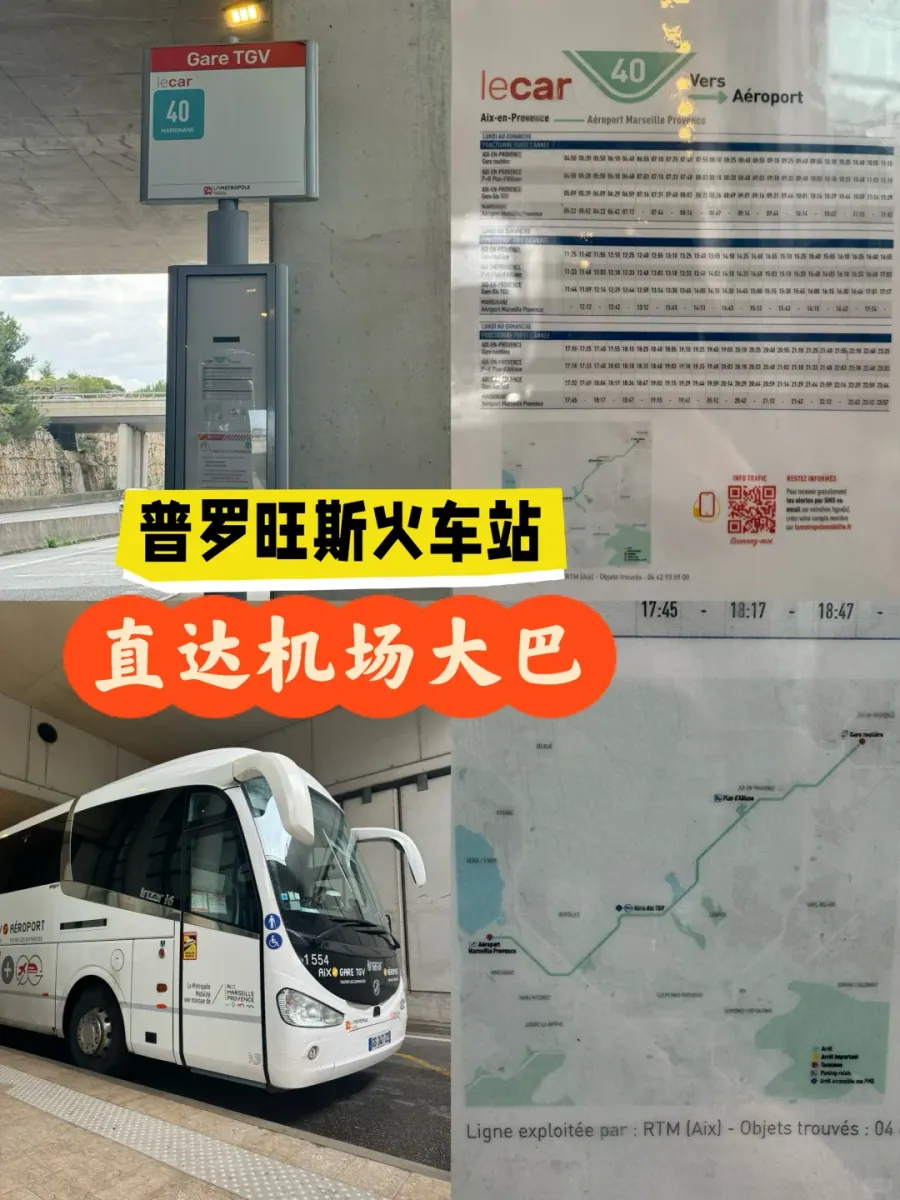
Departures are not frequent. The yellow timetable beside the stop runs at roughly half-hour intervals through the afternoon — 17:45, 18:17, 18:47 — and after the last one you are on your own. So the first thing to do off the train is not find coffee but read the timetable: if the next bus is in twenty minutes, walk over slowly; if one has just gone, decide whether to wait or call a car. The coach is white, with AIX GARE TGV on the destination display and AÉROPORT Marseille Provence along the side, so it is hard to mistake.
One trap worth knowing: Aix has two stations. Aix-en-Provence TGV is the one in the fields served by high-speed trains; Gare d’Aix-en-Provence is the city-centre station served by regional trains. Bus 40 leaves only from the former, so arriving at the city station means getting back out to the TGV station first. Check the suffix on your ticket and save yourself the detour.
There is nothing around the TGV station but fields, so there is nothing to do while waiting. If you are early, stay longer in Aix and time your arrival for a bus; if the TGV is late and you miss one, a car costs about €15 — not cheap, but it will not ruin the trip.
4. Bus 91 from Marseille, or an Uber
From Marseille itself the route is different: bus 91 from Gare Saint-Charles, about 30 minutes to the airport. Saint-Charles sits on a hill north of the city centre; follow the airport bus signs out of the station and the stop is on the road outside. The fare is not posted at the stop — you pay on board, so check the current price with the driver.
Taxis and ride-hailing are the simpler option, and the numbers are easy to compare: an Uber from Aix takes about 10 minutes and starts at roughly €15, while one from Marseille covers nearly 30 km and starts at roughly €26. That arithmetic decides most cases. Two people travelling from Aix pay under €8 each, less than the €12 bus, without waiting or dragging cases; one person with time to spare is better off on bus 40.
With a lot of luggage, an early flight or a late arrival, an Uber buys certainty: no timetable to gamble on, no platform to find in an unfamiliar station, and a drop-off at the terminal door. On a budget and in no hurry, the buses are perfectly good.
Bear in mind that the 30 minutes for bus 91 assumes clear roads. The route out of Marseille uses the urban expressway, and rush hour or summer holiday traffic stretches it, so build in some slack if you are catching a flight.
5. Fares, timing and planning
Put the two starting points side by side and the trade-off is obvious. The Aix-en-Provence TGV station wins on distance and speed but loses on frequency; Saint-Charles wins on departures and city access but loses on journey time and on traffic you cannot predict.
| Starting point | Bus | Journey | Bus fare | Uber |
|---|---|---|---|---|
| Aix-en-Provence TGV (level 0 stop) | 40 (Lecar 40) | 14 minutes | €12 | about 10 minutes, from roughly €15 |
| Gare Saint-Charles, Marseille | 91 | about 30 minutes | paid on board (not posted) | nearly 30 km, from roughly €26 |
On timing, the airport process is genuinely quick, but for an international flight still allow 2 to 3 hours: the refund, bag drop and security usually take half an hour to forty minutes here, and the rest is margin. Anyone taking bus 40 has to add the interval between departures — half an hour between coaches means missing one costs you half an hour, so do not schedule the train and the flight into the same hour.
If the flight is early, check one more thing: the first departure of bus 40 and bus 91. Both are ordinary scheduled services with nothing before the first run, so an early flight means a taxi or an Uber, and a pre-dawn car from Aix or Marseille costs more than the daytime fare. Book it the night before.
The short version:
- From Nice: TGV to Aix-en-Provence TGV, then bus 40 from level 0 — 14 minutes, €12.
- From Marseille: bus 91 from Gare Saint-Charles, about 30 minutes.
- Two or more people, luggage, a tight schedule: Uber, about 10 minutes and €15 from Aix, nearly 30 km and €26 from Marseille.
- Refund: scan at the kiosk between rows 17 and 18; green means go to check-in, red means see customs; cash is paid at the desk opposite row 46, beside PAUL.
This reflects the situation in October 2026. Timetables, fares and desk positions change, so check the airport and operator websites on the day.
Related links
- On this site: France (FR)
- Wikipedia: Marseille Provence Airport
- Baidu Baike: Marseille Provence Airport
More articlesTravel notes
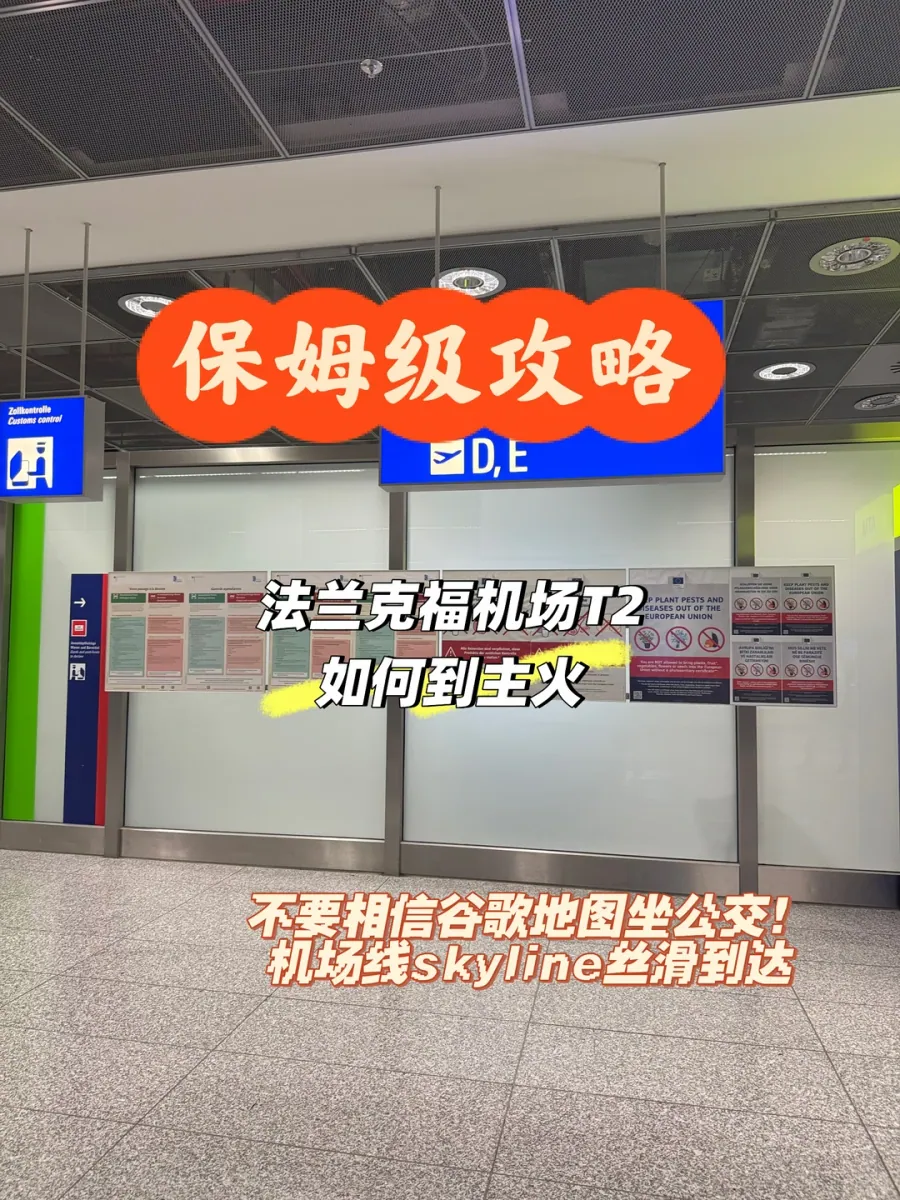
Frankfurt Airport Terminal 2 to Frankfurt Hauptbahnhof: SkyLine, then the S8 or S9
How to get from Frankfurt Airport Terminal 2 to Frankfurt Hauptbahnhof without stepping outside: the free SkyLine people mover to Terminal 1, the Bahnhof signs down to the regional station, and about fifteen minutes on the S8 or S9, plus tickets, frequencies and the five wrong turns.10 min read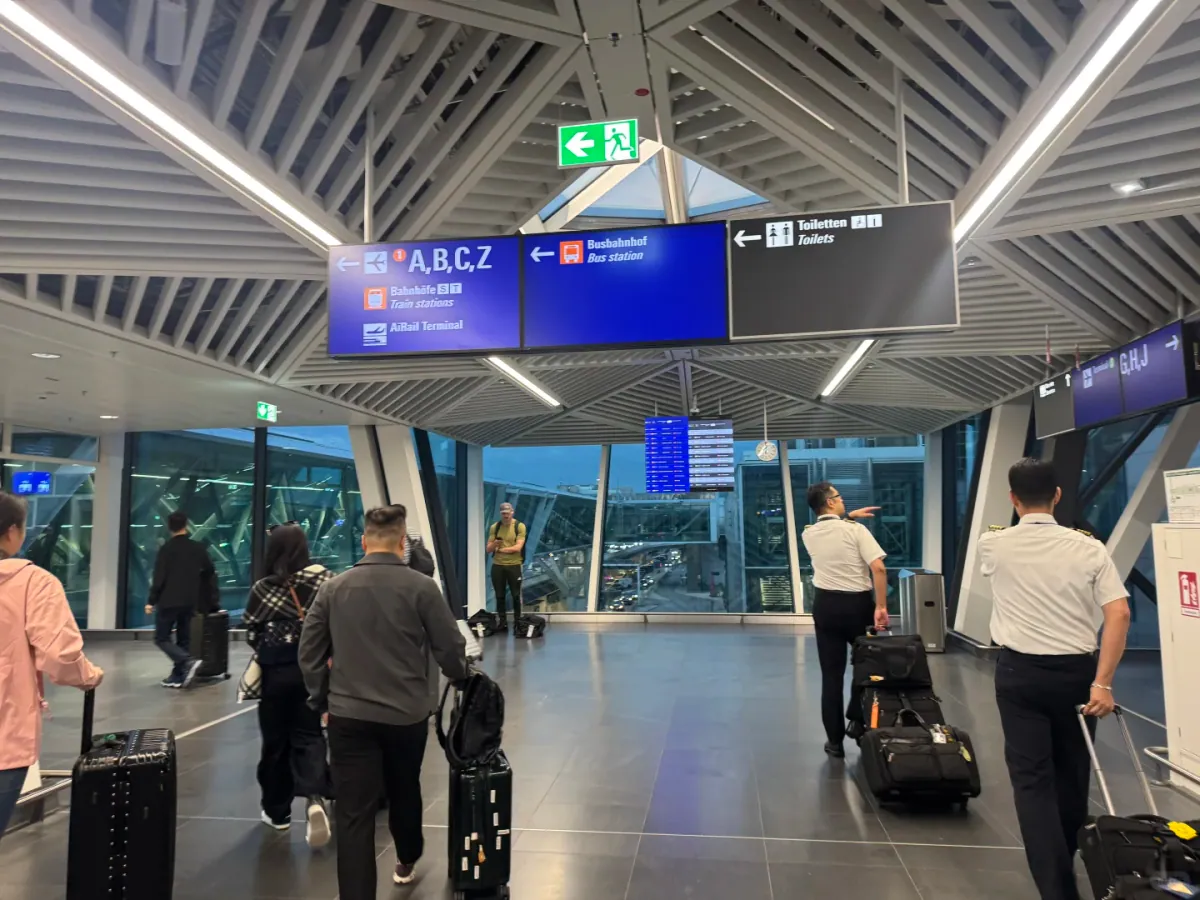
Frankfurt Airport Terminal 3 to the Fernbahnhof: SkyLine, a long corridor, and 1 hour 40 minutes
A step-by-step account of reaching Frankfurt Airport long-distance station from Terminal 3: the free SkyLine to Terminal 1, the blue Fernbahnhof signs and the corridor to The Squaire, waiting for a platform number on the Abfahrt board, and how much time to allow.10 min read