Kigali International Airport Ranks Third in Africa at the Skytrax World Airport Awards
- Kigali International Airport
- KGL
- Skytrax
- Africa airport ranking
- RwandAir
- Changi Airport
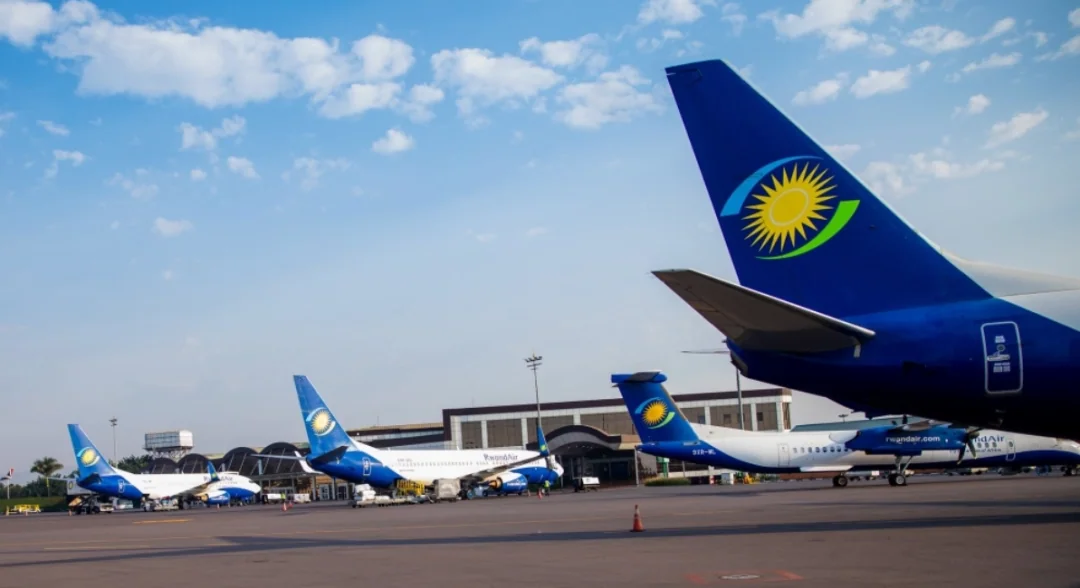
Kigali International Airport (KGL) has been ranked third in Africa at the 2026 Skytrax World Airport Awards, behind Marrakech Menara Airport in Morocco and King Shaka International Airport in South Africa. For an airport long overshadowed by larger regional hubs, the placing is a position international travellers can actually see.
Kigali is Rwanda's main gateway and the base of RwandAir. The rise is not accidental: over recent years the country has kept investing in aviation infrastructure and in service, smoothing passenger flows, raising service efficiency and improving the terminal environment. What follows sets out where Kigali sits in the African table, how Skytrax reaches its results, and what the placing means for travellers and for competition between African hubs.
Third in Africa: where Kigali sits
| Rank | Airport | Country |
|---|---|---|
| 1 | Marrakech Menara | Morocco |
| 2 | King Shaka International | South Africa |
| 3 | Kigali International | Rwanda |
The ceremony was held in London on 18 March, bringing together the industry's main players. Beyond the top three, the African top ten named in the results also include Port Elizabeth, Bloemfontein and East London in South Africa, Entebbe in Uganda, Antananarivo in Madagascar, Rabat in Morocco and Luanda in Angola.
Those airports have something in common: most are their country's gateway rather than a continental transfer hub. Kigali finishing third means that on the measure that matters here — how travellers actually experience the airport — it scores above several airports with larger networks.
How the ranking is produced
The Skytrax World Airport Awards are widely treated as one of the industry's most authoritative rankings, and the results rest on the largest annual passenger satisfaction survey in the world. Unlike a jury-based prize, the outcome is decided entirely by passengers' scores.
According to Skytrax, the 2026 survey ran from August 2025 to February 2026 and gathered responses from travellers in more than 100 countries. It covers the whole airport experience: check-in, security, immigration, shopping, transfers and boarding. The awards have run since 1999, and airports neither take part in the process nor influence the result — which is why the rankings are so often quoted.
For a traveller, the practical meaning is simple: the placings are scores given by ordinary passengers on real journeys, not the impressions of a judging panel.
What the result says about Rwanda's investment
Local coverage reads the Kigali result as evidence of a marked improvement in how Rwanda runs and serves its airport, and as the payoff from a strategy to build a regional aviation hub. Recent investment has concentrated on three things: smoothing passenger flows, raising service efficiency, and improving the terminal environment.
Those three sound modest, but for an airport of limited size they are exactly what changes how a journey feels. Smoother flows mean a transfer without repeated queuing; better service efficiency means baggage and immigration do not eat time; a better environment means seats, food and clear signs in the departure area. A large hub can solve all of it at once with a new terminal; an airport of limited size has to buy it in small instalments through management.
Hub competition, and the Changi benchmark
Competition between African hubs is getting crowded. In the north, Marrakech and Rabat hold their ground on tourist traffic and European routes; in South Africa, King Shaka, Port Elizabeth and East London form a group of regional gateways; in East Africa, the transfer market has long been dominated by a handful of carriers. They serve different flows, but on one table of passenger satisfaction they are compared in the same pool.
Beyond the continent, Changi is the usual reference point: in 2026 Singapore Changi was named World's Best Airport for the 14th time, adding World's Best Airport Dining and Best Airport in Asia among other category awards. An airport that holds the top spot for that long does it not through one breakthrough but by keeping every part of the experience high.
For Kigali, third in Africa is a starting point rather than an arrival. Industry observers say the placing will strengthen Rwanda's position on the international aviation map and help attract more airlines and travellers, and that continued work on infrastructure and network could speed the move toward regional-hub status in the coming years.
What it means for travellers
If you are heading to Rwanda, or connecting through Kigali to neighbouring countries, the practical value of the ranking is in expectations: passenger scores for check-in, security, immigration and baggage put the airport in Africa's upper group. It does not mean more flights, cheaper fares or a shorter connection.
What decides a trip is still the schedule, the visa and your documents, and how early you reach the airport. Treat a ranking as a filter, not a promise — which is the right way to read any airport league table.
Related links
- On this site: South Africa (ZA), Morocco (MA)
- Wikipedia: Kigali International Airport
- Baidu Baike: Kigali International Airport
Image source: Kigali Chinese Business News. Award names, placings and criteria are as published by Skytrax; for flights, visas and airport services, check the airlines' and the airport's own channels.
More articlesTravel notes

Adelaide Airport Wins Two Skytrax Awards for Staff and Regional Service
Adelaide Airport has been named Best Airport Staff in Australia/Pacific for the first time and Best Regional Airport in Australia/Pacific for the fourth time in five years at the Skytrax World Airport Awards in London. Passenger numbers passed nine million in 2025, international traffic grew more than 20%, and a A$600 million expansion called Project Flight is under way.4 min read
Buying Whisky at Airport Duty-Free: A Global Shelf Guide by Flight Time
From Taoyuan and Changi to Heathrow and Sydney, airport duty-free is where whisky's travel-retail exclusives live: single casks, cask strength and no local duty. A region-by-region survey of what stood on the shelves around Chinese New Year 2020, plus how to choose by age, cask, bottle size and the liquid rules on connections.7 min read