
Dublin Airport Terminal Map
 Dublin · Ireland· Dublin Airport
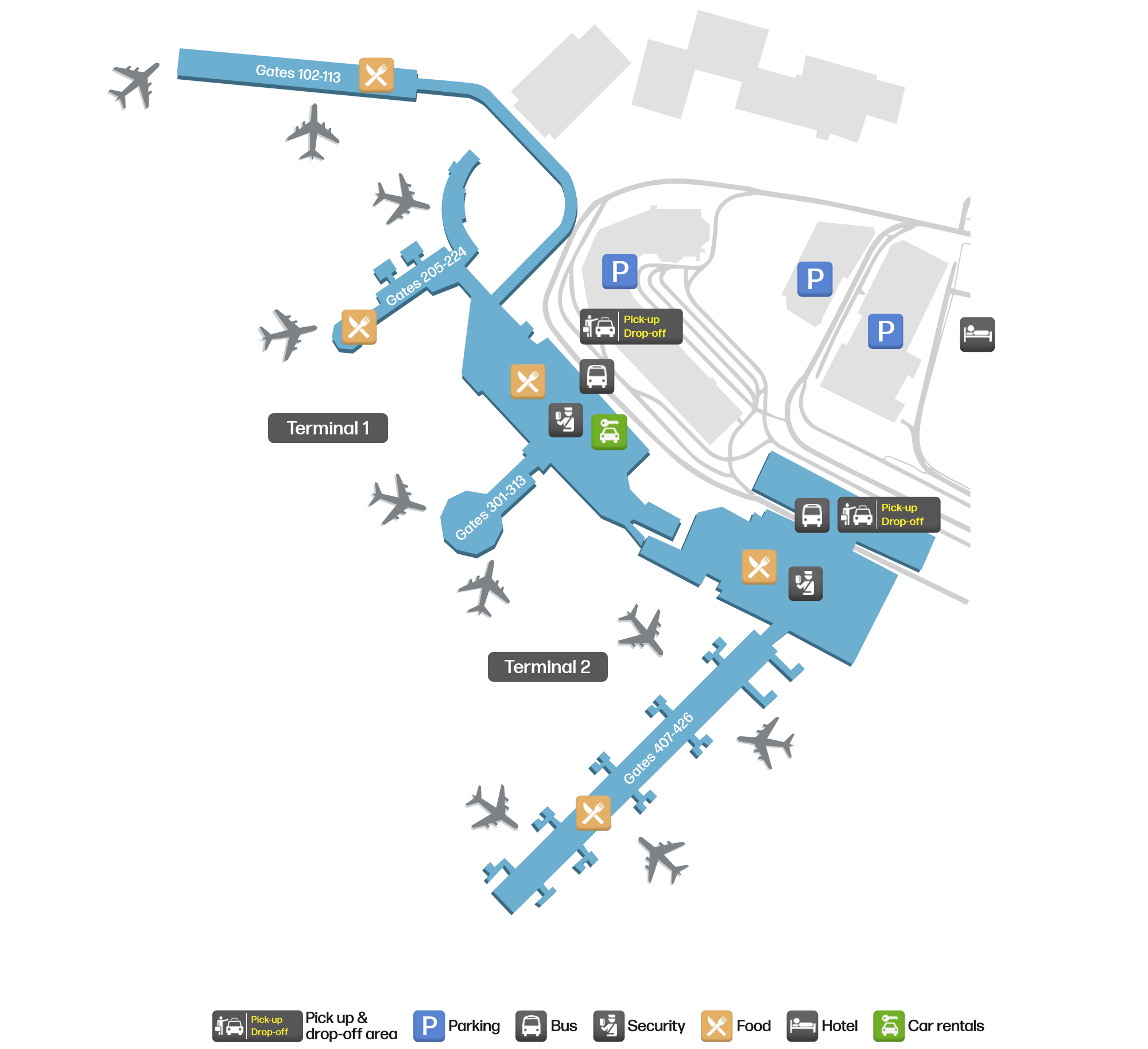
Dublin Airport (IATA: DUB, ICAO EIDW) is a large airport serving Dublin, Ireland, with 2 terminals and 65 gates, about 10 km from central Dublin.
Dublin Airport (DUB) serves Dublin, Ireland. It has 2 terminals with 65 gates in total and handles about 33 million passengers a year. The airport is about 10 km from the city centre. Ground transport into the city: bus and taxi.
Download Airport MapsDownloads
Airport time information — DUB current timeAirport Time
Current time at DUB (Europe/Dublin) compared with your local time.
Dublin Airport route map — direct destinationsRoute Map
139 direct destinations: map, operating airlines and distances.
Airport information & detailsAirport Details
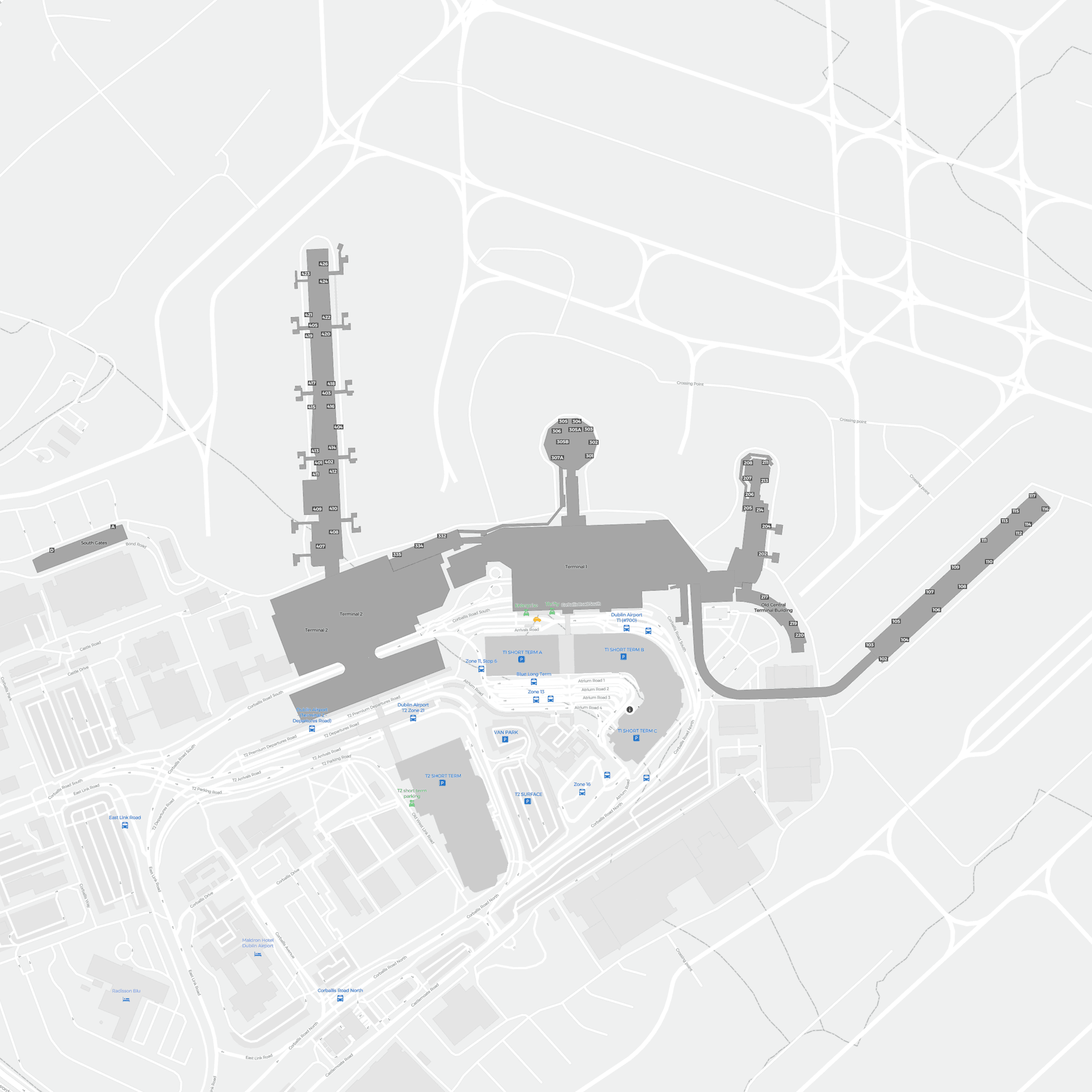
Interactive map — Dublin Airport locationInteractive Map
View this airport on other map services:
Dublin Airport terminal guideAirport Guide
Dublin Airport lies about 10 km from the city centre and handles around 36.4 million passengers a year (2025) as Ireland's gateway hub. It has two terminals and a simple structure; what is genuinely unusual is an arrangement few other countries offer: passengers flying to the United States can clear US immigration at Dublin Airport before they leave — on landing in the US, you walk out as a domestic passenger.
The two terminals
| Code | Name | Main users |
|---|---|---|
| T1 | Terminal 1 | Ryanair and other low-cost carriers, plus some European airlines |
| T2 | Terminal 2 | Aer Lingus and long-haul flights |
How to work out where you are going:
- Aer Lingus and transatlantic long-haul flights mostly use T2; low-cost carriers and most short-haul European flights use T1.
- The two buildings are adjacent, a few minutes apart on foot outdoors, with clear signage.
For US flights, note especially:
- Flights to the United States use US preclearance on the T2 side, in effect moving the immigration process forward to Dublin.
- As a result, security and clearance take longer on these flights; arrive one hour earlier than you would for an ordinary international flight.
- The payoff is that on landing in the US you exit through the domestic arrivals process and skip the long immigration queue.
Transfers and connections
- The two buildings are adjacent and a connection can be made on foot; for a change of terminal, allow two hours or more.
- For a connection involving a US flight, check whether US clearance has to be completed in Dublin and allow extra time for it.
- Aer Lingus is based here, and through connections run smoothly.
Routes and flights
| Aspect | Details |
|---|---|
| Routes | Aer Lingus' main base, with transatlantic non-stops to the US East Coast and a dense European network; Ryanair also has a large base here; 36.43 million passengers in 2025 (+5.1%), a record year |
| Flights | Roughly 700 commercial movements a day; Aer Lingus alone carried about 11 million passengers through Dublin in 2025 |
| Aircraft | Aer Lingus (A320-family and A330 widebodies) operates from T2; Ryanair (Boeing 737) operates European low-cost services from T1 |
Getting into Dublin
- Airport coaches (Aircoach and others) — covering the city centre and the main hotel districts, frequent and running 24 hours.
- City buses (routes 16, 41 and others) — the lowest fare, and they take a travel card; good if you are travelling light.
- Taxi / ride-hailing — only about 10 km and 20 minutes or so, and the least hassle.
- Car hire — good for a tour around the island (remember that Ireland drives on the left).
Practical tips
- Allow significantly more time for a US flight: US clearance happens in Dublin and you cannot board without it, as the process is completed before departure.
- Dublin has a further convenience that is easy to miss: on the way from the United States, some flights complete Irish immigration on the US side (Shannon and Dublin have reciprocal arrangements).
- There are two main airports on the island of Ireland: Dublin (DUB) and Belfast (BFS, in the United Kingdom); check the three-letter code on cross-border itineraries.
Terminal guideTerminal Guide
Gate ranges, main airlines and facilities for each terminal at Dublin Airport.