
Cape Town International Airport Terminal Map
 Cape Town · South Africa· Cape Town International Airport
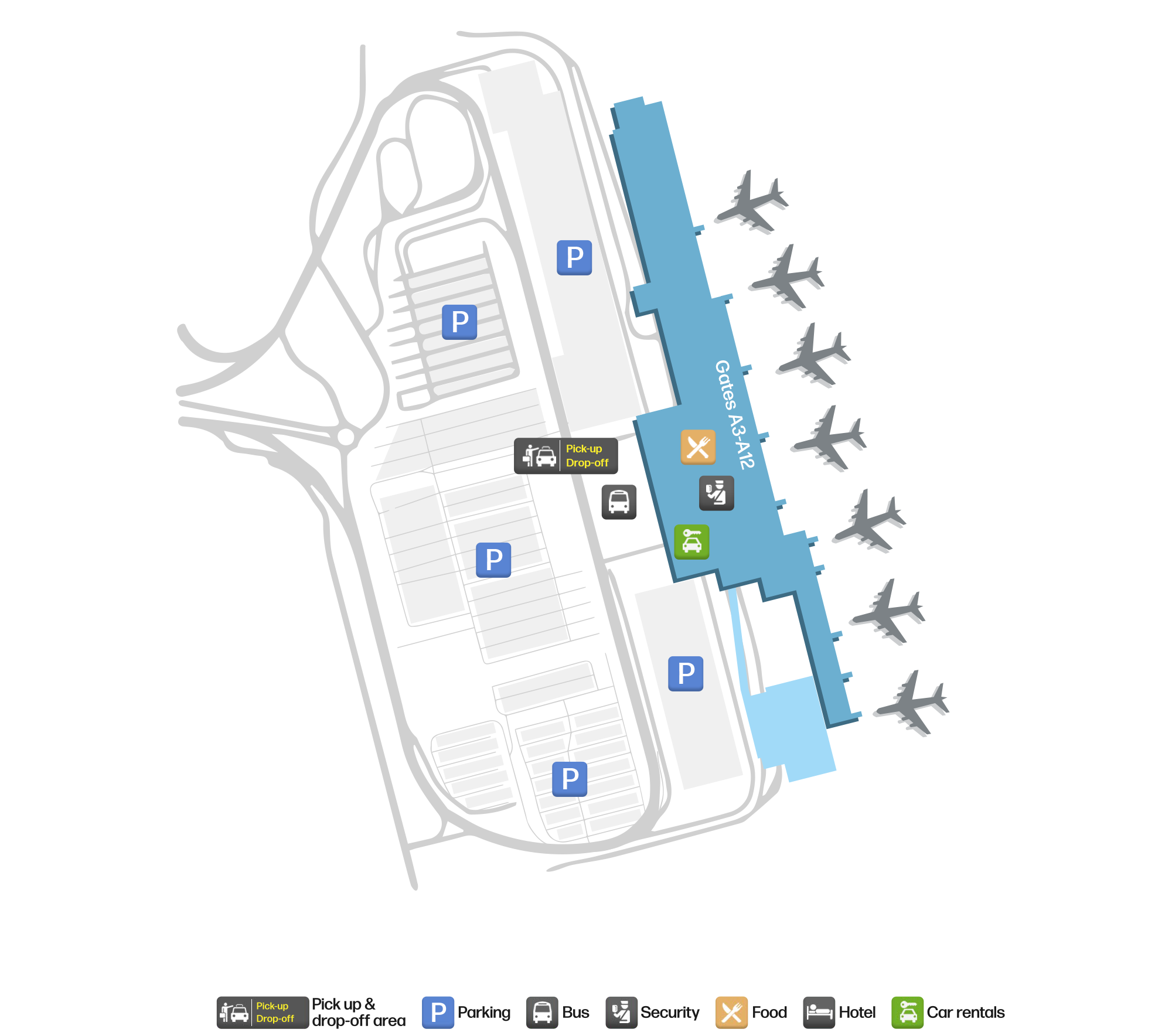
Cape Town International Airport (IATA: CPT, ICAO FACT) is a large airport serving Cape Town, South Africa, with 1 terminal and 28 gates, about 20 km from central Cape Town.
Cape Town International Airport (CPT) serves Cape Town, South Africa. It has 1 terminal with 28 gates in total and handles about 11 million passengers a year. The airport is about 20 km from the city centre. Ground transport into the city: bus, taxi and car.
Download Airport MapsDownloads
Airport time information — CPT current timeAirport Time
Current time at CPT (Africa/Johannesburg) compared with your local time.
Cape Town International Airport route map — direct destinationsRoute Map
22 direct destinations: map, operating airlines and distances.
Airport information & detailsAirport Details
Interactive map — Cape Town International Airport locationInteractive Map
View this airport on other map services:
Cape Town International Airport terminal guideAirport Guide
Cape Town International lies about 20 km from the city centre and handles around 11.1 million passengers a year (2025), making it South Africa's second-busiest airport. Its structure is compact: a single central terminal, with the domestic and international sides set apart from each other but joined by a central concourse — five to ten minutes on foot between them, which is its greatest convenience. But there is one important limit: the airport has no international transit corridor that bypasses immigration.
One terminal, two zones
| Zone | Location | Gates |
|---|---|---|
| International | North side of the terminal | A1–A5 |
| Domestic | South side of the terminal | C1–C5 |
| Central concourse | Links the two sides | All check-in is handled on the upper level |
How to work out where you are going:
- International flights are on the north side and domestic flights on the south, five to ten minutes apart on foot through the central concourse — no shuttle bus needed.
- Check-in desks are gathered on the upper level of the central terminal, arrivals on the ground level, and domestic and international arrivals share a single exit hall.
Our diagram draws it as a single building labelled domestic on one side and international on the other precisely to make the point: here, changing zone is a walk along an indoor corridor.
Transfers and connections
- There is no transit corridor that bypasses immigration — whether you are connecting domestic to international or international to international, you must clear immigration, collect your luggage, and check in and clear security again.
- For a self-transfer on separate tickets, allow 2.5 hours or more; on a through ticket, follow your airline's guidance.
- International to international also requires entering South Africa, which is not the case at many hubs, so check your visa requirements in advance.
Routes and flights
| Aspect | Points |
|---|---|
| Routes | 11.11 million passengers in 2025 (7.8 million domestic, 3.3 million international), served by more than 29 airlines on 31 or more direct destinations; international points include London, Amsterdam, Frankfurt, Dubai and Doha |
| Flights | Mainly high-frequency South African domestic routes, with lower international frequency |
| Aircraft | The home base is for South African domestic carriers FlySafair, Airlink and South African Airways (SAA); international sectors are operated by British Airways, KLM, Lufthansa, Emirates and Qatar |
Getting into Cape Town
- Taxi / ride-hailing — about 20 km, 25–35 minutes, and the most common way in.
- Airport bus (MyCiTi connection) — links the city centre and the main hubs, and the fare is low, but it requires a change.
- Car hire — there is a rental centre at the airport; Cape Town is the starting point of a Garden Route drive and demand for cars is high.
- No rail — the airport has no train or metro running into the city.
Practical tips
- The airport is carrying out a large expansion running 2026–2029 (including a new runway and extra terminal capacity), so parts of it are under construction and routes through the building may change.
- Cape Town is the starting point of Garden Route and wine-country trips, so allow for the queue at car collection on a self-drive itinerary (it gets long in high season).
- South Africa's domestic network is dense, and travellers connecting from a domestic flight to an international one should budget 2.5 hours or more for the "no transit corridor" process.
Terminal guideTerminal Guide
Gate ranges, main airlines and facilities for each terminal at Cape Town International Airport.